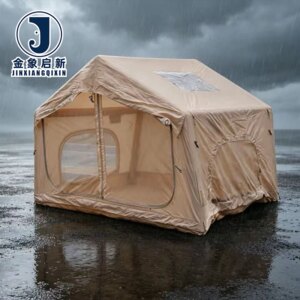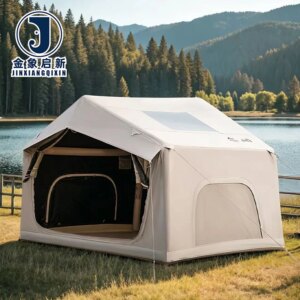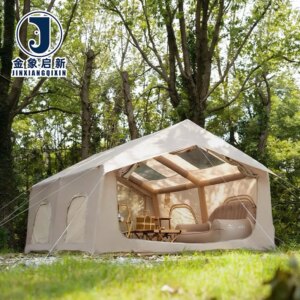
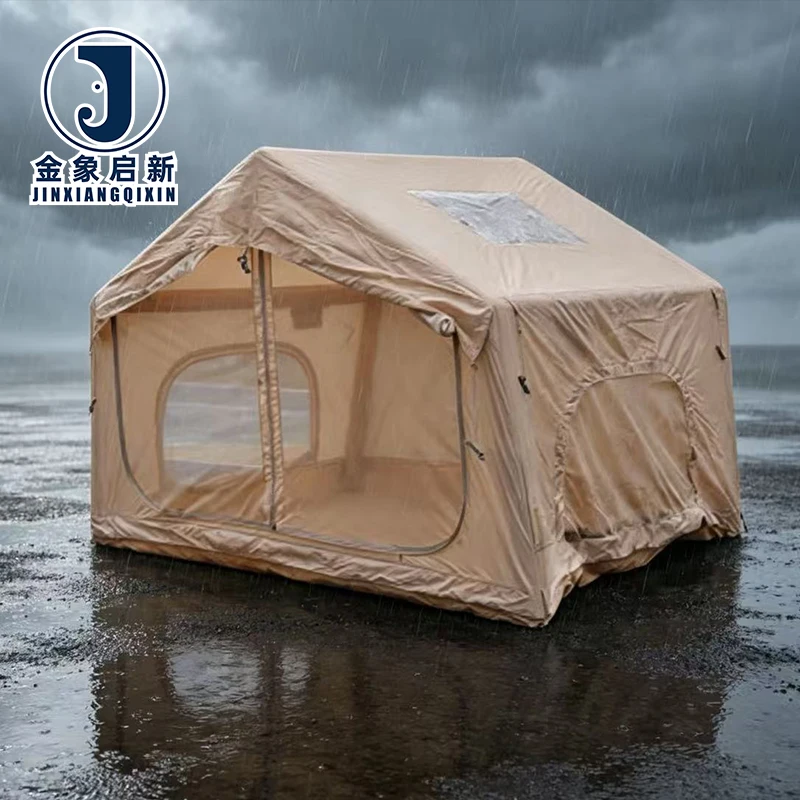
Deep Process Control Over Coating Adhesion — Nearly 30 years of PVC textile engineering applied to inflatable tent fabric, ensuring batch-to-batch consistency in hydrostatic pressure resistance and UV stabilization for commercial shelter applications.
Technical Specifications
| Parameter | Value |
|---|---|
| Product Type | Inflatable Tent |
| Core Material | UV-Resistant PVC |
| Waterproof Rating | Hydrostatic head exceeding 5000mm |
| UV Exposure Resistance | 5000+ hours |
| Tensile Strength Retention | 85% after 2 years outdoor exposure (test basis not stated in source) |
| Deployment Mechanism | Quick Auto Opening, under 60 seconds |
| Temperature Tolerance | -30°C to 70°C |
| Construction | Single-layer |
| Production Facility | 9,180 m², 3 full production lines |
| Processing Equipment | 36 sets of professional equipment |
| R&D Capability | 10 technicians, OEM & ODM |
| Certifications | ISO9001, ISO14001, ISO45001, CE |
Application Suitability
| Application | Exposure & Requirement |
|---|---|
| Construction Site Temporary Storage | Heavy rain exposure, UV degradation risk, puncture from equipment handling, rapid deployment for project timelines |
| Logistics Mobile Equipment Enclosures | Road abrasion during transport, temperature cycling, wind load stress, repeated inflation/deflation cycles |
| Emergency Relief Shelters | Remote deployment without tools, extreme temperature tolerance, rapid setup for disaster response, compliance documentation for international aid |
| Outdoor Event Workspaces | Prolonged sun exposure, crowd traffic abrasion, branding requirements, aesthetic finish consistency |
What "UV-Resistant" Means Without Testing Data Behind It
Procurement teams need documented UV stabilization metrics, not just marketing claims on the data sheet.
When inflatable tent fabric degrades unpredictably in the field, the consequences extend beyond fabric replacement—entire project timelines collapse. I have reviewed specifications where UV resistance was claimed without accelerated weathering test results to back it up, leaving buyers to discover embrittlement only after months of sun exposure. The Inflatable Tent Fabric manufacturer custom market requires verifiable performance data: tensile strength retention percentages, exposure hours under standardized testing protocols, and temperature cycling validation [NEED_CITE: ISO 4892-2 accelerated weathering methods for coated textiles]. Without these, you are buying on faith rather than engineering specification.
The Material Science Behind Rapid Deployment Shelters
This Inflatable Tent operates on a single-layer PVC construction engineered for structural integrity when pressurized. The UV-stabilized formula maintains fabric pliability across temperature extremes, preventing the brittle cracking that plagues inferior compounds in cold-weather deployments. Waterproof performance is achieved through coating application that exceeds 5000mm hydrostatic head rating, meaning prolonged rain exposure will not penetrate to compromise stored equipment or personnel comfort.
Pressure Retention and Seam Integrity Under Field Conditions
The critical failure point in inflatable structures is not the fabric itself but the welded seams where stress concentrates during inflation cycles. Our 12-point inspection system includes 24-hour pressure retention testing that simulates extended field deployment, catching seam failures before they reach your job site. Ultrasonic seam integrity checks verify bond strength at a molecular level, ensuring that the weld line holds even when the structure flexes under wind load or uneven ground settlement [NEED_CITE: ultrasonic testing standards for thermoplastic welds in technical textiles].
Decoding the Specifications That Actually Matter
Hydrostatic head rating exceeding 5000mm tells you the fabric can withstand heavy, sustained rainfall without water penetration—essential for construction sites where equipment cannot tolerate moisture damage. The temperature tolerance range from -30°C to 70°C indicates the PVC compound has been formulated to resist both low-temperature embrittlement and high-temperature softening, which matters when your inflatable tent deploys in desert heat or arctic conditions. UV-stabilized chemistry maintaining 85% tensile strength retention after extended outdoor exposure suggests proper additive loading rather than surface-only treatment that washes off after the first rain season. Single-layer construction reduces weight and packing volume for transport logistics while the coating formulation provides the structural and environmental protection in one integrated system.
The Hidden Cost of Underspecified Inflatable Shelter Fabric
When procurement prioritizes initial cost over specification accuracy, the field failures compound quickly. Fabric that lacks verified UV stabilization will show surface chalking and tensile strength loss within months, requiring premature replacement that erases any initial savings. Seam failures at inflation points mean the entire shelter must be deflated for repair, disrupting operations and potentially damaging stored equipment during uncontrolled collapse. Temperature intolerance manifests as cracking in cold weather or excessive sagging in heat, both compromising the structural rigidity that inflatable designs depend on for weather protection [NEED_CITE: field failure analysis of inflatable structures in mining and construction]. Batch-to-batch inconsistency in coating weight means your second order performs differently than your first, creating unpredictable inventory management and quality control challenges.
Why This Manufacturing Approach Reduces Your Procurement Risk
Three full production lines and 36 sets of processing equipment mean we handle volume orders without subcontracting to facilities we cannot audit, maintaining control over coating formulation and application consistency. The 10-person R&D team develops samples within days, allowing you to verify color match, fabric hand, and inflation characteristics before committing to bulk production runs. ISO9001, ISO14001, ISO45001, and CE certifications are not just wall decorations—they represent audited processes for quality management, environmental responsibility, and occupational safety that translate into documentation you can present to your compliance team. Dedicated QA/QC at every production stage with 100% inspection before shipment catches defects that would otherwise surface in the field where repair costs multiply. The 9,180 square meter facility supports the capacity your annual volume requires without the long lead times that come from outsourcing to multiple smaller workshops.
Documentation & Verification
- Material specification sheet detailing PVC compound formulation, coating weight, and hydrostatic head test results per production batch
- UV stabilization test report documenting tensile strength retention after accelerated weathering exposure cycles
- CE compliance certificate confirming conformity with EU temporary structure safety directives
- ISO9001/14001/45001 certification documentation for quality, environmental, and safety management system verification
- Pre-shipment inspection record showing 12-point quality check results including seam integrity and pressure retention testing
- Temperature cycling validation report confirming material performance across -30°C to 70°C operating range
Fabrication, Handling & Storage
- Heat welding parameters must account for single-layer PVC construction to avoid burn-through while achieving full seam adhesion
- Store rolled fabric vertically in climate-controlled environment to prevent creasing that creates weak points during inflation
- Avoid folding at same crease lines repeatedly—rotate fold patterns to distribute stress across the UV-resistant coating surface
- Clean with mild pH-neutral detergents only; aggressive solvents will degrade the waterproof coating and UV stabilization additives
- Inspect inflation valves and grommets before each deployment—these connection points experience highest cyclic stress
- Repair field punctures with compatible PVC adhesive patches applied to clean, dry surfaces for proper bond formation
Requesting Your Technical Proposal
When you are ready to specify inflatable tent fabric for your application, we need to understand the deployment environment and performance expectations. Share your typical operating temperature range, expected UV exposure duration, and any compliance requirements for your target market or industry sector. If you have specific color, logo printing, or structural design modifications in mind, provide reference files or Pantone numbers for sample development. Let us know your annual volume forecast and whether you require the fabric in roll form or as finished, factory-tested inflatable units ready for immediate deployment.
Frequently Asked Questions
Q: What customization options are available for inflatable tent size, color, and structural design?
A: Our OEM and ODM services cover size adjustments, color matching to your brand specifications, pattern printing, logo application, and structural design modifications to meet your deployment requirements. The 10-person R&D team develops custom samples for your approval before bulk production, ensuring the final product matches your technical and aesthetic specifications exactly.
Q: How does the manufacturing process ensure batch-to-batch consistency across multiple orders?
A: Three full production lines with 36 sets of professional processing equipment operate under ISO9001 certified quality management, with standardized coating formulation and application parameters. Every batch undergoes the same 12-point inspection protocol including 24-hour pressure retention testing, so your repeat orders perform identically to your first sample-approved shipment.
Q: What international certifications does the inflatable tent fabric carry for market compliance?
A: The product carries ISO9001, ISO14001, ISO45001, and CE certifications, providing documentation for quality management, environmental responsibility, occupational safety, and EU temporary structure compliance. These certificates accompany each shipment, giving you the audit trail your procurement and compliance teams require for market entry and ongoing operations.
Q: What is the sample development process and timeline before bulk production begins?
A: Submit your specifications for size, color, and any structural modifications, and our R&D team develops samples within days for your evaluation and approval. Once you confirm the sample meets your requirements and provide deposit confirmation, bulk production typically requires 15-20 working days before dispatch with full documentation.
Q: What documentation and test reports accompany each shipment for quality verification?
A: Every shipment includes material specification sheets, batch inspection reports detailing mechanical performance test results, CE and ISO certification documentation, and pre-shipment inspection records. Third-party laboratory test reports and material safety data sheets are available upon request for specialized projects requiring additional compliance verification.