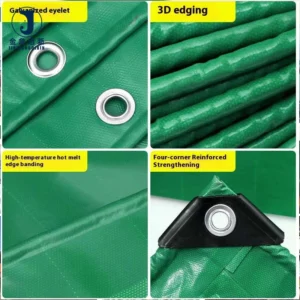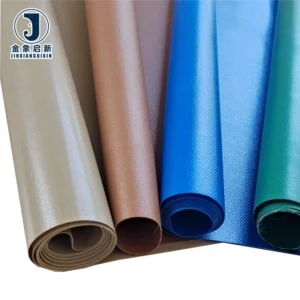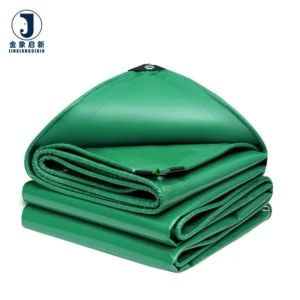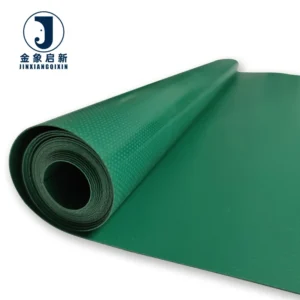
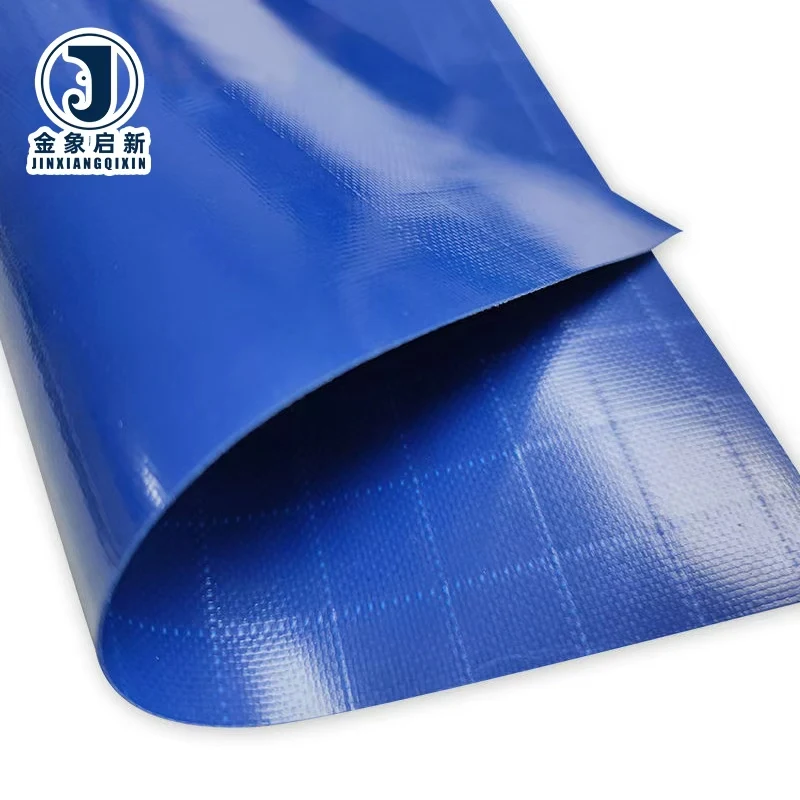
Coating Adhesion Control — Nearly 30 years of process refinement ensures that every roll of PVC tarpaulin roll material coating technology maintains consistent bond strength between base fabric and laminate layers, verified at each production stage.
Technical Specifications
| Parameter | Value |
|---|---|
| Product Type | PVC Tarpaulin Roll |
| Coating Material | HDPE weaving with LDPE lamination on both sides |
| Weight (GSM) | 50 g/m² – 220 g/m² (confirm grade for specific application) |
| Total Thickness | 0.2 mm – 0.4 mm (8 mil – 16 mil) / Custom |
| Roll Width | 6 ft, 8 ft, 10 ft, 12 ft / 2 m, 4 m, 6 m (custom available) |
| Roll Length | 100 yards, 100 meters, or per buyer requirement |
| Weave Density | 6×6, 6×7, 7×7, 7×8, 8×8, 9×9, 8×10, 10×10, 12×12, 14×14, 14×16 |
| Color Options | Blue, Blue/Orange, Green, Grey, Black, Clear, Grey/Green, Orange, or custom |
| Waterproof | Yes |
| UV Treatment | Available (test basis available on request) |
| Mildew Proof | Yes |
| Anti-aging | Yes |
| Tear Resistant | Yes |
| Anti-static | Grade not stated — confirm requirement for your market |
| Certifications | ISO, CE (company level) |
Application Suitability
| Application | Exposure & Requirement |
|---|---|
| Tent and awning structures | Long-term UV exposure, wind load flexing, water ingress at seams, repeated assembly and teardown |
| Construction scaffolding covers | Abrasion against metal frames, wind-driven rain, UV degradation over multi-month site use |
| Truck and trailer covers | Road debris impact, constant vibration, weather cycling, tie-down stress at eyelet points |
| Agricultural crop covers | Direct sunlight, condensation buildup, mildew risk, seasonal deployment and storage |
| Boat and container wraps | Saltwater spray, humidity, UV reflection off water surfaces, tight folding for transport |
Why GSM Alone Does Not Define the PVC Tarpaulin Roll Material Coating Technology You Receive
A 90 g/m² roll with a 14×14 weave will outperform a 120 g/m² roll with a 6×6 weave in tensile strength, because the base fabric architecture carries the structural load — the coating adds weight, not strength.
Technical buyers routinely receive PVC tarpaulin roll material coating technology that meets the quoted GSM on a scale test yet underperforms in the field. The discrepancy traces to how manufacturers distribute weight between the base yarn and the laminate layers. A loosely woven HDPE base flooded with thick LDPE lamination hits the target weight but delivers poor tear propagation resistance. When the fabric is tensioned over a frame or flexes under load, the coating cracks before the base fabric engages, and the failure propagates along the weak weave intersections [NEED_CITE: tensile and tear test methods for coated fabrics per ISO 1421].
How Weave Density Dictates Structural Performance
Each weave density in this PVC tarpaulin roll material coating technology range — from 6×6 through 14×16 — maps to a distinct performance tier. Lower mesh counts use thicker yarns spaced wider apart, yielding a heavier hand feel and higher puncture resistance per intersection but fewer load-bearing crossover points per square metre. Higher mesh counts create a denser grid that distributes point loads across more yarns, reducing the likelihood that a single snag initiates a tear cascade. Fabricators selecting roll stock for tensioned structures should match weave density to the expected load profile rather than defaulting to the heaviest GSM available.
Lamination Mechanics and Surface Behaviour
The dual-side LDPE lamination over HDPE woven base creates a fully waterproof envelope that bonds coating to yarn at every intersection. This lamination method produces a smoother surface profile than knife-coated PVC, which affects how the material behaves during fabrication. Heat-welding LDPE requires lower temperature settings and shorter dwell times than PVC knife-coat formulations. The surface finish also influences ink adhesion for printed branding and the material’s resistance to dirt accumulation during outdoor deployment [NEED_CITE: coating adhesion test methods for laminated fabrics].
Reading the Specification Sheet Correctly
Thickness, GSM, and weave density interact in ways that are not immediately obvious from a single spec line. A 0.4 mm thickness achieved through heavy lamination over a 6×6 base will feel stiff and resist bending, making it suitable for flat covers but problematic for applications requiring repeated folding. The same thickness achieved with a lighter coat over a 12×12 base remains more pliable while delivering superior tear resistance. When reviewing PVC tarpaulin roll material coating technology specifications, always cross-reference the weave density with the stated thickness and GSM to understand where the weight actually sits. Anti-UV treatment and mildew-resistant additives are incorporated into the lamination compound — request the test basis documentation to verify these treatments match your market’s exposure duration requirements.
The Hidden Cost of Specifying on Weight Alone
When procurement decisions rest on GSM without verifying weave density, the consequences surface after installation. A tarpaulin that passes the incoming weight check but relies on heavy coating over sparse weave will develop cracks at fold lines within the first season of use. At the weld seams — where the material is thermally joined — the coating melts and reflows, leaving only the base fabric to carry the structural load. If that base is a 6×6 weave, the seam becomes the weakest point in the entire assembly, and failure follows the exact stress path the load creates [NEED_CITE: weld seam strength testing for coated fabrics]. Batch-to-batch colour variation compounds the problem when rolls from different production runs are installed side by side on the same structure, forcing contractors to replace entire sections to maintain visual consistency.
Why Technical Buyers Source This Material Here
Three full production lines and 36 sets of professional coating and lamination equipment support bulk roll output with consistent GSM and colour across every roll in a container load. The 10-person R&D team develops samples within days when buyers need to verify weave density, surface finish, or colour match before committing to volume orders. Dedicated QA/QC runs at every stage — base weaving, lamination, winding, and packing — with 100% pre-shipment inspection ensuring that the PVC tarpaulin roll material coating technology leaving the facility matches the specification sheet in weight, thickness, and colour reference. Custom widths, colours, and roll lengths are produced on the same lines as stock grades, so non-standard orders receive identical process control.
Documentation & Verification
- Material specification sheet stating exact GSM, base fabric weave count, and lamination weight per roll batch
- Test report for UV resistance and anti-aging claims available on request with batch reference
- Pre-shipment inspection record documenting weight, thickness, and colour verification per roll
- Roll packing list with individual roll IDs traceable to production batch
- Certificate of origin and customs documentation included for international shipments
Fabrication, Handling & Storage
- Heat-weld LDPE lamination at lower temperatures than PVC knife-coat to avoid burning through the 0.2–0.4 mm laminate layers
- Space galvanized eyelets at intervals matching the weave density to prevent pull-through on lower mesh counts
- Store rolls vertically on core ends to prevent flat-spot creases that become permanent in cold weather
- Allow rolled material to acclimate to ambient temperature before unrolling to prevent lamination cracking
- Cut patterns along weave lines to maximize tear resistance and minimize offcut waste on standard widths
What to Include in Your Inquiry
Specify the weave density and GSM range that your application requires, along with the environmental exposure conditions the material will face. If your market mandates specific UV or fire-retardant compliance, state the standard or test method your finished product must meet. Indicate whether you need roll stock in standard widths or require custom dimensions, and confirm your annual volume to support consistent batch scheduling.
Frequently Asked Questions
Q: How is the actual GSM verified against the quotation on arrival?
A: Each roll is weighed and measured during 100% pre-shipment inspection, and the inspection record accompanies the shipment. The base fabric weave density and lamination weight are documented separately on the material specification sheet, so you can confirm whether the weight sits in the yarn or the coating before the roll enters your production line.
Q: What test documentation supports the UV and anti-aging treatment?
A: Test reports are available on request and reference the specific batch. UV treatment is incorporated into the LDPE lamination compound during production — request the test basis that aligns with your market’s exposure duration and climate classification before placing your bulk order.
Q: How does dual-side LDPE lamination affect heat-welding compared to PVC knife coating?
A: LDPE lamination requires lower welding temperatures and shorter dwell times than PVC knife-coat fabrics. The lamination melts and bonds at a lower threshold, so fabricators must adjust their hot-air or wedge-weld settings accordingly to avoid burn-through on the 0.2–0.4 mm material range.
Q: What colour consistency can I expect across a full container order?
A: Roll-to-roll colour consistency is maintained through in-process QA at the lamination stage, with colour reference documented per batch. If your project requires multiple rolls installed side by side, request that all rolls be produced in a single batch run to minimize visual variation.
Q: What are the lead times and minimums for custom widths or colours?
A: Samples for custom widths, colours, or print requirements are developed within days. Production lead times and minimum order quantities depend on the specific GSM, weave density, and colour requested — submit your requirements for a quotation with confirmed scheduling.