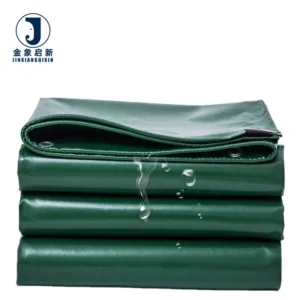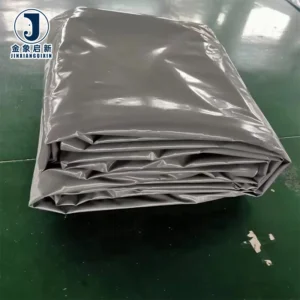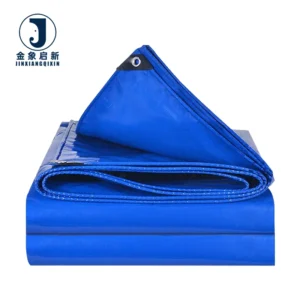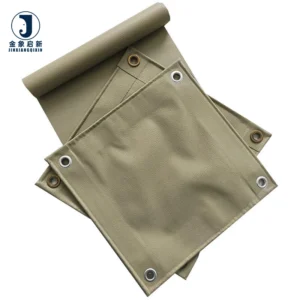
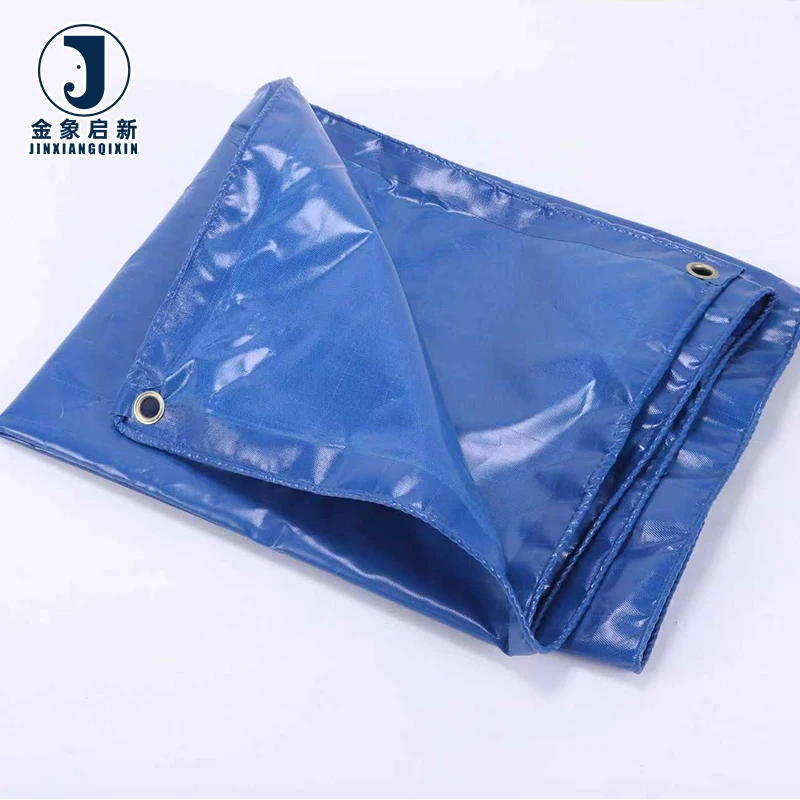
Coating weight control — Every roll of PVC coated tarpaulin fabric is verified against its stated GSM at the coating head and again before dispatch, ensuring the material you receive matches the technical data sheet you approved.
Technical Specifications
| Parameter | Value |
|---|---|
| Product Type | PVC Coated Tarpaulin |
| Base Fabric Yarn Count | 500D × 500D Polyester |
| Coating Material | Double-Sided PVC Coating on Polyester Base |
| Weight Range | 450–900 g/m² (selectable per application) |
| Flame Retardant | Available in flame retardant grades — confirm the grade required for your market |
| UV Treatment | Anti-UV treatment available — test basis to be confirmed per production batch |
| Waterproof Performance | Fully waterproof coated construction |
| Surface Texture | Smooth, leather-like finish |
| Repairability | Hot-air weldable for field and shop repair |
| Standards & Certification | ISO and CE certified production facility |
Application Suitability
| Application | Exposure & Requirement |
|---|---|
| Truck and trailer side curtains | Constant flexing at hinge points, road debris abrasion, prolonged UV exposure, wind load stress |
| Machine and equipment covers | Outdoor weathering, dust ingress prevention, repeated installation and removal cycles |
| Awning and tent fabrication | Tension loading across spans, rain pooling, UV degradation over seasons, hot-air welding during assembly |
| Wood and building material covers | Moisture exposure on open sites, puncture risk from sharp timber edges, wind uplift forces |
| Industrial protective covers | Chemical splash resistance, abrasion from daily handling, long-term outdoor storage conditions |
Why Stated GSM Does Not Guarantee Fabric Strength on Arrival
A quoted weight means nothing if the coating adhesion and base fabric denier are not held to tolerance during production.
When sourcing PVC coated tarpaulin fabric for industrial covers or transport applications, technical buyers often specify GSM as the primary acceptance criterion. Yet a roll that arrives lighter than the data sheet — even by a small margin — can signal inconsistent coating application across the batch, which compromises both tensile integrity and weld performance at high-stress seams. The problem is rarely caught until the fabric is under tension or a welded joint fails in service. [NEED_CITE: coating weight variance and tensile performance correlation in PVC coated polyester fabrics]
How the 500D Polyester Base Determines Structural Behaviour
The 500D × 500D polyester yarn forms the load-bearing skeleton of this PVC coated polyester fabric. Denier directly influences tear propagation resistance: when a puncture or cut occurs in the field, a higher denier base limits the speed and distance the tear travels before stopping. For truck side curtain fabricators and awning manufacturers, this means the material resists damage spreading from a single impact point or stress concentration. The woven structure distributes mechanical load across both warp and weft directions, which matters when the fabric is tensioned over a frame or subjected to wind loading on a flat cover.
What Double-Sided PVC Coating Delivers at the Weld Line
Double-sided PVC coating ensures that hot-air welded seams bond coating-to-coating rather than coating-to-base-fabric, which produces substantially higher peel strength at the joint. For fabricators building truck curtains or inflatable structures, this means the seam can flex repeatedly at the load-bearing hinge without delaminating before the surrounding material shows wear. The smooth, leather-like surface on both sides also allows the fabric to be used in applications where appearance matters on either face, such as tensioned awning panels or architectural membrane elements. Coating adhesion control during production directly governs whether a welded seam outlasts the fabric or becomes the first failure point. [NEED_CITE: peel strength requirements for hot-air welded PVC coated fabric seams]
Reading the Specification Sheet Beyond the Weight Number
GSM alone does not predict how a PVC coated tarpaulin will perform under load. A 650 g/m² fabric built on a 500D base with tight weave density will behave differently than one of the same weight on a lower-denier, loosely woven base. The base fabric density governs tensile strength in both directions, while the coating weight contributes to abrasion resistance, waterproof integrity, and UV shielding. Coating method — whether knife-over-roll, lamination, or calendering — determines the bond strength between PVC and polyester, which in turn controls how the fabric responds to hot-air welding and long-term flex fatigue. The 450–900 g/m² range offered here lets buyers select weight appropriate to their mechanical demand: lighter grades for temporary covers and awning panels, heavier grades for permanent side curtains and industrial enclosures. Surface finish also plays a role; the smooth texture on this fabric facilitates cleaning in the field and provides consistent contact surface during welding operations.
The Hidden Cost of Overlooking Batch-Level Consistency
A specification sheet that promises uniform colour and weight is only valuable if that uniformity holds across every roll in your shipment. When fabricators receive rolls with visible colour variation, installed side by side on a truck fleet or an awning structure, the visual inconsistency forces rejection and rework — not because the material is structurally deficient, but because the aesthetic standard was not met. Similarly, when hot-air welding parameters calibrated on one roll produce weak seams on the next, the root cause is often a variation in coating thickness or plasticiser content between rolls in the same batch. [NEED_CITE: batch consistency requirements for PVC coated fabric used in fleet and architectural applications]
Why Fabricators Source This Coated Fabric Here
Three full production lines with dedicated coating heads allow tight control over PVC application weight, which is verified per roll before it reaches the packing stage. The 10-person R&D team develops custom samples — including specific widths, colours, and treatment formulations — within days rather than weeks, letting fabricators validate material behaviour before committing to bulk volumes. Every production stage includes in-process QA checkpoints: base fabric inspection before coating, GSM measurement at the coating head, adhesion testing after curing, and 100% pre-shipment inspection. This PVC coated polyester fabric is produced in a facility holding ISO and CE certification, and documentation including material spec sheets, test reports for applicable treatments, and certificates of origin ship with every consignment. Custom width and colour options are handled on the same production lines as standard stock grades, so lead times and minimums remain practical for fabricators working to project schedules.
Documentation & Verification
- Material specification sheet listing exact GSM, 500D base fabric denier, coating type, and colour reference for your order
- Independent test report for flame retardant or anti-UV grade matching your specific production batch
- Weight verification record per roll measured against the stated GSM value before dispatch
- Pre-shipment inspection record confirming roll count, colour uniformity, and surface quality
- ISO and CE certificates issued to the manufacturing facility, available per shipment
- Certificate of origin and customs documentation supporting international freight clearance
Fabrication, Handling & Storage
- Set hot-air welder temperature and speed based on the specific GSM of your roll to ensure coating-to-coating bond without base fabric damage
- Store rolls upright on pallets in a dry, shaded area to prevent flat-spotting and surface marking on the smooth PVC finish
- Avoid folding the fabric during transport; roll it on the original core to prevent permanent crease lines through the double-sided coating
- Use compatible PVC-based repair patches and hot-air welding for field repairs, matching the coating thickness of the installed panel
- Clean the smooth surface with mild detergent and soft cloth; avoid solvent-based cleaners that may degrade the plasticiser in the PVC coating layer
- Plan cutting layouts to maximise yield from the roll width and minimise transverse welds across tension-bearing panels
Request a Technical Sample for Your Application
To specify this PVC coated tarpaulin fabric accurately, share your end-use application, the mechanical loads and environmental exposure the fabric will face, and any flame retardant or UV treatment grade required by your local regulations. Provide your target GSM, required roll width, annual volume, and whether you need the material as roll stock or as pre-cut panels. Requesting a production sample with full documentation lets you validate weld parameters, colour consistency, and coating adhesion before placing a bulk order.
Frequently Asked Questions
Q: How is GSM verified on arrival and what is the tolerance against the quoted value?
A: Each roll is weighed and measured during pre-shipment inspection, and the recorded GSM is compared against the specification sheet for your order. The inspection record travels with the shipment so you can cross-check on arrival. Any tolerance band is agreed at the quotation stage and documented in your material spec sheet.
Q: Which flame retardant standard applies to my target market?
A: Different markets require different classifications — M2, B1 per DIN 4102, NFPA 701, or other national standards. Confirm the specific standard your end application demands, and the production team will formulate and test the PVC coating accordingly, providing a matching test report with your batch.
Q: What is the test basis for anti-UV treatment and expected outdoor performance?
A: Anti-UV treatment is formulated based on the exposure conditions of your application and the target market requirements. The specific test method and exposure duration are confirmed during the sampling stage, and the resulting test report ships with your production batch for verification.
Q: Hot-air welding or sewing — which seam method suits this PVC coated polyester at flex points?
A: Hot-air welding produces a coating-to-coating bond that maintains waterproof integrity and flex fatigue resistance at hinge points, making it the preferred method for truck curtains and tensioned structures. Sewing introduces needle holes that compromise the waterproof barrier and concentrates stress at the stitch line.
Q: How is colour consistency controlled across multiple rolls in one order?
A: All rolls in a single order are produced from the same coating batch using matched pigment formulation. The pre-shipment inspection includes a visual comparison of roll surfaces side by side, and any deviation outside the agreed tolerance triggers a re-run before dispatch.