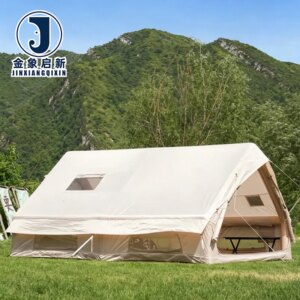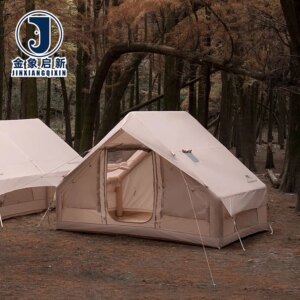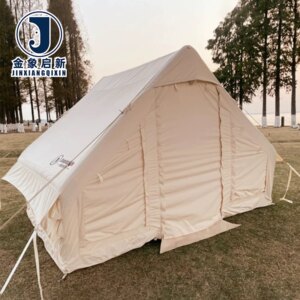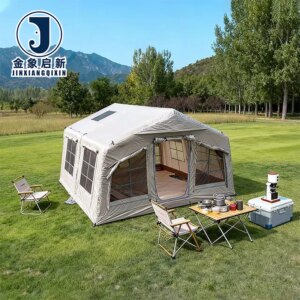
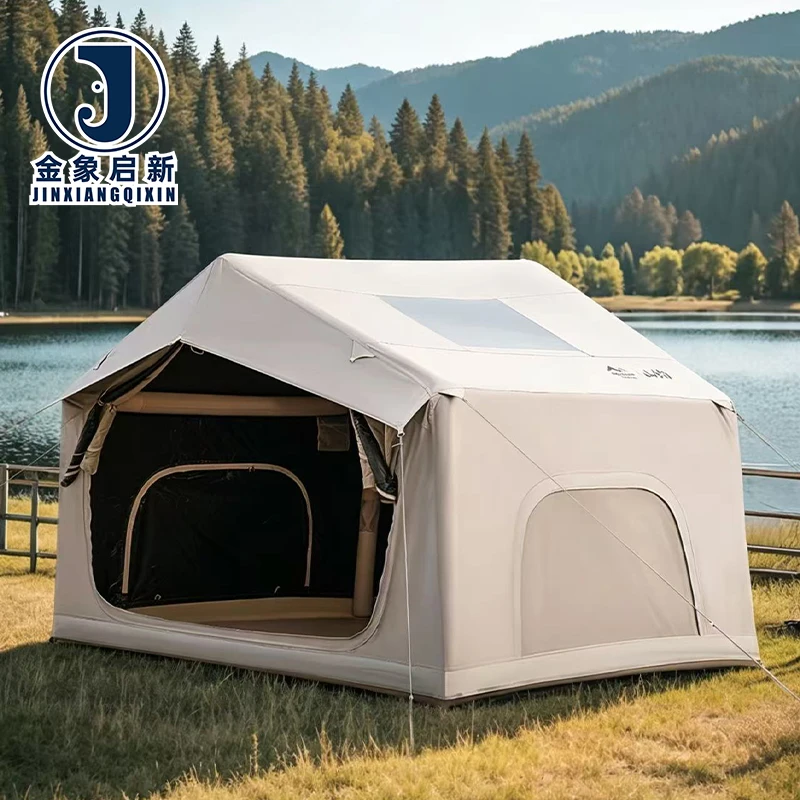
Material Expertise — Nearly 30 years of PVC coating process control ensures base fabric denier, weave, and coating weight are matched to inflatable tent performance requirements.
Technical Specifications
| Parameter | Value |
|---|---|
| Product Type | Inflatable Tent |
| Core Material | PVC tarpaulin |
| Key Performance | Waterproof, UV-resistant (test basis not stated), tear-resistant |
| Capacity | 6-8 Person |
| Opening Mechanism | Quick Automatic Opening (inflatable) |
| Customization Service | OEM & ODM (sample customization, pattern printing) |
| Production Facility Area | 9,180 m² |
| Production Lines | 3 full production lines |
| Processing Equipment | 36 sets of professional equipment |
| R&D Team Scale | 10 technicians |
| Certifications | ISO9001, ISO14001, ISO45001, CE |
Application Suitability
| Application | Exposure & Requirement |
|---|---|
| Commercial campsite glamping equipment | Prolonged outdoor UV exposure, repeated inflation cycles, seasonal weather variations |
| Event organizer temporary shelters | Rapid deployment, high foot traffic, short-term intensive use, varied terrain |
| Construction on-site storage structures | Dust, moisture, mechanical abrasion, long-term static loading |
| Outdoor gear bulk manufacturing | Consistent roll-to-roll material behavior, high-frequency welding compatibility |
Why Base Fabric Weave Dictates Inflatable Tent Longevity
Tensile and tear resistance in inflatable structures depends more on denier count and weave density than on coating weight alone.
When sourcing material for pneumatic shelters, buyers often focus on the stated GSM. Yet an inflatable tent fabric manufacturer sees returns driven by seam failure and tear propagation at stress points, not by coating thickness. The base fabric must resist the cyclical loading created each time the structure inflates and deflates. A loosely woven scrim, regardless of how heavily it is coated, will allow micro-tears to spread once the air beams flex under wind load [NEED_CITE: tensile and tear test methods for coated fabrics per ISO 1421]. Matching denier to the expected internal pressure of the air beams is the first specification decision.
Coating Adhesion and Air Beam Integrity
The PVC coating must bond to the base fabric strongly enough to survive repeated inflation without delaminating at the weld lines. Inflatable tent structures concentrate stress at the junctions where air beams meet the canopy, and any separation between coating and scrim creates a leak path. Our coating process controls adhesion at every stage, so the material holds together through thousands of pressure cycles. Specifying an inflatable tent fabric manufacturer that verifies peel strength per batch eliminates the risk of field failures during peak rental season.
UV Treatment Verification for Extended Outdoor Deployment
Glamping tents and event shelters sit in direct sunlight for weeks or months at a time. UV-resistant treatment is available in multiple grades, and the correct grade depends on the deployment climate and expected service interval. We recommend buyers confirm the UV grade required for their market before placing a bulk order. Test reports documenting the treatment level are supplied with each production run, giving fabrication shops confidence that the material will perform through the intended exposure period [NEED_CITE: ISO 4892 accelerated weathering methods for coated textiles].
Understanding How GSM, Denier, and Coating Weight Interact
GSM tells you the total weight per square metre but does not reveal how that weight is distributed between base fabric and coating. A higher GSM achieved by adding coating rather than increasing scrim density may improve waterproofness while leaving tear strength unchanged. For inflatable tent applications, the base fabric denier and the thread count in both warp and weft directions determine how well the material resists puncture and tear propagation. Knife-over-edge coating typically delivers stronger adhesion than lamination, which matters when heat-welding seams on air beam panels. The interplay between these three factors — scrim weight, coating weight, and coating method — defines the fabric’s behavior under inflation pressure and must be evaluated together, not in isolation.
The Hidden Cost of Ignoring Batch Consistency
A buyer who accepts rolls without verifying coating weight against the purchase specification may discover, mid-production, that some rolls weld at different temperatures than others. Inconsistent coating thickness across a single order forces fabricators to recalibrate hot-air welders between rolls, slowing throughput and generating scrap at the seam lines [NEED_CITE: heat welding parameters for PVC coated fabrics]. Colour variation between rolls becomes visible once panels are joined on the finished tent, leading to customer rejection or costly re-sorting. These downstream costs far exceed the price difference between verified and unverified supply.
Why Procurement Teams Consolidate Here
Three full production lines and 36 sets of processing equipment support volume roll orders with consistent lead times, even during peak glamping season demand. The 10-person R&D team develops pre-production samples within days, allowing fabricators to validate weld settings and colour matches before committing to bulk. Dedicated QA and QC staff inspect every roll against the material specification sheet before dispatch, reducing the chance of GSM or colour discrepancies reaching the cutting table. OEM and ODM services cover thickness adjustment and pattern printing, enabling brand differentiation without sourcing from multiple suppliers.
Documentation & Verification
- Material specification sheet stating GSM, base fabric denier, coating weight, and colour reference per roll
- UV-resistant treatment test report issued per production batch
- Pre-shipment inspection record confirming weight and visual consistency
- ISO9001, ISO14001, ISO45001, and CE certificates included with every shipment
- Certificate of origin and customs documentation prepared per destination market
Fabrication, Handling & Storage
- Calibrate hot-air welder temperature to the specific PVC coating weight before joining air beam panels
- Store rolls upright on pallets to prevent flat-spotting and permanent crease marks on the coated surface
- Allow material to acclimate to workshop temperature before unrolling to avoid coating stiffness cracks
- Use Teflon-coated presser feet when sewing seams to prevent surface scoring on the glossy PVC finish
- Clean finished panels with mild soap solutions; avoid solvent-based cleaners that degrade the PVC plasticizer
- Plan cutting layouts to minimize weld seams across air beam stress zones for improved pressure retention
Structuring Your Material Inquiry
Provide the intended deployment environment, expected inflation pressure range, and annual volume to help our team recommend the correct base fabric denier and coating weight. Specify whether your workshop requires rolls in stock widths or custom widths to reduce trim waste on your cutting table. Indicate any colour, pattern printing, or surface finish requirements so pre-production samples can be developed for your approval before the order enters production.
Frequently Asked Questions
Q: What customization options are available for inflatable tent material thickness and printing?
A: We offer OEM and ODM customization including thickness adjustment, pattern printing, and performance treatment selection. Our R&D team prepares pre-production samples within days so you can verify weld compatibility, colour accuracy, and surface finish before confirming a bulk roll order. Width and length are also configurable to match your cutting layout.
Q: Do you provide test reports for waterproof and UV-resistant performance claims?
A: Each production batch ships with a test report documenting the waterproof rating and UV-resistant treatment level. We recommend buyers confirm the specific UV grade required for their target climate and deployment duration so we can match the treatment accordingly. Reports are issued per batch, not as a generic document.
Q: Can you supply pre-production samples before committing to a bulk roll order?
A: Yes. Our 10-person R&D team develops samples within days based on your specification for GSM, colour, coating weight, and surface finish. Fabricators use these samples to validate heat-weld parameters and colour consistency on their own equipment before authorizing full production.
Q: What certifications accompany the PVC tarpaulin material for European market access?
A: The material is produced in an ISO9001, ISO14001, and ISO45001 certified facility and carries CE marking. A full documentation package including material specification sheet, test reports, certificate of origin, and pre-shipment inspection record accompanies every shipment to support customs clearance and compliance verification.
Q: How do you ensure colour consistency across multiple rolls in the same order?
A: Dedicated QA and QC staff perform in-process colour checks at every production stage and conduct 100% inspection before dispatch. Rolls in a single order are matched against the approved colour reference to prevent visible variation once panels are joined side by side on the finished inflatable tent.