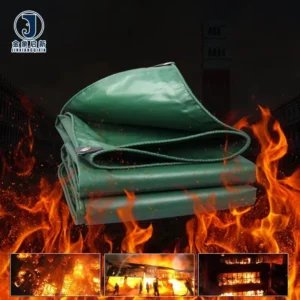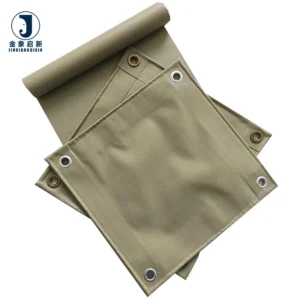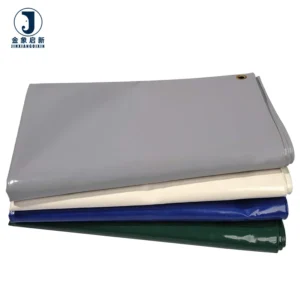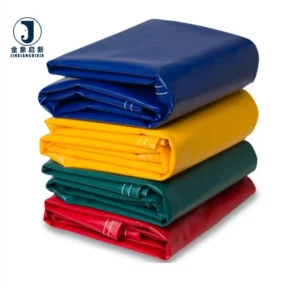
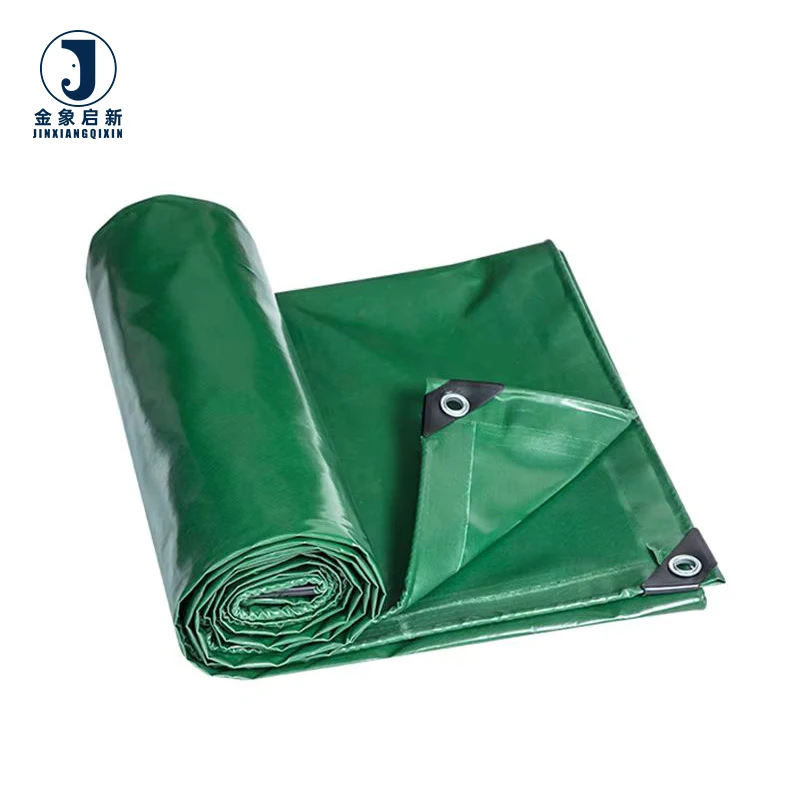
Coating weight control — Each roll of 620gsm PVC coated tarpaulin is weighed and logged at the coating head, with recorded GSM data provided against your purchase order before dispatch.
Technical Specifications
| Parameter | Value |
|---|---|
| Product Type | PVC Coated Tarpaulin Fabric |
| Material | 100% high toughness polyester yarn with PVC coating |
| Coating Technology | Lamination technology and hot melt coating technology |
| Weight (Nominal) | 620 g/m² |
| Thickness | 1.2–1.5 mm |
| Yarn Denier Range | 500D–2000D (confirm denier grade for span requirement) |
| Tensile Strength (Warp) | 2500–3000 N/5cm (no test standard stated) |
| Tensile Strength (Weft) | 2200–2800 N/5cm (no test standard stated) |
| Welding Tear Strength | Excellent (no test standard stated) |
| Weather Resistance | 3–5 years outdoor (test basis not stated) |
| Key Features | Waterproof, cold resistant cracking, mold proof, anti-static treatment available, flame retardant grades available |
| Certifications | ISO, CE |
Application Suitability
| Application | Exposure & Requirement |
|---|---|
| Stadium tensile roof membrane | High sustained tension, wind-load cycling, full weather exposure, fire code compliance for public assembly |
| Industrial pipe and equipment canopy | Continuous UV exposure, thermal cycling, chemical-laden atmosphere, requiring long-term coating adhesion |
| Large-span architectural facade | Architectural visibility demanding roll-to-roll color consistency, structural tension, and seam weld integrity |
| Temporary tensioned event structure | Rapid deployment requiring cold-crack resistance during installation in low temperatures |
Why a 620gsm PVC Coated Tarpaulin Needs More Than Just Weight Data
Coating weight alone does not guarantee structural performance — base fabric denier, coating adhesion, and documented fire test results determine whether a membrane passes inspection.
Technical buyers routinely see material arrive on site with the quoted GSM, only to discover that the flame retardant grade was not verified by a third-party test report, or that the base fabric denier does not match the tensile load calculated by the structural engineer. [NEED_CITE: fire classification standards for tensile membrane structures in public venues] When a stadium roof or architectural canopy fails at the weld seam, the root cause is often a mismatch between the specified coating method and the welding parameters used by the installer, not the weight of the fabric itself. Specifying this PVC coated tarpaulin 620gsm grade requires confirming the complete material data package before the order is placed.
How Lamination and Hot Melt Coating Affect Weld Seam Integrity
The lamination technology and hot melt coating technology used on this PVC coated tarpaulin 620gsm fabric directly influence how the material behaves during heat welding at seam and anchor points. Lamination bonds the PVC layers to the polyester base fabric, which supports strong peel resistance when the welded joint is stressed. Hot melt coating delivers consistent coating weight across the full width of the roll, reducing the chance of thin spots that cause weld burn-through. For membrane structures, where welded seams carry the primary structural load, these coating characteristics determine whether the seam holds or separates before the fabric body reaches its tensile limit.
Denier Selection and Its Impact on Tensile Load Capacity
Base fabric denier is the variable that controls how much sustained tension the membrane can bear over its service life. This fabric family spans 500D to 2000D yarn, with the super heavy category engineered for large-span roofs and high wind-load environments. [NEED_CITE: relationship between polyester yarn denier and tensile strength in coated technical textiles] A 2000D base provides higher warp and weft tensile values, which is necessary for stadium roofs with unsupported spans. Specifying the correct denier grade at the inquiry stage prevents the common situation where a mid-range denier is supplied for a high-tension application, leading to fabric creep or premature failure at the anchor points.
Reading the Specification Sheet for Structural Decisions
Total thickness in the 1.2–1.5 mm range places this material in the super heavy category, but thickness without context is misleading. The tensile strength values of 2500–3000 N/5cm warp and 2200–2800 N/5cm weft indicate the load the base fabric and coating can carry together, yet these figures require a stated test method to be comparable across suppliers. Cold resistant cracking performance matters for installations in low-temperature climates where the PVC can become brittle during handling and tensioning. Mold proof treatment is essential for structures in high-humidity environments where condensation forms on the underside of the membrane. Each of these parameters must be confirmed on the material specification sheet before the fabric is committed to a structural design.
The Hidden Cost of Undocumented Flame Retardant Grades
Stadium roofs and public assembly canopies must meet specific fire codes that vary by market and jurisdiction. When flame retardant treatment is claimed without a documented test grade such as B1 per DIN 4102 or NFPA 701, the membrane may fail the building inspection after installation, requiring costly replacement or remedial treatment. [NEED_CITE: DIN 4102 fire classification for building materials] Batch color inconsistency across rolls in a single order creates visible panel mismatches on large architectural facades, leading to full removal and reinstallation. Welded seams that fail before the fabric body reaches its load limit indicate a coating formulation incompatible with the site welding equipment, a problem that surfaces only after the structure is under tension.
Why Source This Membrane Fabric Here
Three full production lines with 36 sets of professional equipment support consistent coating weight delivery across bulk roll quantities for large membrane projects. A 10-person R&D team handles denier matching, custom width development, and sample production within days when a specific membrane span demands a non-standard construction. Dedicated QA/QC at every production stage includes coating weight checks and adhesion verification, with 100% pre-shipment inspection documented before the rolls leave the facility. Nearly 30 years of focus on coated fabric provides process control over lamination and hot melt coating parameters that directly affect weld seam performance. Material specification sheets are issued per roll, giving your structural engineer the exact GSM, denier, and coating data needed for load calculations.
Documentation & Verification
- Material specification sheet stating exact GSM, base fabric denier, and coating method for each roll
- Flame retardant test report documenting the grade achieved, issued where applicable to the selected product variant
- ISO and CE certificates provided with each shipment for project compliance files
- Pre-shipment inspection record confirming coating weight and adhesion check results before dispatch
- Roll packing list matching roll numbers to documented specification data
Fabrication, Handling & Storage
- Heat-weld at temperatures matched to the hot melt coating formulation to achieve seam strength equal to the fabric body
- Store 620gsm rolls upright on pallets to prevent flat-spot deformation of the 1.2–1.5 mm thick material
- Unroll and allow cold resistant PVC fabric to acclimatize before tensioning in low-temperature installations
- Use compatible PVC welding tape for field repairs on laminated coating surfaces to maintain waterproof integrity
- Cut panels with allowance for weld seam overlap, accounting for the super heavy thickness during fabrication layout
What to Include in Your Inquiry
Provide the span dimensions, expected wind-load category, and the fire classification required by your local building authority so we can match the base fabric denier and confirm the correct flame retardant grade. Specify the roll width needed for your fabrication setup and the total linear meterage to confirm production scheduling. If color consistency across multiple rolls is critical for visible facade panels, include your RAL or Pantone reference so we can confirm batch matching before production begins.
Frequently Asked Questions
Q: How is the 620gsm coating weight verified on arrival and what tolerance applies?
A: Each roll is weighed during production and the recorded GSM is documented on the material specification sheet provided with your shipment. On arrival, you can verify by cutting a measured sample and weighing it. The tolerance is confirmed on the specification sheet per your order agreement, and our pre-shipment inspection record includes the coating weight data for every roll dispatched.
Q: Which flame retardant grades are available for stadium and public-venue membrane roofs?
A: Flame retardant treatment is available in grades suited to different market requirements. The specific test standard — such as B1 per DIN 4102, M2, or NFPA 701 — must be confirmed at the inquiry stage based on your local building code. We provide the test report documenting the grade achieved for the selected product variant with your shipment documentation.
Q: How should heat-welding parameters be set for this PVC construction?
A: The lamination and hot melt coating technology used on this fabric requires welding temperatures and dwell times matched to the coating formulation. We recommend running a weld test on a sample piece to confirm that seam tear strength matches the fabric body. Specific parameter guidance is provided with the material specification sheet based on the coating grade supplied.
Q: Can base fabric denier and GSM be matched to a specific membrane span?
A: Yes, the base fabric denier range from 500D to 2000D allows us to match the tensile load requirement of your structural design. Provide the span dimensions, expected wind-load data, and safety factor required by your engineer. Our R&D team will recommend the denier grade and confirm the tensile values on the specification sheet before production.