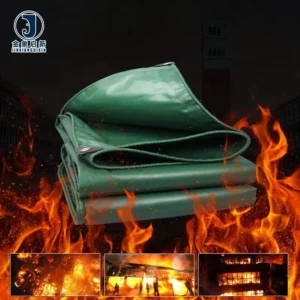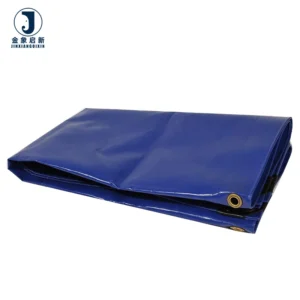
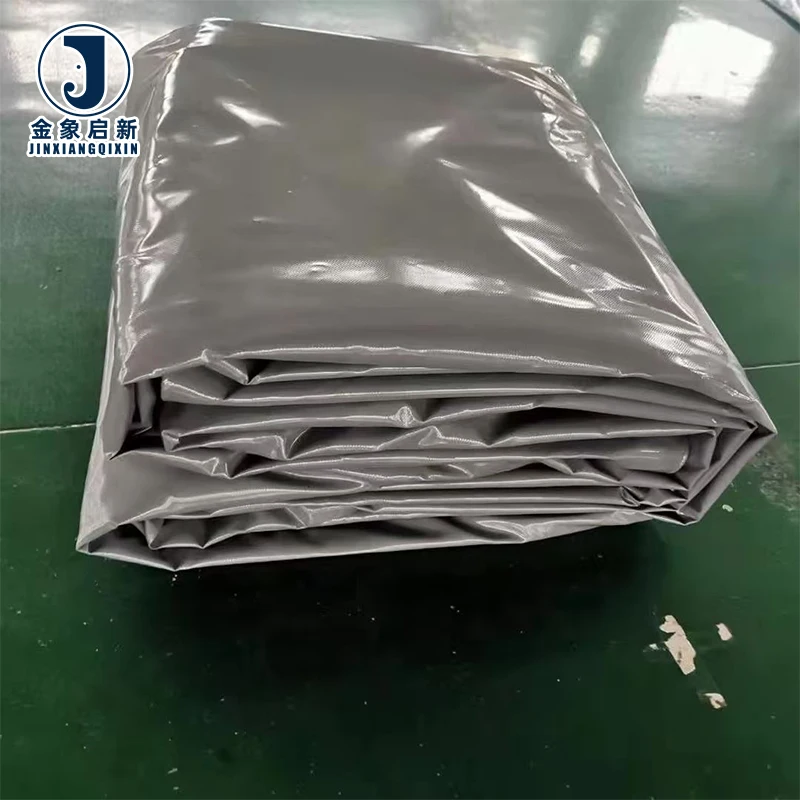
Controlled Coating Adhesion — every roll of 630 gsm PVC coated tarpaulin ships with a specification sheet verifying coating weight and base fabric denier for receiving-side confirmation.
Technical Specifications
| Parameter | Value |
|---|---|
| Product Type | PVC Coated Tarpaulin Roll |
| Weight | 630 gsm |
| Base Fabric Denier Options | 500D×500D / 840D×840D / 1000D×1000D |
| Coating Method | Knife-over-roll |
| Surface Finish | Available in glossy or matte finish |
| Temperature Range | -15°C to 70°C |
| UV Treatment | Available — confirm grade required for your market |
| Flame Retardant | Treated — grade and test standard to be confirmed per order |
| Anti-Fungal | Treated |
| Waterproof | Fully waterproof coated construction |
| Key Features | Tear-resistant, abrasion-resistant, good flexibility and adhesion strength |
| Working Life | Suited to extended outdoor exposure depending on usage environment |
| Colour Options | Blue, Grey, Orange, and additional colours available |
Application Suitability
| Application | Exposure & Requirement |
|---|---|
| Truck side curtain fabrication | Constant flexing at load points, road debris abrasion, sustained UV exposure — requires high tensile base fabric and weld seam integrity |
| Tent and awning roll stock | Heat-weld assembly along pattern lines, consistent coating adhesion across the roll width, colour matching between consecutive rolls |
| Industrial equipment covers | Mechanical abrasion from contact with steel edges, weather exposure during outdoor storage — needs abrasion-resistant coating surface |
| Membrane structure panels | Tension loading across large spans, thermal expansion and contraction cycles — demands high tensile denier and stable dimensional behaviour |
Why GSM Alone Does Not Tell You How Strong 630 gsm PVC Coated Tarpaulin Really Is
Total fabric weight tells you how much material is on the roll — it does not tell you where that weight sits.
A 630 gsm reading can come from a thick coating on a light base fabric, or a thin coating on a heavy denier weave. The first gives stiffness but tears easily under tension; the second provides structural strength but may lack surface durability. For technical buyers specifying PVC coated tarpaulin 630 gsm for fabrication, the split between coating weight and base fabric construction is the number that determines whether a welded seam holds under load or fails at the flex point. [NEED_CITE: relationship between coating weight and base fabric denier in tensile performance per ISO 1421]
Base Fabric Denier and Its Role in Structural Performance
The base fabric carries the mechanical load. Denier options for this 630 gsm PVC coated tarpaulin range from 500D×500D to 1000D×1000D, each producing a different balance of tensile and tear behaviour. A 1000D×1000D weave delivers higher resistance to tear propagation, which matters when a puncture or cut occurs in service — the damage stays localised rather than running across the panel. A 500D×500D base is lighter in hand and more pliable, suiting applications where the fabric must fold or drape repeatedly without cracking the coating at the fold line.
Coating Weight and Surface Behaviour
The PVC coating protects the base fabric from moisture, UV degradation and chemical contact while providing the surface for heat-weld joining. On a 630 gsm specification, the coating thickness directly affects weld temperature settings and seam peel strength. A glossy finish produces a smooth weld interface with strong visual consistency — suited to applications where appearance matters alongside function. A matte finish scatters light and hides surface marking, but requires adjusted heat-weld parameters because the surface texture affects heat transfer into the coating layer. [NEED_CITE: effect of surface finish on heat-weld seam strength in PVC coated fabrics]
Reading the Specification Sheet Before You Commit
When sourcing 630 gsm PVC coated tarpaulin for fabrication, request the material specification sheet that states coating weight separately from total GSM, base fabric denier and weave count, and the specific surface finish. This allows you to verify that the fabric arriving at your workshop matches what was quoted — not just in total weight, but in the structural composition that determines how it performs under tension, how it welds, and how it ages in service. Temperature range from -15°C to 70°C indicates the operating window within which the coating retains flexibility and the base fabric maintains dimensional stability.
The Cost of Specifying on Weight Without Checking Construction
A fabric that meets the quoted GSM but uses a lighter denier base with heavier coating will pass a weight check on arrival and still fail in service. The coating cracks at flex points because the underlying weave cannot absorb the mechanical cycling. Weld seams peel because the coating-to-fabric adhesion was not proportioned for the denier used. Batch colour variation appears when coating thickness drifts between rolls, changing how pigment reads on the surface. These failures do not show in a receiving inspection — they appear weeks or months into fabrication or field use. [NEED_CITE: coating adhesion failure modes in PVC tarpaulin under cyclic flex loading]
Why Fabricators Source This Grade Here
Each production run of 630 gsm PVC coated tarpaulin undergoes in-process QA at the coating stage, checking coating weight and adhesion before the roll proceeds to winding. The 10-person R&D team develops samples within days when a fabricator needs to confirm weld behaviour on a specific denier and finish combination before committing to a production order. Three full production lines and 36 sets of professional equipment support volume orders with on-time delivery, so fabricators can plan production schedules around confirmed dispatch dates. The QA system includes 100% pre-shipment inspection with documented records at every coating stage — not just a final visual check. ISO and CE certified production provides the compliance foundation that fabricators need when their own customers require material traceability.
Documentation & Verification
- Material specification sheet stating 630 gsm total weight, coating weight, base fabric denier and weave count
- Colour reference per roll for batch matching across multi-roll fabrication orders
- UV treatment test documentation provided when UV grade is specified and confirmed at order
- Flame retardant test report issued per the agreed grade and standard for the target market
- Pre-shipment inspection record covering coating consistency, surface finish and roll dimensions
Fabrication, Handling & Storage
- Heat-weld settings must account for glossy or matte finish — test seam peel strength on a sample strip before full production
- Store 630 gsm rolls upright on end cores to prevent flat-spot deformation of the coating surface
- Allow rolls to acclimatise to workshop temperature before unrolling, especially when delivered in cold conditions near -15°C
- Cut patterns should account for the base fabric denier direction to align tear resistance with the primary load axis
- Clean welding platens between seams to avoid coating residue build-up affecting subsequent weld adhesion on matte surfaces
What to Include in Your Enquiry
Provide the base fabric denier you need based on the tensile and tear requirements of your end application. Specify whether glossy or matte finish suits your fabrication process and confirm any flame retardant grade or UV treatment level required by your target market. State the roll width, roll length and annual volume so the production schedule can be planned accordingly. If you need samples to verify heat-weld parameters before ordering, request them at the enquiry stage.
Frequently Asked Questions
Q: How do I verify the 630 gsm weight when rolls arrive?
A: Total fabric weight includes both coating and base fabric. Request the material specification sheet that breaks down coating weight and base fabric denier separately. On arrival, cut a measured sample from the roll edge and weigh it against the stated GSM. Discrepancies indicate the coating-to-base ratio may differ from what was quoted, which affects weld behaviour and tensile performance.
Q: Which base fabric denier should I choose for truck side curtain fabrication?
A: Truck side curtains experience constant flexing at load points. A 1000D×1000D base fabric provides higher tear propagation resistance for these cyclic stress conditions. A 500D×500D base is more pliable and suits curtains that fold frequently. Confirm the denier on your material specification sheet before production to ensure it matches your weld seam strength requirements.
Q: What flame retardant grade is available and which test standard applies?
A: Flame retardant treatment is available in multiple grades. The applicable test standard depends on your target market and end-use regulation — common frameworks include DIN 4102, NFPA 701 and local building codes. Specify the grade required at enquiry stage so the correct treatment is applied and the matching test report is issued with your shipment.
Q: Does glossy or matte finish affect heat-weld seam strength?
A: Yes. Glossy surfaces transfer heat more uniformly through the coating layer during welding. Matte surfaces have a textured finish that can require adjusted temperature or dwell time settings. Always run a test weld on a sample strip of the specific 630 gsm PVC coated tarpaulin finish you are ordering and measure peel strength before starting full production.
Q: How is colour consistency maintained across multiple rolls in the same order?
A: Colour consistency depends on coating thickness uniformity and pigment batch control. Each roll is assigned a colour reference on the packing documentation. When ordering multiple rolls for fabrication where panels are installed side by side, request that rolls come from the same production batch and confirm colour matching at the pre-shipment inspection stage.