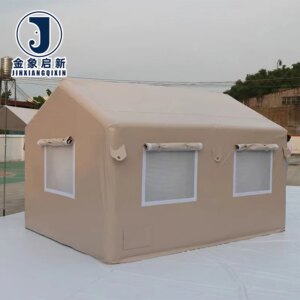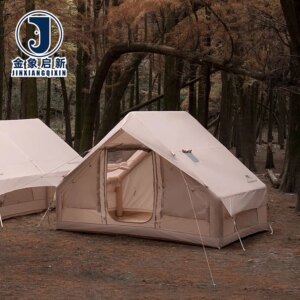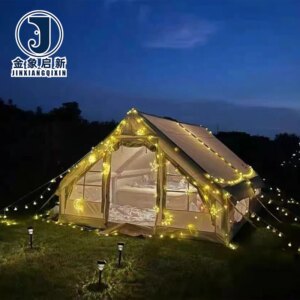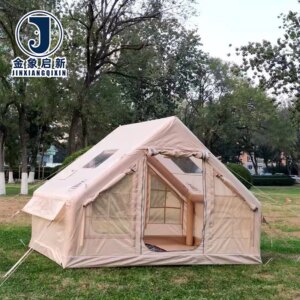
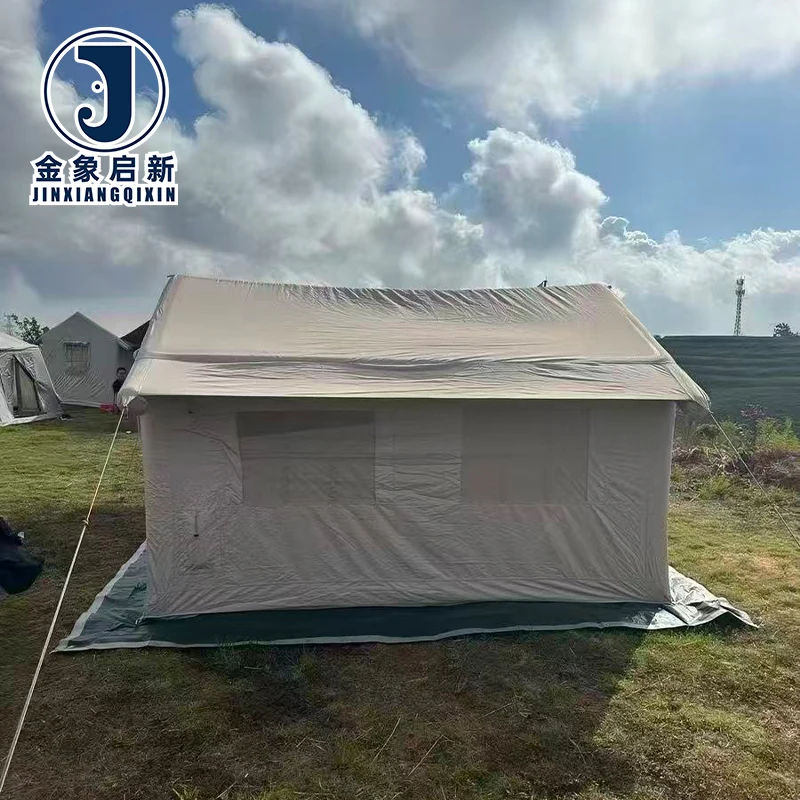
Deep Coating Process Control — Every roll of this inflatable tent fabric passes through a 9,180 m² facility where coating weight and adhesion are monitored across three full production lines, ensuring batch-to-batch consistency that fabricators rely on when cutting multiple panels for a single structure.
Technical Specifications
| Parameter | Value |
|---|---|
| Product Type | Inflatable Tent Fabric |
| Core Material | Oxford Waterproof Fabric |
| Key Performance | Automatic Opening, Four-Season Design, Single Layer Construction, Extended Type |
| Waterproof Rating | ≥10,000mm H₂O |
| UV Treatment | UPF 50+ (test basis not stated in source — confirm test standard for your market) |
| Temperature Range | -30°C to 70°C |
| Tensile Strength | ≥300N/5cm (test standard not stated in source — request test report for verification) |
| Tear Strength | ≥150N (test standard not stated in source — request test report for verification) |
| Waterproof Durability | 5,000 cycles of water pressure testing |
| Material Thickness Tolerance | ±0.1mm |
| Dimension Tolerance | ±2cm |
| Customization | OEM & ODM, sample customization, pattern printing |
| Standards | ISO9001, ISO14001, ISO45001, CE |
Application Suitability
| Application | Exposure & Requirement |
|---|---|
| Construction site temporary shelter | Wind loading, rain ingress, daily deployment and strike cycles, UV degradation |
| Mobile storage for logistics fleets | Abrasion from loading equipment, moisture exposure, rapid redeployment across sites |
| Disaster relief emergency structure | Rapid inflation and deployment, transportability to remote areas, all-weather moisture barrier |
| Outdoor industrial events and temporary workspace | Crowd and equipment contact, weather variability, multi-day continuous inflation |
| Rapid-response emergency preparedness staging | Stockpile storage conditions, immediate deployment readiness, temperature extremes during standby |
Why Batch Colour Consistency Matters When Sourcing Inflatable Tent Fabric
Inconsistent colour across rolls in a single order becomes visible the moment adjacent panels are joined on the factory floor or in the field.
When a tent, awning, or inflatable manufacturer buys inflatable tent fabric by the roll, a single order may span dozens of panels that sit side by side on the finished product. If one roll sits even slightly off the colour reference, the seam line draws the eye and the entire batch looks like a reject. This is not a cosmetic complaint — it is a commercial failure that sends product back to the cutting table and delays shipment to the end customer [NEED_CITE: colour tolerance standards for coated fabrics in industrial textile applications].
The root cause is often pigment dosing variation during the coating stage or insufficient colour matching between production runs. Dedicated QA/QC inspection at every production stage, including visual and instrumental colour checks against a defined reference, is what separates a batch you can trust from one you have to sort through panel by panel.
How Oxford Waterproof Fabric Performs Under Continuous Inflation Pressure
Inflatable tent structures hold their shape through internal air pressure, which places constant tensile load on every panel of the custom inflatable tent material. Oxford waterproof fabric is specified here because its woven base provides dimensional stability under that sustained load, resisting the creep and panel distortion that lighter constructions show after several inflation cycles. The single layer construction keeps transport weight manageable for remote deployment while maintaining the structural integrity required for multi-day continuous use.
Four-Season Formulation Across the Full Temperature Envelope
This inflatable tent fabric is engineered to perform from -30°C to 70°C, a range that covers winter staging in northern climates through summer heat buildup inside enclosed inflatable structures. The UPF 50+ UV treatment is integrated to address solar degradation during extended outdoor deployment, though the specific test basis should be confirmed against the compliance requirements of your destination market [NEED_CITE: UV resistance test methods for coated technical textiles].
Reading the Specs That Actually Define Field Performance
The waterproof rating of ≥10,000mm H₂O indicates the hydrostatic head the fabric can sustain before water penetrates the coating — a critical measure for structures exposed to driving rain or pooling water on roof panels. Waterproof durability tested to 5,000 cycles of water pressure confirms that this rating holds after repeated wet-dry cycles rather than degrading on first contact with sustained moisture.
Tensile strength at ≥300N/5cm and tear strength at ≥150N together define how the fabric resists both uniform pulling forces at inflation seams and localised tearing if a panel is snagged during deployment. These two values should always be evaluated together — high tensile strength with low tear resistance indicates a fabric that holds load well but propagates tears rapidly once the surface is breached.
Material thickness tolerance of ±0.1mm ensures consistent panel behaviour across the structure. When thickness varies beyond this range, adjacent panels flex differently under inflation pressure, creating stress concentrations at the seams that accelerate weld failure [NEED_CITE: relationship between coating thickness uniformity and seam performance in inflatable structures].
The Hidden Cost of Underspecified Inflatable Tent Fabric
When a fabricator specifies material without verifying that the quoted properties are backed by test data, the failure does not appear in the warehouse — it appears in the field after the structure has been deployed and trusted. A waterproof rating claimed without supporting test cycles may hold for the first rain event and then allow moisture penetration as the coating surface degrades under real-world flexing and abrasion.
Inflatable tent structures are particularly unforgiving of specification gaps because internal air pressure exposes every weakness in the fabric simultaneously. A panel that would survive as a flat cover under gravity loading may fail under the biaxial stress of inflation, especially at welded seams where the fabric flexes most during pressure fluctuations. When a buyer receives fabric that is lighter than the quoted specification, the entire structural calculation for the inflatable is invalidated before a single panel is cut [NEED_CITE: consequences of GSM deviation on inflatable structural integrity].
Batch colour variation across rolls in the same order forces the fabricator to either accept visible panel mismatch on the finished structure or reject rolls and absorb the cost of replacement and production delay. Neither outcome is acceptable when shipping deadlines are fixed and the end customer is waiting for compliant product.
Why Procurement Teams Source This Custom Inflatable Tent Material Here
Three full production lines and 36 sets of professional processing equipment give this facility the capacity to fulfil roll orders on schedule without compressing quality checkpoints to meet volume targets. Each production stage carries dedicated QA/QC oversight, and 100% pre-shipment inspection is standard rather than an upcharge.
The 10-person R&D team handles material selection, custom sizing, pattern printing, and sample development, which means a fabricator can request a sample cut to their exact panel dimensions and evaluate inflation behaviour before committing to a production run. Samples are developed within days for custom requirements, collapsing the typical sampling timeline.
ISO9001, ISO14001, ISO45001, and CE certifications are maintained at facility level, and the relevant documentation ships with every order. This matters for inflatable tent fabric because end customers in construction, emergency response, and industrial events increasingly require traceable compliance documentation before they will accept delivery.
Documentation & Verification
- Material specification sheet stating base fabric, coating type, colour reference, and waterproof rating
- Pre-shipment inspection record with batch-specific waterproof and dimensional test data
- ISO9001, ISO14001, ISO45001, and CE certificates included with each shipment
- Certificate of origin and customs documentation prepared per destination country requirements
- Custom sample approval record referenced against production batch for traceability
Fabrication, Handling & Storage
- Heat welding parameters should be matched to Oxford waterproof fabric coating type to prevent seam delamination under inflation pressure
- Maintain material thickness tolerance of ±0.1mm when calibrating roller pressure during panel joining
- Store rolls flat or on core-supported racks to avoid crease marks that weaken the coating at fold lines
- Allow cold-stored rolls to acclimatise above -30°C minimum before unrolling to prevent coating crack at low temperature
- Use mild, non-solvent cleaners compatible with the waterproof coating to preserve the ≥10,000mm H₂O rating after field cleaning
What to Include When Requesting a Quotation for Inflatable Tent Fabric
Provide the intended application environment, including expected temperature range, UV exposure duration, and whether the structure will face continuous or intermittent inflation cycles. Specify the roll width and linear metre quantity required per colour, along with any pattern printing or branding requirements for panel identification.
If the finished inflatable tent must meet specific fire-retardant or anti-static requirements in the destination market, state the applicable standard so the correct material grade can be quoted. Indicate whether you need raw roll stock for in-house fabrication or custom cut-to-size panels, and whether a pre-production sample is required for design and performance verification before full order commitment.
Frequently Asked Questions
Q: How is material thickness and specification verified upon arrival against the original quotation?
A: Each shipment includes a pre-shipment inspection record with batch-specific test data covering material thickness, waterproof rating, and dimensional conformance. The material specification sheet references the exact base fabric, coating, and colour agreed at sample approval. We recommend verifying roll weight and thickness on receipt against these documents for your own quality records.
Q: What UV treatment test basis supports the UPF 50+ claim for this inflatable tent fabric?
A: The UPF 50+ rating is stated in the product specification, but the specific test method and standard used should be confirmed for your market’s compliance requirements. Request the UV test report at the quotation stage so you can verify it aligns with your destination country’s regulatory framework before placing a production order.
Q: How is batch-to-batch colour consistency controlled across rolls in a single order?
A: Colour matching is performed against a defined reference at every production stage, with visual and instrumental checks before rolls are approved for packing. The 10-person R&D team oversees pigment formulation consistency, and dedicated QA/QC inspection ensures that all rolls within one order fall within the agreed colour tolerance before dispatch.
Q: What custom sizing, pattern printing, and OEM/ODM options are available, and what should I prepare?
A: OEM and ODM services cover custom dimensions, pattern printing, and sample customization. Prepare your panel layout, colour references, and any branding artwork at the inquiry stage. The R&D team develops samples within days for design and performance verification, allowing you to evaluate inflation behaviour and seam placement before mass production begins.
Q: What documentation ships with each order for compliance and customs clearance?
A: Every order ships with a material specification sheet, pre-shipment inspection record, ISO9001, ISO14001, ISO45001, and CE certificates, a roll packing list, and a certificate of origin. Additional customs documentation is prepared based on the destination country’s import requirements to support smooth clearance at the port of entry.