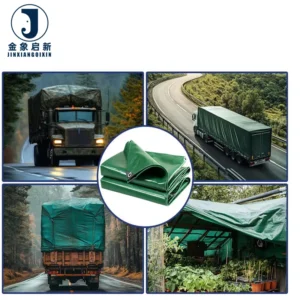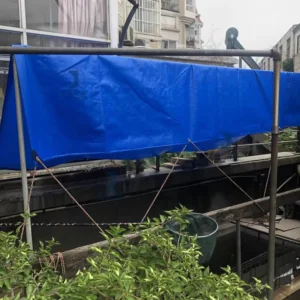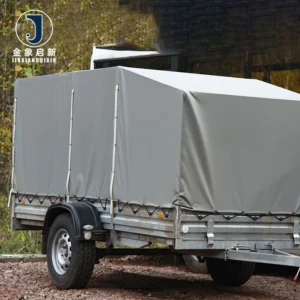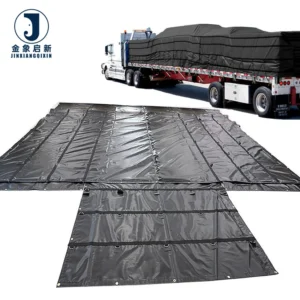
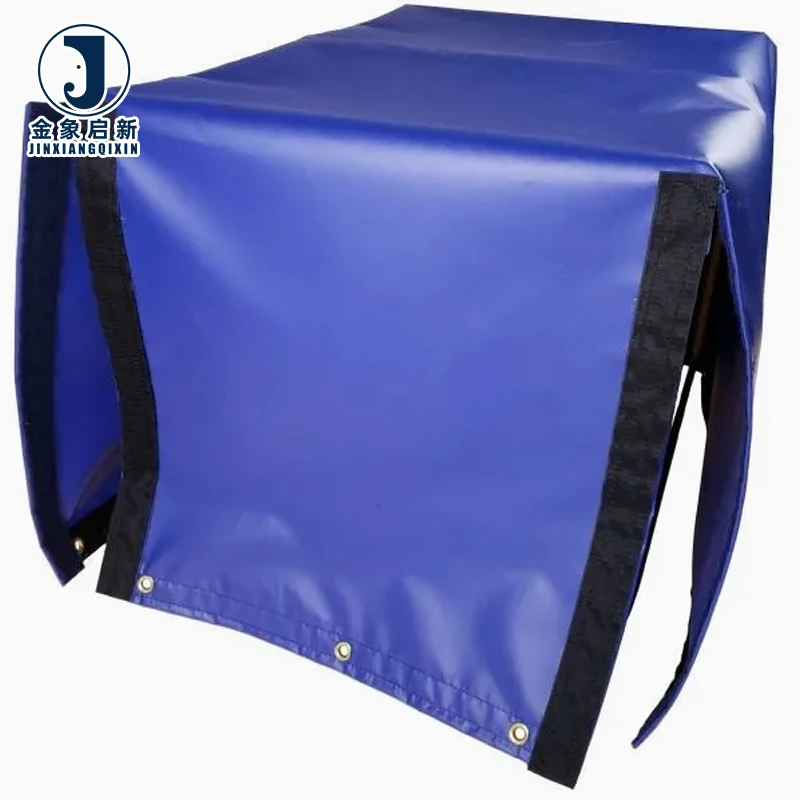
Coating Process Control — nearly 30 years focused on coated fabric delivers repeatable PVC adhesion and verified weight across every roll of PVC coated truck tarpaulin material.
Technical Specifications
| Parameter | Value |
|---|---|
| Product Type | PVC Coated Tarpaulin Truck Cover |
| Base Fabric Denier | 200D×300D / 500D×500D / 840D×840D / 1000D×1000D |
| Coating Material | PVC |
| Weight (GSM) | 250gsm–1500gsm (confirm the grade for this item) |
| Size Options | 3×4m / 6×8m / 8×10m / 10×12m or custom made |
| Colour Options | Blue / Yellow / Black / Green / White / Custom |
| Surface Finish | Glossy or matte |
| Temperature Range | -15ºC to 70ºC |
| Flame Retardant | FR treated (grade not stated — confirm the grade required for your market) |
| UV Treatment | Customized (test basis not stated — request test report before production) |
| Waterproof | Yes |
| Anti-Fungal | Yes |
| Key Features | Water-proof, rain-resistant, durable, good flexibility, adhesion strength, abrasion resistance |
| Working Life | 3–10 years depending on usage environment |
| Standards | ISO, CE |
Application Suitability
| Application | Exposure & Requirement |
|---|---|
| Truck and trailer cargo cover | Continuous road vibration, wind load flexing, UV exposure, tie-down abrasion at edges |
| Transport fleet weather protection | Rain ingress prevention, cargo security, repeated deployment and folding cycles |
| Outdoor equipment cover | Standing water, dust ingress, temperature swings from -15ºC to 70ºC |
| Side curtain fabric for trailers | Constant lateral flex, friction against load edges, weld seam integrity under tension |
Why Coating Adhesion Matters More Than GSM for Truck Cover Durability
A PVC coated truck tarpaulin material can show the correct GSM on the scale yet still delaminate at the weld line within months if the coating bond to the base fabric is weak. Coating adhesion and base fabric denier together determine whether the cover survives load flex cycles, not weight alone.
Technical buyers often specify a target GSM and assume tensile performance follows. In practice, a lighter fabric with tight base weave and full PVC penetration can outperform a heavier fabric where the coating sits on the surface without bonding through the yarn structure. [NEED_CITE: ISO 1421 tensile and tear test methods for coated fabrics] Weld failures at high-flex points — where the trailer load shifts under braking — trace back to this adhesion gap rather than to the fabrication process itself.
Base Fabric Denier and Its Effect on Tear Propagation
The denier options available — from 200D×300D through to 1000D×1000D — define the individual yarn thickness in the base polyester weave. Higher denier yarns resist tear propagation because each yarn absorbs more energy before breaking, which matters at stress concentration points such as eyelets and tie-down zones. For PVC coated truck tarpaulin material used on long-haul trailers, a mid-range denier like 500D×500D provides balanced tear resistance without excessive weight, while heavy equipment transport may require the 840D×840D or 1000D×1000D options to withstand sharper load edges and higher strap tension.
PVC Coating Weight and Abrasion Resistance at Stress Points
The coating weight range from 250gsm to 1500gsm directly influences how the fabric handles abrasion where it contacts the load or trailer frame. A thicker PVC layer absorbs friction over a greater depth before the base fabric becomes exposed, extending service life at wear points. However, the relationship is not linear — a coating that is too heavy relative to the base fabric denier can crack under repeated folding at low temperatures, particularly near the -15ºC lower limit. Selecting the correct PVC coated truck tarpaulin material grade means matching coating thickness to both the denier and the expected flex frequency. [NEED_CITE: relationship between coating weight and flex endurance in PVC tarpaulin]
Specifying Finish, Treatment and Weld Behaviour
The choice between glossy and matte surface finish affects more than appearance. A glossy surface sheds dirt and water more readily, reducing cleaning frequency for fleet operators, while a matte finish reduces glare and may hold printed markings with better adhesion. Flame retardant treatment is available in various grades — confirm the grade required for your market before production, as different transport regulations demand different test certifications. UV treatment is customised per order; request the test basis and report before committing to volume. At the fabrication stage, heat-welded seams depend on the PVC coating formulation and thickness to achieve a bond that matches or exceeds the base fabric strength, which is why coater consistency across the roll is critical.
What Happens When the Wrong Grade Reaches the Production Line
When PVC coated truck tarpaulin material arrives with a lower coating weight than specified, the cover may pass initial inspection but fail prematurely at high-abrasion zones. Fleet operators discover this when the fabric thins at tie-down contact points within the first season of use. A batch where colour varies between rolls forces the fabricator to sort and match panels, adding labour cost and delaying dispatch. [NEED_CITE: batch colour consistency standards for coated textile rolls] Flame retardant grades that lack supporting test documentation can result in rejected shipments at border inspection or failed compliance audits at the end-user facility, creating liability that extends beyond the material cost itself.
Why Source PVC Coated Truck Tarpaulin Material From Jinxiang
Three full production lines and 36 sets of professional equipment support bulk roll output with consistent coating weight and on-time delivery schedules. The 10-person R&D team handles material selection, pattern printing, custom sizing and sample development, producing samples within days for custom colour or width requirements. Dedicated QA/QC at every production stage includes 100% pre-shipment inspection, so GSM is verified against the quotation before rolls leave the facility. Nearly 30 years of focused coated fabric production has built deep process control over coating adhesion and base fabric selection, directly addressing the weld integrity and delamination concerns that technical buyers raise.
Documentation & Verification
- Material specification sheet stating exact GSM, base fabric denier and PVC coating composition per roll
- Test report for UV and flame-retardant treatment where applicable — request before production begins
- Pre-shipment inspection record with verified GSM measurement against the agreed quotation
- Colour reference swatch confirming batch-to-batch consistency across multiple rolls in the same order
- ISO and CE certificates included with shipment documentation for customs and compliance filing
Fabrication, Handling & Storage
- Heat-weld temperature must match the PVC coating formulation; test on a sample piece from the same roll before production runs
- Store rolls upright on pallets in a shaded area to prevent flat-spot deformation and surface marking on the glossy or matte finish
- Allow cold-stored rolls to reach ambient temperature before unrolling to avoid cracking the PVC coating below -15ºC
- Cut panels with allowance for weld seam overlap, accounting for fabric shrinkage at the selected denier and GSM grade
- Clean finished covers with mild detergent only; solvent-based cleaners can degrade the anti-fungal and UV treatment layers
Request a Material Specification
Provide the base fabric denier and GSM range your application demands, along with the trailer type and load profile. Specify any flame retardant or UV test standard your market requires so the correct treatment grade is confirmed before sampling. Indicate whether you need rolls in stock widths or custom-cut panels with edge reinforcement details.
Frequently Asked Questions
Q: How is GSM verified on arrival and what tolerance is acceptable?
A: Each roll carries a weight measurement from the pre-shipment inspection. On receipt, cut a measured sample from the roll interior, weigh it, and calculate GSM. Minor variation is normal in coated textiles, but the measured value should align with the specification sheet supplied with your shipment. Raise discrepancies with the mill before fabrication.
Q: What flame retardant grade applies to this fabric for truck cover use?
A: Flame retardant treatment is available in multiple grades. The required grade depends on your market’s transport safety regulations. Request the specific test standard your region mandates, and the appropriate grade will be applied with a supporting test report before production is confirmed.
Q: How does base fabric denier affect heat-weld seam strength?
A: Higher denier base fabric provides thicker yarns that interlock more effectively during heat welding, producing seams that resist peeling under load flex. The PVC coating must penetrate the weave fully for the weld to bond across both coating and yarn structure, not just the surface layer.
Q: How is batch-to-batch colour consistency controlled across multiple rolls?
A: Colour is matched against a reference standard during coating, and rolls within a single production batch are cross-checked for shade variation. For orders placed across multiple batches, request a reference swatch from the first batch to hold against subsequent deliveries for visual comparison.
Q: What documentation accompanies each shipment?
A: Shipments include a material specification sheet, pre-shipment inspection record, packing list, certificate of origin and customs documentation. Where flame retardant or UV treatment is specified, the corresponding test report is provided. ISO and CE certificates are available for compliance filing.