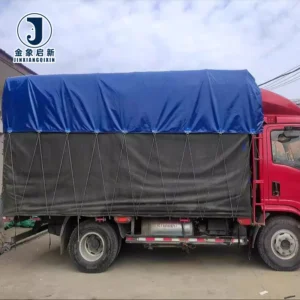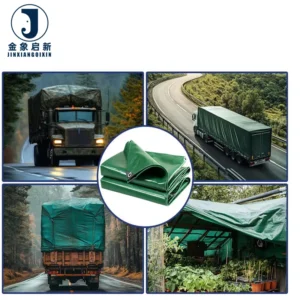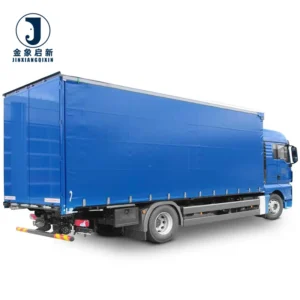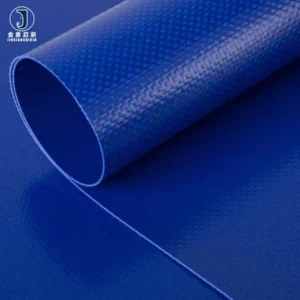
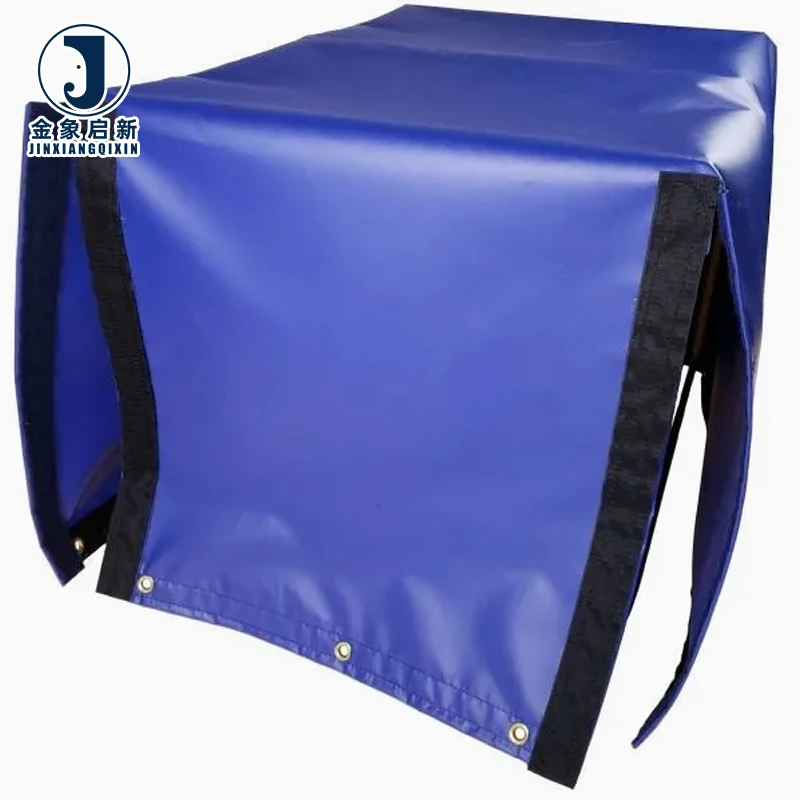
Coating Precision — nearly 30 years of PVC coating process control applied to every roll of truck cover fabric, ensuring measured GSM matches the quoted value across the entire batch.
Technical Specifications
| Parameter | Value |
|---|---|
| Product Type | PVC Tarpaulin Truck Cover |
| Base Fabric Denier | 200Dx300D, 500Dx500D, 840Dx840D, 1000Dx1000D |
| Weight Range | 250gsm–1500gsm |
| Coating Material | PVC |
| Surface Finish | Glossy or matte |
| Temperature Range | -15ºC to 70ºC |
| Treatments | Waterproof, UV treated (test basis not stated), FR treated (grade not stated), anti-fungal treated |
| Standard Sizes | 3x4m, 6x8m, 8x10m, 10x12m or custom made |
| Colour Options | Blue, yellow, black, green, white, etc. |
| OEM / ODM | Accepted |
Application Suitability
| Application | Exposure & Requirement |
|---|---|
| Truck and trailer top cover | Continuous UV exposure, rain pooling, wind uplift flexing, road debris impact |
| Side curtain fabric on curtain-siders | Repeated lateral flex at every load and unload, abrasion against load edges, tie-down strap friction |
| Flatbed load wrap | Direct contact with sharp-edged cargo, compression from ratchet straps, overnight condensation |
| Equipment cover for parked fleet | Long-term static UV exposure, fungal growth in humid depots, dust and road salt accumulation |
What "PVC Coated Truck Cover Material Properties" Actually Means on the Dock
A coating weight figure on a quotation tells you nothing about the finished fabric until you verify base denier, weave density and adhesion strength together.
When a fleet operator specifies PVC coated truck cover material properties for a new side curtain build, the GSM number alone cannot predict how the panel will behave at the tie-down rail after repeated flexing. Technical buyers often receive rolls that meet the quoted weight but underperform at stress points because the base fabric denier was swapped for a lighter grade while the coating was applied thicker to compensate. The result is a cover that passes a scale check yet fails at the weld seam within the first season of road use [NEED_CITE: tensile and tear test methods for coated fabrics per ISO 1421].
How Base Denier Drives Tear Propagation Under Road Load
The four denier constructions — 200Dx300D through 1000Dx1000D — represent fundamentally different base fabrics, not incremental upgrades. A 200Dx300D polyester base yields a lighter, more pliable panel suited to temporary covers and short-haul applications where the fabric flexes less violently. At the opposite end, 1000Dx1000D provides a densely woven grid that arrests tear propagation at the yarn intersection level, critical for side curtains that experience lateral whip at highway speed. PVC coated truck cover material properties shift dramatically between these constructions even when the finished GSM is held constant.
The Coating-Weight-to-Adhesion Balance
Coating weight determines surface abrasion resistance and waterproof integrity, but only when the PVC layer bonds firmly to the base yarns. A 1500gsm fabric with poor adhesion will delaminate at fold lines long before the coating itself wears through. Process control over the PVC compound viscosity and curing temperature is what prevents this failure mode. On this product family, glossy and matte finishes are both available; glossy surfaces release dirt more readily during rain wash-off, while matte surfaces accept custom logo printing with better ink adhesion and reduce glare under depot lighting.
Reading the Specification Sheet Beyond GSM
Understanding PVC coated truck cover material properties requires reading several parameters as a system. The base fabric denier and weave density govern tensile and tear strength; the PVC coating weight governs abrasion resistance and waterproofing; the surface finish governs cleanability and weld seam behaviour. A 500Dx500D base at 650gsm will exhibit different tensile behaviour than an 840Dx840D base at the same 650gsm because the coating-to-yarn ratio changes. Buyers specifying for curtain-sider applications should request the full denier-plus-GSM combination rather than quoting on weight alone [NEED_CITE: relationship between base fabric construction and coated fabric tensile performance].
The temperature range of -15ºC to 70ºC sets the operational boundary: below -15ºC the PVC compound stiffens and becomes susceptible to crack propagation at fold lines, while above 70ºC the coating softens and may mark against hot metal trailer frames. Anti-fungal treatment is relevant for fleets operating in tropical or high-humidity routes where condensation under the cover promotes mildew growth on the PVC surface over extended parking periods.
The Hidden Cost of Specifying on Weight Alone
A common procurement mistake is approving a PVC coated truck cover material properties sheet that lists only GSM without locking the base denier. When the base fabric is downgraded but the coating is thickened to maintain weight, the finished fabric passes the incoming scale check yet tears easily because the underlying yarn structure is weaker. Weld seams also suffer: thicker coating over a lighter base creates an imbalance where the heat-affected zone at the weld line fails before the body of the fabric does. This failure pattern typically appears at the point of maximum load flex — exactly where a truck cover needs the most integrity [NEED_CITE: weld seam failure analysis in PVC coated fabrics].
Why Source This PVC Truck Cover Fabric Here
- Three full production lines and 36 sets of professional equipment support bulk roll output with consistent coating weight across every metre of the batch.
- A 10-person R&D team handles base denier selection, coating formulation and sample development, producing confirmation samples within days for custom requirements.
- Dedicated QA/QC stages inspect coating adhesion, GSM and colour at each production step, with 100% inspection recorded before any roll is packed for shipment.
- Deep process control over PVC coating weight means the GSM value on the pre-shipment inspection record matches the figure on the original quotation — no silent substitution of base denier.
Documentation & Verification
- Material specification sheet stating base denier, measured GSM, coating type and colour reference for each roll shipped.
- UV test report and FR test report provided on request — confirm the specific standard required for your target market before ordering.
- Pre-shipment inspection record with actual measured GSM verified against the quoted value for every production batch.
- ISO and CE certificates supplied with shipping documentation to support import compliance in regulated markets.
Fabrication, Handling & Storage
- Set hot-air weld temperature to match the selected GSM; heavier grades above 1000gsm require higher heat input to achieve full coating fusion at the seam.
- For glossy finish rolls, use a silicone-free cleaning agent before welding to prevent surface contamination from weakening the bond line.
- Store rolls horizontally on padded racking to prevent flat spots on the PVC coating that can become permanent crease marks after extended compression.
- In cold-weather transport below -15ºC, allow rolls to acclimatise indoors for several hours before unrolling to avoid coating crack propagation at fold lines.
- Matte finish surfaces accept solvent-based ink for custom logo printing; verify ink compatibility with the PVC compound before full production runs.
Requesting the Right Specification
To receive a targeted material recommendation, share the base denier and GSM range your application demands, the surface finish preference for welding or printing, and any flame-retardant or UV test standard your end market requires. Specify whether you need rolls in stock widths or pre-cut panels sized to your trailer model, and whether custom colour or logo printing is part of the order. Our team will return a specification sheet and sample for your approval before production begins.
Frequently Asked Questions
Q: How can I verify the actual GSM of the PVC coated truck cover fabric on arrival?
A: Cut a measured sample from each roll using a standard template, weigh it on a calibrated scale and compare the result against the GSM stated on the pre-shipment inspection record included in your shipment. Any discrepancy beyond normal tolerance should be reported before fabrication begins, as cutting or welding voids the ability to return the roll.
Q: What flame-retardant grade and UV test basis are available for this fabric?
A: Flame-retardant and UV treatments are offered in multiple grades; the specific standard applicable to your market must be confirmed at inquiry stage. Request the test report referencing the exact standard before placing your order so the material specification sheet reflects a verifiable result rather than a general treatment claim.
Q: How does glossy versus matte finish affect weld seam strength and printing?
A: Glossy finish provides a smoother surface that releases dirt easily and welds cleanly with standard hot-air equipment. Matte finish offers better ink adhesion for custom logo printing but may require adjusted weld parameters. Request sample swatches in both finishes to test your fabrication process before committing to a full production order.
Q: Which base denier should I choose for a curtain-sider side curtain application?
A: Curtain-sider panels experience continuous lateral flex and abrasion against cargo edges, making higher denier constructions such as 840Dx840D or 1000Dx1000D preferable for tear resistance. Lighter deniers like 200Dx300D suit temporary covers with less mechanical stress. The final choice depends on the load type and the expected service intensity of the fleet.
Q: When should I specify anti-fungal treatment for truck covers?
A: Anti-fungal treatment is recommended for fleets operating in tropical climates or high-humidity corridors where covers remain folded and damp for extended periods between trips. The treatment inhibits mildew growth on the PVC surface. Specify this at inquiry stage so it is incorporated during the coating process rather than applied as a topical after-treatment.