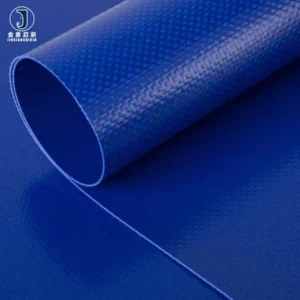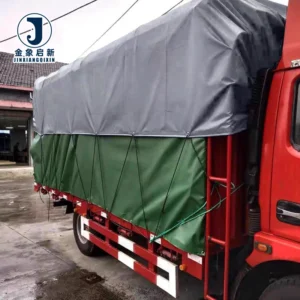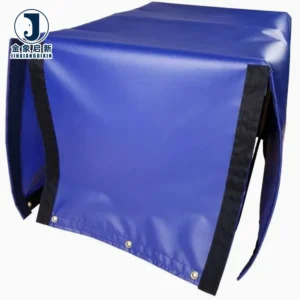
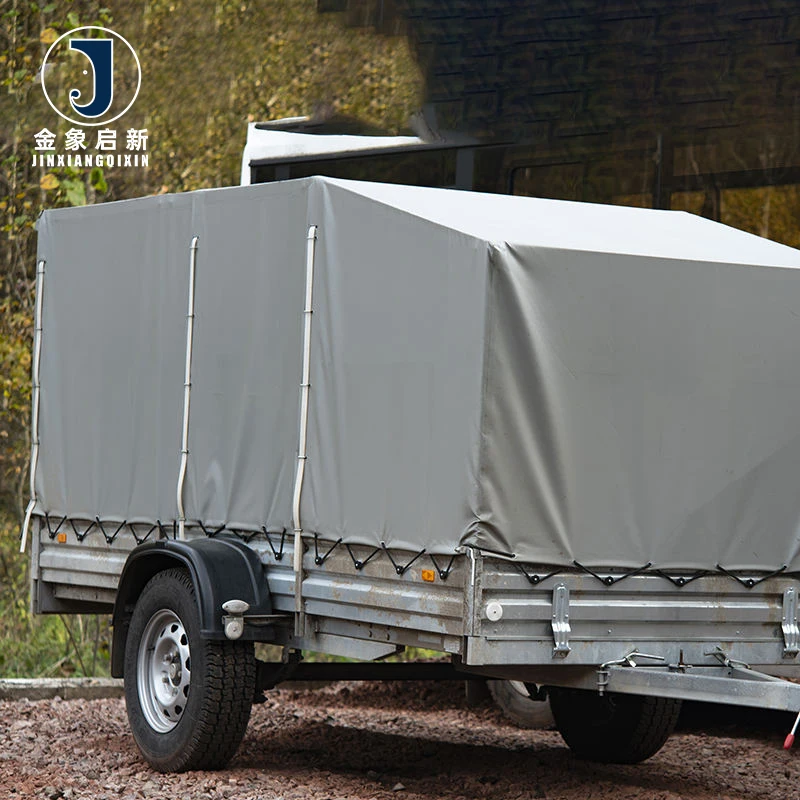
Three Full Production Lines — Supporting bulk capacity with reliable on-time delivery, our facility runs dedicated hot-melt and laminated coating lines to produce heavy-duty PVC coated truck cover fabric in consistent roll-to-roll quality.
Technical Specifications
| Parameter | Value |
|---|---|
| Product Type | Truck Cover |
| Material Composition | PVC coating on high-strength polyester mesh fabric |
| Coating Technology | Laminated technology & Hot-melt coating technology |
| Weight Options | 350gsm / 420gsm / 500gsm / 550gsm / 600gsm / 750gsm |
| Total Thickness | 0.32mm / 0.35mm / 0.4mm / 0.45mm / 0.5mm / 0.65mm |
| Roll Width | 2m / 2.1m |
| Roll Length | 75m (2m width) / 50m (2.1m width) |
| Color Options | Blue / Red / Yellow / Light blue / Grey (Customized) |
| Flame Retardant | Available as special treatment (grade to be confirmed per market requirement) |
| Anti-Static | Available as special treatment (standard to be confirmed) |
| UV Treatment | Sunproof treatment available (test basis to be confirmed) |
| Waterproof | Fully waterproof coated construction |
| Cold Crack Resistance | Engineered for low-temperature flexibility |
| Anti-Mildew | Treated for mildew resistance |
| Weldability | Outstanding tearing strength for high-frequency and hot-air welding |
| Certifications | ISO, CE |
Application Suitability
| Application | Exposure & Requirement |
|---|---|
| Truck side curtains | Constant flexing at load points, road debris abrasion, UV exposure, weld seam integrity under dynamic tension |
| Truck top covers and tarps | Direct weather load, ponding water, tie-down strap friction at contact points |
| Flatbed load enclosures | Wind flutter fatigue, thermal cycling, colour consistency across adjacent panels |
| Transport equipment fabrication | Roll stock for in-house cutting and welding, batch uniformity across container volumes |
| Cargo ship deck covers | Salt spray, heavy weather, prolonged UV exposure, mildew in humid marine environments |
| Temporary construction enclosures | Wind load, scaffolding contact abrasion, site fire safety compliance requirements |
Why the Weld Line Fails Before the Fabric Does on a Moving Load
Coating adhesion strength at the seam determines real-world service life more than base fabric tensile rating.
When a PVC coated tarpaulin roll is fabricated into a truck cover, the welded joints become the highest stress concentration on the entire assembly. Every time the load shifts during transit, the flex point lands directly on or near the seam. If the coating method produces weak interlayer bonding between the PVC skin and the polyester mesh, the delamination starts at the weld edge and propagates rapidly under cyclic loading [NEED_CITE: tensile and tear test methods for coated fabrics per ISO 1421]. Fleet operators who specify material solely by gsm often discover too late that a heavier fabric with poor coating adhesion will fail at the seam long before the body of the fabric shows wear.
Hot-Melt Coating and Adhesion Performance at Welded Joints
The manufacturing method directly controls how deeply the PVC compound penetrates the polyester mesh structure. Hot-melt coating technology forces molten PVC into the interstices of the base yarns under heat and pressure, creating a mechanical bond that resists peel forces during high-frequency welding. When two panels are joined, the weld zone must transfer load across the coating-to-yarn interface without separation. This PVC coated tarpaulin roll benefits from that deep penetration, producing weld seams where the tear strength at the joint approaches the tear strength of the parent fabric. Fabricators running automated weld lines will find consistent heat response across the roll width.
Base Fabric Construction and Its Role in Tear Propagation
The high-strength polyester mesh fabric acts as the structural skeleton. Yarn tenacity and weave density determine how a puncture or cut edge behaves under load — whether the tear arrests at the next yarn intersection or zips across the panel. For truck side curtains that experience daily flexing, the mesh construction must resist tear propagation even when minor damage occurs from road debris contact [NEED_CITE: DIN 53354 tear resistance testing for coated textiles]. The range from 350gsm through 750gsm allows specification matched to the mechanical demand: lighter grades for temporary covers, heavier grades for long-haul side curtains where the fabric must survive years of tension cycling.
Understanding GSM, Thickness and Coating Weight as Interrelated Values
Weight in gsm is the sum of base fabric mass and coating mass combined. A 550gsm material could achieve that total through a heavy base fabric with thin coating, or a lighter base with thick coating — and these two constructions behave very differently. The first gives higher tensile and tear strength but may show poorer weld adhesion if the coating layer is too thin to form a proper bond zone. The second offers better weldability and surface durability but relies on coating thickness rather than yarn strength for its gsm figure. Total thickness values from 0.32mm to 0.65mm correspond to the gsm range and indicate the overall profile [NEED_CITE: relationship between GSM, coating weight and mechanical properties in PVC coated polyester fabrics]. Technical buyers should request the coating-to-base-fabric weight ratio when comparing materials at the same gsm.
The Cost of Specifying on Weight Alone Without Verifying Coating Method
Receiving a roll that measures below the quoted gsm is one failure mode, but a roll that hits the target weight while using inferior coating technology is a more expensive problem because it is invisible on arrival. The PVC coated tarpaulin roll performs correctly only when the adhesion between coating and mesh withstands the thermal and mechanical stress of fabrication. Rolls that pass incoming weight inspection but carry poorly bonded coating will delaminate at the weld line within the first weeks of service, forcing warranty claims and fleet downtime. Batch-to-batch colour variation between rolls in the same order creates a visible mismatch once panels are installed side by side on a trailer, requiring selective sorting or partial rejection of the shipment [NEED_CITE: colour consistency verification across production batches]. These downstream costs are avoidable when the specification locks both the gsm and the coating method, supported by in-process quality checks.
Why Sourcing This Material Through a Controlled Production Chain Matters
Three full production lines and 36 sets of professional equipment provide the capacity to deliver container-volume orders with consistent lead times, avoiding the delays that disrupt fleet maintenance schedules.
A 10-person R&D team handles material selection and sample development, allowing custom GSM and colour requirements to be validated before production commitment rather than discovered at delivery.
Dedicated QA/QC operates at every production stage, with 100% inspection before shipment, meaning each roll of PVC coated tarpaulin roll is verified against its specification sheet prior to dispatch.
Roll-to-roll colour consistency is checked before packing, preventing the visible panel mismatch that forces on-site sorting when multiple rolls are fabricated into a single trailer cover.
Sample development within days supports custom width, colour and treatment requests, giving buyers physical confirmation of material behaviour before committing to bulk production.
Documentation & Verification
- Material specification sheet confirming exact GSM, base fabric type and coating method for each roll produced
- Pre-shipment inspection record documenting weight verification and visual check against the purchase specification
- Test report for flame retardant grades where ordered, tied to the applicable standard required by the destination market
- UV treatment documentation stating the test basis and exposure classification for the grade supplied
- Roll packing list with individual roll identifiers for traceability back to production batch
- Certificate of origin and customs documentation supporting international freight clearance
Fabrication, Handling & Storage
- Hot-air weld temperature must match the coating method; hot-melt coated grades respond to different settings than laminated grades
- Store rolls upright on pallets in shaded, ventilated areas to prevent flat-spot deformation of the polyester mesh
- Allow cold-stored rolls to reach ambient temperature before unrolling to avoid coating crack at low-temperature flex points
- High-frequency welding produces the strongest seams on PVC coated polyester — validate weld peel strength on sample cuts first
- Cut panels with sealed edges where possible to prevent moisture ingress into the mesh structure at exposed fabric ends
- Clean with mild detergent only; solvent-based cleaners attack the PVC surface and reduce colour fastness over time
How to Structure Your Enquiry for Accurate Material Recommendation
Provide the end-use application and the mechanical exposure the fabric will face — side curtain flexing demands different construction from a static top cover. Specify the target market and any fire safety or anti-static compliance that the destination jurisdiction requires, so the correct treatment grade is quoted from the start. State whether you need roll stock in standard widths or finished cut-to-size covers, along with the colour reference and estimated annual volume, to receive lead time and minimum order guidance aligned with your procurement schedule.
Frequently Asked Questions
Q: How is the stated GSM verified before the roll leaves the factory?
A: Every roll undergoes weight measurement against the material specification sheet during the 100% pre-shipment inspection. The inspection record documents the actual GSM and coating weight, and this documentation ships with the order. If your receiving procedure requires independent sampling on arrival, we can align the dispatch record format with your incoming quality protocol.
Q: Which flame retardant grades can be applied, and how do I match them to my market?
A: Flame retardant treatment is available as a special order. The applicable grade depends on your destination market — European construction sites typically reference DIN 4102 classifications, while other jurisdictions require NFPA 701 or local equivalents. Confirm the exact standard your end user requires at the enquiry stage so the correct formulation is applied and documented with a supporting test report.
Q: What is the difference between hot-melt coating and laminated coating for weld performance?
A: Hot-melt coating forces PVC compound into the mesh under heat and pressure, creating deep mechanical bonding that supports strong weld seams. Laminated coating bonds pre-formed PVC films to the base fabric. For truck covers where welded joints must resist cyclic flexing, hot-melt coating generally delivers higher peel strength at the seam. The best choice depends on the fabrication method and the mechanical demand of the end application.
Q: How is colour consistency maintained when ordering multiple rolls for one project?
A: Rolls within a single production batch are checked for colour uniformity before packing. When an order spans multiple batches, cross-batch colour comparison is performed to identify any visible drift. If your fabrication involves installing panels side by side on a single trailer, flag this at the order stage so that rolls from the same production run are allocated to your shipment.
Q: Can I order custom widths or finished cut sizes, and what are the minimum requirements?
A: Standard roll widths are 2m and 2.1m. Custom widths, colours and finished cut-to-size covers can be produced subject to minimum order quantities that vary by specification complexity. Sample development is available within days for custom requirements, allowing you to approve material and colour before bulk production begins.