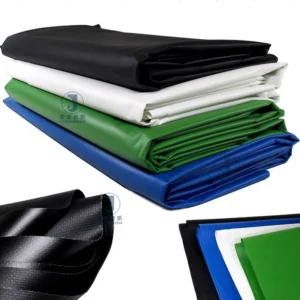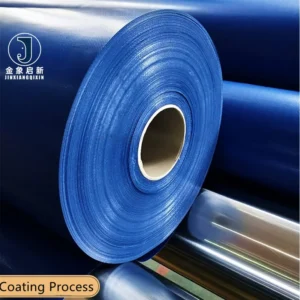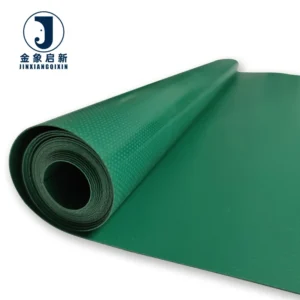
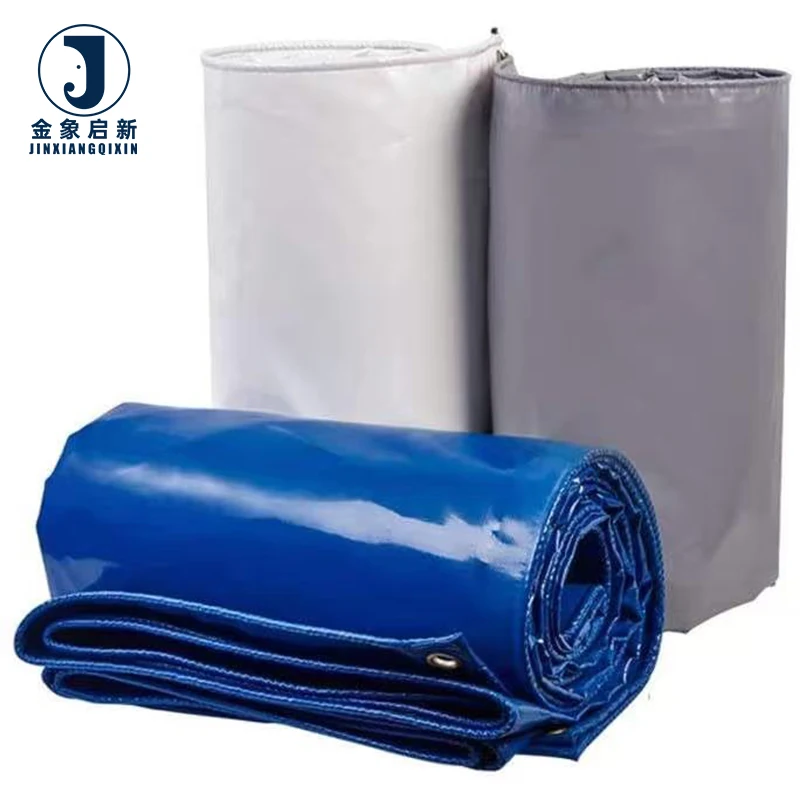
Coating Adhesion Control — PVC coating weight and base fabric bonding verified at every production stage, ensuring consistent peel strength for heat-welded truck side curtain seams.
Technical Specifications
| Parameter | Value |
|---|---|
| Product Type | PVC Coated Tarpaulin |
| Coating Material | PVC |
| Application Grade | Industrial / Heavy Duty |
| Waterproof Rating | Fully waterproof coated construction |
| Flame Retardant | Available in flame retardant grades — confirm the grade required for your market |
| UV Treatment | UV resistant — test basis available upon request |
| Anti-Shrink | Maintains dimensional stability across temperature variations |
| Surface Finish | Available in glossy or matte finish |
| Colour Options | Custom colour matching per order, single or double side colour available |
| Width | Custom widths available — confirm required roll width at inquiry stage |
Application Suitability
| Application | Exposure & Requirement |
|---|---|
| Truck side curtains | Constant flexing at tie-down points, road debris abrasion, sustained UV exposure, wind load tension |
| Lorry and trailer covers | Highway-speed airflow stress, rain and moisture ingress, repeated rolling and folding |
| Tent and awning fabric | Long-term outdoor weathering, structural tension loads, heat-welded seam integrity |
| Industrial fabric covers | Chemical dust exposure, mechanical abrasion, UV degradation in open-yard storage |
Why PVC Coated Tarpaulin GSM Specification Alone Does Not Guarantee Seam Performance
A roll that meets GSM on the scale can still fail at the weld line if coating adhesion is inconsistent.
When a truck side curtain flexes thousands of times per journey, the stress concentrates at heat-welded seams and tie-down reinforcement zones. I have seen heavy-grade coated rolls delaminate at the weld while the base fabric remained intact — the coating simply peeled away under cyclic load. The PVC coated tarpaulin GSM specification tells you how much material is on the roll, but it does not tell you how well the coating bonds to the base fabric or how that bond holds up after repeated flexing [NEED_CITE: peel strength and adhesion test methods for PVC coated fabrics per ISO 2411].
Coating Weight and Adhesion Under Cyclic Flex Load
The relationship between PVC coating weight and base fabric adhesion determines how a truck side curtain performs at high-stress zones. When the coating is applied with controlled penetration into the base fabric weave, the bond resists delamination even as the curtain flexes at every tie-down point. PVC coated tarpaulin GSM specification must be read alongside adhesion data — a heavy coating with poor penetration will crack at the weld before the fabric itself shows wear.
Base Fabric Denier and Weave as the Structural Foundation
The tensile and tear performance of any PVC coated tarpaulin roll depends on the base fabric denier and weave density. A higher denier yarn in the warp direction provides the strength needed to resist tearing when a side curtain catches crosswind on a motorway. The weft density contributes to puncture resistance from road debris. Together, these structural properties define how the material behaves long after the coating surface has weathered [NEED_CITE: tensile and tear test methods for coated fabrics per ISO 1421].
Reading GSM, Coating Method and Treatment Specs for Real-World Use
GSM is the combined weight of base fabric and PVC coating per square metre, but two rolls with identical GSM can perform very differently depending on how that weight is distributed. A roll with a heavier base fabric and lighter coating will show higher tensile strength, while one with a lighter base and heavier coating may offer better surface abrasion resistance. The coating method — whether knife-over-roll, dip, or calendar — affects how deeply the PVC penetrates the weave and therefore how well heat-welded seams hold. UV resistant treatment is available for extended outdoor exposure, and flame retardant grades are produced for markets with specific fire classification requirements. Confirm the exact treatment specification needed for your application and region before placing a production order.
The Hidden Cost of Specifying on Price Per Kilogram Instead of Performance
When purchasing decisions focus on the lowest cost per kilogram, the supplier is incentivised to reduce coating weight or use a lighter base fabric to hit the quoted GSM with cheaper raw materials. The result arrives looking correct on the scale but fails prematurely in the field — seams split at flex points, colour fades unevenly across adjacent panels, or the material shrinks after the first hot summer. These failures surface weeks or months after installation, long after the shipment has been accepted and paid for [NEED_CITE: common failure modes in PVC coated fabric used for transport covers].
Why Fabricators Source PVC Coated Tarpaulin Roll Stock Here
Three full production lines with 36 sets of professional equipment support consistent coating weight and adhesion across every roll in a bulk order. The 10-person R&D team handles custom width, colour matching and treatment specifications, developing samples within days for buyer approval. A dedicated QA/QC process inspects every roll before shipment, verifying PVC coated tarpaulin GSM specification against the material specification sheet. Production runs are documented with in-process coating weight records, and colour reference is matched across all rolls in the same order to prevent visible variation once installed side by side.
Documentation & Verification
- Material specification sheet stating exact GSM, base fabric denier and coating type per roll
- UV and flame retardant test reports supplied with shipment where applicable grades are specified
- Pre-shipment inspection record confirming weight and visual quality before dispatch
- ISO and CE certificates provided for compliance documentation packages
- Roll packing list with batch reference for traceability across production runs
- Certificate of origin included for customs clearance in destination markets
Fabrication, Handling & Storage
- Heat-weld seams using temperature and dwell time matched to the PVC coating thickness to prevent delamination at flex zones
- Store rolls upright on pallets in shaded, dry conditions to avoid compression marks on the coated surface
- Allow cold-stored rolls to reach ambient temperature before unrolling to prevent coating crack in heavy-duty grades
- Use compatible PVC-based adhesives for field repairs, matching the coating formulation for bond strength
- Plan cut patterns across the full roll width to minimise offcut waste on custom side curtain dimensions
What We Need to Quote Accurately
To provide a precise specification and lead time, share the end-use application and the environmental exposure conditions the fabric will face. Let us know the target market and any fire classification or compliance requirements that apply. Confirm the roll width, colour reference and whether you need gloss or matte finish, along with the estimated annual volume for pricing tier alignment.
Frequently Asked Questions
Q: How is GSM verified before each shipment?
A: Every roll is weighed and measured during pre-shipment inspection, with results recorded against the stated GSM on the material specification sheet. This verification document accompanies the shipment so you can independently confirm coating weight and base fabric mass on arrival, eliminating the risk of receiving lighter material than quoted.
Q: Can you match colour consistently across multiple rolls in one order?
A: Colour reference is controlled across the entire production batch using standardised pigment formulation and in-line visual inspection. All rolls in a single order are produced from the same coating batch, and pre-shipment inspection includes side-by-side colour comparison to catch any visible variation before dispatch.
Q: What test reports are supplied with flame retardant grades?
A: When a flame retardant grade is specified, the shipment includes a test report documenting the grade achieved and the test standard applied. Confirm the specific fire classification required for your market — such as DIN 4102 B1 or NFPA 701 — at the inquiry stage so the correct formulation is produced and documented.
Q: How do heat-welded seams perform at high-flex points on side curtains?
A: Weld strength depends on coating adhesion to the base fabric and the heat-weld parameters used during fabrication. Our PVC coating process ensures consistent penetration into the base weave, providing a reliable bond at seam lines. We recommend weld testing on sample material to confirm temperature and dwell settings for your specific equipment.