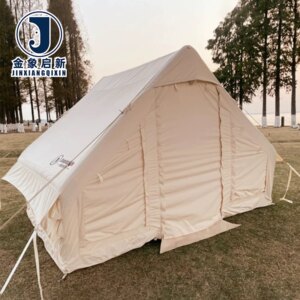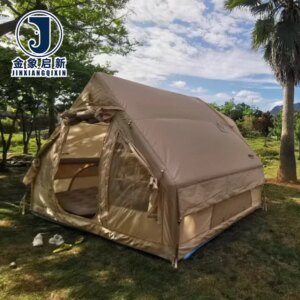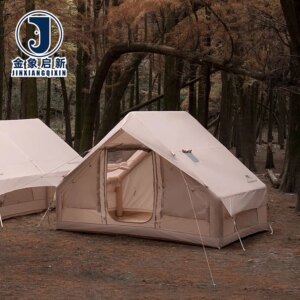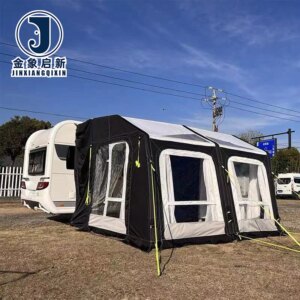
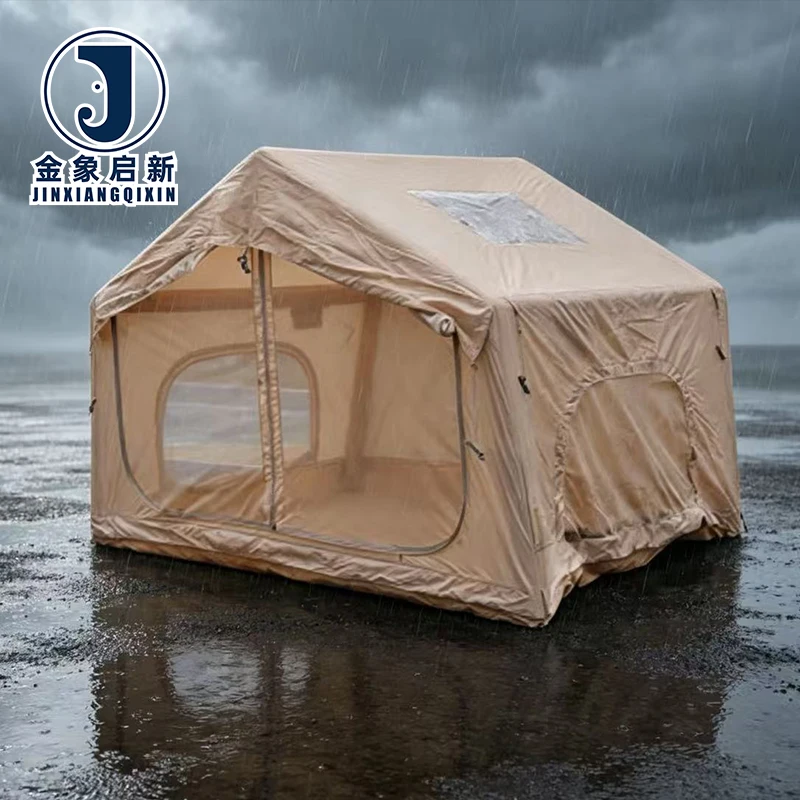
Deep Process Control — coating weight and adhesion consistency maintained across every batch of inflatable tent PVC fabric through 36 sets of professional processing equipment and 12 inspection checkpoints.
Technical Specifications
| Parameter | Value |
|---|---|
| Product Type | Inflatable Tent |
| Core Material | UV-Resistant PVC |
| Waterproof Rating | Hydrostatic head exceeding 5000mm |
| UV Exposure Resistance | 5000+ hours sunlight exposure test |
| Tensile Strength Retention | 85% after 2 years outdoor exposure |
| Deployment Time | Under 60 seconds |
| Temperature Tolerance Range | -30°C to 70°C (validated by temperature cycling test) |
| Inflation System | Industrial-grade inflation valves with rapid pressure retention |
| Quality Control | 12 inspection points, 24-hour pressure retention testing, ultrasonic seam integrity checks |
| Customization | OEM & ODM — sample customization, pattern printing, size adjustments, color customization, logo printing, structural design modification |
| Certifications | ISO9001, ISO14001, ISO45001, CE |
Application Suitability
| Application | Exposure & Requirement |
|---|---|
| Construction site temporary storage shelters | Constant UV exposure, wind loading, rain ingress, puncture risk from equipment movement |
| Logistics mobile equipment enclosures | Rapid deployment demand, repeated inflation cycles, vehicle proximity abrasion |
| Outdoor event weather-protected workspaces | Public visibility, UV and rain exposure, frequent setup and teardown cycles |
| Emergency relief field shelters | Extreme temperature swings, minimal ground preparation, compliance with relief agency specifications |
| Equipment maintenance areas | Chemical splash exposure, high internal pressure for clearance, extended inflation periods |
Why Coating Formulation Determines Inflatable Shelter Reliability More Than Fabric Weight Alone
A heavy fabric with poor coating adhesion will delaminate at the seams long before the base cloth fails.
Procurement teams often specify inflatable shelter fabric by weight, assuming a higher number guarantees longer service life. In practice, inflatable structures concentrate stress at welded seams and valve attachment points, where coating bond strength matters far more than base fabric mass. We have reviewed field returns where the PVC layer peeled away from the polyester scrim under repeated inflation cycles, leaving the structural threads exposed to moisture and UV degradation [NEED_CITE: coating adhesion test methods for inflatable structural fabrics]. The inflatable tent PVC fabric manufacturer must therefore document not only the hydrostatic head rating but also the peel strength between coating and substrate across the operating temperature range.
Coating Chemistry and the 5000mm Hydrostatic Head Benchmark
The waterproof performance of this inflatable shelter fabric rests on a PVC compound engineered to exceed 5000mm hydrostatic head, meaning the coating resists water penetration under sustained pressure well beyond typical rainfall intensity. This rating is not a surface treatment but a function of coating thickness, plasticiser migration control, and the absence of micro-voids introduced during the coating process. For inflatable tent applications, the internal air pressure pushes the fabric outward while rain and standing water press inward — the coating must resist both forces simultaneously without cracking at low temperatures or softening at high ambient heat. The custom inflatable shelter fabric achieves this balance through a formulation validated across temperature cycling from -30°C to 70°C.
UV Stabilisation Tested Beyond Standard Exposure Cycles
PVC compounds used in inflatable structures face continuous solar radiation that breaks down plasticiser chains, leading to embrittlement and loss of air-holding capability. This fabric has been tested to 5000+ hours of sunlight exposure, retaining 85% of its original tensile strength after two years of outdoor deployment [NEED_CITE: accelerated weathering test protocols for PVC-coated technical textiles]. The UV-stabilised formula incorporates hindered amine light stabilisers that scavenge free radicals before they attack the polymer backbone. For buyers specifying inflatable tent PVC fabric for prolonged field deployments in high-irradiance regions, this test data provides a documented basis for maintenance scheduling and replacement planning rather than relying on generic durability claims.
Reading the Specification Sheet: Temperature Range and Inflation Pressure
The -30°C to 70°C operating range reflects validated temperature cycling tests, not theoretical polymer limits. Below the lower threshold, PVC loses plasticiser flexibility and becomes susceptible to crack propagation at fold lines and welded joints. Above the upper limit, the coating softens and internal air pressure can cause dimensional creep, particularly at seam overlaps. Industrial-grade inflation valves with rapid pressure retention are specified to maintain structural rigidity across this range without requiring specialised compressor equipment. When evaluating custom inflatable shelter fabric, buyers should cross-reference the stated temperature tolerance with their deployment climate data, paying particular attention to the rate of temperature change rather than just the absolute extremes [NEED_CITE: low-temperature flexibility testing for coated fabrics per ISO standards].
The Cost of Underspecifying Inflatable Tent Fabric for Industrial Use
Selecting inflatable shelter material based on price per square metre rather than verified performance data leads to predictable field failures. Fabric that lacks documented UV stabilisation degrades within months in exposed installations, requiring unplanned replacement that disrupts operations and inflates total procurement spend. Coating formulations without adequate cold-flex performance crack during winter deployments, causing sudden deflation that exposes stored equipment or halts outdoor work [NEED_CITE: field failure analysis of inflatable temporary structures]. Similarly, inflation valves not matched to the fabric’s pressure retention characteristics force maintenance teams into frequent re-inflation cycles, consuming labour hours that compound across a fleet of shelters. These consequences are preventable when the inflatable tent PVC fabric manufacturer provides test-backed specifications at the quotation stage.
Why Technical Buyers Source Inflatable Shelter Fabric Here
Material selection for inflatable structures requires a supplier who controls the coating process end-to-end, not a trader assembling components from multiple mills. Our 10-person R&D team handles compound formulation, pattern printing, custom sizing, and sample development in-house, so the fabric you approve at sampling is the fabric that ships in production. Three full production lines and 36 sets of professional processing equipment support bulk capacity while maintaining batch-to-batch coating weight consistency. Every roll undergoes dedicated QA/QC at 12 production checkpoints, including 24-hour pressure retention testing and ultrasonic seam integrity verification before dispatch. ISO and CE certified processes mean compliance documentation travels with each shipment, reducing the approval burden on your site safety and procurement teams.
Documentation & Verification
- Material specification sheet stating coating compound type, temperature tolerance, and hydrostatic head rating
- Batch inspection report detailing mechanical performance test results for each production run
- UV exposure and temperature cycling test reports available for compliance submissions
- ISO9001, ISO14001, ISO45001 and CE certificates included with every shipment
- Pre-shipment inspection record confirming 12-point QA check completion
- Ultrasonic seam integrity and 24-hour pressure retention test log per unit
Fabrication, Handling & Storage
- Heat-weld parameters must match the UV-resistant PVC compound; request recommended temperature and dwell time settings before fabrication
- Store rolls vertically on pallets to prevent permanent creasing of the PVC coating layer
- Avoid folding inflated structures at temperatures below -30°C to prevent cold-crack damage at seam lines
- Clean with pH-neutral detergents only; solvents degrade the UV-stabilised surface treatment
- Inspect inflation valve gaskets before each deployment cycle to maintain pressure retention performance
- Repair minor coating damage with compatible PVC patching compound matched to the original coating formulation
Requesting a Quotation for Your Inflatable Shelter Project
To move from specification to sample, share your intended deployment environment including expected temperature extremes, UV exposure duration, and any site-specific fire safety or compliance requirements. Indicate whether you need roll stock for in-house fabrication or finished inflatable structures with valve integration and seam welding. Colour, size, pattern printing, and structural design modifications are all available — provide your target dimensions and branding artwork so the R&D team can prepare a development sample for your evaluation.
Frequently Asked Questions
Q: What UV stabilization test basis supports the claimed outdoor durability of the inflatable tent fabric?
A: The fabric has undergone 5000+ hours of sunlight exposure testing, with tensile strength retention measured at 85% after two years of continuous outdoor deployment. The UV-stabilised PVC compound incorporates specific light stabiliser additives validated through this test protocol. Full test reports are available upon request for compliance verification.
Q: How is batch-to-batch coating consistency and color uniformity maintained across large-volume orders?
A: Each production run passes through 12 inspection checkpoints covering coating weight, colour reference, and mechanical performance. The 36 sets of processing equipment operate under controlled parameters that are logged per batch. Pre-shipment inspection records document actual measured values, ensuring every roll meets the specification stated on your quotation.
Q: What material specifications and certification documentation ship with each order for compliance verification?
A: Every shipment includes a material specification sheet, batch inspection report, ISO9001, ISO14001, ISO45001, and CE certificates. Test reports for UV resistance and temperature cycling are provided. Additional third-party laboratory reports can be arranged for projects requiring independent verification of coating performance or fire safety properties.
Q: What customization options are available and what is the sample development process?
A: OEM and ODM services cover size adjustments, colour customization, pattern printing, logo printing, and structural design modification. The 10-person R&D team develops samples within days based on your drawings or application description. Sample approval is required before bulk production begins, ensuring the final product matches your exact specifications.
Q: What inflation pressure requirements and temperature tolerance limits should be considered during specification?
A: The fabric operates across a validated temperature range of -30°C to 70°C, confirmed through temperature cycling tests. Industrial-grade inflation valves provide rapid pressure retention suitable for the stated operating envelope. Specific pressure requirements depend on your structural design and internal volume; share your engineering parameters so the R&D team can recommend appropriate valve specifications.