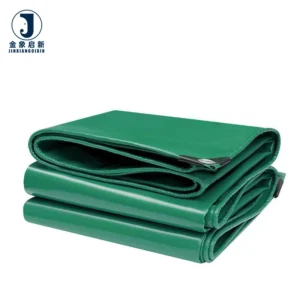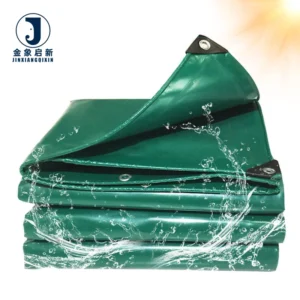
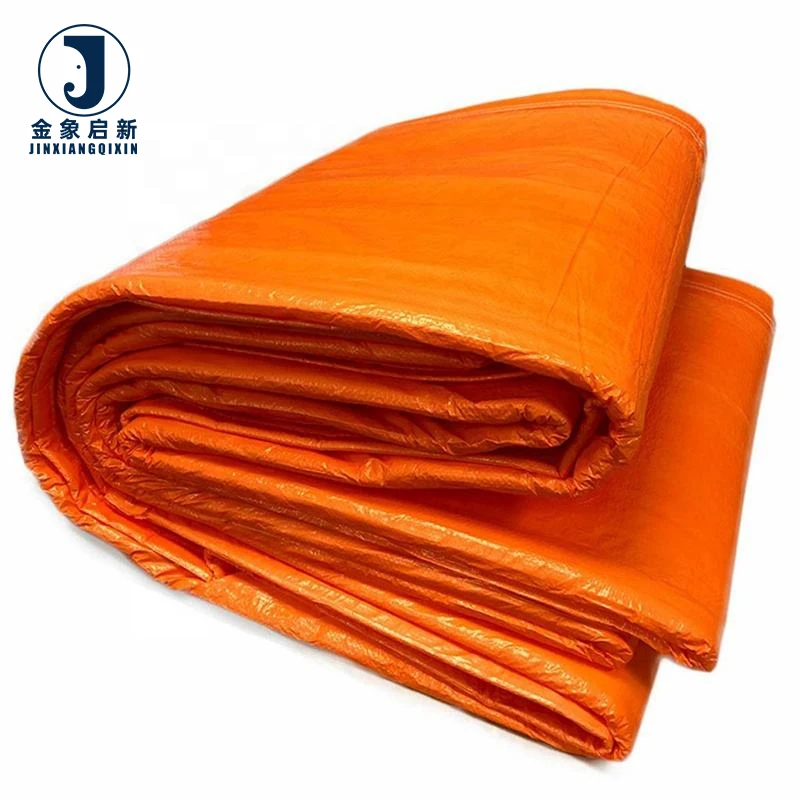
Multi-Layer PE Construction — Thermal insulation capability derived from closed-cell foam core lamination, verified through material composition breakdown and thickness measurement at each production stage.
Technical Specifications
| Parameter | Value |
|---|---|
| Product Type | Insulated Tarpaulin |
| Material Structure | PE cloth + closed cell PE foam core + PE cloth |
| Coating Material | PE |
| Available Thickness Options | 2x2mm, 3×1.5mm, 1x4mm, 5mm, 6mm, 8mm, 12mm |
| Standard Dimensions | 6ftx24ft / 8ftx25ft / 12ftx20ft / 12ftx24ft |
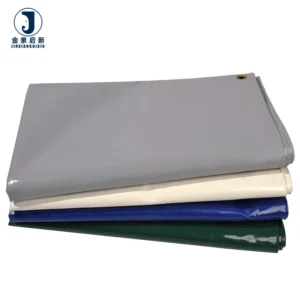
| Color Options | Orange, Black, White, Silver, Customized color |
| Grommet Configuration | Aluminum holes, hole distance 61cm and 91.5cm |
| Edge Finish | Reinforcement stitch, rust-proof brass grommets around all finished stitched edges |
| Waterproof | Yes (surface fabric waterproof) |
| UV Treatment | Yes (test basis not stated in source) |
| Anti-Mildew | Yes (source claim — verify against manufacturer catalog) |
| Flame Retardant | Grade not stated — confirm requirement for your application |
| Standards | ISO and CE certified |
Application Suitability
| Application | Exposure & Requirement |
|---|---|
| Concrete curing blanket | Low ambient temperatures, wind exposure, direct ground contact, heat retention over slab surfaces during hydration |
| Heated enclosure insulation | Vertical hanging loads, sustained wind pressure, thermal bridging prevention, grommet pull-out resistance |
| Building enclosure and wind block | Multi-week weather exposure, UV radiation, mechanical stress from wind flutter, abrasion at attachment points |
| Cold-weather construction protection | Sub-zero temperatures, ice and snow accumulation, repeated deployment and storage cycles |
Why Insulation Claims Fail Without Material Transparency
The thermal performance of an insulated tarpaulin depends entirely on its foam core density and thickness, not on marketing language alone.
Technical buyers routinely receive quotations stating "insulated" or "thermal" without any specification of what material provides the insulation or how its thickness translates to actual thermal resistance. When an insulated concrete curing blanket arrives on site, the project engineer needs to verify that the foam core is present, continuous, and matches the thickness stated on the material specification sheet. Without this documentation, the blanket becomes a generic cover rather than a verified thermal management system. The gap between a quoted specification and the actual delivered product creates liability when concrete curing temperatures fall below required thresholds. [NEED_CITE: concrete curing temperature requirements per ACI 306]
Multi-Layer PE Structure and Thermal Separation
The three-layer construction separates the waterproof exterior from the insulating core. The outer PE cloth layers protect the closed-cell PE foam from puncture, moisture ingress, and mechanical damage during handling. This insulated tarpaulin structure ensures the foam core maintains its closed-cell integrity, which is what prevents convective heat transfer through the material. When the outer layer is compromised, moisture can penetrate the foam and reduce its insulating value significantly.
Thickness Selection and Insulation Performance
Each thickness option serves a different thermal requirement based on ambient conditions and exposure duration. The 2x2mm and 3×1.5mm configurations suit moderate temperature differentials where some heat retention is needed. The 12mm option addresses severe cold-weather scenarios where maximum thermal separation is required. The relationship between foam core thickness and thermal resistance is not linear — doubling the core thickness does not double the insulation value, but it does shift the performance boundary substantially for concrete curing and enclosure applications. [NEED_CITE: thermal conductivity values for closed-cell PE foam at varying densities]
Grommet Spacing and Load Distribution at Fixation Points
The aluminum grommet configuration at 61cm and 91.5cm spacing determines how wind load transfers from the fabric to the attachment structure. Reinforcement stitching around the perimeter distributes pull-out forces across a wider area of the PE cloth, preventing localized tearing at the brass grommet. When this insulated concrete curing blanket is used as a vertical wind barrier, the grommet spacing directly affects how much the material can flex between attachment points before stress concentrates at a single fixation. The rust-proof brass specification prevents corrosion staining on concrete surfaces during extended curing periods.
What Happens When Thickness Specification Is Ignored
Selecting a thickness based on cost rather than thermal requirement leads to inadequate temperature retention during concrete curing, which compromises structural strength development. When an insulated tarpaulin specified at 5mm is substituted with a thinner variant on site, the concrete surface temperature may drop below the minimum hydration threshold during overnight exposure. Batch-to-batch thickness variation within the same order creates inconsistent curing conditions across adjacent pours. [NEED_CITE: relationship between curing temperature and concrete compressive strength development]
Why Material Documentation Determines Project Acceptance
The specification sheet stating foam core density and total material thickness provides the verification basis that site engineers require before approving the curing blanket for use. When flame-retardant grades are required for heated enclosures, the test report must confirm the specific grade — generic "flame retardant" claims without a standard reference lead to failed inspections and project delays. Available in flame retardant grades — confirm the grade required for your market before specifying. Pre-shipment thickness verification across the order prevents disputes when material arrives and measurement reveals deviation from the quoted specification. The 10-person R&D team handles custom thickness development with samples produced within days, allowing buyers to verify material composition before committing to production volume.
Documentation & Verification
- Material specification sheet stating PE cloth denier, foam core density, and total thickness per option
- UV and flame-retardant test reports where applicable, confirming grade for regulated sites
- Pre-shipment inspection record verifying thickness consistency across all panels in the order
- Roll and panel packing list with dimension and color reference for each unit shipped
- Certificate of origin and customs documentation for cross-border procurement
Fabrication, Handling & Storage
- Reinforcement stitch perimeter requires industrial sewing equipment capable of penetrating multi-layer PE cloth and foam core simultaneously
- Brass grommets must be set with matching die size to prevent crushing the surrounding PE foam during installation
- Store panels flat or rolled with foam core facing inward to prevent permanent compression marks on the closed-cell structure
- Avoid folding at the same crease line repeatedly, as closed-cell PE foam develops fatigue cracks at repeated bend points
- Clean PE surface with mild detergent only — solvent-based cleaners can degrade the waterproof coating layer
- Inspect grommet pull-out resistance after each deployment cycle in high-wind applications
Inquiry Requirements for Specification Matching
Provide the minimum ambient temperature and wind speed expected during the curing or enclosure period so the correct thickness option can be recommended. Specify whether flame-retardant certification is required by your local fire code and which standard applies. Confirm the total square meterage needed and whether standard panel dimensions work or custom sizing is required for your structure geometry.
Frequently Asked Questions
Q: How is the insulation value measured and reported for each thickness option?
A: The thermal resistance of this insulated tarpaulin depends on the closed-cell PE foam core density and thickness. A material specification sheet stating the foam core density and total composite thickness is provided with each order. For projects requiring a certified R-value, confirm the test standard applicable in your market and request the corresponding test report before placing the order.
Q: What UV test basis supports the anti-UV claim on these panels?
A: UV treatment is applied to the PE surface fabric, but the specific weathering test basis and hour rating are not stated in the standard product documentation. If your project requires verified UV resistance for extended outdoor exposure, request the test report and confirm the exposure duration covered before specifying this insulated concrete curing blanket for your application.
Q: What flame-retardant grade is available, and does it meet building enclosure fire codes?
A: This product is available in flame retardant grades — confirm the grade required for your market. The specific classification and test standard must be verified against your local fire code before use in heated enclosures or occupied construction zones. Request the applicable test report during the specification stage to ensure compliance documentation is ready for site inspection.
Q: How is batch-to-batch color consistency controlled across multiple panel orders?
A: Color consistency is managed through controlled PE compound mixing and standardized extrusion parameters. When ordering multiple panels in the same color for visible applications like building enclosures, specify that color matching verification is required across the entire batch. The R&D team can produce color samples within days for approval before full production proceeds.
Q: What documentation accompanies each shipment for project verification?
A: Each shipment includes a material specification sheet stating thickness and material composition, a packing list identifying each panel by dimension and color, pre-shipment inspection records, and certificate of origin. Test reports for UV treatment or flame-retardant grades are included where applicable. Confirm your documentation requirements during the inquiry stage.