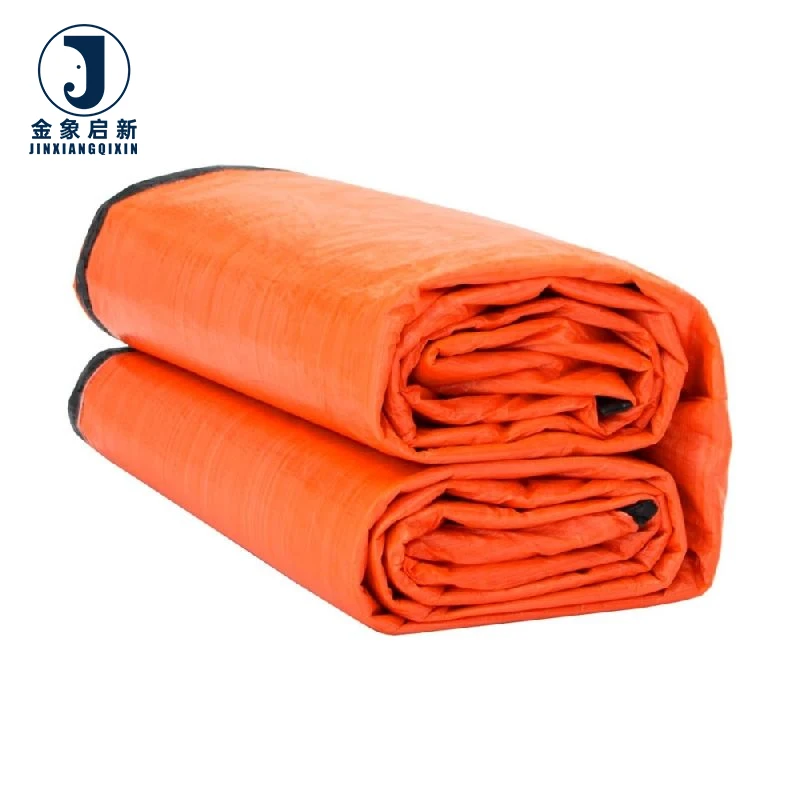
Process-Controlled Thermal Retention — Nearly 30 years focused on coated and laminated fabrics, with dedicated QA at every production stage ensuring the stated thickness and insulation performance of PE insulated tarpaulin reaches the site as specified.
Technical Specifications
| Parameter | Value |
|---|---|
| Product Type | Insulated Tarpaulin / Concrete Curing Blanket |
| Material Structure | PE cloth + closed cell PE foam core + PE cloth |
| Total Thickness Options | 2x2mm, 3×1.5mm, 1x4mm, 5mm, 6mm, 8mm, 12mm |
| Dimensions | 6ftx24ft, 8ftx25ft, 12ftx20ft, 12ftx24ft |
| Color Options | Orange, Black, White, Silver, Customized color |
| Grommet Configuration | Aluminum holes, hole distance 61cm and 91.5cm |
| Edge Finish | Reinforced stitch, rust-proof brass grommets |
| UV Treatment | Yes (test basis not stated) |
| Waterproof | Yes |
| Coating Material | PE |
| Standards | ISO, CE |
Application Suitability
| Application | Exposure & Requirement |
|---|---|
| Concrete Curing Blanket | Direct ground contact, sustained thermal retention, moisture exposure during hydration |
| Heated Enclosure Insulation | Interior temperature differential, wind loading on temporary structures, repeated installation and removal |
| Building Enclosure in Cold Weather | Prolonged UV and snow exposure, high wind uplift, structural movement of scaffolding |
| Outdoor Material & Equipment Cover | Precipitation, freeze-thaw cycles, UV degradation, abrasion from handling |
Why Insulation Fails at the Flex Points Before the Foam Does
Seam integrity under repeated flexing determines real-world thermal performance more than core thickness alone.
When insulated tarps fail on construction sites, the failure rarely originates in the foam core itself. It appears at the stitch line or the weld where the panel flexes most — typically near the grommets or where panels overlap. The PE cloth skin delaminates from the foam, or the stitching cuts through the outer layer under wind load, letting cold air bypass the insulation entirely. A thicker core provides no benefit once the envelope is breached [NEED_CITE: tensile and tear test methods for coated fabrics per ISO 1421]. This is why material specification must address the bonding between layers, not just the foam density or total thickness stated on the quotation.
Multi-Layer PE Construction and Thermal Envelope Integrity
The Insulated PE Tarpaulin Concrete Curing Blanket uses a three-layer lamination: a PE cloth outer face, a closed-cell PE foam core, and a PE cloth inner face. Closed-cell foam traps air within discrete pockets, reducing convective heat transfer across the panel. The PE cloth layers on both sides protect the foam from mechanical damage and moisture ingress, which would otherwise compromise the insulation value over a curing cycle.
Grommet Spacing and Wind Load Distribution
Reinforced stitching and rust-proof brass grommets at 61cm and 91.5cm intervals address the primary failure mode of temporary enclosures: wind-induced fatigue at the attachment points. Standard spacing ensures load distributes across the fabric face rather than concentrating at isolated tie-downs. When panels are laced together on a heated enclosure, consistent grommet intervals allow continuous tension without gaps that admit cold air [NEED_CITE: wind load testing standards for temporary construction enclosures].
Reading Thickness Against Application Demand
Total thickness options range from 2x2mm to 12mm, but the number alone requires interpretation. A 2x2mm structure indicates two millimetres of foam sandwiched between two cloth layers, while 1x4mm places four millimetres of foam between thinner facings. The thermal resistance and mechanical durability differ between these configurations even at similar total thickness. Selecting the correct grade depends on the temperature differential across the enclosure and the expected handling frequency — a curing blanket laid once and left undisturbed has different demands than an enclosure panel removed and reinstalled daily throughout a winter season.
What Happens When the Specified Thickness Does Not Arrive
A common procurement failure on insulated tarp projects is receiving material that measures below the quoted thickness at the edges, where the foam core compresses during roll packing or where the lamination bond thins under tension. Once installed, these compressed zones become thermal bridges — the concrete beneath cures unevenly, or the heated enclosure loses temperature at predictable intervals corresponding to the panel overlap. Verification at the roll stage, before cutting and fabrication, prevents the cost of rework on site [NEED_CITE: pre-shipment inspection protocols for laminated technical textiles].
Production Control Specific to Laminated PE Insulation
Each production run of Insulated PE Tarpaulin material coating technology is managed through controlled lamination pressure and dwell time, ensuring the foam core bonds to the PE cloth without crushing the cell structure. In-process thickness checks across the roll width catch compression inconsistencies before the material reaches the cutting table. The 10-person R&D team develops custom panel sizes and grommet layouts against specific enclosure designs, with samples produced within days for site validation before the full order runs. Dedicated QA inspects every panel before shipment, checking grommet pull-through resistance and edge stitch density against the application requirement.
Documentation & Verification
- Material specification sheet stating total thickness, foam core density and PE cloth denier for each grade ordered
- UV treatment test report with stated basis and exposure duration
- Pre-shipment inspection record confirming thickness and grommet spacing consistency across all panels
- Certificate of origin and customs documentation for export shipments
Fabrication, Handling & Storage
- Heat welding parameters must account for the closed-cell PE foam core to avoid delamination at seam lines
- Brass grommets require back-plate washers on 12mm grades to distribute pull-through load across the foam layer
- Store rolls flat or suspended — vertical stacking compresses the PE foam core and creates permanent thin zones
- Unroll and allow panels to relax before measuring, as the foam core recovers thickness after transit compression
- Clean with neutral detergent; solvents degrade the PE cloth surface and reduce UV treatment effectiveness
- Repair minor face punctures with PE-compatible adhesive patches before moisture reaches the foam core
Specification Details for Your Site Conditions
To specify the correct Insulated PE Tarpaulin Concrete Curing Blanket for your project, share the minimum ambient temperature during the curing period, the expected duration of enclosure, and the wind exposure classification for the site. If panels are joining to form a continuous enclosure, provide the overall dimensions so grommet spacing and overlap can be calculated to eliminate thermal bridging. Confirm whether your local authority requires a fire classification certificate for temporary heated structures before we quote the applicable grade.
Frequently Asked Questions
Q: How is the total thickness measured across the three-layer PE structure?
A: Total thickness is measured with a calibrated gauge at multiple points across the panel face and at the edges, recording the combined thickness of both PE cloth layers and the closed-cell foam core. Edge readings often differ from face readings due to lamination pressure and packing compression. We report both values on the pre-shipment inspection record so you can verify consistency against the specification before installation.
Q: What is the thermal performance difference between the thickness grades?
A: Each grade provides a different level of thermal resistance based on foam core thickness and cell structure. A 12mm panel retains substantially more heat than a 5mm panel under identical conditions. However, the correct grade depends on the temperature differential across the blanket and the duration of the curing cycle. Share your site climate data and we will recommend the grade that meets your curing specification.
Q: Does the UV treatment come with a test report?
A: UV treatment is integrated into the PE cloth base fabric during production. We supply a test report where a specific test basis and duration have been established for the grade ordered. If your local authority or project specification mandates a particular UV exposure standard, confirm the required test basis at inquiry stage so we align the material and documentation to your requirement.
Q: How is batch-to-batch colour consistency controlled across custom colour orders?
A: Custom colour PE insulated tarpaulin runs are produced using matched pigment batches with reference samples held from the initial approval. Each roll is checked against the approved swatch under controlled lighting before packing. For large orders spanning multiple production runs, we schedule all rolls in a single campaign where possible to eliminate inter-batch variation. Confirm your colour reference standard at inquiry so we match the control method to your acceptance criteria.
Q: What seam and joinery options are available for custom-sized insulated panels?
A: Panels can be joined by heat welding the PE cloth faces, by lacing through aligned grommets, or by overlapping and stitching with sealed tape over the seam. The method depends on the thickness grade and whether the joint must be waterproof or simply wind-resistant. For heated enclosures, we recommend welded seams with taped overlap to prevent thermal bridging. Share your joint performance requirement and we will specify the fabrication method before sample approval.