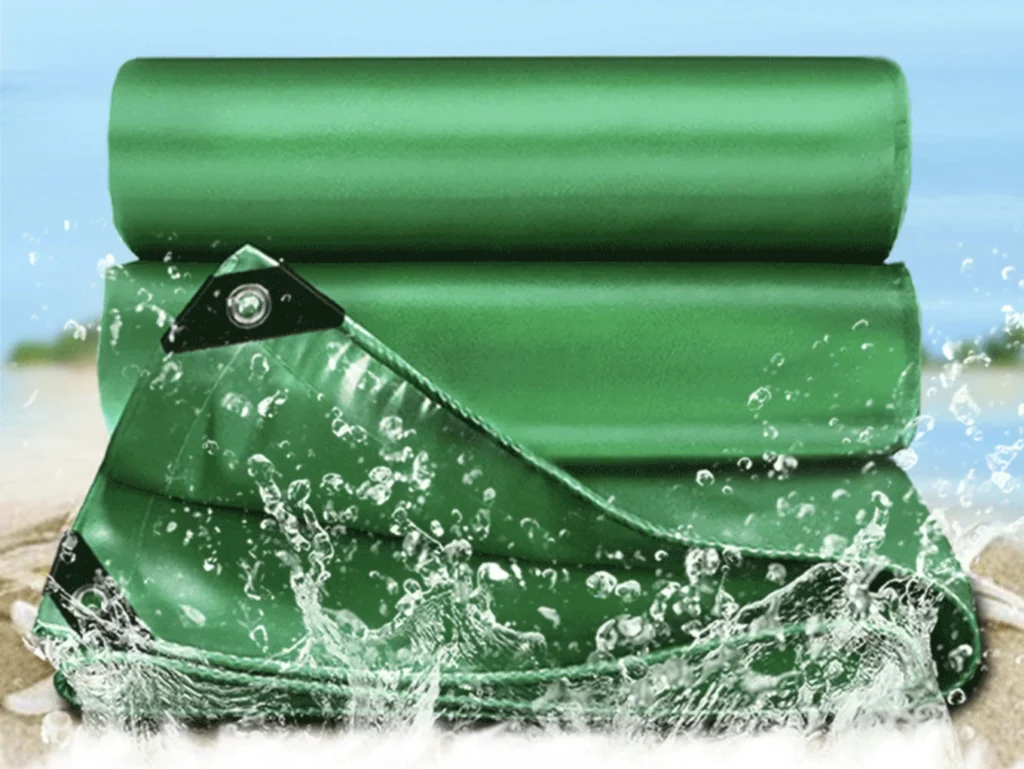
Precision-Coated PVC Fabric — Every roll undergoes 100% pre-shipment inspection with a material specification sheet stating exact GSM, base fabric denier and coating weight so you can verify on arrival.
Technical Specifications
| Parameter | Value |
|---|---|
| Product Type | PVC Knife Coated Fabric |
| Coating Method | Knife coated |
| Coating Material | PVC |
| Welding Options | HF, Hot Air, Sewing |
| Flame Retardant Grade | Available in flame retardant grades — confirm the grade required for your market |
| UV Treatment | Available with UV stabilisation — request test basis for your exposure class |
| Anti-Mildew | Mildew proof (confirm test standard for project specification) |
| Antibacterial | Yes (confirm test standard for project specification) |
| Chemical Resistance | Oil, stain, acid and alkali resistant |
| Surface Character | Self-cleaning, high flexibility with crack resistance |
Application Suitability
| Application | Exposure & Requirement |
|---|---|
| Tensile and membrane structures | Sustained tension loads, long-term weathering, structural wind uplift |
| Stadium architectural roofs | UV exposure, fire code compliance, large-span tension behaviour |
| Airport hangar covers | Wide unsupported spans, wind-driven rain, fire classification for aviation zones |
| Portable storage structures | Repeated assembly flex, ground contact abrasion, seasonal UV |
| Shade systems and canopies | Direct solar exposure, thermal expansion cycles, colour retention |
| Large format technical textiles | Roll-to-roll consistency, weld integrity across long seam runs |
| Truck covers | Flex fatigue at tie-down points, road debris abrasion, weather sealing |
Why Coating Adhesion Matters More Than GSM Alone
A heavy PVC knife coated tarpaulin can still delaminate if the coating bond to the base fabric is poorly controlled.
Technical buyers often specify GSM as the primary acceptance criterion, yet GSM tells you the total weight — not how that weight is distributed between base fabric and coating layers [NEED_CITE: tensile and tear test methods for coated fabrics per ISO 1421]. When coating adhesion is weak, the PVC layer separates from the polyester scrim under tension or thermal cycling, leaving a structurally compromised base fabric exposed to moisture and UV. Knife coating as a process forces PVC paste into the scrim weave under controlled blade pressure, building a mechanical and chemical bond that laminated or calendered methods struggle to match at equivalent weight. For tensile structures and architectural membranes, this bond integrity determines whether the fabric performs as a single composite or fails at the interface between its layers.
Base Fabric Denier and Weave as the Structural Skeleton
The tensile and tear performance of any PVC knife coated tarpaulin starts with the polyester base fabric. Denier selection and warp-weft density define how the fabric distributes point loads across the scrim, resisting tear propagation when a puncture or cut initiates in the field. Higher denier yarns carry greater individual thread strength, while tighter weave patterns limit the distance a tear can travel before encountering the next yarn intersection. Specifying the right base fabric construction for your structural span or cover application is as critical as the coating chemistry applied over it.
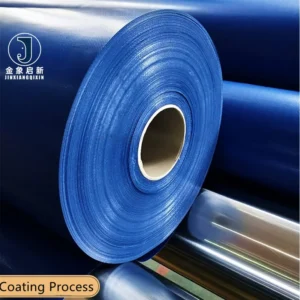
Coating Weight, Adhesion and the Knife Coating Advantage
Knife coating deposits PVC paste directly onto the moving scrim under a precision-set blade gap, controlling coating weight per side independently of the base fabric thickness. This produces a consistent coating film that penetrates the weave interstices rather than sitting on the surface as a separate layer [NEED_CITE: DIN 53357 peel adhesion test for coated fabrics]. The result is a composite material where coating and scrim behave as one unit under load. For fabricators welding long seam runs on tensile membranes or truck side curtains, this adhesion consistency means weld parameters set on the first panel remain valid across the entire roll, reducing scrap and rework at the fabrication stage.
Reading the Specification Sheet Beyond the Weight Number
GSM, base fabric denier and coating weight interact as a system rather than independent variables. A fabric with a heavier base scrim and lighter coating may deliver superior tensile strength but reduced surface durability, while a heavier coating on a lighter scrim improves weather resistance at the cost of tear performance. The knife coating process allows manufacturers to tune each side of the fabric independently — a heavier top coat for UV and abrasion resistance paired with a lighter bottom coat for weld receptivity. Understanding this balance lets technical buyers match material construction to the specific load case and exposure environment of their project rather than defaulting to the highest available GSM.
When Underspecified Coating Adhesion Costs More Than the Fabric
A roll that arrives at the correct GSM but with poor coating adhesion will pass incoming weight inspection yet fail during fabrication or early service life. Seam peeling at high-flex points on truck covers, delamination along fold lines in portable storage structures, and coating blistering under sustained solar exposure all trace back to inadequate bond strength between PVC and scrim [NEED_CITE: field failure analysis of coated fabric seams under cyclic loading]. The cost of replacing a fabricated membrane or re-covering a truck fleet far exceeds the price difference of specifying verified adhesion data at the procurement stage. Batch-to-batch consistency in coating weight and adhesion also matters — a specification confirmed on the approval sample must hold across every roll in the production run.
How Jinxiang Supports Technical Specification and Verification
Three full production lines with 36 sets of professional equipment give us the capacity to maintain coating parameter control across large-volume orders without sacrificing roll-to-roll consistency. A dedicated 10-person R&D team handles base fabric selection, coating formulation and sample development for custom requirements, returning samples within days rather than weeks. Every production stage carries dedicated QA checkpoints, with 100% inspection before shipment rather than statistical sampling. Our process control over coating weight and adhesion is built on nearly 30 years focused exclusively on coated fabric production. Documentation accompanies every dispatch — specification sheets, test reports where applicable, and pre-shipment inspection records that let you verify what was ordered against what arrived.
Documentation & Verification
- Material specification sheet stating GSM, base fabric denier, coating material and colour reference for each roll
- Test report for UV and flame retardant grades matched to your project compliance standard
- Pre-shipment inspection record confirming weight and visual quality before dispatch
- ISO and CE certificates available to support your market entry documentation
- Roll packing list with individual roll identification for traceability through fabrication
Fabrication, Handling & Storage
- HF welding suits this knife coated PVC for high-strength structural seams; confirm frequency and dwell time on test pieces before production runs
- Hot air welding requires adjusted temperature and speed settings versus laminated PVC due to deeper coating penetration into the scrim
- Sewn seams on this fabric should use UV-stable thread and sealed needle holes to maintain waterproof integrity at stitch lines
- Store rolls upright on pallets in a dry, shaded area to prevent flat-spot deformation of the coating surface
- Avoid dragging rolls across abrasive surfaces during unloading — the self-cleaning coating can be scored by sharp contact
- Allow cold-stored rolls to reach ambient temperature before unrolling to prevent coating micro-cracking at low-flex points
What to Include in Your Enquiry
Provide the structural span or cover dimensions, expected tension loads and primary exposure conditions so we can recommend the appropriate base fabric denier and coating weight combination. Specify the fire classification required by your local building code or aviation authority, along with any UV test standard your project engineer has nominated. Confirm whether you need rolls in stock widths or custom widths to minimise fabrication waste, and indicate your annual volume for production scheduling.
Frequently Asked Questions
Q: How is GSM verified against the quoted value on arrival?
A: Each roll ships with a material specification sheet stating the exact GSM, base fabric denier and coating weight. We conduct 100% pre-shipment inspection rather than batch sampling, and the inspection record is included in your dispatch documentation so you can cross-check weight on receipt against the stated values.
Q: What test basis supports the UV resistance claim for outdoor exposure?
A: UV stabilisation is available for this knife coated PVC fabric, but the appropriate test standard depends on your target market and exposure class. Request the specific test report applicable to your project specification — we supply documentation matched to the grade confirmed at the sample approval stage.
Q: Which flame retardant grade is available and does it match my market fire code?
A: Flame retardant treatment is available across multiple grade levels. The grade you need depends on whether your project falls under building, aviation or temporary structure codes. State your required classification in your enquiry and we will confirm the matching grade with its corresponding test certificate.
Q: How does knife coated PVC compare to laminated fabric in coating adhesion?
A: Knife coating forces PVC paste into the scrim weave under blade pressure, creating a mechanical bond through the fabric interstices rather than a surface-adhered film. This produces higher peel adhesion values and more consistent weld behaviour across long seam runs, which matters for tensile structures and fabricated covers under cyclic loading.
Q: Can you maintain colour consistency across multiple production batches for one project?
A: Colour matching is controlled through reference standards confirmed at sample approval. For projects requiring multiple roll deliveries over time, we retain production records and coating formulations from the initial batch to minimise visible variation when panels are installed side by side.