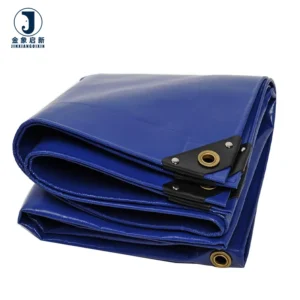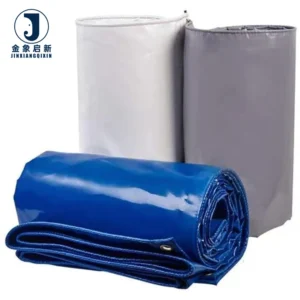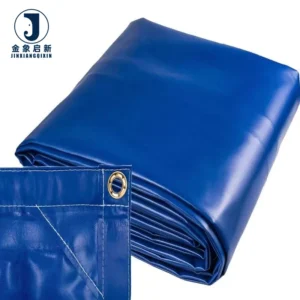
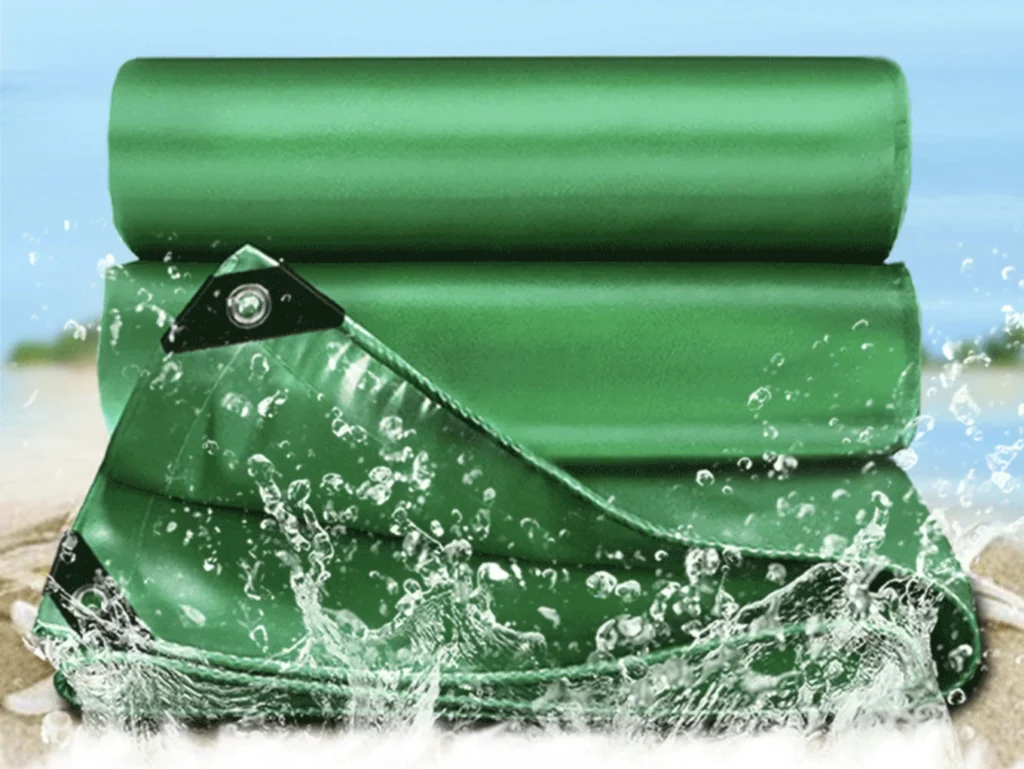
Deep Process Control — Nearly 30 years of knife coating process refinement ensures every roll of PVC knife coated tarpaulin fabric base fabric denier GSM tensile tear strength leaves our facility with verified coating weight and adhesion data.
Technical Specifications
| Parameter | Value |
|---|---|
| Product Type | PVC Knife Coated Fabric |
| Coating Method | Knife coated |
| Coating Material | PVC |
| Welding Options | HF, Hot Air, Sewing |
| Fire Retardant | Available in flame retardant grades — confirm the grade required for your market |
| UV Treatment | Available with UV treatment — request test basis for your application |
| Anti-Mildew | Antibacterial and mildew proof (standard available on request) |
| Chemical Resistance | Oil, stain, acid and alkali resistance |
| Temperature Resistance | High temperature and cold resistance (range available on request) |
| Surface Finish | Self-cleaning surface |
| Key Features | Highly flexible, resistant to cracking, self-cleaning finish |
Application Suitability
| Application | Exposure & Requirement |
|---|---|
| Tensile and membrane structures | Sustained mechanical tension, wind load cycling, UV exposure — requires verified tensile and tear data |
| Airport hangars and stadium roofs | Large span coverage, fire code compliance, long-term weathering — demands certified flame retardant grades |
| Shade systems and shadings | Direct sun exposure, thermal expansion, colour stability — needs UV treatment confirmation |
| Portable storage structures | Repeated assembly and disassembly, flex stress at seams — relies on weld compatibility and fabric flexibility |
| Truck covers and outdoor tents | Road abrasion, wind flap, rain exposure, fold creasing — requires high flexibility and surface durability |
Why Coating Weight Without Test Data Is a Liability for Fabricators
Every roll ships with a material specification sheet stating exact coating weight, base fabric denier, and weave — so you can verify on receipt.
Technical buyers who specify PVC knife coated tarpaulin fabric base fabric denier GSM tensile tear strength for structural applications often discover after delivery that the coating weight on the label does not match the material on the cutting table. This discrepancy only becomes visible when the fabric fails to meet expected tensile values or when welded seams separate under load. Fabricators installing membrane structures or truck covers then face rework costs and project delays that far exceed the material savings [NEED_CITE: tensile and tear test methods for coated fabrics per ISO 1421].
Coating Adhesion and Its Role in Structural Performance
Knife coating forces PVC paste directly into the base fabric under controlled pressure, creating a mechanical bond between the coating and individual yarns. This method produces higher peel strength compared to lamination, which matters when the PVC knife coated tarpaulin fabric base fabric denier GSM tensile tear strength is fabricated into tensile structures that experience constant stress at anchor points and welded seams.
Welding Compatibility Across Fabrication Methods
Fabricators working with membrane structures and large-format technical textiles need confidence that the material responds predictably to their chosen joining method. This knife coated PVC fabric supports high-frequency welding, hot air welding, and industrial sewing — each producing different seam characteristics. HF welding creates molecular fusion at the interface, hot air welding allows continuous seam formation on curved panels, and sewing provides mechanical reinforcement at high-stress junctions [NEED_CITE: welding methods for PVC coated technical textiles].
How Base Fabric Construction Determines Real-World Strength
The denier of the base yarn and the weave density together define how the material resists tensile loads and tear propagation. A higher denier yarn provides individual thread strength, while weave density determines how load distributes across neighbouring yarns when one thread is compromised. Coating weight adds surface protection and contributes to overall mass, but it does not compensate for an underspecified base fabric. This is why PVC knife coated tarpaulin fabric base fabric denier GSM tensile tear strength must be evaluated as a system — base fabric, coating, and adhesion together — rather than by any single number.
The Hidden Cost of Specifying on Price Per Square Metre Alone
When fabricators select material based on unit cost without verifying coating weight and base fabric construction, the consequences appear during fabrication and installation. Welds may separate because insufficient coating material is present to fuse properly. Panels may tear at stress concentrations because the base fabric denier cannot sustain the required load. Colour variation between rolls becomes visible once panels are installed side by side on a tensile structure or stadium canopy, forcing selective replacement and schedule delays [NEED_CITE: DIN 4102 fire classification for building materials].
Why Fabricators Source This Material Here
Three full production lines with 36 sets of professional equipment allow simultaneous processing of multiple roll orders, maintaining consistent coating weight and colour across a bulk production run. The 10-person R&D team develops custom samples within days, matching specific denier, weave, and coating weight requirements for structural applications. Dedicated QA and QC inspection at every production stage means coating adhesion and GSM are checked in-process, not just at final packing. ISO and CE certified production with pre-shipment inspection records gives fabricators documentation they can present to project engineers and building inspectors.
Documentation & Verification
- Material specification sheet stating exact GSM, base fabric denier, weave pattern, and coating weight per roll
- UV and flame retardant test reports provided for the specific grade quoted, not generic claims
- ISO and CE certificates included with every shipment for project compliance submissions
- Pre-shipment inspection record confirming roll count, colour consistency, and coating verification
- Roll packing list with individual roll weights and dimensions for receiving inspection
Fabrication, Handling & Storage
- HF welding parameters should be calibrated to the specific coating weight of this knife coated fabric before production runs begin
- Hot air welding temperature and speed settings vary with GSM — request recommended parameters for your grade
- Store rolls upright on pallets to prevent permanent creasing of the self-cleaning surface coating
- Allow cold-stored rolls to reach ambient temperature before unrolling to prevent coating micro-cracking
- Clean self-cleaning surfaces with mild detergent only — solvent-based cleaners may compromise the coating finish
- Plan panel cutting layouts to minimise waste, accounting for the available roll width and seam allowance
What We Need to Quote Your Requirement
Provide the target application and expected mechanical loads so we can recommend the appropriate base fabric denier and coating weight combination. Specify any fire retardant grade or UV treatment requirement along with the test standard your market or project demands. Confirm whether you need full rolls or cut-to-size panels, and indicate your required colour reference or custom print specifications.
Frequently Asked Questions
Q: How is GSM verified and how can I confirm coating weight on arrival?
A: Each roll ships with a material specification sheet stating the exact GSM, base fabric denier, and coating weight measured during production. You can verify these values independently on receipt using standard gravimetric testing methods. Our pre-shipment inspection records document the measured values before dispatch.
Q: What flame retardant grades are available and which test standards do they meet?
A: Flame retardant treatment is available in multiple grades depending on your market and application requirements. We provide test reports matched to the specific grade quoted, covering standards relevant to building, transport, and mining sectors. Confirm the standard required for your project and we will supply the corresponding certified grade.
Q: Which welding methods are recommended for this knife coated fabric and why?
A: This fabric supports HF welding for high-strength molecular fusion seams, hot air welding for continuous curved panel joins, and sewing for mechanical reinforcement at stress points. The choice depends on your fabrication equipment, seam geometry, and structural load requirements. Sample welds are recommended to optimise parameters.
Q: How is roll-to-roll colour and coating consistency controlled across a bulk order?
A: Coating weight and colour are monitored at every production stage across our three full production lines. Each roll in a bulk order is checked against the master colour reference and GSM specification during in-process QA. The pre-shipment inspection record confirms consistency before the order is packed and dispatched.