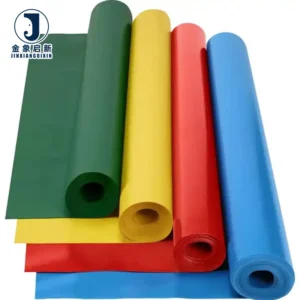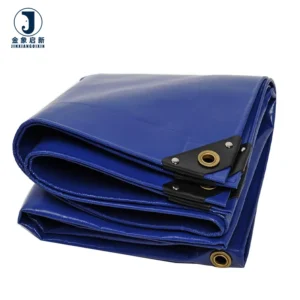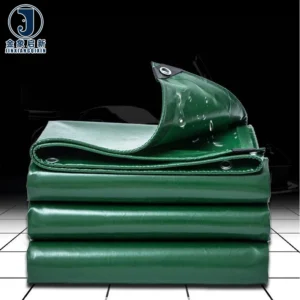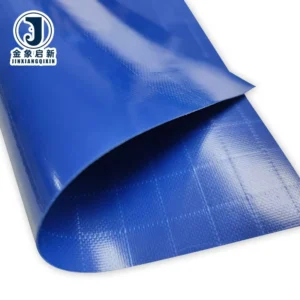
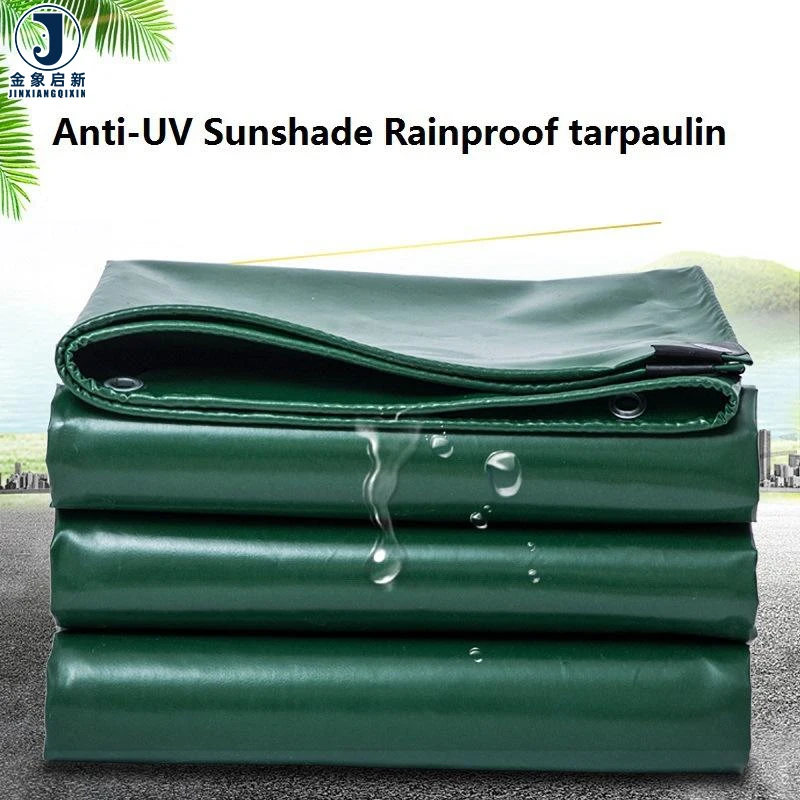
Process Control Over Coating Weight — Every roll of PVC coated tarpaulin leaves the production line with documented GSM, base fabric denier, and coating composition for incoming verification at your facility.
Technical Specifications
| Parameter | Value |
|---|---|
| Product Type | PVC Coated Tarpaulin Roll |
| Base Fabric | High-strength polyester mesh fabric |
| Coating Material | PVC |
| Coating Method | Laminated Technology & Hot-melt Coating Technology |
| Weight Range | 350gsm, 420gsm, 500gsm, 550gsm, 600gsm, 750gsm (confirm grade for your application) |
| Total Thickness | 0.32mm to 0.65mm (corresponds to selected GSM grade) |
| Roll Width | 2m, 2.1m |
| Roll Length | 50m, 75m |
| Color Options | Blue, Red, Yellow, Light Blue, Grey (custom colors available) |
| Waterproof | Stated |
| UV Resistant | Available — test basis to be confirmed per order |
| Flame Retardant | Available in flame retardant grades — confirm the grade required for your market |
| Anti-Static | Treatment available — surface resistance standard to be confirmed |
| Anti-Mildew | Stated (standard not cited) |
| Cold Crack Resistance | Stated (test basis to be confirmed) |
| Color Fastness | Best color fastness (grade not stated) |
| Tearing Strength | Outstanding tearing strength for welding (test value not stated) |
| Certifications | ISO, CE |
Application Suitability
| Application | Exposure & Requirement |
|---|---|
| Tent and awning fabrication | Roll-to-roll color consistency, repeatable weld-seam behavior, GSM matching structural span |
| Truck side curtain and awning | Constant flexing at load points, road splash abrasion, UV exposure in transit |
| Construction site enclosure | Wind loading on scaffold wrap, puncture from debris, weather exposure across seasons |
| Industrial equipment cover | Outdoor storage UV exposure, handling abrasion during cover placement and removal |
| Fish tank and pool liner | Permanent water contact, coating adhesion under hydrostatic pressure |
| Inflatable and membrane structure | Air-holding seam integrity, weld strength at curved panels, coating flexibility |
What "GSM on the Quote" Actually Means When the Roll Arrives
A stated GSM is only useful when the material specification sheet matches the roll you receive at the dock.
Technical buyers sourcing PVC coated tarpaulin roll stock know the frustration: the quotation confirms one weight, the shipping documents repeat it, and then the roll on the cutting table feels noticeably lighter. Coating weight variance between batches is a common complaint across the coated fabric supply chain [NEED_CITE: coating weight variance in PVC tarpaulin incoming inspection]. This is not just a commercial issue — lighter coating means less PVC protecting the polyester base fabric from UV degradation and moisture ingress, and it changes the thermal profile during heat welding. Every roll from this production facility ships with a material specification sheet documenting the exact GSM, base fabric, and coating weight so your incoming inspection team can verify before cutting.
Base Fabric and Coating Adhesion Under Weld Stress
When a fabricator heat-welds two panels of PVC coated tarpaulin, the weld line is only as strong as the bond between the PVC coating and the polyester mesh underneath. Laminated coating technology bonds the PVC film to the base fabric under heat and pressure, creating a continuous adhesive interface. Hot-melt coating technology applies molten PVC directly into the mesh structure, achieving mechanical interlock with the yarns. Both methods produce a PVC coated tarpaulin base fabric denier GSM coating weight tensile tear strength profile suited to fabrication, but they behave differently when the welded seam is subjected to peeling forces at flex points.
Why Roll-to-Roll Consistency Matters for Fabricators
A tent manufacturer cutting dozens of panels from consecutive rolls needs every roll to deliver the same coating thickness and color density. Variance in coating weight between rolls changes the heat-weld temperature window — a roll with slightly heavier coating requires different dwell time on the weld bar [NEED_CITE: weld parameter adjustment for coating weight variance]. Color variation between rolls becomes immediately visible once panels are installed side by side on a large awning or structure. Batch consistency is controlled through in-process QA at every coating stage, with 100% inspection before any roll is cleared for dispatch.
Reading the Specification Sheet Beyond GSM Alone
A 550gsm roll and a 600gsm roll may carry similar total weight but differ significantly in how that weight is distributed between base fabric and coating. A heavier base fabric with higher denier yarns and tighter weave delivers greater tensile and tear resistance, while a heavier coating layer provides improved waterproofing and surface abrasion resistance. The coating method — laminated versus hot-melt — further determines peel strength, which directly affects whether the coating delaminates before the fabric tears under load. The total thickness range from 0.32mm to 0.65mm across available GSM grades reflects these structural differences. Selecting the right grade means matching the base fabric construction and coating proportion to the mechanical demands of your end product, not simply choosing the heaviest option.
The Hidden Cost of Selecting the Wrong Grade for Fabrication
Specifying a lighter GSM grade to reduce material cost often surfaces as a problem only after fabrication. The weld seam on a lighter-coated fabric may fail before the base fabric reaches its tear limit, because the thinner coating layer provides less material for the thermal bond [NEED_CITE: weld seam failure in lightweight coated fabric]. A flame-retardant grade ordered without confirming the applicable test standard can result in rejected shipment at the project site when the inspector requests documentation. Color inconsistency between rolls in the same order forces the fabricator to either accept visible panel mismatch or sort and return rolls at significant schedule cost. These are not material defects — they are specification mismatches that occur when the selection process does not connect the end-use requirement to the documented grade.
Why Technical Buyers Source This PVC Coated Tarpaulin Here
Deep process control over coating weight and adhesion comes from nearly 30 years of focused production on coated polyester fabric, giving you traceable material properties across every roll. Three full production lines with 36 sets of professional equipment support bulk volume with consistent on-time dispatch schedules. A dedicated 10-person R&D team handles material selection, custom width development, and sample preparation for your specific fabrication process. QA/QC runs at every production stage with 100% pre-shipment inspection, not spot-check sampling. Samples for custom color, width, or treatment requirements are developed within days, allowing you to validate weld parameters and drape behavior before committing to production volume.
Documentation & Verification
- Material specification sheet per roll stating exact GSM, base fabric denier, and coating composition
- Test reports for UV and flame-retardant grades provided where treatment is specified and confirmed
- Pre-shipment inspection record documenting roll-by-roll verification before container loading
- ISO and CE certification documentation supporting project compliance submissions
- Certificate of origin and customs documentation prepared per destination country requirements
- Roll packing list with batch reference for traceability back to production date
Fabrication, Handling & Storage
- Hot-melt coated grades require weld bar temperature adjustment based on the specific GSM and coating thickness selected
- Laminated PVC coated tarpaulin rolls should be stored upright on cores to prevent flat-spot creasing across the 2m or 2.1m width
- Anti-mildew treated grades benefit from ventilated storage — avoid wrapping rolls in sealed polyethylene for extended periods
- Cold crack resistant grades should still be unrolled and allowed to reach ambient temperature before cutting in cold weather
- Panel nesting on 50m or 75m roll lengths should account for selvage trim to maximize yield per roll
- Weld seam strength testing recommended on sample cuts from each new roll batch before full production run begins
Requesting a Quotation with the Right Detail
To receive a specification and sample matched to your fabrication process, share the target GSM grade, required roll width, and whether you need laminated or hot-melt coating. If your market requires flame-retardant or anti-static compliance, specify the applicable test standard so the correct treatment grade can be quoted. Indicate your annual roll volume and whether custom color or standard stock colors meet your production needs.
Frequently Asked Questions
Q: How is GSM verified on each roll before shipment?
A: Every roll undergoes weight verification against the stated GSM as part of 100% pre-shipment inspection. The material specification sheet included with your order documents the exact coating weight, base fabric construction, and total GSM for incoming quality check at your facility.
Q: What flame-retardant grades are available and which test standards apply?
A: Flame-retardant treatment is available across the PVC coated tarpaulin range. The specific grade and test standard must be confirmed based on your market requirements — share your applicable standard and the correct treatment grade will be matched and documented with a test report.
Q: How do laminated and hot-melt coating methods differ for welding?
A: Laminated coating bonds a PVC film to the polyester mesh under heat and pressure, producing a smooth surface suited to high-frequency welding. Hot-melt coating penetrates the mesh structure with molten PVC, creating stronger mechanical adhesion. Both methods deliver reliable weld seams when parameters are set to the specific GSM grade.
Q: What is the relationship between GSM, base fabric denier, and tensile strength?
A: Total GSM combines base fabric weight and coating weight. A higher denier base fabric with tighter weave delivers greater tensile and tear resistance independent of coating weight. Selecting the right PVC coated tarpaulin roll means evaluating the base fabric construction alongside total GSM to match your mechanical requirements.