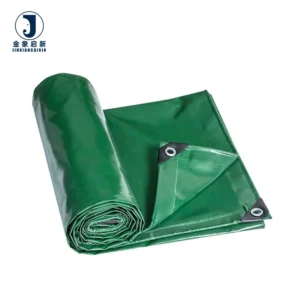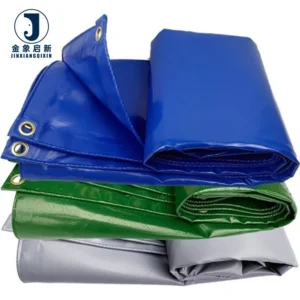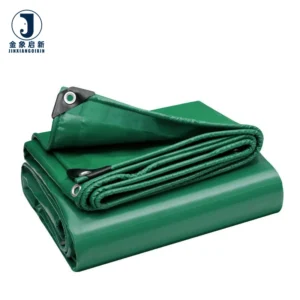
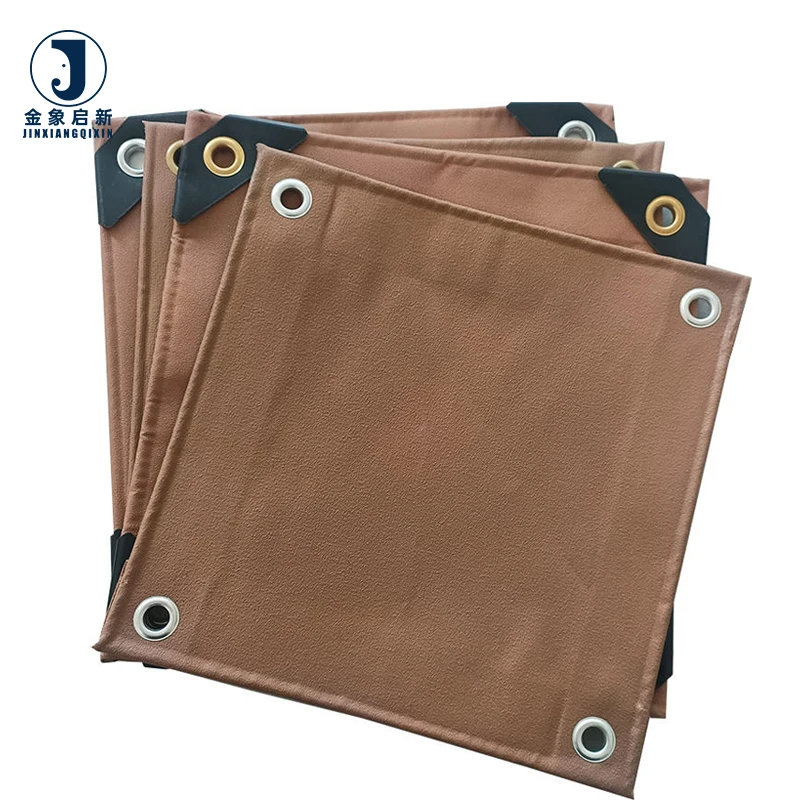
Precision-Coated Weight Control — every roll of 500gsm 600gsm PVC coated tarpaulin is weighed and verified against specification before leaving the line, eliminating the gap between quoted GSM and delivered material.
Technical Specifications
| Parameter | Value |
|---|---|
| Product Type | PVC Coated Tarpaulin |
| Weight Options | 500gsm / 600gsm |
| Coating Material | PVC |
| Base Fabric | Polyester woven substrate |
| Coating Method | Knife coated |
| Flame Retardant | Available in flame retardant grades — confirm the grade required for your market |
| Anti-Static | Available with anti-static treatment — confirm the surface resistance standard required |
| Anti-Mildew | Treated |
| Anti-Cold | Treated |
| Waterproof | Fully waterproof coated construction |
| Finish Options | Custom glossy or matte finish available |
| Weather Resistance | Suited to extended outdoor exposure |
Application Suitability
| Application | Exposure & Requirement |
|---|---|
| Truck side curtain fabric | Constant flexing at load points, road spray abrasion, UV exposure, weld seam integrity under tension |
| Flatbed cargo cover | Tie-down strap friction, wind flap fatigue, rain ingress prevention, UV degradation resistance |
| Industrial equipment shroud | Outdoor storage contact, moisture and mildew exposure, chemical splash from site environments |
| Transport fleet load wrap | Repeated handling and folding, cold-temperature brittleness risk, colour consistency across fleet units |
What "Flame Retardant" Means Without a Grade Behind It
When a PVC coated tarpaulin fabric for truck cover is labelled flame retardant but no test standard is referenced, the claim carries no compliance weight at the point of installation. Site inspectors and fleet auditors do not accept a marketing statement — they ask for a certificate tied to a recognised standard such as DIN 4102 B1, NFPA 701, or M2. We supply the test report that matches the grade specified on your purchase order, not a generic claim.
Material specifiers have lost contracts because the fabric delivered to site could not be traced back to a fire classification. In one case, a warehouse cover installation was rejected after the inspector noted the absence of a DIN 4102 certificate, forcing the contractor to strip and replace the entire membrane. [NEED_CITE: DIN 4102 fire classification for building materials] The cost of rework far exceeded the fabric savings from an unverified grade.
PVC Coated Tarpaulin 500gsm 600gsm Coating Integrity
The adhesion between the PVC layer and the polyester base fabric determines whether the material holds together at welded seams. Knife coating forces the PVC compound into the weave under controlled pressure, producing a mechanical bond that resists delamination when the fabric is heat-welded or folded repeatedly. This PVC coated tarpaulin 500gsm 600gsm range relies on that bond to maintain seam strength across truck curtain flex points where the load shifts during transit.
Base Fabric Density and Tensile Behaviour
The denier of the polyester yarns and the weave density together set the tensile ceiling of the coated fabric. A 500gsm grade with a tighter weave can outperform a 600gsm grade built on a looser base, because the coating weight alone does not determine how much load the warp and weft can carry before rupture. Specifiers sourcing PVC coated tarpaulin for structural covers should request the base fabric denier and thread count alongside the GSM figure to make an informed comparison.
Coating Method and Weld Performance
Knife-coated PVC fabric delivers a consistent coating thickness that allows fabricators to set weld temperature and dwell time with confidence. Laminated alternatives often show uneven coating distribution, leading to seams that blow through or fail to bond at the same machine settings. [NEED_CITE: tensile and tear test methods for coated fabrics per ISO 1421] Fabricators producing truck curtains and inflatable structures benefit from the repeatable weld behaviour that knife coating provides across the 500gsm and 600gsm weight range.
Reading the Specification Sheet Correctly
GSM measures the total weight of base fabric plus coating per square metre, but it does not isolate how much of that weight is structural yarn versus PVC compound. Two rolls at 500gsm can behave very differently under load if one carries a heavier coating on a lighter base fabric. The coating-to-yarn ratio affects tear propagation: a heavier coating on a sparse weave tends to crack along the tear line, while a balanced construction distributes the tear force across multiple yarn intersections. Surface finish — glossy or matte — influences how the material handles dirt accumulation and whether printed branding or lot numbering adheres cleanly. For cold-climate deployments, the anti-cold treatment shifts the low-temperature brittleness point downward, allowing the fabric to remain flexible during winter handling and folding.
The Cost of Undocumented Specifications
When a roll arrives lighter than the quoted GSM, the fabricator may not notice until the finished cover is installed and shows premature wear at stress points. Flame retardant treatment claimed without a supporting test report becomes a liability the moment a site inspector asks for documentation. Colour variation between rolls in a single delivery forces the installer to either accept a patchwork appearance across adjacent panels or reject the entire batch and delay the project. [NEED_CITE: coating adhesion failure modes in PVC tarpaulin under cyclic loading] Weld seams failing before the fabric body is itself a symptom of inconsistent coating thickness — a defect that only becomes visible when the load flexes and the weakest seam opens first.
Why Source This Fabric Here
Three dedicated production lines and 36 sets of professional equipment maintain the coating weight tolerance roll-to-roll, so the 500gsm and 600gsm grades you order are the grades you receive. The 10-person R&D team handles base fabric selection and treatment formulation, meaning custom flame retardant or anti-static requirements are developed in-house rather than outsourced to a third-party finisher. Every roll passes 100% inspection before shipment, with weight verification and visual checks documented in the pre-shipment record. Samples for custom widths, colours, or treatment combinations are produced within days, allowing fabricators to confirm weld parameters and drape behaviour before committing to a production run. The material specification sheet accompanying each order states the exact GSM, base fabric construction, and coating weight, giving technical buyers the data they need for compliance files.
Documentation & Verification
- Material specification sheet stating exact 500gsm or 600gsm weight, base fabric denier, and coating ratio
- Flame retardant test report matched to the grade specified on your purchase order
- Anti-static surface resistance certificate where treatment is applied for regulated environments
- Pre-shipment inspection record with per-roll weight verification and visual defect log
- ISO and CE certificates included in the shipment documentation package
Fabrication, Handling & Storage
- Set weld temperature and dwell time based on the specific 500gsm or 600gsm coating thickness to avoid blow-through
- Store rolls upright on pallets to prevent flat-spotting and permanent crease marks in the PVC layer
- Allow cold-stored rolls to acclimatise before unrolling to prevent cracking in anti-cold treated grades
- Use compatible PVC welding tape and solvent for field repairs on knife-coated seams
- Plan cutting layout around the supplied roll width to minimise off-cuts and cross-seam joins
Specifying the Right Grade for Your Project
Provide the end-use environment — whether the fabric will serve as a truck side curtain, a flatbed cargo cover, or an industrial shroud — along with the exposure conditions it will face. State the fire classification or anti-static standard required by the destination market so the correct treatment grade is formulated. Confirm whether you need rolls in stock widths or custom dimensions, and whether finished panels or raw roll stock is required. Request a sample if weld parameters or drape behaviour need validation before the production order is placed.
Frequently Asked Questions
Q: How is GSM verified before shipment and what tolerance is acceptable?
A: Each roll is weighed and measured for area, with the result recorded on the pre-shipment inspection sheet. The stated 500gsm or 600gsm figure is verified against this measurement, and any roll falling outside the agreed tolerance is flagged and replaced before dispatch. Buyers receive the weight record with their documentation package.
Q: Which flame retardant standards are available with supporting test reports?
A: The fabric can be treated to meet common classification systems — confirm the specific standard your project requires, such as B1, M2, or NFPA 701, at the inquiry stage. A test report from a recognised laboratory is supplied with the shipment, referencing the exact batch and treatment grade applied.
Q: How does knife coating affect weld and seam performance?
A: Knife coating produces a uniform PVC layer thickness across the roll, which lets fabricators set consistent weld temperatures without risking blow-through or weak bonds. This uniformity is critical for truck curtain seams that flex under load, where an uneven coating would cause intermittent weld failure along the same joint.
Q: What anti-static surface resistance values can be certified?
A: Anti-static treatment is formulated to the surface resistance range specified by the buyer’s market or project standard. The certification document states the measured value for the supplied batch. Specify the target range at inquiry so the correct formulation is applied and tested before shipment.
Q: Can custom widths be ordered for this PVC coated tarpaulin fabric?
A: Custom widths are available across the 500gsm and 600gsm range, subject to production line capacity and minimum run length. Provide the required width and total metreage at the inquiry stage so the lead time and roll configuration can be confirmed before sample development begins.