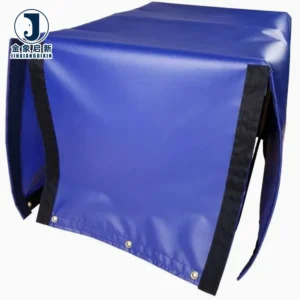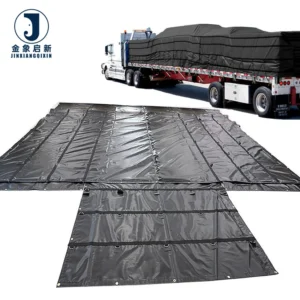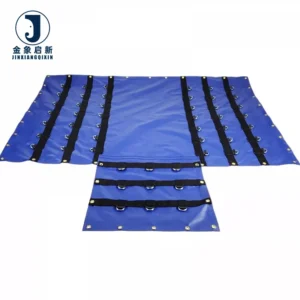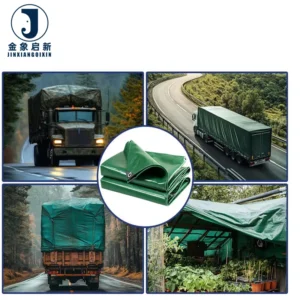
Precision Coating Control — every roll produced on hot-melt coating lines with in-process GSM verification against the stated specification, ensuring the PVC truck tarpaulin material you order is the material you receive.
Technical Specifications
| Parameter | Value |
|---|---|
| Product Type | PVC Coated Tarpaulin Roll / Truck Tarpaulin Cover |
| Base Fabric | High-tenacity polyester mesh fabric |
| Coating Method | Hot-melt coating & laminated technology |
| Weight Options | 350gsm / 420gsm / 500gsm / 550gsm / 600gsm / 750gsm |
| Total Thickness | 0.32 mm / 0.35 mm / 0.4 mm / 0.45 mm / 0.5 mm / 0.65 mm |
| Roll Width | 2 m / 2.1 m |
| Roll Length | 75 m (for 2 m width) / 50 m (for 2.1 m width) |
| Colour Options | Blue, Red, Yellow, Light Blue, Grey (custom colours available) |
| Waterproof | Yes |
| Cold Crack Resistance | Stated (test basis not stated in source) |
| Anti-Mildew | Stated (test basis not stated in source) |
| Anti-Static | Stated (surface resistance or standard not stated in source) |
| Flame Retardant | Available as special treatment — confirm the grade required for your market |
| UV Treatment | Available (test basis not stated in source) — request test report before specifying |
| Colour Fastness | Stated (test basis not stated in source) |
| Adhesion Strength | Good flexibility and adhesion (no numeric value stated) |
| Tear Strength | Outstanding tearing strength for welding stated (no numeric value or standard) |
| Special Treatments | Flame retardant / Anti-static / Anti-cold / Anti-mildew / 3P available |
| Service Life | 3–7 years under normal circumstances (source value — verify against application) |
| Certifications | ISO / CE |
Application Suitability
| Application | Exposure & Requirement |
|---|---|
| Truck side curtain | Constant flexing at load points, road debris abrasion, UV exposure, wind loading at highway speed |
| Truck awning and trailer cover | Direct sunlight, rain ingress prevention, repeated deployment and stowage cycles |
| Cargo ship deck cover | Salt spray, prolonged UV, wind-driven water, mechanical abrasion from cargo shifting |
| Construction enclosure | Scaffolding contact, wind load, dust containment, weather protection during build phase |
| Tent and membrane structure | Tensile loading at anchor points, UV exposure, weld seam integrity under tension |
| Equipment and machinery cover | Outdoor storage, moisture barrier, dust ingress prevention, abrasion from contact surfaces |
Why GSM Verification Matters More Than the Quoted Number
GSM on paper means nothing if the coating weight arriving at your dock does not match. The PVC coated tarpaulin GSM coating technology used here controls adhesion and layer weight at every pass, so the roll you test matches the roll you specified.
Buyers who have received tarpaulin lighter than the agreed GSM know the consequence: the base fabric carries less PVC mass, which changes the tensile behaviour and reduces the material available for a proper heat weld. When a truck side curtain flexes under highway wind load, the weld line is the first point to fail if the coating bond is insufficient. [NEED_CITE: tensile and tear test methods for coated fabrics per ISO 1421]
How Hot-Melt Coating and Lamination Shape the Bond
The distinction between hot-melt coating and laminated technology matters at the fabrication bench. Hot-melt coating drives liquid PVC into the interstices of the high-tenacity polyester mesh under controlled temperature and pressure, producing a mechanical lock between yarn and coating. Laminated technology bonds pre-formed PVC films to the base fabric under heat and pressure. Both methods are available across the 350gsm to 750gsm range, and the choice affects how the PVC truck tarpaulin material specifications translate into weld seam behaviour during curtain fabrication.
What the Polyester Base Fabric Contributes
The base fabric is a high-tenacity polyester mesh, and its construction determines how the composite responds to tear propagation. When a puncture occurs on a truck curtain in service, the tear must be arrested by the yarn structure before it reaches the next weld or eyelet line. Thicker grades at 600gsm and 750gsm carry heavier denier yarns and tighter mesh geometry, which changes the tear path and the energy required for propagation. This is why GSM and thickness must be read together — neither alone predicts in-service performance. [NEED_CITE: tear propagation behaviour in coated polyester fabrics per DIN 53363]
Reading Thickness Against Coating Method
Total thickness ranges from 0.32 mm at 350gsm to 0.65 mm at 750gsm, but thickness alone does not confirm how much PVC sits above the base fabric versus how much penetrates it. A 0.5 mm sheet produced by lamination may have a different surface PVC mass compared to one produced by hot-melt coating at the same total thickness. For truck cover fabricators running automated heat-weld lines, the surface PVC thickness determines the dwell time and temperature window before the base fabric is exposed. Selecting the correct combination requires reviewing the material specification sheet before committing to bulk.
The Cost of Choosing the Wrong Grade
A truck curtain specified at 500gsm for a long-haul fleet operating in high-UV corridors may show surface degradation before the fabric reaches its mechanical end of life, because the thinner PVC surface layer offers less UV mass to absorb. Conversely, specifying 750gsm for a light trailer that flexes frequently adds dead weight to every deployment cycle, increasing wear at the roller mechanism and tie-down points. Colour variation between rolls in the same order becomes visible once panels are installed side by side on a trailer, forcing rework on a vehicle that is already behind schedule. [NEED_CITE: colour consistency standards for PVC coated fabrics across production batches]
Why Fabricators Source This Material Here
Three full production lines and 36 sets of professional equipment support bulk roll output with the capacity to hold colour and coating consistency across an order. A 10-person R&D team handles material selection, pattern printing, custom sizing and sample development, allowing you to test weld parameters on a sample roll before bulk runs. Dedicated QA/QC at every production stage with 100% inspection before shipment means coating weight is checked roll by roll, not batch by batch. Samples are developed within days for custom GSM, colour, width or treatment requirements, so your lab can verify adhesion and weld behaviour before commitment.
Documentation & Verification
- Material specification sheet stating exact GSM, base fabric construction, coating method and colour reference per roll
- Test reports for UV resistance and flame-retardant grades supplied where applicable — request before specifying
- Pre-shipment inspection record confirming coating weight verification against stated GSM
- Roll packing list with individual roll dimensions, weight and colour batch for traceability
- Certificate of origin and customs support documentation for cross-border shipment
Fabrication, Handling & Storage
- Heat-weld parameters vary by GSM grade — test weld on sample at 550gsm and 750gsm before setting line temperatures
- Roll stock at 2 m or 2.1 m width should be stored upright on cores to prevent flat-spot creasing in the PVC coating
- Cut panels from heavier grades such as 600gsm require higher dwell time at weld bars due to increased coating mass
- Cold crack resistance allows deployment in low temperatures, but unroll slowly below freezing to avoid surface micro-cracking
- Anti-mildew treatment reduces biological growth on stored rolls — keep wrapped until fabrication begins
- Clean finished truck covers with mild detergent only, as aggressive solvents can soften the PVC surface layer
What to Include With Your Enquiry
Provide the target GSM, required roll width and the treatment grade your end-use market demands, including any fire-safety standard the material must meet. Specify whether you need roll stock only or finished panels cut to trailer dimensions, and indicate your annual volume so production can be scheduled across available lines. If colour consistency across multiple rolls is critical, request a reference sample for approval before the production run begins.
Frequently Asked Questions
Q: How is GSM verified — can I receive a coating weight test report with my shipment?
A: Every order is accompanied by a material specification sheet stating the agreed GSM, base fabric details and coating method. Pre-shipment inspection includes roll-by-roll weight verification. If your project requires a formal coating weight test report from a specific standard, state this requirement at enquiry stage so the correct test protocol is applied before dispatch.
Q: What is the difference between hot-melt coating and laminated technology for my welding process?
A: Hot-melt coating penetrates the polyester mesh, creating a mechanical interlock that changes how heat transfers through the material during welding. Laminated technology bonds surface films to the fabric, producing a different surface PVC profile. Fabricators should test both options on sample material to confirm which suits their weld bar temperature, dwell time and pressure settings.
Q: Which flame-retardant grades are available, and do they meet my market’s fire safety standard?
A: Flame-retardant treatment is available as a special option across the PVC coated tarpaulin range. The specific grade depends on your target market’s regulatory requirement. State the fire-safety standard your project must comply with at enquiry stage, and the applicable test report will be confirmed or developed before bulk production begins.
Q: How does PVC thickness relate to tensile and tear strength across the 350gsm to 750gsm range?
A: Thickness increases with GSM, but tensile and tear behaviour depend on both the base fabric construction and how much PVC penetrates the mesh. Heavier grades carry higher-denier yarns that resist tear propagation, while the coating mass affects surface abrasion resistance. Review the full specification sheet rather than selecting on thickness alone.
Q: Can anti-static or anti-mildew treatment be confirmed with a test result before bulk production?
A: Both anti-static and anti-mildew treatments are available across the range. Request a sample treated to your required specification and arrange testing at your own facility or an independent lab before confirming the bulk order. This ensures the treatment level matches your operating environment and compliance requirements.