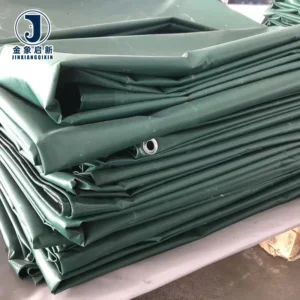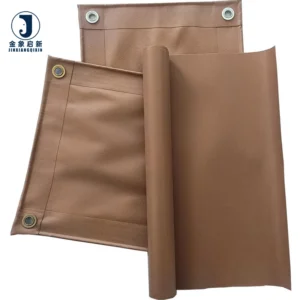
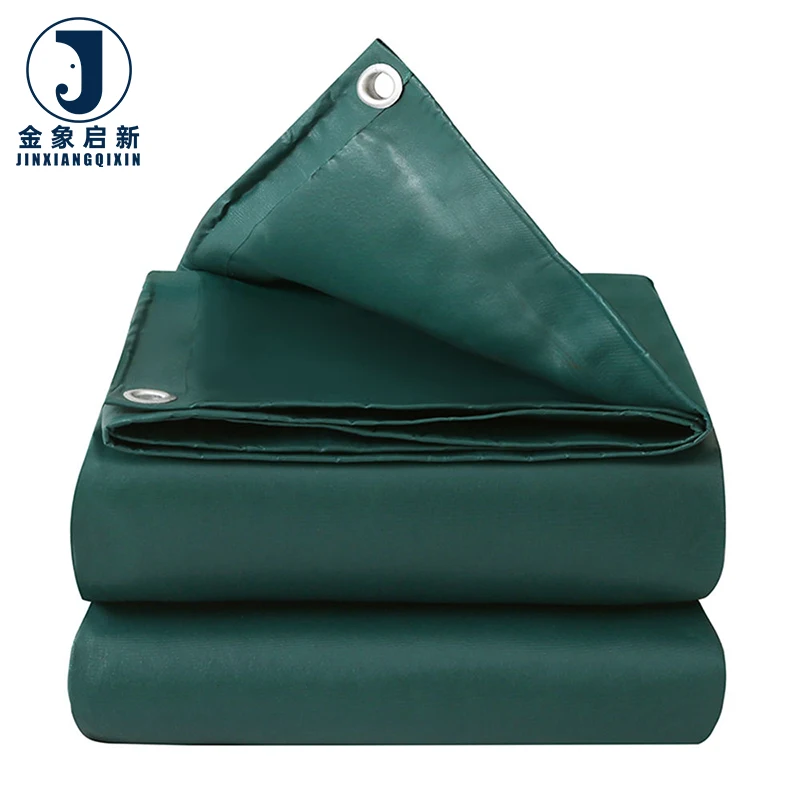
Coating Process Control — Every roll of this laminated PVC coated fabric undergoes in-process adhesion and weight checks before it leaves the line, ensuring the material you receive matches the specification you approved.
Technical Specifications
| Parameter | Value |
|---|---|
| Product Type | PVC Coated Tarpaulin Fabric |
| Base Fabric | High-strength polyester mesh fabric |
| Coating Material | PVC |
| Coating Technology | Laminated Technology & Hot-melt Coating Technology |
| Weight Options | 350gsm / 420gsm / 500gsm / 550gsm / 600gsm / 750gsm |
| Thickness Options | 0.32mm / 0.35mm / 0.4mm / 0.45mm / 0.5mm / 0.65mm |
| Roll Width | 2m / 2.1m |
| Roll Length | 75m (at 2m width) / 50m (at 2.1m width) |
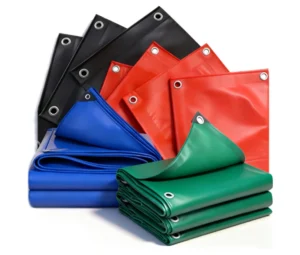
| Colour Options | Blue, Red, Yellow, Light blue, Grey (custom colours available) |
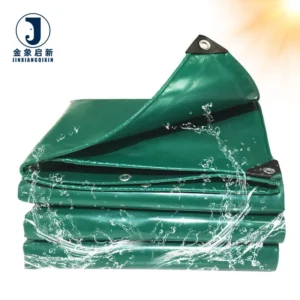
| Waterproof | Fully waterproof coated construction |
| UV Treatment | Sunproof treatment available — confirm test basis for your market |
| Flame Retardant | Available in flame retardant grades — confirm the grade required for your market |
| Anti-Static | Available — surface resistance standard to be confirmed at inquiry |
| Cold Crack Resistance | Stated — test basis to be confirmed at inquiry |
| Anti-Mildew | Stated — test basis to be confirmed at inquiry |
| Color Fastness | Best color fastness rating stated |
| Service Life | 3–7 years under normal circumstances |
| Standards | ISO, CE |
Application Suitability
| Application | Exposure & Requirement |
|---|---|
| Truck side curtain fabric | Constant flexing at fold lines, road debris abrasion, UV and weather exposure, weld integrity under tension |
| Construction site enclosure | Wind load, scaffolding contact abrasion, prolonged sun exposure, flame retardant compliance on site |
| Tent and awning fabrication | Panel welding at seams, colour consistency across multiple rolls, UV and water resistance |
| Equipment and stockpile covers | Puncture from sharp edges, prolonged outdoor storage, waterproofing under pooled water |
| Fish tank and pool liners | Continuous water immersion, chemical exposure from water treatment, anti-mildew requirement |
| Marine and offshore covers | Salt spray, high UV index, wind-driven rain, mechanical handling during deployment |
Why the PVC Coated Tarpaulin GSM You Were Quoted May Not Match What Arrives
A stated GSM on a quotation means nothing unless it is verified on the roll you receive.
Technical buyers and fabricators regularly face a frustrating gap: the material specification sheet promises a certain coating weight, but the rolls arriving at the dock weigh less per square metre than agreed. This is not always deliberate — coating thickness can drift during production if line speed and knife gap are not tightly managed. The result is a PVC coated tarpaulin fabric that feels lighter, welds differently, and delivers lower tensile and tear performance than the sample you approved. [NEED_CITE: tensile and tear test methods for coated fabrics per ISO 1421] When a fabricator cuts and welds hundreds of panels for a fleet of truck curtains, even a small shortfall in coating weight compounds into a structural weakness across every seam.
How Coating Method Affects Weld Behaviour and Adhesion
The PVC Coated Tarpaulin Fabric in this range is produced using both laminated technology and hot-melt coating technology. Laminated construction bonds a pre-formed PVC film to the polyester mesh under heat and pressure, yielding a smooth surface with consistent thickness that is well-suited to high-frequency welding. Hot-melt coating applies molten PVC directly into the mesh, creating a deeper penetration into the base fabric weave. For fabricators building welded panels for tents or truck curtains, the coating method determines the temperature window and dwell time needed at the weld bar — getting this wrong causes delamination before the fabric itself reaches its tear limit.
The Role of Base Fabric Construction in Tear Propagation
The high-strength polyester mesh base fabric is the structural skeleton of this PVC coated tarpaulin. When a puncture or cut occurs in service, the way the tear propagates depends on yarn tenacity, weave density, and the adhesion between coating and substrate. A tightly woven mesh with high-tenacity yarns forces the tear to change direction at each crossover point, absorbing energy and slowing propagation. This is why two fabrics at the same GSM can perform very differently under load — the one with a denser base fabric and stronger yarn-to-coating bond will resist tear spread far more effectively in applications like scaffolding wraps or cargo covers. [NEED_CITE: relationship between base fabric denier and tear resistance in coated technical textiles]
Reading the Specification Sheet Beyond the GSM Number
GSM tells you the total mass per square metre, but it does not tell you how that mass is distributed between the base fabric and the PVC coating. A 550gsm fabric with a heavy coating and a light mesh will have different flex behaviour and weld characteristics than a 550gsm fabric with a lighter coating and a heavier mesh. Thickness values across this range — from 0.32mm at 350gsm to 0.65mm at 750gsm — give a second data point: a higher GSM-to-thickness ratio indicates a denser construction. For fabricators selecting material for welded structures, understanding this ratio helps predict how the fabric will behave under the heat bar and how the seam will hold under flex load. The available treatment options — including cold crack resistance, anti-mildew, and anti-static — should be matched to the specific environment where the finished product will operate, not applied as a blanket specification.
The Hidden Cost of Specifying on Price Per Kilogram Alone
When procurement decisions are driven by the lowest cost per kilogram, the fabric that arrives often achieves that price by reducing coating weight or substituting a lighter base fabric. The consequence shows up weeks or months later: welded seams on truck side curtains peeling open at the flex points, construction enclosure panels tearing at grommet positions under wind load, or tent fabric showing visible colour variation when two rolls from the same order are installed side by side. [NEED_CITE: common failure modes in PVC coated fabric installations related to specification shortfall] These are not manufacturing defects in the finished product — they are material specification failures that no amount of fabrication skill can correct after the fabric has been cut and welded.
What Process Control Looks Like at the Production Stage
This PVC coated tarpaulin is produced on dedicated lines where coating weight, adhesion strength, and colour consistency are checked at each stage rather than only at final inspection. The 10-person R&D team handles material selection and sample development, meaning custom widths, colours, and treatment combinations are developed and validated before full production runs begin. QA/QC checkpoints sit at coating, laminating, colouring, and winding — not just at the packing bench. Rolls are inspected before shipment with a pre-shipment record that documents the actual GSM and visual condition, so the material reaching your fabrication floor matches what was agreed at sample approval.
Documentation & Verification
- Material specification sheet confirming exact GSM, base fabric type, and coating method per roll
- UV and flame retardant test reports supplied for treated grades — confirm required standard at inquiry
- Pre-shipment inspection record documenting weight verification and visual condition before dispatch
- ISO and CE certificates available with certificate of origin and customs documentation
Fabrication, Handling & Storage
- Set weld bar temperature and dwell time to match the specific coating technology — laminated and hot-melt grades respond differently
- Allow cold-stored rolls to reach ambient temperature before unrolling to avoid cracking the PVC coating surface
- Store rolls horizontally on padded racks to prevent permanent creasing across the 2m or 2.1m width
- Use sharp blades for cutting to avoid fraying the polyester mesh base fabric at panel edges
- Match thread weight and stitch length to the fabric thickness — heavier grades require adjusted machine settings
What to Include in Your Inquiry
To get an accurate specification and sample, provide your end-use application and the environmental conditions the finished product will face — including exposure to UV, chemicals, or temperature extremes. Specify whether you need roll stock for your own fabrication or finished cut sizes, and indicate any flame retardant or anti-static compliance requirements your market demands. If colour matching or custom printing is required, share your Pantone or RAL reference so a sample can be developed before production commitment.
Frequently Asked Questions
Q: How is the GSM verified on each roll before shipment?
A: Every roll is checked against the stated GSM during pre-shipment inspection. A material specification sheet accompanies each shipment documenting the actual weight, base fabric construction, and coating method. This allows you to independently verify the PVC coated tarpaulin you receive matches the agreed specification before it enters your production line.
Q: What is the difference between laminated and hot-melt coating for welding?
A: Laminated technology bonds a PVC film to the polyester mesh, producing a smooth surface ideal for high-frequency welding with predictable results. Hot-melt coating penetrates deeper into the mesh weave, offering strong adhesion but requiring adjusted weld parameters. Request a sample of each to test on your equipment before committing to a full order.
Q: Can you supply test reports for flame retardant and anti-static treatments?
A: Yes, test reports are provided for treated grades. Because flame retardant and anti-static standards vary by market and application — from building enclosure codes to mining ventilation requirements — confirm the specific standard your project requires at the inquiry stage so the correct treatment and documentation are supplied.
Q: How is colour consistency controlled across multiple rolls?
A: Colour matching is managed at the coating stage with in-process checks, and rolls within the same order are compared side by side during final inspection. This addresses the common problem of visible colour variation when panels from different rolls are installed adjacent to each other in tent or truck curtain fabrication.