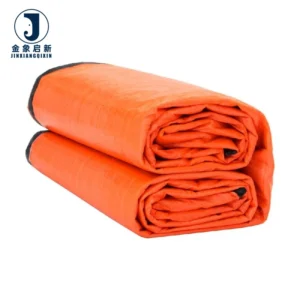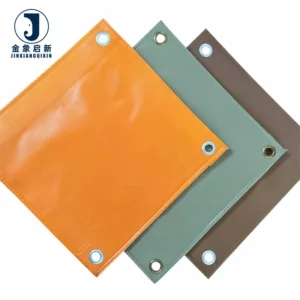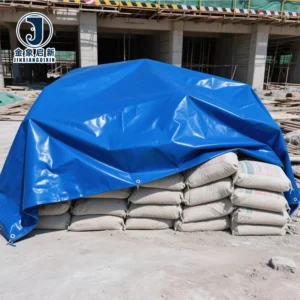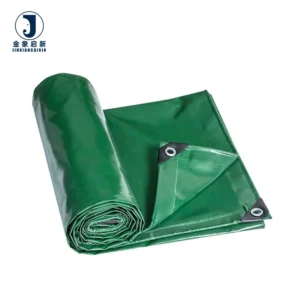
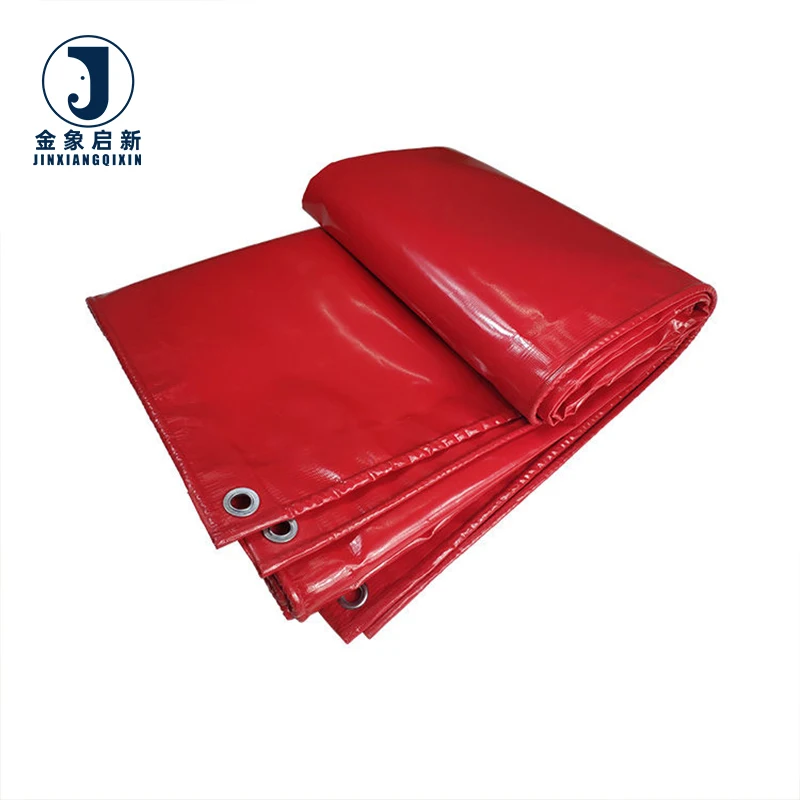
Coating Consistency Control — Nearly 30 years focused on PVC coated fabric with deep process control over coating weight and adhesion, ensuring every roll of PVC coated tarpaulin leaving the facility matches the specification sheet that accompanies it.
Technical Specifications
| Parameter | Value |
|---|---|
| Product Type | PVC Coated Tarpaulin |
| Weight Range | 350gsm, 400gsm, 420gsm, 500gsm, 600gsm, 650gsm, 750gsm, 900gsm |
| Base Fabric Denier | 500D×840D, 500D×1000D, 1000D×1000D, 1000D×1300D, 1300D×1300D, 1000D×2000D |
| Mesh Count | 30×19, 20×20, 30×15 |
| Coating Method | High frequency hot melt, Hot air, Sewing |
| Coating Material | PVC |
| Total Thickness | 0.29mm, 0.32mm, 0.38mm, 0.44mm, 0.46mm, 0.55mm, 0.65mm |
| Tensile Strength (warp / weft) | Up to 3900N / 3500N (test basis not stated in source) |
| Flame Retardant | Flame retardant available (grade not stated) |
| UV Treatment | Anti-UV treatment available (test basis not stated in source) |
| Anti-Mildew | Stated |
| Key Features | Waterproof, Heavy Metal Free, Flexible, Self Clean |
| Brittle Temperature | ≤ -50°C to -60°C |
| Softening Temperature | ≥ 80°C |
Application Suitability
| Application | Exposure & Requirement |
|---|---|
| Farming covers and crop shelters | Constant sun and rain exposure, wind uplift on large spans, need for light control and moisture barrier |
| Pond and reservoir liners | Permanent water contact, soil chemistry interaction, puncture risk from substrate irregularities |
| Greenhouse and tunnel structures | UV degradation over extended growing seasons, thermal cycling, condensation management |
| Livestock and equipment covers | Abrasion from repeated handling, animal contact, ammonia and organic chemical exposure |
| Succulent and garden plant rain covers | Frequent wet-dry cycles, moderate UV load, lightweight handling for seasonal deployment |
Why Coating Weight and Base Fabric Denier Both Matter for PVC Coated Tarpaulin Material Properties
A quoted GSM figure without the underlying base fabric denier and mesh count is incomplete specification data.
Technical buyers sourcing PVC coated tarpaulin material properties coating technology often receive a single weight number on the quotation. The problem is that two fabrics can share the same stated GSM yet differ fundamentally in tensile behaviour, tear propagation resistance and weldability. One roll may carry more coating mass over a lighter base yarn, while the other uses a heavier denier with a thinner coating film. On the production floor, these two rolls will behave differently under heat-sealing heads, respond differently to mechanical stress at seam junctions, and age at different rates under outdoor exposure. [NEED_CITE: relationship between base fabric denier and tensile performance in coated polyester per ISO 1421]
Base Fabric Construction as the Structural Backbone
The base fabric denier and mesh count directly determine how the finished PVC coated tarpaulin resists tensile and tear forces. A 1000D×1300D construction at 20×20 mesh produces a heavier yarn skeleton that distributes load across more fibre mass before any individual yarn reaches its break point. This matters most at the flex points where a cover is tensioned over a frame or where wind load concentrates on a fixed installation. The mesh count further governs how tightly those yarns interlock — a denser 30×19 weave on the lighter 500D×840D grades provides more cross-directional stability for applications that require frequent folding and repositioning.
Coating Method and Adhesion Integrity
How the PVC coating is applied and bonded to the base fabric determines seam behaviour during fabrication. High frequency hot melt welding fuses the coating layers across both fabric panels, creating a joint whose strength depends on coating thickness and polymer compatibility at the weld interface. Hot air welding relies on surface melting and pressure, making the coating’s softening temperature range a critical parameter. When the coating adhesion to the base fabric is well-controlled through consistent process parameters, the resulting seam can match the parent fabric strength at the points where loads concentrate most heavily.
Interpreting the Specification Table for Fabrication Decisions
Every parameter in the specification table above interacts with the others. Thickness correlates with GSM but is also influenced by the base fabric denier — a 650gsm grade at 0.46mm built on 1000D×1300D yarns will have a different coating-to-yarn ratio than a 750gsm grade at 0.55mm on 1300D×1300D. For fabricators running automated welding lines, knowing both values allows them to set dwell time and pressure accurately. The brittle temperature ceiling of -50°C to -60°C indicates the lower boundary for cold-climate handling and installation, while the softening temperature of ≥ 80°C defines the upper limit for storage and transport in enclosed containers during summer months. [NEED_CITE: brittle and softening temperature thresholds for plasticised PVC coated fabrics]
The Cost of Specification Mismatch in Farming and Agricultural Use
When the base fabric denier does not match the mechanical demands of the application, failure appears first at the seams and stress concentration points rather than across the fabric field. A lighter grade installed as a permanent pond liner may resist water adequately but succumb to puncture from substrate stones or root penetration. A farming tarpaulin specified only by GSM without confirming the underlying yarn construction may pass incoming weight inspection yet show premature edge fraying where grommets carry tie-down loads. Batch-to-batch coating inconsistency compounds the problem — rolls from the same purchase order arriving with different weld parameters required can disrupt production schedules and generate scrap. [NEED_CITE: coated fabric failure modes at seam and grommet junctions in agricultural applications]
Why Source This PVC Coated Fabric Here
Process control built over nearly 30 years of continuous coated fabric production means coating weight and base fabric adhesion are managed at every stage, not spot-checked after the fact. Three full production lines and 36 sets of professional equipment support volume capacity while maintaining the parameter consistency that fabricators and converters depend on for automated cutting and welding operations. The 10-person R&D team develops samples for custom width, colour and GSM requirements within days rather than weeks. Dedicated QA/QC operates at every production stage with full pre-shipment inspection covering roll count, weight verification and specification reconciliation before the container is sealed.
Documentation & Verification
- Material specification sheet stating exact GSM, base fabric denier, mesh count and coating method with every shipment
- Test reports for UV and flame-retardant grades issued where applicable with standard and grade clearly identified
- Pre-shipment inspection record covering roll count, weight verification and specification reconciliation
- Roll packing list enabling receiving warehouse to reconcile quantity and grade before container sealing
- ISO and CE certificates supplied as part of the dispatch documentation package
Fabrication, Handling & Storage
- Set high frequency welder dwell time according to the specific thickness grade, adjusting for 0.29mm through 0.65mm range
- Reinforce grommet zones with additional PVC patching on grades below 650gsm to distribute tie-down point loads
- Store rolls vertically on pallets to prevent permanent crease marks in the coating surface across heavier grades
- Allow cold-stored rolls to acclimatise to ambient temperature before unrolling to avoid coating micro-cracking below -50°C
- Use PVC-compatible solvent cleaners only, testing on a cut sample first to confirm surface treatment tolerance
What to Include with Your Enquiry
Provide the specific farming or agricultural application, including whether the PVC coated tarpaulin will be used as a fixed installation or a repeatedly deployed cover. State the target market and any local compliance requirements for flame retardant classification or UV performance documentation. Specify required roll width, GSM grade and whether you need the material supplied as roll stock or as finished cut sizes with edge finishing and grommet installation. If colour consistency across multiple rolls is critical for your project, flag this in the initial enquiry so batch allocation can be planned accordingly.
Frequently Asked Questions
Q: How is GSM verified on each roll, and what documentation accompanies shipment?
A: Every roll undergoes weight verification as part of the pre-shipment inspection process. A material specification sheet stating the exact GSM, base fabric denier, mesh count and coating method is supplied with each dispatch. The pre-shipment inspection record and roll packing list allow your receiving warehouse to cross-check roll count and specification against the original quotation before the container is accepted.
Q: Which flame retardant grades are available, and are test reports issued per batch?
A: Flame retardant treatment is available across the PVC coated tarpaulin range — confirm the specific grade required for your market, such as B1, M2 or NFPA 701, at the enquiry stage. Where applicable, test reports identifying the standard and grade are issued with the shipment documentation. This ensures compliance-sensitive agricultural and building installations can be verified against local fire safety requirements.
Q: How does base fabric denier affect heat-sealed seam strength for fabricators?
A: Higher denier base fabrics such as 1000D×1300D or 1300D×1300D provide more fibre mass at the weld interface, which generally supports stronger heat-sealed seams under both high frequency and hot air methods. The mesh count also influences how evenly the coating melts across the joint. Fabricators should request sample panels in their target GSM grade to validate weld parameters before committing to production volumes.
Q: Can custom width, colour and roll length be produced in a single order?
A: Custom width, colour and roll length are supported across the PVC coated tarpaulin range. The R&D team develops samples for new specifications within days. Colour consistency across multiple rolls in a single batch is managed through controlled coating and pigment processes — flag this requirement at enquiry stage so production planning can allocate rolls from the same coating run.
Q: What UV treatment documentation is available for outdoor agricultural applications?
A: Anti-UV treatment is available across the range. The specific test basis and expected performance classification should be confirmed at the enquiry stage to match your regional climate and exposure conditions. Where test reports are available for the selected grade, they are included with the dispatch documentation package for your records and compliance verification.