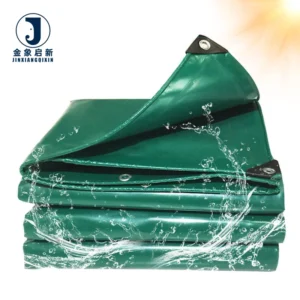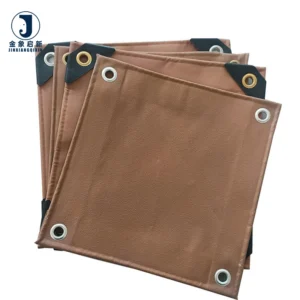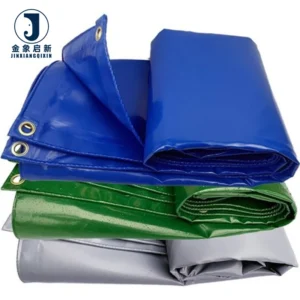
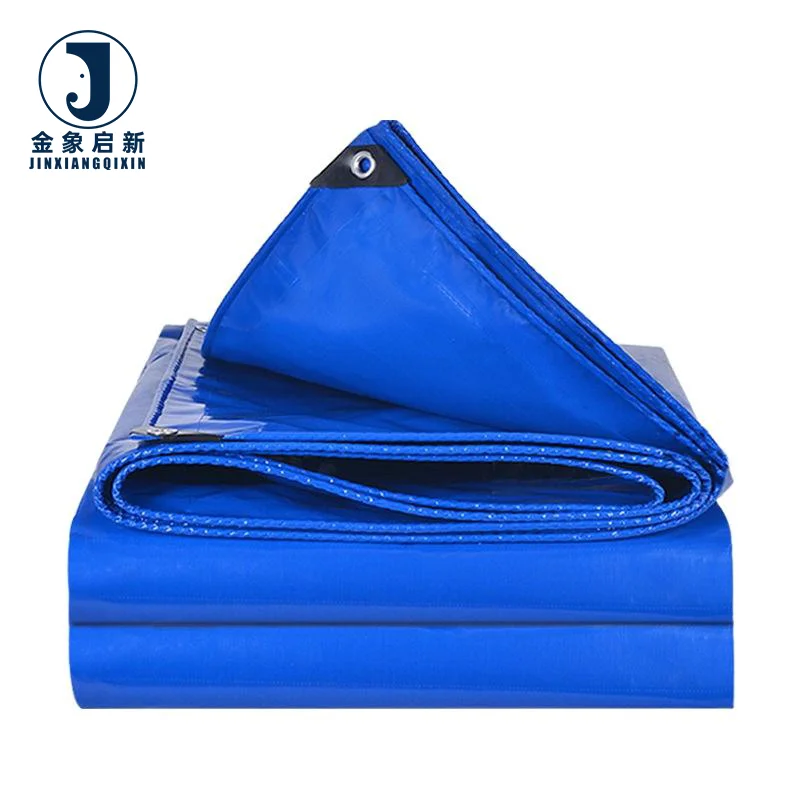
Coating Weight Control — Every roll of this PVC coated polyester mesh tarpaulin ships with a documented GSM verification record, ensuring the coating weight you specify is the coating weight you receive.
Technical Specifications
| Parameter | Value |
|---|---|
| Product Type | PVC Coated Tarpaulin |
| Base Fabric | High-strength polyester mesh |
| Coating Method | Laminated technology & Hot-melt Coating technology |
| Weight (GSM) | 350gsm / 420gsm / 500gsm / 550gsm / 600gsm / 750gsm |
| Total Thickness | 0.32mm / 0.35mm / 0.4mm / 0.45mm / 0.5mm / 0.65mm |
| Roll Width | 2m / 2.1m |
| Roll Length | 75m / 50m |
| Surface Finish | Glossy or Matt |
| Color Options | Blue, Red, Yellow, Light Blue, Grey (custom colors available) |
| Waterproof | Double-sided 100% waterproof |
| Key Features | Anti-static treatment, cold crack resistance, anti-mildew, UV treatment (confirm test basis required for your application) |
| Flame Retardant | Available in flame retardant grades — confirm the grade required for your market |
| Service Life | 3–7 years under normal conditions |
| Certifications | ISO, CE |
Application Suitability
| Application | Exposure & Requirement |
|---|---|
| Poultry coop curtains | Continuous humidity, ammonia exposure, temperature fluctuation, anti-static requirement for dust control |
| Construction enclosure & scaffolding wrap | Wind load, UV exposure, abrasion from scaffolding contact, site visibility color requirements |
| Truck awning & side curtain fabric | Road vibration, flex fatigue at fold points, weather exposure during transit |
| Industrial equipment covers | Static discharge risk in plant environments, chemical splash, repeated handling |
| Tent & awning manufacturing roll stock | Batch color consistency across production runs, weld seam integrity at stress points |
Why the Coating Technology Matters More Than GSM Alone for PVC Coated Tarpaulin
The bond between the PVC coating and the polyester mesh base fabric determines whether the material holds together at the weld line or delaminates under flex load.
Technical buyers often specify PVC coated tarpaulin by GSM and assume that a heavier weight guarantees proportional strength. In practice, a 600gsm fabric produced via laminated coating can underperform a 550gsm fabric made with hot-melt coating when tested for peel strength at welded seams [NEED_CITE: tensile and tear test methods for coated fabrics per ISO 1421]. The coating-to-yarn adhesion method controls how force transfers through the fabric structure when a load shifts against a tie-down point or when wind gusts press against a scaffolding enclosure. Without understanding which coating process produced the roll on your cutting table, the GSM number alone gives an incomplete picture of field performance.
Hot-Melt Versus Laminated Coating and What Each Delivers
Hot-melt coating drives the PVC compound into the polyester mesh under heat and pressure, producing a bond where the coating penetrates between individual yarns. This method supports higher peel strength at welded seams, making it the preferred specification for fabricated covers where load flex concentrates stress at the join. PVC coated tarpaulin produced this way maintains seam integrity through repeated folding cycles common in truck curtain and tent applications.
Laminated Construction and Its Role in Cost-Effective Roll Stock
Laminated technology bonds a pre-formed PVC film layer to the base fabric, delivering a smooth surface with consistent thickness at a lower production cost. For applications like agricultural covers, temporary site enclosures, and poultry curtains where weld seam cycling is less severe, laminated PVC coated polyester mesh provides reliable waterproof performance with a predictable cost structure. Buyers sourcing by the roll benefit from the dimensional stability this process delivers across production batches [NEED_CITE: DIN 53354 peel adhesion test for coated textiles].
Reading GSM and Thickness as a System, Not Isolated Numbers
The relationship between GSM and total thickness reveals how much coating mass sits above and below the base fabric. A 350gsm grade at 0.32mm indicates a lean coating suitable for lightweight curtains and short-term covers, while the 750gsm at 0.65mm places maximum coating mass around a heavier base mesh for industrial enclosures exposed to sustained mechanical stress. Selecting the correct grade requires matching both values to the tensile and tear demands of the finished product, not choosing on weight alone. The anti-static treatment integrated into the coating formulation addresses dust attraction in poultry environments and static discharge risk in industrial plant settings — request the surface resistance test data for your specific compliance requirement.
When the Wrong Grade Reaches the Fabrication Floor
A poultry curtain specified at 350gsm for a high-wind installation will show cold crack damage at stress concentrations within the first winter cycle, forcing a complete replacement before the planned interval [NEED_CITE: low-temperature flex testing standards for coated fabrics]. Rolls that arrive with color drift between batches create visible banding when panels are installed side by side on a scaffolding wrap or truck curtain, triggering a reject that delays project handover. Selecting a flame retardant grade without verifying the certification standard against site requirements leads to failed inspections and rework costs that far exceed the material savings of an untested specification.
Why Fabricators Source This Material Here
Three full production lines with 36 sets of professional equipment deliver the batch volume and roll-to-roll consistency that fabricators depend on for repeat production runs. The 10-person R&D team develops material samples within days when custom color matching or specific GSM grades are required outside standard stock options. A dedicated QA/QC process inspects coating weight at every production stage rather than sampling only at dispatch, catching GSM deviations before the roll is wound. Hot-melt and laminated coating capabilities in the same facility let technical buyers compare both methods against their weld seam requirements without managing multiple suppliers. Material specification sheets ship with each order detailing the exact GSM, base fabric construction, and coating weight so the documentation matches what arrives on the loading dock [NEED_CITE: ISO 1421 tensile testing for coated fabric verification].
Documentation & Verification
- Material specification sheet stating exact GSM, base fabric denier, and coating weight per roll
- Test report for UV and flame retardant grades referenced to the applicable standard
- Pre-shipment inspection record with documented coating weight verification against quoted GSM
- Roll packing list with batch traceability for color and coating consistency confirmation
- ISO and CE certificates included with each shipment
- Certificate of origin and customs documentation for cross-border dispatch
Fabrication, Handling & Storage
- Hot-melt coated rolls respond to high-frequency welding at standard power settings; laminated grades may require adjusted dwell time for full seam fusion
- Store rolls upright on pallets in shaded conditions to prevent flat-spotting on the 2m or 2.1m width that causes creasing during unrolling
- Anti-static treated surfaces should be cleaned with non-ionic detergent to preserve the surface resistivity without stripping the treatment
- Cold crack resistant grades remain flexible during winter fabrication but allow the material to acclimatize to workshop temperature before cutting for dimensional accuracy
- When fabricating poultry curtains, space grommets at intervals that distribute wind load across the polyester mesh base rather than concentrating force on individual yarn bundles
- Glossy finish rolls show handling marks more readily during fabrication; use protective interleave during transport and cutting-table operations
Specifying Your Requirement
When requesting a quotation, provide the end-use application and the environmental conditions the finished product will face — humidity levels, wind load expectations, and whether anti-static or flame retardant compliance is required on site. Specify your preferred GSM grade or describe the tensile and tear performance target so the correct weight and coating method can be recommended. Indicate whether you need roll stock in standard 2m or 2.1m widths, or whether custom width and color matching is required for your production schedule.
Frequently Asked Questions
Q: How is GSM verified on each roll and what documentation ships with the order?
A: Every roll undergoes coating weight measurement during production and again at pre-shipment inspection. The material specification sheet included in the dispatch documentation records the measured GSM alongside the quoted value, allowing you to confirm the coating weight matches before the material enters your fabrication process.
Q: What is the difference between hot-melt and laminated coating for weld seam performance?
A: Hot-melt coating penetrates between the polyester mesh yarns under heat and pressure, producing higher peel strength at welded joints. Laminated coating bonds a pre-formed PVC film to the fabric surface, offering a cost-effective solution for applications where weld seam cycling is less demanding.
Q: Can color consistency be maintained across multiple rolls in one production batch?
A: Dedicated QA/QC checks color against reference standards at every production stage. Rolls within the same batch are inspected side by side before packing to identify and remove any units showing visible drift, ensuring uniform appearance when panels are installed adjacent to each other.
Q: What test documentation supports the anti-static and UV treatment claims?
A: Test reports are available for UV and anti-static treatments, referenced to the applicable standard. Request the specific test data relevant to your market compliance requirements before committing to bulk volume so the certification basis is confirmed in advance.