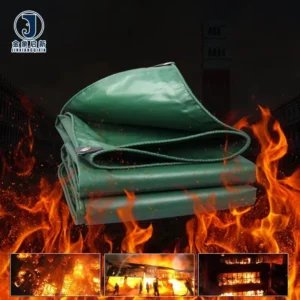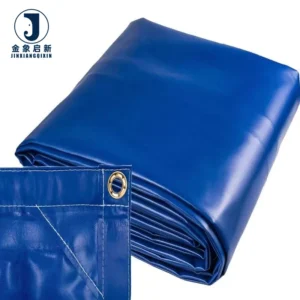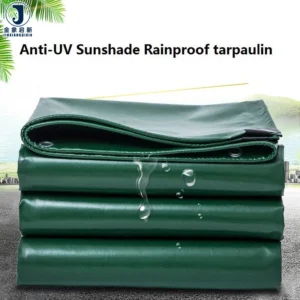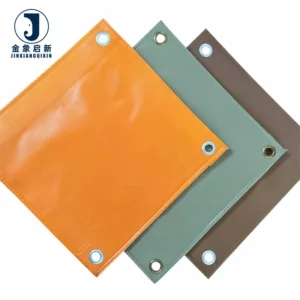
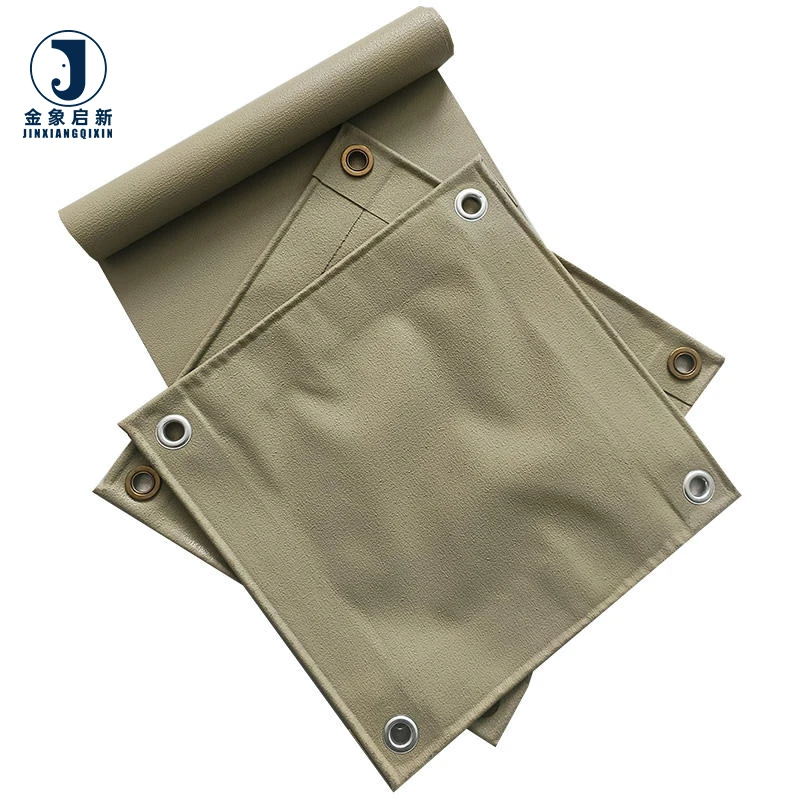
Coating Control Mastery — nearly 30 years of focused PVC coating process knowledge ensures every roll of this knife coated tarpaulin fabric meets the GSM and adhesion specification stated on the quotation, verified before dispatch.
Technical Specifications
| Parameter | Value |
|---|---|
| Product Type | PVC Coated Tarpaulin |
| Material Construction | PVC Coated Fabric, Knife Coated |
| Weight Options | 700gsm / 850gsm / 900gsm |
| Coating Material | PVC |
| Flame Retardant | Available (grade not stated — confirm the grade required for your market) |
| Anti-Static | Available (standard not stated — confirm the standard required for your market) |
| Anti-Cold | Available |
| Anti-Mildew | Available |
| Weather Resistance | Outdoor life 1-3 years (source value — verify against manufacturer catalog) |
| Key Features | Flame retardant, anti-static, anti-cold and anti-mildew treatments available on request |
Application Suitability
| Application | Exposure & Requirement |
|---|---|
| Truck cargo cover | Constant road vibration, flexing at load shift points, UV and rain exposure, tie-down abrasion at reinforcement zones |
| Transport load covering | Extended outdoor weather exposure, wind uplift stress at seams, repeated folding and unfolding during loading operations |
| Side curtain fabric for trailers | High-frequency flex cycles, road debris impact, friction against cargo edges, weld seam integrity at panel joints |
| Industrial cargo shielding | Chemical splash risk, forklift contact abrasion, dust and moisture ingress prevention during intermodal transit |
Why the PVC Coated Tarpaulin Base Fabric Denier and Coating Weight GSM Determine Real-World Cover Performance
GSM on the quotation means nothing if the coating adhesion fails before the base fabric reaches its tensile limit.
Technical buyers specify PVC coated tarpaulin base fabric denier coating weight GSM expecting a certain performance tier, yet arrival inspection often reveals material that is lighter than agreed or where the coating separates from the base fabric under flex stress. The base fabric denier and weave density define the structural skeleton — the PVC coating weight determines how well that skeleton is protected and how reliably the fabric can be welded at seams. When these three variables are not controlled in tandem, truck covers fail at the weld line long before the fabric body shows wear. [NEED_CITE: tensile and tear test methods for coated fabrics per ISO 1421]
How Knife Coating Builds the Adhesion Foundation
The knife coated process used for this PVC coated tarpaulin drives coating compound directly into the base fabric weave under controlled pressure, filling the interstices between yarns rather than simply laminating a film on top. This produces a mechanical bond where the PVC locks into the fabric structure, giving the material the peel strength it needs to survive repeated folding, tensioning and thermal cycling on a truck body. Coating weight control at this stage is what separates fabric that welds cleanly from fabric that delaminates under the heat bar.
Why Weld Seam Behaviour Defines Service Life on the Road
Truck covers experience their highest stress not in the centre of a panel but at every welded seam where the fabric flexes against cargo movement and wind load. The PVC coating weight and its adhesion to the base fabric directly determine whether the weld zone holds or peels apart after a season of use. Fabric with insufficient coating penetration leaves gaps at the yarn crossover points where heat welding cannot form a continuous bond, creating weak lines that split under load. This PVC coated tarpaulin base fabric denier coating weight GSM relationship is why specifying by GSM alone leaves the most critical performance variable uncontrolled. [NEED_CITE: DIN 4102 fire classification for building materials]
Reading the Spec Sheet Beyond the GSM Number
The 700gsm, 850gsm and 900gsm weight options each represent a different balance of base fabric density and coating mass — not simply a thicker or thinner version of the same material. A higher GSM achieved through heavier base yarns delivers greater tear resistance, while a higher GSM achieved through thicker coating improves weld strength and surface abrasion tolerance but adds stiffness. Technical buyers should request the base fabric denier and weave count alongside the GSM figure to understand which performance axis the material favours. The available flame retardant, anti-static, anti-cold and anti-mildew treatments add functional layers whose compatibility with the coating formulation affects long-term flexibility and colour stability.
What Happens When the Specification Is Incomplete
Fleet operators who accept a quotation based on GSM alone without verifying base fabric construction or coating adhesion often discover the shortfall only after the cover is installed and in service. Coating that was applied too thin delaminates at eyelet reinforcement zones where tie-down tension concentrates. Base fabric woven with low-denier yarns tears progressively from a single puncture rather than containing the damage. Colour variation between rolls from different production batches becomes visible when panels are heat-welded side by side on the trailer. These are material specification failures, not installation errors, and they trace back to incomplete procurement documentation. [NEED_CITE: coating adhesion and peel strength testing for PVC tarpaulin fabrics]
Why Technical Buyers Source This Fabric Here
Deep coating process control developed over nearly 30 years of focused PVC coated fabric production means GSM and coating weight are held within tolerance across the full production run, not just on the sample roll. Three full production lines with 36 sets of professional equipment allow bulk orders of this PVC coated tarpaulin to ship on schedule without compressing the coating cure cycle. The 10-person R&D team develops samples within days when custom widths, colours or treatment combinations are required, so buyers can verify material behaviour before committing to production volume. Every roll undergoes dedicated QA/QC at each production stage with full pre-shipment inspection, ensuring the specification sheet matches what arrives at the container door.
Documentation & Verification
- Material specification sheet stating GSM, base fabric denier, coating material and coating weight for each roll
- Test report for flame retardant grade where applicable, confirming standard and classification
- Pre-shipment inspection record verifying roll-to-roll GSM and colour consistency before dispatch
- ISO and CE certificates provided as supporting compliance documentation
- Certificate of origin and customs documentation included with every export shipment
Fabrication, Handling & Storage
- Heat welding parameters must be calibrated to the 700gsm, 850gsm or 900gsm grade to avoid coating burn-through at seam zones
- Cut rolls should be stored flat on pallets to prevent permanent crease marks in the PVC coating surface
- Unfolding in cold conditions requires gradual acclimatisation to prevent cracking in anti-cold treated grades
- Panel layout should account for roll width to minimise transverse welds across high-stress cargo cover zones
- Clean with mild detergent only — solvent-based cleaners degrade the PVC coating surface and treatment layers
- Repair minor field punctures with compatible PVC patch material heat-bonded at the coating adhesion temperature
What to Include in Your Enquiry
To specify this PVC coated tarpaulin accurately, provide the target GSM grade, the required treatment combination (flame retardant, anti-static, anti-cold or anti-mildew), and the roll width and length that match your panel layout or fabrication equipment. If your end-use market mandates a specific fire classification or anti-static standard, state the governing regulation so the correct treatment grade can be confirmed before sampling. Buyers requiring custom colour matching should submit a physical swatch or Pantone reference and indicate whether rolls will be installed side by side, so batch colour consistency can be planned into the production schedule.
Frequently Asked Questions
Q: How do I verify the GSM matches what was quoted when the rolls arrive?
A: Cut a measured sample from each roll, weigh it on a calibrated scale, and calculate GSM from the known area. Compare the result against the material specification sheet provided with your shipment. Any deviation beyond tolerance should be flagged before fabrication begins, as welding parameters depend on accurate coating weight data.
Q: What certifications come with flame retardant or anti-static treatments?
A: Flame retardant and anti-static grades are available, but the applicable standard depends on your target market regulation. State the required classification in your enquiry so the correct treatment formulation is applied and a matching test report is issued with the shipment documentation.
Q: How does coating weight affect heat welding performance at seams?
A: Coating weight determines how much PVC material is available to form a continuous bond at the weld zone. Insufficient coating penetration leaves gaps at yarn crossover points, producing seams that peel under flex stress. The knife coated process used for this PVC coated tarpaulin drives coating into the weave to support reliable weld adhesion.
Q: Can I get custom roll widths and lengths for my truck cover panel layout?
A: Custom widths and lengths are available through the R&D sample development process. Provide your panel dimensions and annual volume so the most efficient roll configuration can be quoted, minimising offcuts and transverse welds across high-stress areas of the finished cargo cover.
Q: How do you ensure colour consistency when multiple rolls are installed side by side?
A: Colour consistency is managed through controlled pigment dosing and in-process inspection at every production stage. Rolls destined for adjacent panel installation are grouped within the same production batch, and a pre-shipment inspection record verifies visual match before dispatch to prevent visible variation on the assembled truck cover.