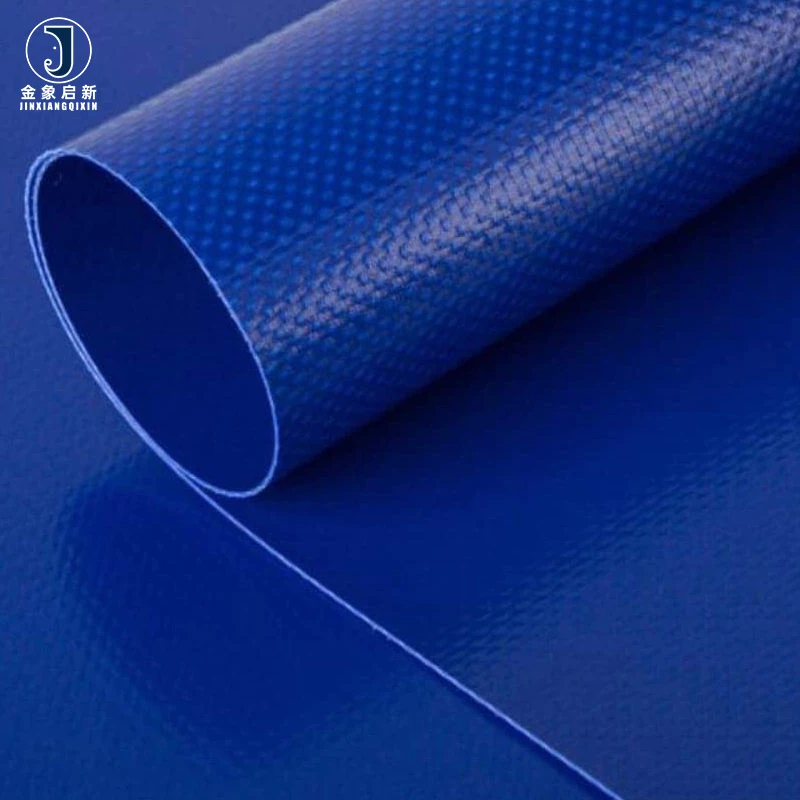
Coating Weight Control — Every roll is verified against the stated GSM at multiple production stages before dispatch, ensuring the PVC coated tarpaulin base fabric denier coating weight GSM you specify is the fabric you receive.
Technical Specifications
| Parameter | Value |
|---|---|
| Product Type | PVC Coated Tarpaulin |
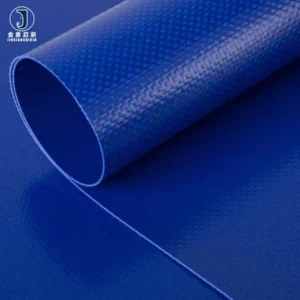
| Base Fabric | High-strength polyester mesh |
| Coating Method | Laminated technology & Hot-melt coating technology |
| Weight Options | 350gsm, 420gsm, 500gsm, 550gsm, 600gsm, 750gsm |
| Thickness Options | 0.32mm, 0.35mm, 0.4mm, 0.45mm, 0.5mm, 0.65mm |
| Roll Size | 2m × 75m / 2.1m × 50m |
| Colour Options | Blue, Red, Yellow, Light Blue, Grey (custom available) |
| Finish Product Size | Custom cut to buyer dimensions |
| Waterproof | Fully waterproof coated construction |
| UV Protection | Stated (test basis not stated in source) |
| Flame Retardant | Available in flame retardant grades — confirm the grade required for your market |
| Anti-Static | Available in anti-static grades — confirm the standard required |
| Anti-Mildew | Treated |
| Cold Crack Resistance | Treated |
| Colour Fastness | Stated (grade not stated in source) |
| Service Life | Suited to extended outdoor exposure under normal conditions |
| Standards | ISO, CE |
Application Suitability
| Application | Exposure & Requirement |
|---|---|
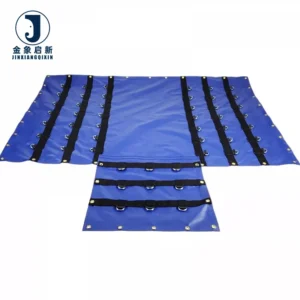
| Truck side curtains and trailer covers | Constant flexing at load points, road abrasion, wind loading, UV exposure — requires weld seam strength matching base fabric tear resistance |
| Tent and awning panels | Welded seam construction, tension loading, weather cycling — demands consistent GSM and coating adhesion across full roll length |
| Construction and scaffolding enclosure | Puncture risk from site debris, wind shear, prolonged UV — requires tear propagation resistance from mesh base |
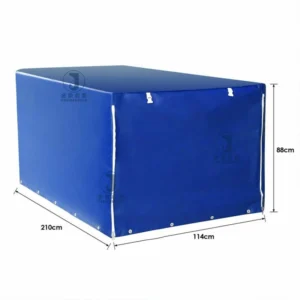
| Equipment and industrial covers | Abrasion from vibration contact, chemical splash, moisture ingress — needs coating integrity at seams and hems |
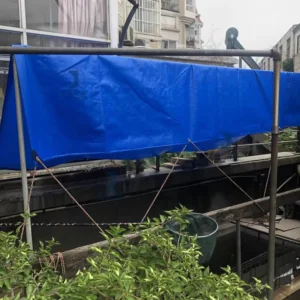
| Cargo ship and marine covers | Salt spray, sustained moisture, mechanical handling — calls for anti-mildew treatment and cold crack resistance |
Why GSM Alone Does Not Tell You How Strong the Fabric Is
The PVC coated tarpaulin base fabric denier coating weight GSM figure only becomes meaningful when read alongside base fabric denier, weave density and coating method.
I have seen coated fabric orders arrive on site where the roll weight matched the quotation, yet the material tore at welded seams within months of installation. The reason is almost always the same: the base mesh was woven with a lower denier yarn than expected, and the GSM was achieved by adding more PVC rather than more polyester. A fabric built on coating thickness alone will pass a weight check but fail where the load flexes most — at the heat-welded seam line. [NEED_CITE: tensile and tear test methods for coated fabrics per ISO 1421] Specifying by GSM without confirming the mesh construction and coating method is how truck covers and tent panels end up being replaced far earlier than planned.
Laminated and Hot-Melt Coating Methods Explained
This PVC coated tarpaulin is produced using both laminated and hot-melt coating technology, each affecting the bond between the PVC layer and the polyester mesh in different ways. Hot-melt coating forces liquid PVC into the mesh under heat and pressure, producing a bond where the coating penetrates the yarn structure rather than sitting on top. Laminated technology bonds pre-formed PVC films to the mesh under controlled heat. For truck cover fabricators running hot-air welders, the coating method directly influences the temperature window where seams form a reliable bond without delaminating from the base fabric.
Coating Adhesion and Weld Seam Behaviour
The point where a truck side curtain or tent panel fails is rarely the centre of the fabric — it is the welded seam where flex load concentrates. Hot-melt coated fabric tends to offer stronger peel resistance at the weld line because the PVC has already penetrated the mesh during production, creating a through-thickness bond. [NEED_CITE: peel strength test methods for coated textile welds] When the coating sits primarily on the surface as in some laminated constructions, the weld can separate from the mesh under repeated flexing. For fabricators building truck covers that endure constant road vibration, understanding which coating method was used on each roll is essential to setting correct welder temperatures and dwell times.
Reading GSM, Thickness and Mesh Density Together
A 650 GSM fabric with a dense, high-denier polyester mesh will outperform a 650 GSM fabric that achieved its weight through a thick coating over a light mesh. The base fabric denier and weave density determine tear propagation resistance — how far a puncture or cut will spread before the weave arrests it. The coating weight determines abrasion resistance, waterproofing integrity and surface durability. Thickness readings across the range from 0.32mm to 0.65mm correlate with the PVC coating mass but do not alone indicate base fabric quality. Specifying PVC coated tarpaulin by a combination of GSM, stated base mesh construction and coating method gives fabricators a far more reliable predictor of how the fabric will behave under mechanical stress.
Specifying the Wrong Grade and the Cost That Follows
A truck cover built from a grade that is too light for the trailer’s flex pattern will develop micro-tears at eyelet lines and welded corners long before the centre of the panel shows wear. When flame retardant fabric is specified without confirming the test standard, the shipment can fail site inspection on arrival — forcing the contractor to source replacement material under deadline pressure. Colour variation between rolls in the same order becomes visible the moment panels are installed side by side on a tent structure or a row of trailers, and the entire batch may need rework. [NEED_CITE: colour consistency standards for batch-dyed coated fabrics] These failures are not material defects in the usual sense — they are specification mismatches that could have been caught before production started.
Why Technical Buyers Source This PVC Coated Tarpaulin Here
Three full production lines and 36 sets of professional equipment support consistent output volume, meaning roll-to-roll GSM and colour matching are controlled by process rather than chance. A 10-person R&D team develops custom samples within days — covering colour, GSM selection and finish product sizing for specific truck models or tent panel layouts. Dedicated QA and QC checkpoints run at every production stage, with every roll inspected before shipment rather than sampled from a batch. The coating weight and adhesion process is controlled in-house, which is where deep experience in coated fabric translates directly to reliable weld seam performance. Documentation ships with each order, including material specification sheets and pre-shipment inspection records that give fabricators traceable proof of what they received.
Documentation & Verification
- Material specification sheet listing exact GSM, base fabric denier, coating method and colour reference per roll
- Test reports for UV and flame retardant grades provided where applicable to confirm stated treatment
- Pre-shipment inspection record verifying dimensions, GSM and visual quality of every roll in the order
- Roll packing list with net weight and roll count for container loading planning
- Certificate of origin and customs documentation supporting international dispatch
Fabrication, Handling & Storage
- Hot-air welding temperature and speed should be calibrated to the specific coating method — hot-melt and laminated grades respond differently at the seam
- Store rolls upright on cores in a dry, shaded area to prevent flat spots that affect feed tension during fabrication
- Cold crack resistant grades should still be unrolled and allowed to reach ambient temperature before cutting or welding in cold-weather workshops
- Cut panels using the 2m or 2.1m roll width to plan seam placement away from high-flex zones on truck covers
- Clean finished covers with mild detergent only — abrasive solvents can degrade the PVC coating surface and colour fastness over time
Before You Specify — What We Need From You
Provide the specific truck or trailer model, the panel layout and the flex points where the cover will experience the highest mechanical load. Confirm whether your target market requires a particular flame retardant or anti-static standard so we can match the correct treatment grade. Let us know the roll width, colour reference and whether you need finished cut sizes or full roll stock for your own fabrication line. If colour consistency across multiple rolls is critical for your installation, request a pre-production sample to approve before the full order enters production.
Frequently Asked Questions
Q: How is GSM verified on each roll before shipment?
A: Every roll is weighed and measured during pre-shipment inspection, with the result recorded against the stated specification on the material sheet. We do not rely on batch sampling — the inspection covers each individual roll. If a tolerance range applies to your specification, confirm this at the inquiry stage so it is documented on the production order and inspection record.
Q: Which flame retardant standards are available for this PVC coated tarpaulin?
A: Flame retardant treatment is available in multiple grades to suit different market requirements. The specific test standard and classification depend on your target market’s fire codes — confirm the standard you need at inquiry stage so we supply the correct grade with supporting test documentation. No flame retardant claim is made without a documented test basis.
Q: What test basis supports the UV protection claim?
A: UV treatment is applied during the coating process to resist degradation from prolonged sun exposure. The specific test method and exposure rating depend on the grade selected. Request the UV test report for the grade you are specifying so you can verify it matches the expected outdoor service conditions of your truck covers or tent installations.
Q: How does coating method affect weld seam strength on fabricated panels?
A: Hot-melt coating penetrates the polyester mesh during production, which generally produces stronger peel resistance at the weld line compared to surface-only coating. Laminated coating bonds pre-formed PVC films to the mesh. Your welder settings — temperature, speed and pressure — should be calibrated to the specific coating method used on the rolls you receive. We provide this information on the material specification sheet.
Q: How do I specify custom width, colour and GSM for my order?
A: Send us the required GSM, roll width, colour reference and any treatment requirements at the inquiry stage. Our R&D team develops a sample within days for your approval. Once the sample is confirmed, the production order runs to the approved specification with QA checkpoints throughout, and pre-shipment inspection verifies every roll before dispatch.