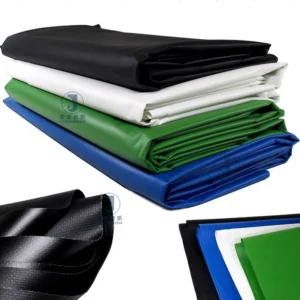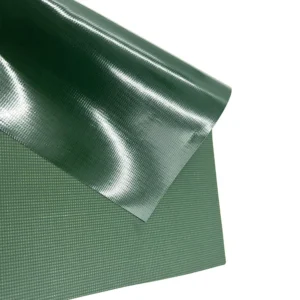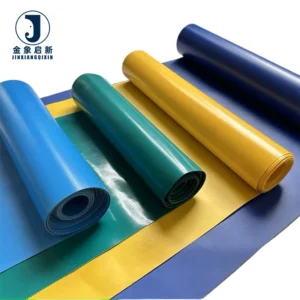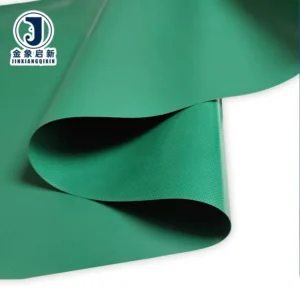
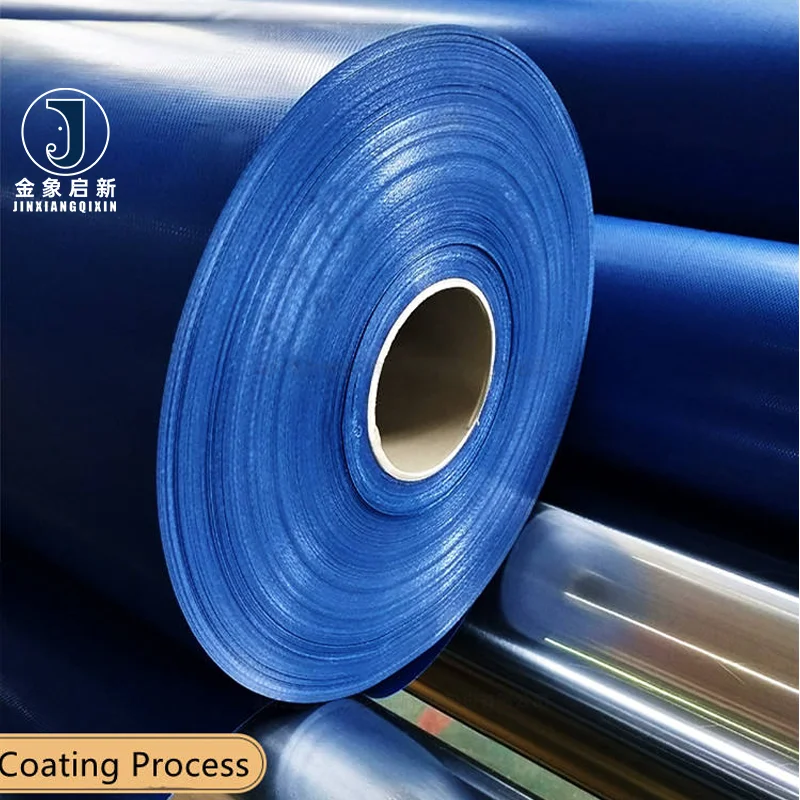
Coating Adhesion Mastery — Nearly 30 years of focused PVC coating process control ensures that the bond between base fabric and coating layer holds firm at flex points, directly supporting the reliability of every 650 GSM roll leaving the production line.
Technical Specifications
| Parameter | Value |
|---|---|
| Specification | PVC Coated Tarpaulin Roll 650 Gsm |
| Product Type | PVC Coated Tarpaulin |
| Base Fabric Denier | 200D×300D, 500D×500D, 840D×840D, 1000D×1000D |
| Coating Material | PVC |
| Surface Finish | Glossy or matte |
| Treatment | Waterproof, UV, flame retardant (grade not stated in source) and anti-fungal |
| Temperature Range | -15°C to 70°C |
| Colour Options | Blue, yellow, black, green, white, or custom |
| Size Options | 3×4 m, 6×8 m, 8×10 m, 10×12 m or custom |
| Standards | ISO, CE |
Application Suitability
| Application | Exposure & Requirement |
|---|---|
| Truck side curtain fabric | Constant flexing at load points, road debris abrasion, prolonged UV exposure |
| Tent and roof cover panels | Sustained weather loading, thermal cycling from sun to rain, wind-driven rain ingress |
| Transport trailer top sheet | Direct sun exposure, standing water pooling, tie-down strap compression at edges |
| Outdoor poly tarp for construction sites | Contact with soil and cement dust, mechanical puncture risk, repeated folding and unfolding |
Why Coating Weight Control Decides Real Fabric Performance
A quoted 650 GSM means little if the coating was applied unevenly or if the base fabric absorbed the specification gap.
Buyers specifying PVC coated tarpaulin by weight often discover on arrival that the roll feels lighter than expected. The reason is rarely fraud — it is usually poor process control during coating, where the PVC paste thickness varies across the web or where the base fabric denier is lower than assumed in the GSM calculation. [NEED_CITE: tensile and tear test methods for coated fabrics per ISO 1421] The result is a material that meets the number on paper but underperforms in the field, particularly where the fabric must withstand repeated flexing or where welded seams carry structural loads. In-process coating weight verification at every stage of production is the only way to close this gap between quotation and delivery.
Base Fabric Denier Selection for Coated Fabric Buyers
When sourcing PVC coated tarpaulin 650 gsm material, the base fabric denier is the variable that most influences how the coating interacts with the yarn structure. A 200D×300D construction yields a lighter, more pliable fabric suited to applications where drapability matters, such as temporary tent panels or protective covers that must conform to irregular shapes. Moving to 500D×500D or 840D×840D increases the yarn mass available for the coating to bond with, producing a stiffer panel that resists deformation under wind load or tie-down compression.
The 1000D×1000D option maximises yarn density in both warp and weft, creating a base where the PVC coating penetrates deeply into a tighter weave. This combination suits truck side curtains and heavy transport covers where the fabric must endure years of flexing without delamination. Each denier option pairs with the same 650 GSM coating weight, meaning the ratio of coating to base fabric shifts across the range — a factor that directly affects hand feel, weld behaviour, and long-term adhesion strength.
Coating Adhesion and Weld Behaviour at Flex Points
The bond between the PVC coating and the base yarn is the property that determines whether a welded seam fails before the fabric itself does. In truck and transport applications, the highest stress occurs where the side curtain flexes over the load during transit. If coating adhesion is weak, the heat from welding degrades the bond in the immediate seam zone, creating a failure path that opens under repeated bending. [NEED_CITE: weld strength versus fabric tensile strength in PVC coated fabrics]
Deep process control over coating application — including paste viscosity management, oven temperature profiling, and pressure roller settings — ensures that the PVC penetrates the yarn bundle rather than sitting on the surface. This penetration is what allows a welded seam to perform as a monolithic joint rather than a laminated weak point. For fabricators building custom tarpaulin products, requesting a weld peel test sample before committing to a bulk order provides direct evidence of how the coating will behave under their specific welding equipment and parameters.
Reading the Specification Sheet Beyond the GSM Number
A 650 GSM figure alone tells a technical buyer very little about how the material will perform in service. The base fabric denier determines the structural skeleton: a 200D×300D weave distributes load across fewer, finer yarns, making the fabric more susceptible to tear propagation along the weft, while a 1000D×1000D construction spreads the same load across heavier yarns that resist tear spread. The coating weight fills the spaces between yarns and bonds to their surface — but if the weave is too open, a higher proportion of the coating mass is wasted filling gaps rather than bonding to fibre.
Temperature range also interacts with these variables. At -15°C the PVC coating stiffens, and a lighter denier base fabric may become brittle at the yarn-coating interface. At 70°C the coating softens, and a heavier denier base provides the dimensional stability needed to prevent sagging or stretching under load. The surface finish — glossy or matte — affects how the material handles contamination: a glossy surface sheds dirt and water more readily but may show scuff marks in transport applications, while a matte surface disguises abrasion but can trap fine particulate in high-dust environments. Understanding these interactions is essential when specifying PVC coated tarpaulin for demanding applications.
The Hidden Cost of Underspecified Coated Fabric
Purchasing a coated fabric roll without verifying the coating weight and base fabric construction against the quotation leads to failures that surface only after installation. A roll that arrives lighter than the stated 650 GSM will show reduced abrasion resistance at contact points, with the coating wearing through to expose the base yarn within the first season of outdoor use. [NEED_CITE: common failure modes in underspecified PVC tarpaulin installations] Flame retardant treatment claimed without a supporting test report creates compliance risk at the project handover stage, where the site inspector demands documentation that does not exist. Colour variation between rolls in the same shipment becomes visible the moment two panels are installed side by side on a tent or truck curtain, forcing the buyer into a costly panel replacement. These consequences are preventable when the specification is verified at every production stage rather than assumed from the quotation.
Why Source This Grade From a Coating Specialist
Three full production lines and 36 sets of professional equipment provide the capacity to maintain coating consistency across large-volume orders of PVC coated tarpaulin 650 gsm material. A 10-person R&D team handles material selection, sample development, and custom sizing requests, developing samples within days for custom requirements. Dedicated QA/QC inspection at every production stage, with 100% pre-shipment inspection, ensures that each roll leaving the facility matches the specification on the material sheet. The ability to offer base fabric denier options from 200D×300D through 1000D×1000D within the same coating weight range gives fabricators the flexibility to match the material to their end-use without switching suppliers. Nearly 30 years of focused coated fabric production has built a process knowledge base that addresses the specific failure modes buyers encounter with commodity-grade material.
Documentation & Verification
- Material specification sheet stating 650 GSM, base fabric denier, coating type, and colour reference
- Test report for UV and flame retardant treatment where applicable to the order
- Pre-shipment inspection record confirming roll-to-roll weight and colour consistency
- Roll packing list with individual roll identification for traceability
- Certificate of origin and customs documentation for export shipments
Fabrication, Handling & Storage
- Heat-weld at temperatures matched to the 650 GSM coating thickness to avoid delamination at seam edges
- Store rolls upright on a flat surface to prevent compression creasing in the coating layer
- Allow material to acclimatise before unrolling in cold conditions to protect the PVC surface finish
- Cut with a straight edge and sharp blade to maintain clean edges for welding preparation
- Clean glossy finish surfaces with mild detergent; avoid solvent-based cleaners that degrade the coating
- Reinforce high-stress tie-down zones with additional PVC patches before installing grommets
What We Need To Prepare Your Quotation
To provide an accurate specification recommendation and quotation for PVC coated tarpaulin in this grade, share your intended application and the environmental exposure conditions the fabric will face. Specify the base fabric denier range you are evaluating, or describe the tensile and tear performance your end product requires. Confirm whether you need rolls at a standard or custom width, and whether any flame retardant or UV treatment must meet a particular test standard for your market. Let us know if you require finished panels with eyelets and hemming, or roll stock only, and whether a pre-production sample is needed for your weld testing and approval.
Frequently Asked Questions
Q: How is the 650 GSM verified on delivery and what does the inspection record show?
A: Each roll is weighed and measured during the pre-shipment inspection, and the actual GSM is recorded against the stated specification. The inspection report documents the result per roll, along with base fabric denier and surface finish, so you can verify on arrival that the material matches the quotation. Any roll falling outside the tolerance band is held before dispatch.
Q: Which base fabric denier from 200D×300D to 1000D×1000D suits my tensile and tear requirement?
A: The correct denier depends on how the fabric will be loaded in service. For applications requiring flexibility and moderate strength, 200D×300D or 500D×500D provides adequate performance. For truck curtains and heavy covers subject to constant flexing and tie-down compression, 840D×840D or 1000D×1000D delivers the yarn mass needed to resist tear propagation and maintain weld integrity.
Q: What test basis supports the UV and flame retardant treatment claims?
A: UV and flame retardant treatments are available in grades appropriate to the end-use market. We recommend specifying the standard or classification your project requires — such as a particular national fire code or UV exposure duration — so that the correct treatment level is applied and a matching test report is included with the shipment documentation.
Q: How does PVC coating adhesion affect welded seam performance at flex points?
A: Coating adhesion determines whether a welded seam behaves as a continuous joint or a laminated weak point. When the PVC penetrates the base yarn bundle rather than sitting on the surface, the weld zone maintains its bond under repeated flexing. This is critical at truck curtain load points where the fabric bends over the cargo during transit.
Q: Can glossy or matte finish be specified without affecting coating weight consistency?
A: Yes. The surface finish is determined during the final coating stage and does not alter the total coating weight applied to the base fabric. Both glossy and matte options maintain the stated 650 GSM specification, and roll-to-roll consistency is verified during pre-shipment inspection regardless of the finish selected.