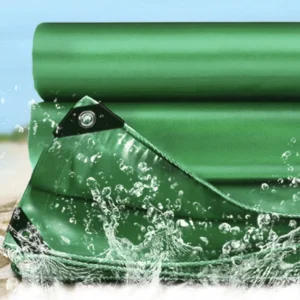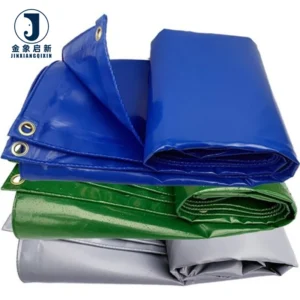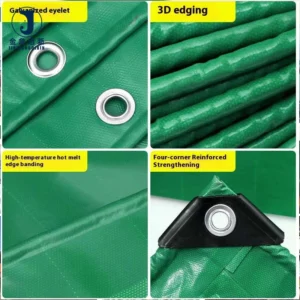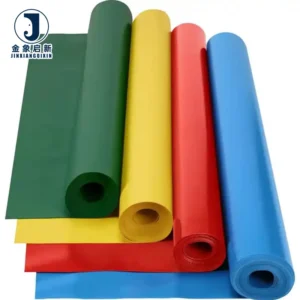
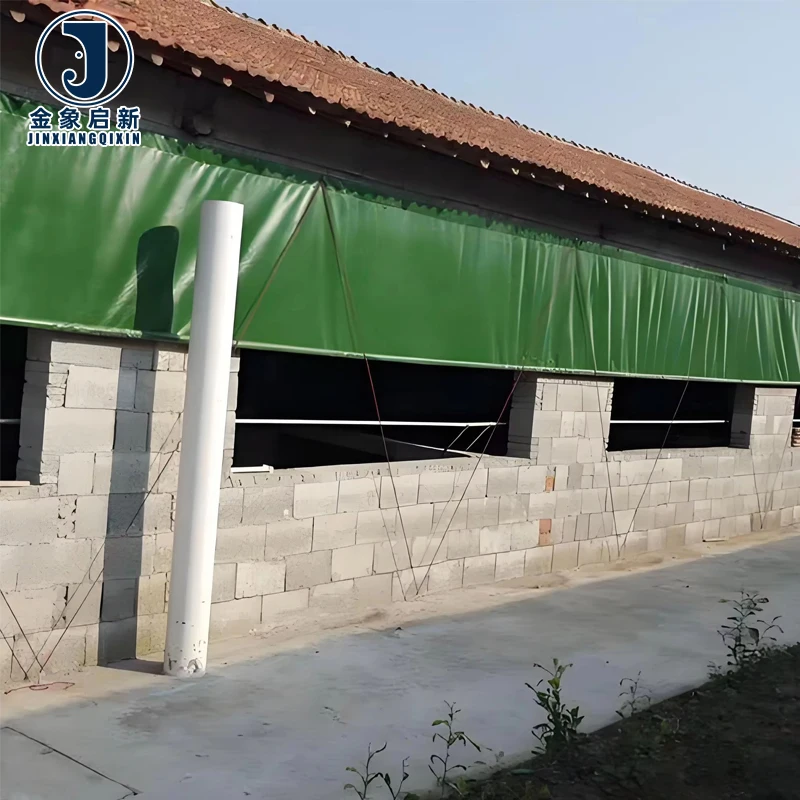
Coating Process Control — Every roll of PVC coated tarpaulin roll for farm cover is produced under strict coating weight supervision, ensuring uniform GSM and adhesion across the entire batch.
Technical Specifications
| Parameter | Value |
|---|---|
| Product Type | PVC Coated Tarpaulin Roll |
| Coating Material | PVC |
| Base Fabric | Warp Knitted Polyester |
| Waterproof | Yes |
| Anti-Static | Available (test basis not stated) |
| Tear Resistant | Yes |
| Color | Customizable |
| Finish | Plain Style |
Application Suitability
| Application | Exposure & Requirement |
|---|---|
| Poultry House Side Curtains | Constant tension, wind load, high humidity, ammonia exposure |
| Pig and Sheep Shelters | Animal contact, rain, mud, mechanical abrasion |
| Broiler Farm Roof Covers | UV exposure, thermal expansion, water pooling risk |
| Agricultural Temporary Enclosures | Rapid deployment, repeated folding, seasonal storage |
Why Specifying Anti-Static Without a Standard Fails the Farm Audit
Static discharge in a dry, dusty poultry environment is a compliance issue, not just a material preference.
When a buyer specifies anti-static fabric for a broiler house but receives no surface resistance test report, the material may pass visual inspection yet fail the site safety audit. The claimed property exists on paper only. We have seen entire farm cover orders rejected at handover because the certification trail did not match the site’s electrical safety protocol [NEED_CITE: anti-static test standards for agricultural environments].
Coating Adhesion and Livestock Containment Integrity
The PVC coating must bond fully to the warp knitted base fabric to prevent delamination when animals push against the cover. In a PVC coated tarpaulin roll for farm cover application, the coating weight and penetration depth determine whether the fabric behaves as a single composite or separates under localized stress at pen boundaries.
Welded Seam Behaviour in High-Humidity Shelters
Farm environments cycle between high humidity and dry periods daily. Stitched seams absorb moisture and degrade, while thermally welded seams maintain continuity. The weld must penetrate both coating layers without scorching the base fabric, a balance that depends on line speed, temperature and dwell time during fabrication [NEED_CITE: thermal welding parameters for PVC coated fabrics].
Reading the Specification Sheet Beyond GSM
GSM tells you the total weight but nothing about how that weight is distributed. A roll with a heavy coating over a light base fabric may show high GSM yet tear easily because the yarn denier and weave density are insufficient. The tensile and tear performance of farm shelter fabric depends on base fabric construction first, coating weight second. A balanced specification matches coating thickness to yarn count so the composite acts predictably under wind load and tensioning. Surface finish also matters: a plain weave provides a stable substrate for tensioned installations, whereas gloss or matte top coats influence cleanability and light reflectance inside the shelter. Buyers comparing two rolls at the same GSM should examine the base fabric denier and thread count before deciding.
The Cost of Ignoring Batch-to-Batch Colour Drift
When hundreds of metres of farm cover go up side by side, even a slight colour shift between rolls becomes immediately visible. This is not an aesthetic complaint — it signals inconsistent coating formulation or pigment dispersion between production runs, which may extend to coating weight variation and unequal UV stabilizer loading across the same order [NEED_CITE: colour consistency standards for coated fabric batches].
Why Procurement Teams Consolidate Here
Coating weight is verified at the line, not estimated from sample cuts taken after production.
The R&D team develops custom colour samples within days, allowing farm operators to confirm shade before the full run proceeds.
Each roll undergoes individual inspection before packing, catching gloss variation, coating voids and edge defects that batch sampling misses.
Welding trials on the actual production fabric establish the correct temperature and speed settings before fabricated covers leave the facility.
Technical documentation ships with the order, giving the buyer traceability from raw material batch to finished roll.
Documentation & Verification
- Material spec sheet confirming PVC coating weight, base fabric denier and roll dimensions per batch
- Colour reference sample retained and matched against production rolls before dispatch authorization
- Anti-static test report supplied when specified, stating the measurement method and result value
- Roll packing list with individual roll weight, net weight and dimensions for container load planning
- Pre-shipment inspection record covering coating surface, edge condition and colour consistency roll by roll
Fabrication, Handling & Storage
- Heat weld at moderate temperature to fuse PVC coating without scorching the warp knitted base
- Store rolls upright on cores to prevent flat spots that cause creasing when unrolled on site
- Use wide hem folds with reinforced webbing at eyelet positions to distribute tension loads evenly
- Avoid dragging cut panels across concrete to protect the PVC coating surface from abrasion
- Clean with mild detergent only; solvent-based cleaners may soften the plasticized coating layer
What to Include in Your Enquiry
Provide the farm type, shelter dimensions and whether the cover will be tensioned or draped. State the colour reference or sample requirement and the total roll quantity needed for the project. If anti-static or UV treatment is required by your site compliance rules, specify the test standard your auditor expects so the correct grade can be confirmed before production.
Frequently Asked Questions
Q: How do I verify the stated GSM once the farm tarpaulin rolls arrive?
A: Cut a measured sample from each roll, weigh it and calculate weight per square metre. Compare against the material specification sheet supplied with the shipment. Any discrepancy beyond normal tolerance should be flagged before installation begins.
Q: Which anti-static test standard applies to livestock shelter fabric?
A: The applicable standard depends on your local agricultural electrical safety regulations. Specify the exact test method your site auditor requires when placing the order so the correct treatment level and documentation can be arranged before production.
Q: How is colour consistency controlled across multiple rolls for one farm project?
A: A retained colour standard is compared against every production roll under controlled lighting before dispatch. Rolls showing visible drift from the approved shade are held back. Request pre-shipment colour photos if on-site verification before delivery is needed.
Q: What eyelet spacing works for tensioned poultry house side curtains?
A: Spacing depends on the fabric weight, wind load and tensioning system used. Reinforced hems with webbing distribute the load more effectively than eyelets set directly into the PVC coated fabric edge. Share your frame design for a spacing recommendation.
Q: Are welded seams better than stitched seams for PVC farm covers in humid conditions?
A: Welded seams create a continuous waterproof bond that does not absorb moisture, making them preferable for permanent livestock shelters. Stitched seams with thread degrade faster in ammonia-rich, high-humidity environments typical of poultry and pig housing.