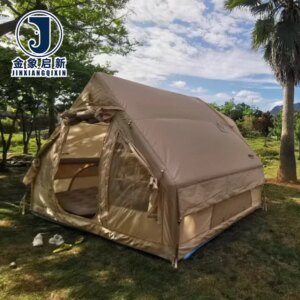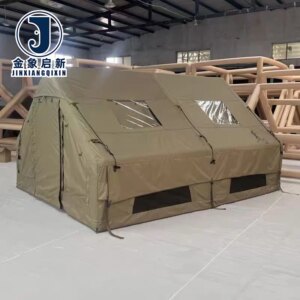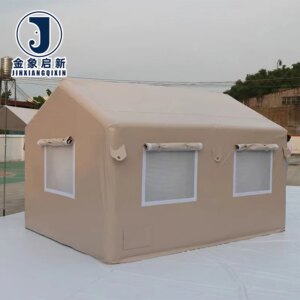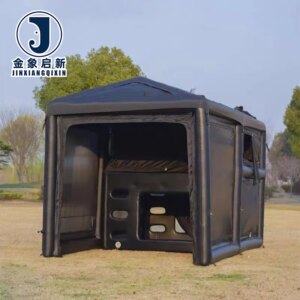
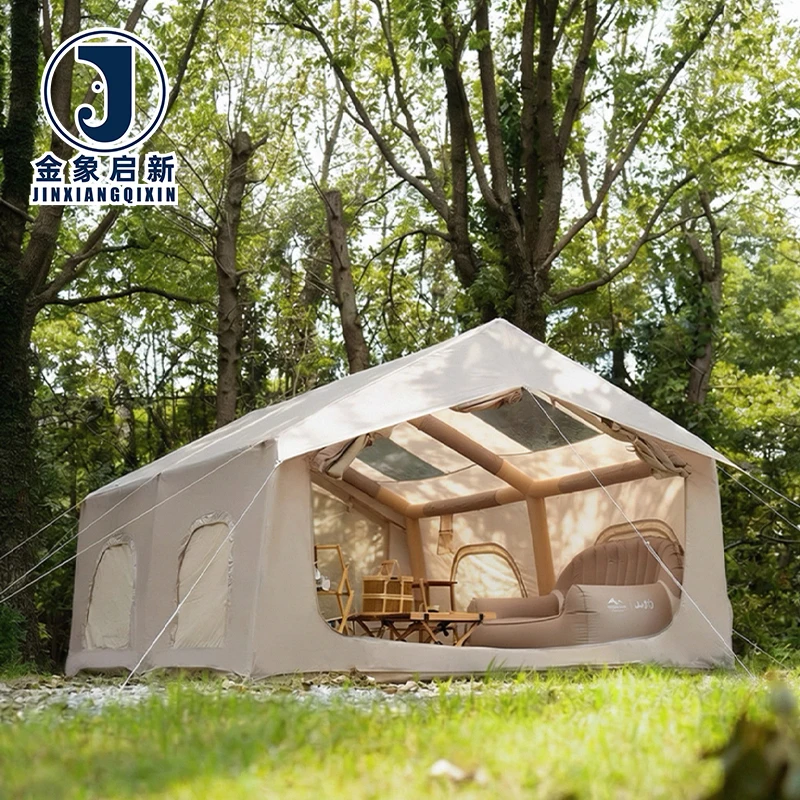
Precision Coating Control — we maintain tight GSM tolerance and verified UV treatment on every roll of inflatable tent fabric, so your shelters perform as specified across four-season deployment.
Technical Specifications
| Parameter | Value |
|---|---|
| Product Type | Inflatable Tent Fabric |
| Core Material | PVC waterproof fabric |
| UV Treatment | UV resistant (test basis not stated in source) |
| Waterproof Rating | Waterproof (rating not stated in source) |
| Key Feature | Quick automatic opening compatible |
| Product Forms | Single Layer Construction, Extended Type |
| Customization | OEM & ODM supported |
| Production Capacity | 3 full production lines, 36 sets of processing equipment |
| R&D Support | 10 technicians for sample and design development |
| Quality System | Full-process QA & QC with dedicated on-site staff |
| Certifications | ISO 9001, ISO 14001, ISO 45001, CE |
Application Suitability
| Application | Exposure & Requirement |
|---|---|
| Temporary site offices at construction projects | Wind load, dust ingress, repeated inflation cycles, UV exposure |
| Equipment storage during outdoor operations | Rain, ground moisture, puncture from stored machinery edges |
| Mobile command centers for industrial events | High visibility, frequent deployment and teardown, temperature swings |
| Emergency response shelters for infrastructure teams | Rapid inflation, all-weather waterproofing, transport abrasion |
| On-site material storage in remote locations | Prolonged UV exposure, wind-driven rain, thermal expansion |
| Temporary workspace in remote industrial locations | Four-season weather, limited maintenance access, structural membrane stress |
Why "UV Resistant" on a Data Sheet Is Not Enough for Inflatable Tent Fabric
Verified treatment documentation separates membrane material you can trust from material you have to guess about.
When sourcing PVC inflatable tent fabric for emergency shelters or temporary industrial structures, buyers frequently receive a quotation that claims UV resistance without attaching a test result. The inflatable membrane sits fully exposed — often for weeks or months — and any degradation shows first as surface chalking, then as loss of tensile strength at the weld lines where stress concentrates. Without a traceable test report tied to the specific production batch, there is no way to confirm whether the treatment level matches what your end-use environment demands [NEED_CITE: accelerated weathering test methods for PVC coated fabrics].
As a PVC inflatable tent fabric manufacturer, we address this by providing material specification sheets that state the exact UV treatment formulation used, alongside batch-level test documentation available on request. If your market requires a specific accelerated weathering standard, we confirm the grade before production begins rather than leaving it ambiguous on the quotation.
Coating Adhesion and Membrane Integrity Under Inflation Pressure
Inflatable structures place continuous stress on the coated fabric. Each inflation cycle stretches the membrane, and the coating must stay bonded to the base fabric through hundreds of pressurization and deflation events. Our PVC inflatable tent fabric production uses controlled coating weight and adhesion processes across three dedicated lines, ensuring the bond between PVC layer and base fabric holds under cyclic loading. This matters most at welded seams, where delamination would compromise structural air retention.
Batch Consistency Across Roll Stock for Shelter Manufacturers
Tent and inflatable structure manufacturers cutting multiple panels from different rolls need colour and coating weight to stay uniform across the entire batch. A visible shade shift between two panels welded side by side on a large emergency shelter is a quality failure that triggers rejection at the client site. Our 10-person technical team manages colour reference matching and coating formulation per order, with full-process QA inspection catching variance before rolls leave the facility.
Reading the Specification Sheet Beyond the Headline GSM
The weight of a coated fabric is the sum of base fabric and coating, but two fabrics at the same GSM can behave very differently. A heavier base fabric with a thinner coating will tear differently than a lighter base with a thick coating layer. For inflatable tent applications, the base fabric denier and weave pattern govern how the membrane handles puncture and tear propagation, while the coating weight governs waterproofing, UV protection, and weldability [NEED_CITE: relationship between base fabric construction and coated fabric tear performance per ISO 1421]. When evaluating PVC inflatable tent fabric options, request the breakdown of base weight versus coating weight rather than relying on total GSM alone. Our specification sheets provide this breakdown so you can match material construction to the structural demands of your shelter design.
The Real Cost of Specifying Inflatable Membrane Fabric on Price Per Kilogram Alone
Choosing membrane material based solely on unit cost creates downstream failures that are expensive to trace. A roll with lower coating weight may pass visual inspection but fail at the heat-welded seam during the first inflation test, because there is insufficient PVC material at the joint to form a continuous bond. Similarly, a batch with inconsistent colour forces the shelter manufacturer to reject panels mid-production, delaying the entire order and wasting cut material [NEED_CITE: common causes of welded seam failure in inflatable PVC structures]. These failures are not caught by a certificate of conformity — they require pre-shipment inspection records that document actual roll-level measurements against the agreed specification.
What Our Production Setup Means for Your Inflatable Tent Orders
Our facility operates three full production lines with 36 sets of professional processing equipment, giving us the capacity to handle volume orders for inflatable tent fabric without sacrificing batch-level quality checks. The 10-person R&D team develops samples within days for custom width, colour, or construction requirements, so you can validate material before committing to a full production run. Every order passes through dedicated QA and QC staff at each production stage, with 100 percent inspection before dispatch — not a sampling protocol that leaves defective rolls in the shipment. OEM and ODM customization covers material selection, design modification, and surface treatment specification, all backed by ISO 9001, ISO 14001, ISO 45001, and CE certification documentation.
Documentation & Verification
- Material specification sheet stating base fabric construction, PVC coating type, and colour reference per order
- UV resistance test report available upon request with batch-level traceability
- ISO 9001, ISO 14001, ISO 45001, and CE certificates included with shipment documentation
- Pre-shipment inspection record confirming roll-level quality checks before dispatch
- Certificate of origin and customs support documentation for international shipments
Fabrication, Handling & Storage
- Heat welding parameters should be set to match the PVC coating formulation for reliable seam bonding
- Store rolls upright on pallets to prevent flat-spot deformation of the coated surface
- Avoid dragging single-layer construction fabric over abrasive surfaces during unloading
- Use compatible PVC adhesive for field repairs on waterproof membrane punctures
- Allow extended-type fabric to acclimate to ambient temperature before inflation in cold conditions
- Plan panel cutting layout to maximize utilization from standard roll widths and minimize weld seams
What to Include in Your Inflatable Tent Fabric Inquiry
To move from initial inquiry to sample approval efficiently, share your intended shelter application and the environmental exposure conditions the membrane will face — particularly UV intensity and temperature range at the deployment site. Specify whether you need fabric supplied by the roll or cut to panel dimensions, along with your target annual volume and colour requirements. If your end market has specific fire safety or compliance requirements, state the applicable standard so we can confirm the available treatment grade before sampling begins.
Frequently Asked Questions
Q: What test documentation supports the UV resistance claim on this inflatable tent fabric?
A: We provide a material specification sheet that states the UV treatment formulation applied during production. Test reports are available upon request and are tied to specific production batches for traceability. If your market requires compliance with a particular accelerated weathering standard, share the reference and we will confirm the applicable grade before your order enters production.
Q: Can I order custom widths and colours with a manageable minimum quantity?
A: OEM and ODM customization covers custom width, colour, and surface finish options. Our R&D team develops samples within days so you can evaluate material before committing to bulk. Minimum quantities depend on the specific construction and colour requested — submit your requirements and we will confirm the production threshold alongside lead time.
Q: How do you control colour consistency across multiple rolls in one order?
A: Every production run uses a defined colour reference, and our QA staff inspect coating consistency at each stage across all three production lines. Rolls are checked side by side before packing to catch any visible shade variation. A pre-shipment inspection record documents the results and accompanies your shipment documentation.
Q: What should I know about welding this PVC fabric for inflatable tent construction?
A: Heat welding parameters must match the specific PVC coating formulation to achieve full seam integrity. The coating weight and adhesion characteristics influence optimal temperature and dwell time. We recommend running weld tests on sample material before full production, and our technical team can provide processing guidance based on the exact fabric construction you select.
Q: How does the sample approval process work before mass production?
A: Once you confirm your application requirements, our 10-person R&D team prepares samples reflecting your specified material construction, colour, and treatment. You review and approve the sample before mass production begins. This ensures the bulk rolls match your validated specification and eliminates surprises at delivery.