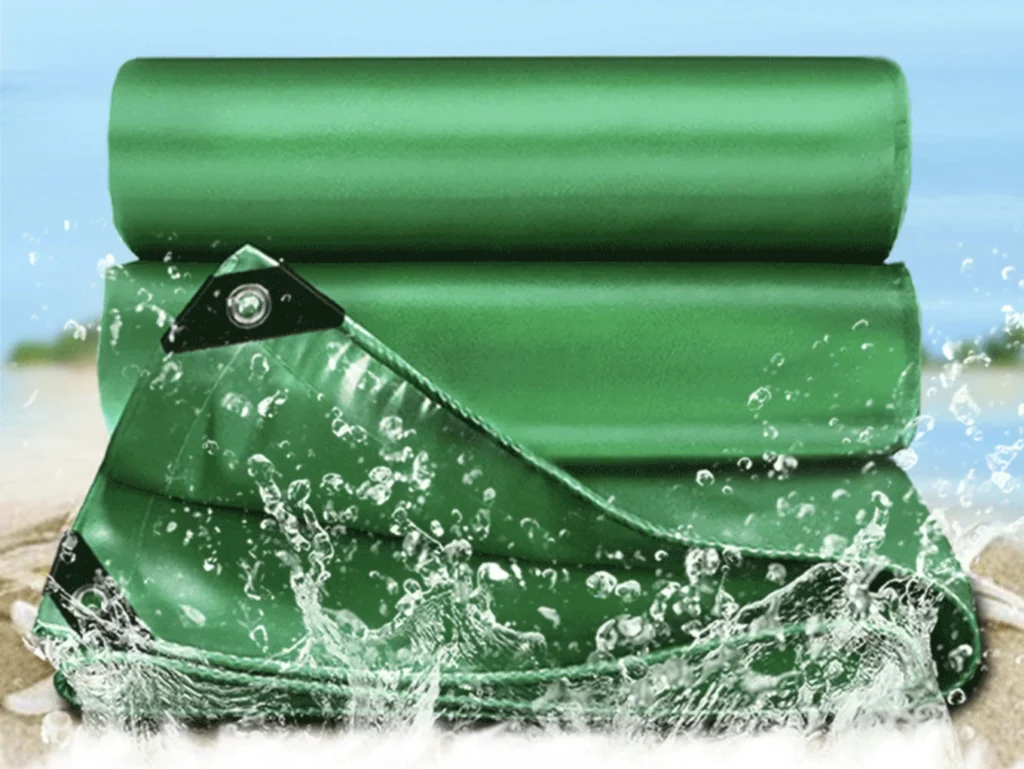
Process-Controlled Coating Weight — Every roll of PVC Knife Coated Fabric is produced with in-line GSM monitoring to hold coating weight to target, reducing the risk of material arriving lighter than specified.
Technical Specifications
| Parameter | Value |
|---|---|
| Product Type | PVC Knife Coated Fabric Waterproof Cover and Truck Cover UV Protective Outdoor Tent Fabric |
| Base Fabric | High-tenacity polyester woven substrate |
| Coating Method | Knife coated |
| Coating Material | PVC (polyvinyl chloride) |
| Welding Compatibility | HF (high-frequency), hot air, sewing |
| UV Treatment | Available with UV stabilisation — confirm test basis required for your market |
| Flame Retardant Grade | Available in flame retardant grades — confirm the grade required for your market |
| Surface Maintenance | Self-cleaning surface behaviour |
| Biological Resistance | Antibacterial and mildew proof (verify against specific order specification) |
| Temperature Behaviour | High temperature and cold resistance (specific thresholds available on specification sheet) |
| Key Features | Excellent tensile, tearing and peeling resistance; oil and stain resistance; acid and alkali resistance; anti-oxidation and weather resistance; highly flexible yet resistant to cracking |
| Certification | ISO, CE |
Application Suitability
| Application | Exposure & Requirement |
|---|---|
| Tensile and membrane structures | Sustained UV exposure, wind load cycling, panel colour consistency across large installed areas |
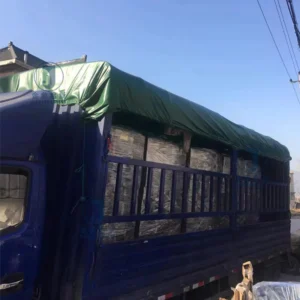
| Truck covers and side curtains | Road abrasion, constant flexing at tie-down points, weather and temperature cycling |
| Airport hangars and stadium roofs | Certified fire-retardant compliance, long-term structural load, wide-span panel joining |
| Shade systems and shadings | Direct solar radiation, thermal expansion and contraction, surface soiling and cleaning frequency |
| Portable storage structures | Temporary ground contact, wind uplift stress, repeated assembly and disassembly at seam lines |
| Large format technical textiles | High-frequency welding consistency across long seam lengths, dimensional stability during fabrication |
| Outdoor tent fabric | Fold creasing resistance, repeated packing and unpacking, abrasion at frame contact points |
What "Verified Treatment" Actually Means When Quotations Arrive
A stated treatment without a matching test report is just a claim — here every treatment statement is tied to documentation you can show your client or building inspector.
Technical buyers receive quotations listing UV stabilisation and flame retardancy as standard features. The fabric arrives on site and the contractor has no test report to present during the fire inspection or to the project engineer reviewing material compliance. The cost of pulling installed panels down and replacing them far exceeds the cost of verifying the treatment basis before the order is placed [NEED_CITE: fire classification requirements for tensile membrane structures in public assembly buildings].
PVC Knife Coated Fabric for architectural and transport applications must carry treatment documentation that matches the regulatory environment of the installation site, not the production country.
How Knife Coating Controls the Adhesion That Laminated Fabric Cannot Match
The knife coating process forces liquid PVC directly into the interstices of the polyester base fabric under controlled blade pressure, creating a mechanical and chemical bond between coating and yarn. Unlike laminated constructions where a pre-formed film is bonded to the substrate with an adhesive layer, knife coating produces a monolithic structure where the coating penetrates the weave [NEED_CITE: coating adhesion and peel strength test methods for PVC coated polyester fabrics].
This matters directly for PVC Knife Coated Fabric GSM specifications because the coating weight is held within the fabric structure rather than sitting on top of it. When a fabricator cuts and welds this material, the peel resistance at the cut edge remains high — the coating does not delaminate from the base fabric under the thermal stress of HF or hot air welding. For tensile structure panels that carry sustained load across welded seams, this adhesion characteristic determines whether the seam holds or the coating separates before the base fabric reaches its tensile limit.
Why Base Fabric Construction Determines Performance More Than Coating Thickness Alone
The denier of the polyester yarn and the weave density of the base fabric establish the tensile and tear strength envelope before any PVC coating is applied. A heavier coating weight adds mass and improves abrasion resistance at the surface, but it does not compensate for a loosely woven base fabric when a tear initiates at a stress concentration point [NEED_CITE: relationship between base fabric weave density and tear propagation resistance in coated technical textiles].
For buyers specifying PVC Knife Coated Fabric by GSM, the critical distinction is understanding how much of that weight is base fabric and how much is coating. Two rolls can share the same total GSM yet perform very differently under load — one with a dense, high-denier base and thinner coating will resist tear propagation better than one with a light base and heavy coating build. The material specification sheet should state base fabric denier, weave count, and coating weight separately so fabricators can match the construction to the structural demands of their project.
Coating Method, Weld Behaviour and Surface Finish — Reading the Specification Sheet Correctly
Knife coating produces a surface that is well-suited to high-frequency and hot air welding because the PVC coating is chemically homogeneous through its full thickness. When two panels are joined under HF energy, the coating material on both sides softens and fuses into a continuous bond, creating a seam that approaches the tensile strength of the parent fabric. Sewing remains an option for applications requiring mechanical fastening or where field repairs are anticipated, though stitched seams introduce needle perforations that can channel moisture into the base fabric if not sealed.
The self-cleaning surface behaviour noted in the specification reduces particulate adhesion on outdoor installations, which matters for shade systems and stadium structures where scaffold access for cleaning is costly. Antibacterial and mildew proof characteristics should be confirmed per order, as these treatments interact with the surface finish and may affect weld temperature settings. The temperature range — described as high temperature and cold resistance — determines the thermal boundaries within which the fabric remains flexible and resistant to cracking, a critical factor for truck covers operating across seasonal extremes.
The Hidden Cost of Specifying GSM Without Understanding Its Components
A common procurement failure occurs when a buyer receives PVC Knife Coated Fabric that matches the quoted total GSM but underperforms on tensile and tear tests. The root cause is often an imbalance between coating weight and base fabric density — the supplier achieved the target weight by building coating thickness rather than investing in a denser base weave. The fabric passes the weight check on arrival but fails during installation when panels are tensioned across a frame or when wind load cycles stress the welded seams [NEED_CITE: common failure modes in tensile membrane structures related to material specification].
Colour variation between rolls in the same order creates visible banding when panels are installed side by side on a large facade or truck curtain. This inconsistency typically traces back to pigment batch mixing rather than the coating process itself, and it becomes apparent only after the material is unrolled and positioned in natural light. The cost impact is not limited to the material — it includes crane time, scaffolding rental, and project delay while replacement rolls are produced and shipped.
Why Fabricators Choose This Supply Source for Coated Technical Fabric
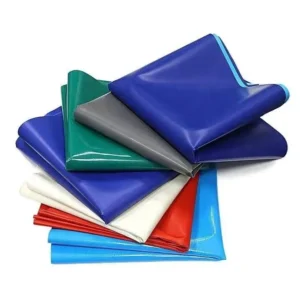
Three full production lines with dedicated knife coating equipment provide the capacity to hold coating weight within tight tolerances across long production runs, which directly addresses the GSM consistency concern that fabricators face when ordering bulk roll stock.
A ten-person R&D team supports material selection and sample development for projects requiring specific denier, weave density, or treatment combinations — samples are developed within days rather than weeks, allowing fabricators to test weld parameters and colour matches before committing to a full container order.
Dedicated QA/QC inspection at every production stage, with 100% pre-shipment inspection and documented records, means roll-to-roll colour and weight consistency is verified before the material leaves the facility rather than discovered on the receiving dock.
Full welding compatibility across HF, hot air, and sewing is confirmed through production trials, giving fabricators the flexibility to choose the joining method that suits their equipment and the structural requirements of the end application.
Nearly thirty years of focused production in coated fabric has produced the process control depth necessary to manage the relationship between base fabric construction, coating penetration, and final GSM — knowledge that newer production facilities are still developing.
Documentation & Verification
- Material specification sheet stating GSM, base fabric denier and weave construction, and coating weight separately
- Test report for UV stability and flame retardant grades where applicable, citing the standard and grade
- ISO and CE certificates included in the documentation package with certificate of origin for customs clearance
- Pre-shipment inspection record confirming roll-to-roll colour consistency and weight verification before dispatch
- Roll packing list detailing net and gross weight per roll for container loading planning
Fabrication, Handling & Storage
- HF welding parameters should be calibrated to the specific knife coated PVC thickness — test welds on roll ends before full production runs
- Hot air seam temperature and speed settings vary with coating weight — request weld guidance matched to your GSM specification
- Sewn seams on this PVC coated fabric should include heat-sealed tape over needle perforations to prevent moisture ingress to the base fabric
- Store rolls horizontally on pallets in shaded, ventilated areas to avoid flat-spot deformation and surface adhesion between layers
- Unroll cold-weather deliveries gradually — knife coated PVC becomes stiffer at low temperatures and forced unrolling can cause surface cracking
- Clean self-cleaning surfaces with mild detergent and soft brush; avoid solvent-based cleaners that may affect the coating chemistry
What We Need to Quote Accurately
Provide the end-use application and the exposure conditions the installed fabric will face — sustained UV, wind load, chemical contact, or fire classification requirements specific to your market. Specify the target GSM, required roll width, and annual volume so pricing can reflect production run efficiency. Indicate whether you require the material in roll form only or need cut-to-size panels with specific welding or finishing, and confirm whether a sample roll for weld and colour evaluation is needed before the bulk order is released.
Frequently Asked Questions
Q: How is GSM verified and what is the relationship between GSM, base fabric denier and tensile strength?
A: GSM is measured per roll before dispatch and recorded on the pre-shipment inspection report. Total GSM comprises both base fabric weight and coating weight — a high-denier, dense base fabric contributes more to tensile and tear strength than coating thickness alone. The material specification sheet breaks down these components so you can verify the construction matches your structural requirement.
Q: What test basis supports the flame retardant and anti-UV claims on this knife coated fabric?
A: Flame retardant and UV treatments are available in multiple grades depending on your market’s regulatory requirements. Confirm the specific standard applicable to your installation — such as the fire classification required by your local building code — and the matching test report will be included with your shipment documentation.
Q: What welding methods are compatible and how does seam strength compare to fabric strength?
A: This PVC knife coated fabric supports HF, hot air, and sewing. HF and hot air welding produce seams where the coating fuses into a continuous bond, approaching the tensile strength of the parent fabric. Sewing provides mechanical fastening suitable for field repairs but requires sealed needle holes to maintain waterproof integrity.
Q: How is roll-to-roll colour consistency controlled across a bulk order?
A: Colour consistency is managed through controlled pigment batching and verified during the 100% pre-shipment inspection. Each production run uses a single pigment batch for the full order quantity, and roll samples are compared side by side under standard lighting before dispatch to flag any visible variation.
Q: What documentation accompanies each shipment for customs and compliance verification?
A: Each shipment includes a material specification sheet, ISO and CE certificates, certificate of origin, roll packing list, and pre-shipment inspection record. Where flame retardant or UV treatment is specified, the corresponding test report citing the applicable standard and grade is included in the documentation package.