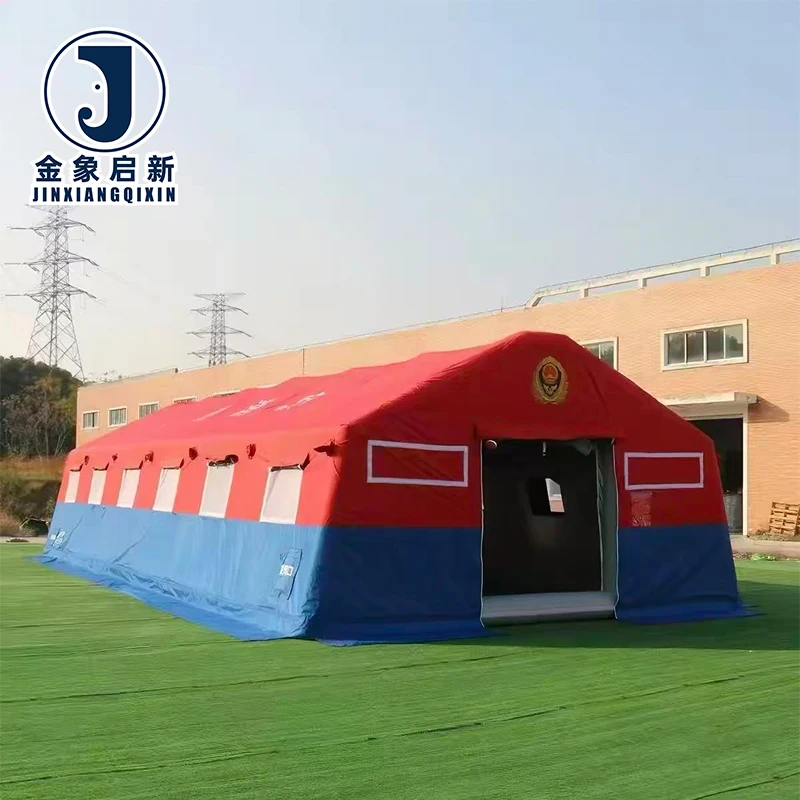
Proven Coating Control — nearly 30 years focused on PVC coated fabric production, with batch-level waterproof integrity checks applied to every inflatable tent unit before dispatch.
Technical Specifications
| Parameter | Value |
|---|---|
| Product Type | Inflatable Tent Fabric / PVC Tent |
| Core Material | PVC Tarpaulin |
| Waterproof Rating | 3000mm |
| Construction | Single Layer |
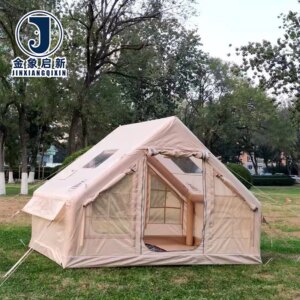
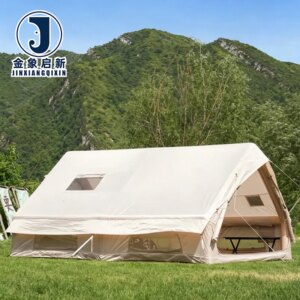
| Design | Four-Season, Extended Type |
| Deployment | Quick Automatic Opening (inflatable) |
| UV Treatment | UV-resistant PVC formulation (test basis not stated in source — confirm UV data for your climate zone) |
| Flame Retardant Grade | Available in flame retardant grades — confirm the grade required for your market |
| Anti-Static | Not confirmed (confirm if required for your application) |
| Customization | OEM & ODM (size, colour, logo printing) |
| Quality Control | Full-Process Inspection with Dedicated QA & QC Staff |
| Standards | CE, ISO 9001, ISO 14001, ISO 45001 |
Application Suitability
| Application | Exposure & Requirement |
|---|---|
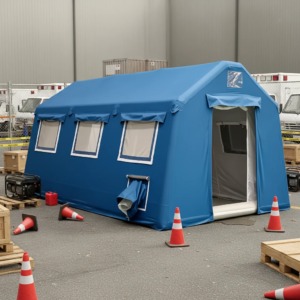
| Disaster relief and emergency shelter | Rapid deployment, repeated inflation cycles, unpredictable weather and ground moisture |
| Construction site command centres | Continuous outdoor exposure, dust ingress, UV and rain across four-season temperature variation |
| Mobile storage and equipment enclosures | Puncture risk from sharp tools, prolonged sun exposure, wind load on inflated structure |
| Utility maintenance field operations | Temporary weatherproof workspace, frequent relocation, transport abrasion |
| Infrastructure project staging areas | Extended outdoor siting, crew traffic at entry points, variable ground conditions |
Why a 3000mm Waterproof Rating Means Nothing Without Batch Verification
The rating on the spec sheet only matters if every roll leaving the line actually delivers it.
Technical buyers sourcing an Inflatable PVC Tent Fabric manufacturer know the frustration: the quotation promises a 3000mm hydrostatic head, but the shelter leaks within the first rain event on site. Material specifications that are not verified at the batch level create a gap between what was ordered and what arrives. Inflatable tent structures face compounding pressure — the fabric must hold both the inflation load and the weather load simultaneously, and a coating inconsistency at any point becomes a failure point under stress [NEED_CITE: hydrostatic head test methods for coated fabrics].
Coating Consistency Across Every Production Run
When sourcing custom inflatable tent PVC tarpaulin for emergency or industrial shelters, the uniformity of the PVC coating directly determines whether the stated waterproof rating holds across the entire surface. Our production lines maintain controlled coating application so that thickness and adhesion do not drift between the start and end of a roll. Each batch undergoes integrity checks before it enters fabrication, reducing the chance that a finished tent ships with a thin spot in the coating layer.
Heat-Welded Seams Under Inflation Stress
The seams on an inflatable structure carry loads that flat tarpaulins never see. Every time the tent inflates, the internal pressure pushes outward at every welded joint. If the heat-weld parameters are not matched to the specific PVC formulation and coating weight, the seam can delaminate before the base fabric reaches its tensile limit. Our welding process is calibrated to the material being used, and the 24-hour pressure retention test on every completed unit confirms that seam integrity holds under sustained inflation [NEED_CITE: seam strength testing for inflatable membrane structures].
Decoding the Specification for Inflatable Tent Fabric
A 3000mm waterproof rating depends on the interaction between base fabric density and PVC coating weight, not on the coating alone. The denier of the yarns and the weave count determine how much coating the fabric can hold without bridging or pooling. Single-layer construction keeps transport weight low and packing volume compact — critical for disaster relief logistics where air freight or limited vehicle space dictates the deployment footprint. The UV-resistant PVC formulation addresses prolonged outdoor exposure, though the specific retention data should be confirmed against the climate zone where the tent will operate. Quick automatic opening through inflatable chambers means the structure relies entirely on air pressure for rigidity, so the base fabric must resist stretch creep over extended inflation periods to maintain structural shape.
What Happens When Inflatable Tent Fabric Specifications Are Wrong
Choosing a fabric without matching the coating weight to the inflation pressure leads to visible sag or, worse, seam failure during sustained deployment. A flame retardant grade that does not match the local fire safety code can result in site inspectors rejecting the entire shelter installation after it is already erected. Batch-to-batch colour variation becomes a visible problem when multiple tents are deployed side by side at a single relief camp or project site [NEED_CITE: colour consistency standards for batch-produced coated fabrics]. Welded seams that fail before the fabric itself are almost always traceable to a mismatch between the welding temperature and the specific PVC formulation used in that production run.
Why Technical Buyers Source This Fabric Here
Our three full production lines and 36 sets of professional equipment support the volume requirements of bulk inflatable tent orders without sacrificing coating consistency. The 10-person R&D team handles prototype development and specification revision, allowing OEM and ODM buyers to adjust size, colour, and logo placement before committing to a full production run. Every unit receives a 24-hour pressure retention test and 100% pre-shipment inspection, not a random sampling. Full traceability by order reference number means that waterproof test data, material thickness records, and structural integrity results can be retrieved for any unit in the field. CE, ISO 9001, ISO 14001, and ISO 45001 documentation is supplied as part of the standard package to support import compliance.
Documentation & Verification
- Material specification sheet stating PVC coating weight and base fabric construction for each order
- Waterproof performance test record tied to production batch before dispatch
- CE, ISO 9001, ISO 14001, ISO 45001 certified copies provided with shipment documentation
- Pre-shipment inflation and 24-hour pressure retention test record for every unit
- Full traceability via order reference number for all critical test data retrieval
Fabrication, Handling & Storage
- Heat-weld temperature must match the specific PVC coating formulation to prevent seam delamination under inflation pressure
- Roll stock should be stored upright on cores to avoid flat-spot creasing that affects inflatable chamber geometry
- Single-layer construction reduces packing volume but requires careful folding to prevent permanent crease lines in the PVC coating
- UV-resistant surface maintains integrity when cleaned with mild detergent — avoid solvent-based cleaners that degrade the coating bond
- Field repairs on punctures require compatible PVC adhesive patches matched to the coating chemistry of this fabric
What We Need to Specify Your Order Correctly
Provide the deployment environment, including expected temperature range and UV exposure level, so we can confirm the material formulation matches your conditions. Share the required dimensions, colour references, and any logo or branding specifications for the OEM or ODM scope. Confirm the fire safety or compliance standards your end market requires so that flame retardant grading can be validated before production.
Frequently Asked Questions
Q: How is the 3000mm waterproof rating verified and can I receive test reports per batch?
A: Each production batch undergoes waterproof integrity checks during manufacturing, and a 24-hour pressure retention test is conducted on every completed inflatable unit before shipment. Test records tied to your specific order reference number are included in the documentation package, allowing you to verify performance data for each unit received.
Q: What OEM and ODM customization options are available for size, colour, and branding?
A: Our R&D team supports size adjustments, colour customization, and logo printing for custom inflatable tent PVC tarpaulin orders. Prototype samples are developed for approval before full production begins, ensuring the finished product matches your specifications. Minimum order quantities and lead times are confirmed during the quotation stage based on your custom scope.
Q: What CE and ISO certifications are provided and how do they support import compliance?
A: Every shipment includes certified copies of CE, ISO 9001, ISO 14001, and ISO 45001 as part of the standard documentation package. These certifications support customs clearance and regulatory compliance in most import markets. A certificate of origin and full packing list are also supplied to streamline the import process.
Q: How does the inflatable structure perform under prolonged UV exposure and four-season temperature extremes?
A: The PVC formulation includes UV-resistant treatment designed for extended outdoor exposure across seasonal temperature variations. However, specific UV retention test data and low-temperature flexibility limits should be confirmed against your deployment climate before production. Request the applicable test reports during the specification review stage.
Q: What is the sample-to-production lead time for custom inflatable tent orders?
A: Prototype samples are typically developed within days once specifications are confirmed, allowing you to evaluate material, colour, and construction before approving full production. Production lead time depends on order volume and customization complexity and is confirmed in the quotation with your approved sample as the production benchmark.