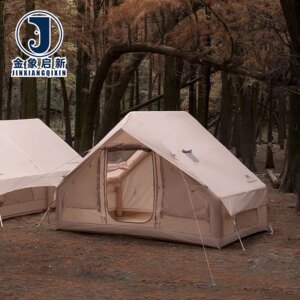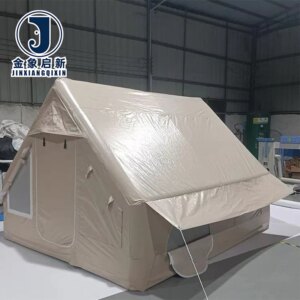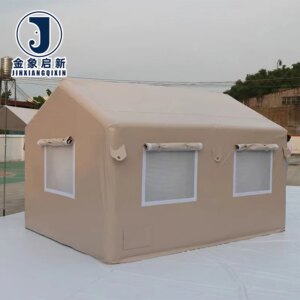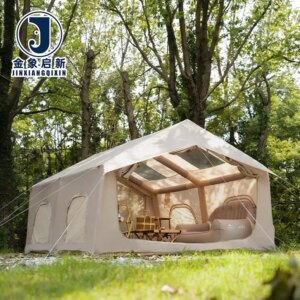
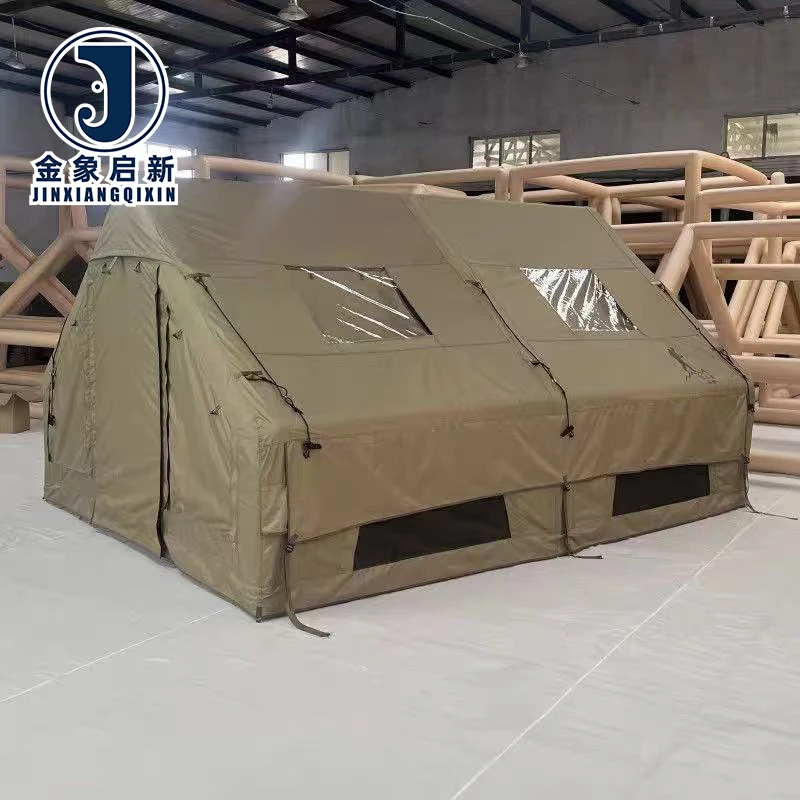
Coating Depth Control — PVC formulation and coating weight are verified at every production stage, ensuring the inflatable tent fabric you specify matches the roll you receive.
Technical Specifications
| Parameter | Value |
|---|---|
| Product Type | Inflatable Tent Fabric |
| Core Material | PVC Tarpaulin |
| Key Performance | Waterproof, UV-resistant (test basis not stated), Tear-resistant |
| Layer Construction | Single Layer |
| Customization Service | OEM & ODM, sample customization, pattern printing |
| Production Facility | 9,180 m² with 3 full production lines |
| Processing Equipment | 36 sets of professional equipment |
| R&D Team | 10 technicians |
| Quality Control | Full-process inspection with dedicated QA & QC staff |
| Certifications | ISO 9001, ISO 14001, ISO 45001, CE |
Application Suitability
| Application | Exposure & Requirement |
|---|---|
| Commercial inflatable camping tents | Repeated inflation/deflation cycles, continuous UV exposure, ground abrasion |
| Adventure tourism shelter systems | Rapid deployment, unpredictable weather, transport and packing stress |
| Industrial event inflatable structures | Batch consistency across multiple units, brand colour matching, public safety compliance |
| Outdoor gear OEM production | Material uniformity roll-to-roll, heat welding compatibility, long-term durability in rental fleets |
Why UV Claims Without Test Data Leave Buyers Exposed
Every UV-resistant claim on inflatable tent fabric should be backed by a test report you can file with your compliance team.
When an inflatable tent fabric is specified for commercial camping operations or adventure tourism deployments, the material faces prolonged sun exposure across entire seasons. Buyers frequently receive rolls where the UV treatment was stated on the quotation but never verified with a third-party test result [NEED_CITE: UV resistance test methods for PVC coated fabrics]. Without documented evidence, there is no way to confirm the fabric will withstand the conditions it was sold for. For an inflatable tent fabric manufacturer custom producing to your specifications, the responsible approach is to supply the test basis alongside every batch — not after a problem surfaces in the field.
PVC Coating Adhesion and Inflatable Structure Integrity
Inflatable tents depend entirely on the bond between the PVC coating and the base fabric. When internal air pressure flexes the material continuously, any weakness in coating adhesion becomes a failure point. Our inflatable tent fabric production controls coating weight and adhesion through dedicated process parameters on each of the 3 production lines. The R&D team of 10 technicians develops formulations matched to the specific demands of inflatable structures, balancing flexibility for packing against the rigidity needed for structural stability when inflated.
Heat Welding Behaviour of PVC Tarpaulin for Inflatables
Inflatable tent seams carry the full internal pressure load, making heat welding performance a primary design consideration. The PVC tarpaulin used in this fabric is formulated to achieve consistent weld strength across the seam line. Welded joints on inflatable structures must match or approach the tensile strength of the parent fabric [NEED_CITE: seam strength requirements for inflatable fabric structures per ISO 1421]. Our QA and QC staff inspect weld compatibility during sample development so that fabricators receive material with documented heat welding parameters rather than discovering the correct temperature window on the production floor.
Reading the Specification Sheet Beyond Surface Properties
The waterproof performance of PVC tarpaulin depends on coating continuity rather than thickness alone — a uniform coating at the correct weight prevents water ingress even under sustained rain exposure. Tear resistance is governed by the base fabric construction and how effectively the PVC coating locks the yarns in place. For inflatable tent fabric, these properties must work together: the material needs enough body to hold shape under pressure while remaining pliable enough for repeated folding and packing. UV-resistant treatment is available for extended outdoor deployment — confirm the grade required for your target market and expected exposure duration.
The Cost of Underspecified Inflatable Tent Fabric
When fabric weight arrives lighter than the quotation stated, the inflatable structure loses rigidity and the tent fails to hold its intended shape under wind load. Coating that varies between rolls in the same order becomes immediately visible once multiple tent units are deployed side by side at an event site. Welded seams that fail before the fabric itself does create warranty claims that damage the equipment brand, not the material supplier [NEED_CITE: common failure modes in inflatable fabric structures]. These consequences fall entirely on the buyer when incoming material inspection is skipped or when the supplier does not provide roll-by-roll verification documentation.
Production Capability Aligned to Inflatable Fabric Requirements
Three full production lines and 36 sets of processing equipment provide the capacity to supply inflatable tent fabric in the volumes that commercial OEM programmes require, with consistent lead times across repeat orders. The 10-technician R&D team handles material selection, custom thickness development, colour matching, and pattern printing from a single point of contact. Dedicated QA and QC staff conduct 100 percent inspection before shipment, checking coating weight, surface quality, and colour consistency across every roll. Pre-production samples are developed within days so buyers can validate material performance and welding behaviour before committing to bulk production.
Documentation & Verification
- Material specification sheet confirming PVC coating weight, base fabric construction, and colour reference for each batch
- UV resistance test report provided where applicable to the specified grade
- Pre-shipment inspection record covering coating weight verification and surface quality per roll
- ISO 9001, ISO 14001, ISO 45001, and CE certificates available for supply chain compliance
- Production process records documenting coating parameters and quality checkpoints
Fabrication, Handling & Storage
- Heat welding parameters provided with each batch to match the specific PVC coating formulation and thickness
- Store rolls vertically on pallets to prevent flat-spot deformation of the PVC coating surface
- Use compatible PVC welding tape for field repairs on inflatable tent seam lines
- Avoid dragging rolls on unsealed floors to protect the coated surface from abrasion damage
- Allow cold-stored rolls to reach ambient temperature before unrolling to prevent coating crack
What We Need to Quote Your Inflatable Tent Fabric Project
Provide the intended deployment environment, expected UV exposure conditions, and any fire safety or compliance requirements for your target market. Specify the fabric width, colour references or pattern printing requirements, and whether you need raw roll stock or pre-cut panels. Let us know your annual volume estimate and whether pre-production samples are required for welding trials before bulk commitment.
Frequently Asked Questions
Q: How do I verify the coating weight when the rolls arrive?
A: We supply a weight verification record per roll against the stated specification before dispatch. On receipt, you can confirm by cutting a measured sample from each roll and weighing it on a calibrated scale. Any discrepancy beyond acceptable tolerance should be reported with the roll number for immediate resolution against the pre-shipment inspection record.
Q: What UV protection level is available and how is it tested?
A: UV-resistant treatment is available in grades suited to extended outdoor exposure. The specific test basis and expected performance duration depend on the grade selected for your application. Request the UV test report for the grade you are considering so your technical team can evaluate it against your deployment conditions before approving bulk production.
Q: What are the custom sizing options and minimum order quantities?
A: Fabric width, thickness, colour, and pattern printing are all configurable through our OEM and ODM service. Minimum order quantities depend on the degree of customisation — standard widths and stock colours carry lower minimums than fully custom formulations. Share your target specifications and annual volume for a detailed quotation with lead time.
Q: How does the pattern printing and colour matching process work?
A: The R&D team develops colour references and print layouts during the sample stage. Pre-production samples are produced for your approval before mass production begins. This ensures colour consistency across all rolls in a batch, which is critical when multiple inflatable tent units are deployed side by side at commercial event sites or camping operations.
Q: What heat welding guidance is provided for inflatable structure fabrication?
A: Each batch ships with recommended welding temperature, pressure, and dwell time parameters matched to the specific PVC coating formulation. We advise running weld test pieces on sample material before full production to confirm seam strength meets your structural requirements. Our technical team supports troubleshooting if weld performance does not meet expectations during your fabrication trials.