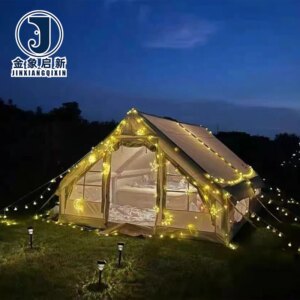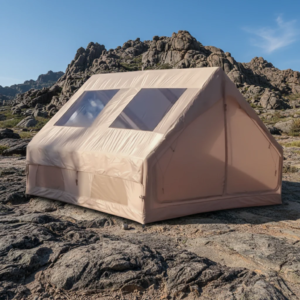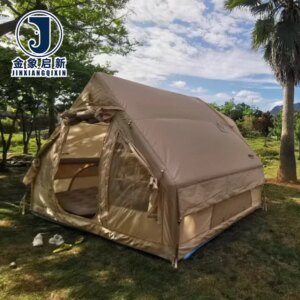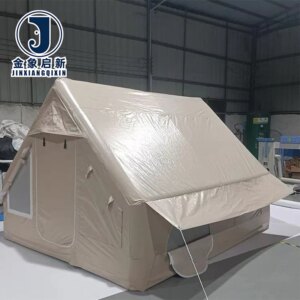
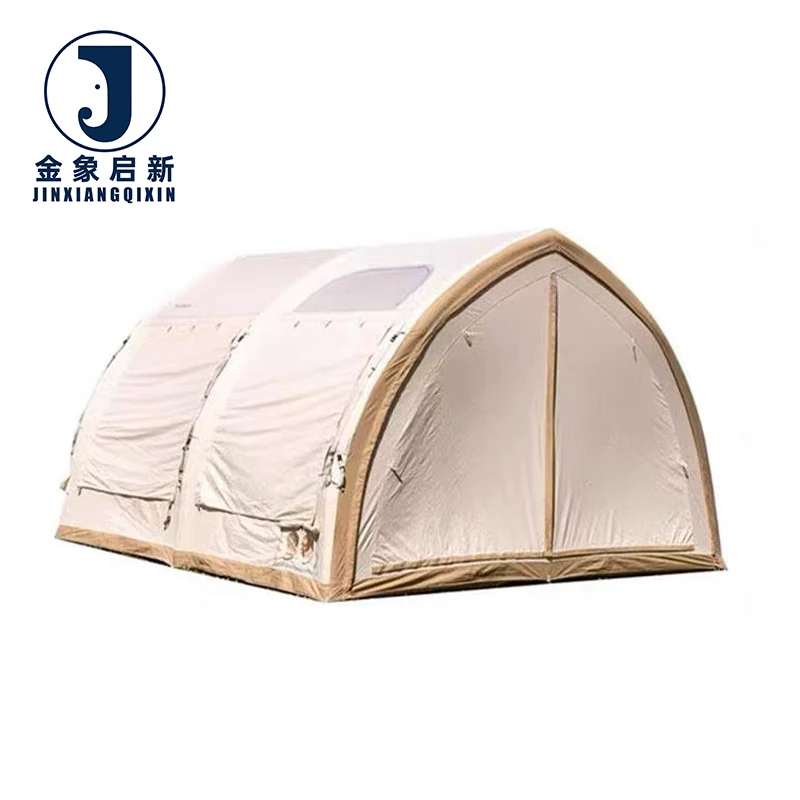
Precision Coating Control — Nearly 30 years of PVC coated fabric process expertise ensures consistent coating weight and adhesion at every stress point, verified through 100% pre-shipment inspection for inflatable tent projects requiring rapid deployment.
Technical Specifications
| Parameter | Value |
|---|---|
| Product Type | Inflatable Tent |
| Core Material | PVC Tarpaulin |
| Waterproof | Fully waterproof coated construction |
| UV Treatment | UV-resistant (test basis not stated in source) |
| Flame Retardant | Fire-retardant (grade not stated in source) |
| Anti-Static | Anti-static (standard/resistance not stated in source) |
| Tear Resistance | Tear-resistant (test standard not stated in source) |
| Product Forms | Single Layer Construction, Extended Type |
| Automatic Opening | Yes |
| Season Rating | Four-season design |
| Customization | OEM & ODM with sample customization and pattern printing |
| Certifications | ISO9001, ISO14001, ISO45001, CE |
Application Suitability
| Application | Exposure & Requirement |
|---|---|
| Emergency disaster relief shelters | Rapid automatic-opening deployment, all-weather exposure, high-visibility identification |
| Construction site temporary workspaces | Abrasion from equipment movement, UV exposure, wind load on inflated structure |
| Mobile logistics storage facilities | Repeated inflation-deflation cycles, ground contact moisture, forklift proximity |
| Outdoor industrial event coverings | Extended sun exposure, crowd safety fire-retardant compliance, branding print durability |
Why Inflatable Tent Fabric Fails at the Weld Line Before the Fabric Does
Seam integrity depends on coating adhesion, not just base fabric strength.
When an inflatable shelter is pressurized, the highest stress concentrates at welded seams and panel junctions. I have seen heavy-grade coated rolls fail at the weld line while the field fabric remained intact. The root cause is typically inconsistent coating weight or poor adhesion between the PVC layer and the base fabric, which causes the heat-welded joint to separate under cyclic inflation loads. For emergency relief and industrial shelter applications where structural failure is not acceptable, specifying material based on GSM alone leaves the most critical performance variable unverified [NEED_CITE: tensile and tear test methods for coated fabrics per ISO 1421].
Coating Adhesion and Its Role in Inflatable Structure Integrity
The performance of any PVC inflatable tent fabric manufacturer output depends fundamentally on how well the coating bonds to the base fabric. Knife coating allows controlled penetration of PVC paste into the weave structure, creating a mechanical lock that resists delamination under repeated inflation pressure cycles. When adhesion is insufficient, the coating peels away from the yarn at stress concentrations around valve ports and panel corners. Our process control maintains consistent coating penetration across the full production run.
Fire-Retardant and Anti-Static Compliance for Controlled Environments
Industrial sites, mining operations, and disaster relief staging areas often mandate documented fire-retardant and anti-static performance for temporary structures. Available in flame retardant grades — confirm the grade required for your market and site specification before ordering. Anti-static treatment is similarly available with supporting documentation upon request. Each batch can be supplied with test reports matching the specific compliance framework your project demands [NEED_CITE: fire classification standards for temporary membrane structures].
Reading Beyond the GSM Number on Your Quotation
GSM tells you the total mass per square meter but reveals nothing about how that mass is distributed between base fabric and coating. A PVC inflatable tent fabric with a dense, high-denier base fabric and thin coating will behave very differently from one with a lighter base and heavy coating fill, even at identical GSM. The base fabric denier and weave density determine tear propagation resistance, while the coating weight governs waterproofing and weld behavior. Specifying both the base fabric construction and the coating weight separately gives you a complete picture of how the material will perform during inflation, handling, and long-term outdoor exposure.
The Hidden Cost of Specifying on Price Per Square Meter Alone
When procurement decisions focus exclusively on unit cost, material substitutions become invisible until the tent is inflated on site. A lighter base fabric hidden under a thick coating fill may meet the quoted GSM but will tear more easily at valve cutouts and panel seams. Color inconsistency between rolls becomes visible only after panels are welded side by side on the finished structure. Fire-retardant claims unsupported by batch-specific test reports can result in failed site inspections and costly project delays. These failures surface in the field, not in the sample approval stage [NEED_CITE: coating weight versus base fabric weight ratio in PVC tarpaulin specifications].
What This Production Facility Delivers for Your Inflatable Tent Project
Deep process control over coating weight and adhesion across three full production lines ensures batch consistency for large-volume inflatable tent orders. The 10-person R&D team develops custom samples within days, covering sizing, pattern printing, and structural panel layout for single layer or extended type configurations. Dedicated QA/QC inspection at every production stage catches coating defects, color drift, and weld adhesion issues before material leaves the facility. All PVC inflatable tent fabric orders ship with complete documentation including material specification sheets and pre-shipment inspection records. ISO9001, ISO14001, ISO45001, and CE certifications support compliance requirements across international markets.
Documentation & Verification
- Material specification sheet confirming PVC tarpaulin GSM, base fabric denier, and coating weight per roll
- Batch-specific test reports for UV resistance and fire-retardant performance available upon request
- ISO9001, ISO14001, ISO45001, and CE certificates included with shipment documentation
- Pre-shipment inspection records verifying coating adhesion and color consistency before dispatch
- Certificate of origin and customs documentation for international inflatable tent fabric shipments
Fabrication, Handling & Storage
- Heat welding temperature must match the PVC coating formulation to avoid seam delamination on inflated panels
- Store rolls upright on pallets to prevent permanent creasing that affects inflation panel flatness
- Allow cold-transported rolls to reach ambient temperature before unrolling to avoid coating cracking
- Use compatible PVC adhesive for field repairs on single layer construction panels
- Plan panel cutting layout to minimize waste at valve ports and structural seam junctions
- Clean printed surfaces with mild detergent only to preserve pattern integrity on branded shelters
Starting Your Inflatable Tent Fabric Specification
Provide your intended deployment environment, including typical wind loads, temperature range, and any fire-retardant or anti-static standards your site mandates. Confirm whether you require rolls for your own fabrication or finished cut-to-size panels with valve port reinforcements. Share your target color references and any pattern printing requirements so the R&D team can develop matching samples for your approval before production begins.
Frequently Asked Questions
Q: How do we verify the fire-retardant grade and anti-static certification for our site requirements?
A: Specify the exact fire-retardant standard and anti-static resistance level your project requires at inquiry stage. Batch-specific test reports are generated for your order and included with shipment documentation. Our team confirms the applicable grade before production begins to ensure compliance with your site safety framework.
Q: What UV treatment test basis supports the claimed outdoor durability?
A: UV-resistant treatment is applied during the coating process. The specific test basis and exposure duration data are available upon request for your market requirements. Confirm your regional UV exposure standards at inquiry so we can match the treatment formulation to your deployment environment and expected service conditions.
Q: How is batch-to-batch color consistency ensured across rolls for large-scale tent fabrication?
A: Color reference samples are confirmed before production, and dedicated QA/QC checks verify consistency at every coating stage. Rolls from the same production batch are matched against the approved reference. For large orders spanning multiple batches, we maintain traceability records linking each roll to its production run.
Q: What customization options are available for size, pattern printing and structural design?
A: OEM and ODM services cover custom panel dimensions, extended type configurations, and pattern printing for branding or identification. The 10-person R&D team develops samples within days for your review. Sample approval is required before mass production proceeds, ensuring the finished inflatable tent fabric meets your exact structural and visual specifications.
Q: What documentation is included with each shipment to support customs and compliance?
A: Every shipment includes a material specification sheet, roll packing list, pre-shipment inspection record, certificate of origin, and relevant ISO and CE certificates. Fire-retardant and anti-static test reports are included where applicable. This documentation package supports customs clearance and on-site compliance verification for your inflatable shelter project.