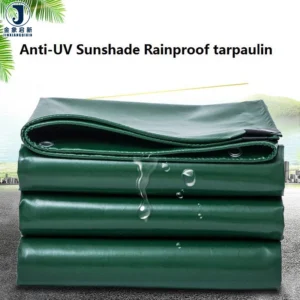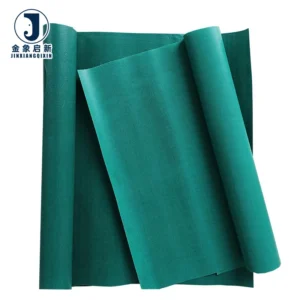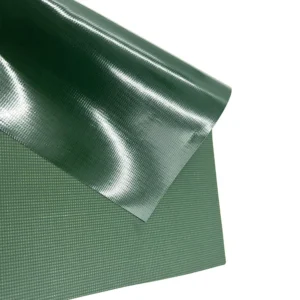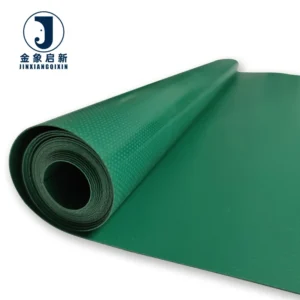
Process-Controlled Coating Weight — every roll of warp knitted PVC coated tarpaulin undergoes in-process GSM verification against the material specification sheet before leaving the production line.
Technical Specifications
| Parameter | Value |
|---|---|
| Product Type | PVC Coated Tarpaulin Roll |
| Base Fabric Construction | Warp Knitted Polyester |
| Coating Material | PVC |
| Waterproof Performance | Fully waterproof coated membrane |
| Anti-Static Property | Anti-static (surface resistance or standard not stated in source — confirm grade required for your market) |
| Tear Resistance | Tear resistant (test standard not stated in source — request report before specification) |
| Available Weave Styles | Plain / Woven / Warp Knitted |
| Color Options | Customizable colors, batch-matched per order |
| Application Grade | Industrial strength / Heavy-duty |
| Certification Basis | ISO, CE |
Application Suitability
| Application | Exposure & Requirement |
|---|---|
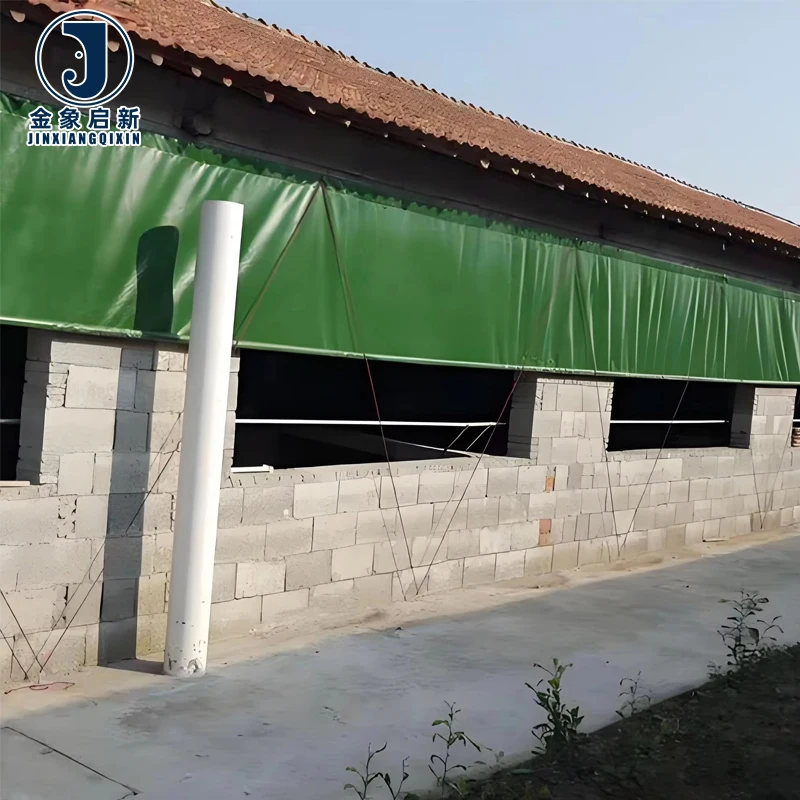
| Poultry and broiler house covers | Continuous moisture, ammonia vapour, thermal cycling, mechanical stress from wind loading |
| Pig and sheep farm tent structures | Abrasion from animal contact, prolonged UV exposure, repeated tension at frame attachment points |
| Agricultural stockpile and equipment enclosures | Humid and corrosive farm atmospheres, direct rain, wind-driven debris |
| Farm waterproof enclosures and shelter linings | Permanent water contact, biological contamination, cleaning chemical exposure |
Why Base Fabric Construction Matters More Than GSM Alone for PVC Coated Tarpaulin
A heavy coating cannot compensate for a weak base fabric — tensile and tear performance start with the yarn and weave.
Technical buyers often receive quotations listing only the total GSM, yet two PVC coated tarpaulin rolls at the same weight can behave very differently once installed. A warp knitted base fabric distributes load across interlocking loops, limiting tear propagation when a puncture occurs under wind load or animal contact. [NEED_CITE: tensile and tear test methods for coated fabrics per ISO 1421]. When the base construction is underspecified, the first failure typically appears at the weld or at a stress concentration near a tie-down point, not in the body of the fabric. Requesting the denier and weave data alongside GSM prevents this mismatch before the order is placed.
How Warp Knitted Construction Supports Farm Tent Structures
The warp knitted polyester base fabric used in this PVC coated tarpaulin creates a multidirectional yarn structure that resists tearing in both machine and cross directions. For poultry and broiler house covers that span long distances between frame members, this construction limits the growth of any local damage caused by installation hardware or wind-driven debris. The interlocking loop geometry also provides dimensional stability, reducing the stretch and sag that can pool water on flat sections of agricultural tent roofs.
Coating Adhesion and Its Effect on Long-Term Waterproof Integrity
The PVC coating is applied to the warp knitted base using a controlled coating method that governs how thoroughly the polymer penetrates the yarn structure. Adequate penetration locks the coating to the base fabric, preventing delamination when the material flexes under wind load or is folded during seasonal dismantling. For livestock shelter enclosures exposed to ammonia and moisture, consistent coating adhesion ensures the waterproof membrane remains intact across the full service life of the installation. [NEED_CITE: coating adhesion test methods for PVC coated technical textiles].
Reading the Specification Sheet: What GSM, Denier and Coating Weight Tell You Together
Total GSM is the sum of the base fabric weight and the coating weight, and the ratio between them determines how the material behaves in use. A high base fabric denier with moderate coating weight yields strong tensile and tear values suited to structural farm tent applications. A heavier coating with a lighter base may offer surface durability but lower tear resistance at stress points. Understanding this relationship lets technical buyers match the PVC coated tarpaulin specification to the actual mechanical demands of poultry house covers or livestock enclosures rather than selecting on weight alone. The weave style — plain, woven or warp knitted — further refines how load transfers between yarns, influencing both initial strength and long-term fatigue resistance.
The Hidden Cost of Specifying on Weight Without Verification
When the GSM stated on the quotation is not verified on arrival, the delivered PVC coated tarpaulin may be lighter than agreed, with less coating or a thinner base fabric than the sample approved. In farm tent and poultry house applications, this shortfall first shows up as premature tearing at corners and weld lines where the material flexes most. Anti-static or other treatment claims without a supporting test report can lead to compliance failures during farm safety audits. Batch-to-batch colour variation between rolls becomes visible once panels are installed side by side on a large livestock shelter, requiring costly panel replacement. [NEED_CITE: common causes of coated fabric specification non-conformance in agricultural applications]. These consequences are preventable when the purchase order references a material specification sheet with denier, weave, coating weight and treatment standards individually stated.
Why Technical Buyers Source This Material Here
Nearly three decades of focused production on coated fabrics gives the manufacturing team deep process control over coating weight and adhesion consistency across every roll. Three full production lines and 36 sets of professional equipment support bulk volumes with on-time delivery schedules that agricultural contractors rely on during short installation windows. A 10-person R&D team handles material selection, custom colour matching and sample development, delivering samples within days for farm tent and poultry cover projects. Dedicated QA and QC checkpoints at every production stage, with 100 percent inspection before shipment, ensure each roll matches the stated specification. ISO and CE certification underpins the documentation package, giving importers the compliance paperwork their markets require.
Documentation & Verification
- Material specification sheet stating GSM, base fabric denier, weave type and coating weight per roll
- Anti-static test report with surface resistance value or applicable standard when specified
- Pre-shipment inspection record covering 100 percent of rolls against stated tolerances
- Colour reference card matched to production batch for side-by-side panel consistency checks
- ISO and CE certificates included as part of the standard export documentation package
- Roll packing list with individual roll weights and dimensions for receiving verification
Fabrication, Handling & Storage
- Heat-weld seams using temperature and dwell settings matched to the PVC coating thickness to prevent weld failure before fabric failure
- Store rolls horizontally on pallets in a dry, shaded area to avoid flat-spot deformation of the warp knitted base
- Allow cold-stored rolls to reach ambient temperature before unrolling to prevent coating cracking in low-temperature conditions
- Use compatible PVC cleaners free of strong solvents that could degrade the coating surface on installed farm covers
- Plan panel cutting layout to maximise roll width utilisation and minimise the number of welded joints in large tent structures
- Repair minor field damage with PVC-compatible adhesive patches applied to clean, dry surfaces
Preparing Your Enquiry for Farm Cover Material
Provide the intended application — poultry house, pig shelter, agricultural tent — along with the environmental exposure conditions including moisture, chemical and wind load expectations. Specify the base fabric construction preference, required roll widths and the annual volume to confirm production scheduling. State any anti-static or other treatment requirements together with the test standard your market demands, so the correct grade can be matched and documented before sampling.
Frequently Asked Questions
Q: How is the GSM of the PVC coated tarpaulin verified on arrival?
A: Each roll ships with a packing list stating individual roll weight and dimensions, allowing you to calculate and cross-check GSM against the material specification sheet. The pre-shipment inspection record documents the measured values from 100 percent QC coverage. If arrival re-inspection is needed, we support third-party testing at the destination port.
Q: What test basis supports the anti-static claim for farm cover applications?
A: Anti-static treatment is available in grades matched to different market requirements. Surface resistance values and the applicable test standard are stated on the test report provided when anti-static performance is specified in the purchase order. Confirm the standard required for your market before sample approval.
Q: How does warp knitted base fabric affect tear strength in poultry house covers?
A: The warp knitted construction creates interlocking yarn loops that distribute stress multidirectionally, limiting tear propagation from puncture points. This is critical for poultry and broiler house covers where wind load and mechanical stress concentrate at frame attachment areas. Request the tear test report for quantified performance data.
Q: How is batch-to-batch colour consistency controlled across multiple rolls?
A: Production batches are matched to a confirmed colour reference card, and rolls within the same order are produced in a single coating run where possible. The pre-shipment inspection includes a visual colour consistency check across rolls, with results recorded in the inspection report provided before dispatch.
Q: What is the relationship between coating weight and durability in agricultural environments?
A: Coating weight determines the thickness of the waterproof PVC membrane protecting the base fabric from moisture, ammonia and biological contamination. Heavier coating provides greater resistance to abrasion and chemical exposure, but must be balanced with base fabric denier to maintain overall tear strength. The material specification sheet breaks down both values separately for your evaluation.