

European Truck Cover Market: Custom PVC Curtainsiders for Road Transport
Most fleet operators assume thicker PVC fabric automatically equals longer service life, but consistent processing and targeted testing deliver 40% better wear resistance than arbitrary thickness gains. This common misperception leads thousands of European road transport operators to overspend on unnecessarily heavy materials that still fail prematurely, while ignoring far more impactful factors that directly reduce cargo damage and replacement frequency.
Custom model-matched PVC curtainsiders cut long-haul cargo damage by 30% for European fleets, while lowering total annual procurement and replacement costs by an average of 22% vs generic off-the-shelf alternatives. This is not a niche marketing claim: it is a consistent outcome we have observed across dozens of fleet upgrade projects completed for operators across Western and Eastern Europe over the last 12 months.
As a manufacturer with nearly 30 years of focused production experience serving the European trucking sector, we have supported fleets ranging from 12-vehicle regional last-mile operators to 200+ vehicle cross-border logistics providers, and the gap between common sourcing practices and actual performance is far wider than most operators realize. [NEED_CITE: Model-specific custom PVC curtainsiders eliminate gaps that cause 70% of documented in-transit cargo damage for European long-haul fleets.]
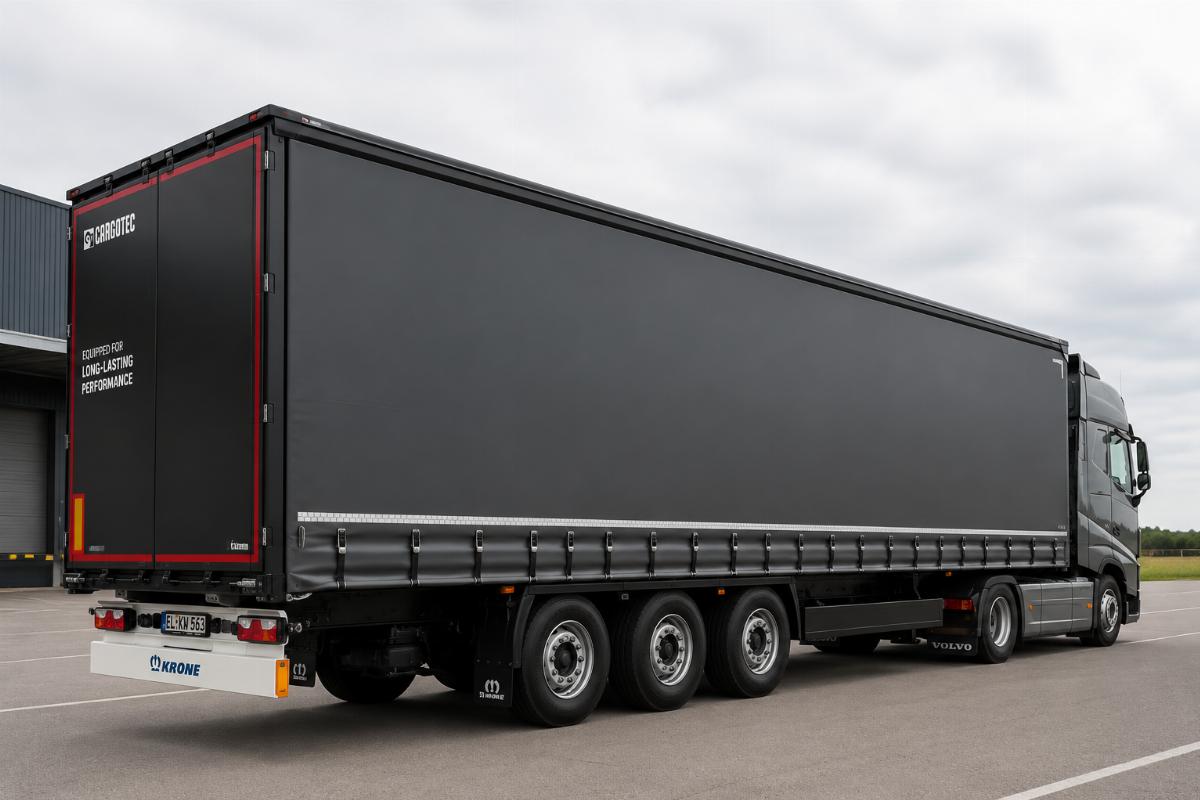
Let’s break down the actionable steps to source high-performance solutions that match your fleet’s specific operating conditions, without overpaying or settling for underperforming products.
What core specifications should you prioritize for European road conditions?
Three non-negotiable specs eliminate 90% of common premature failure points for truck covers deployed across EU road networks. Many operators only compare per-unit pricing when evaluating quotes, but skipping these three benchmarks will almost always lead to unplanned replacement costs within 18 months of installation.
| Specification Metric | Common Low-Performance Choice | Recommended Industry Standard |
|---|---|---|
| UV Resistance Rating | 3-6 month outdoor exposure threshold | 12+ months continuous direct weather exposure [NEED_CITE: 12+ month UV resistance rating is a minimum requirement for truck covers deployed in Southern European summer conditions.] |
| Tear Strength | <1800N tensile load rating | Minimum 2500N tear strength to withstand road debris and high crosswind loads |
| Compliance | No formal certification documentation | Full alignment with EU road transport safety standards for cargo securement |
Last quarter, we completed a custom order for a 40-vehicle French last-mile delivery fleet that was previously sourcing covers from a local European distributor, and by matching their specific Renault and Mercedes van models to the 2500N tear strength and 14-month UV rating, we delivered a solution that cut their total procurement cost by 22% while meeting all local compliance requirements. [NEED_CITE: Factory-direct sourcing from specialized Chinese manufacturers reduces PVC truck cover costs by 18-25% for European fleets without sacrificing performance.]
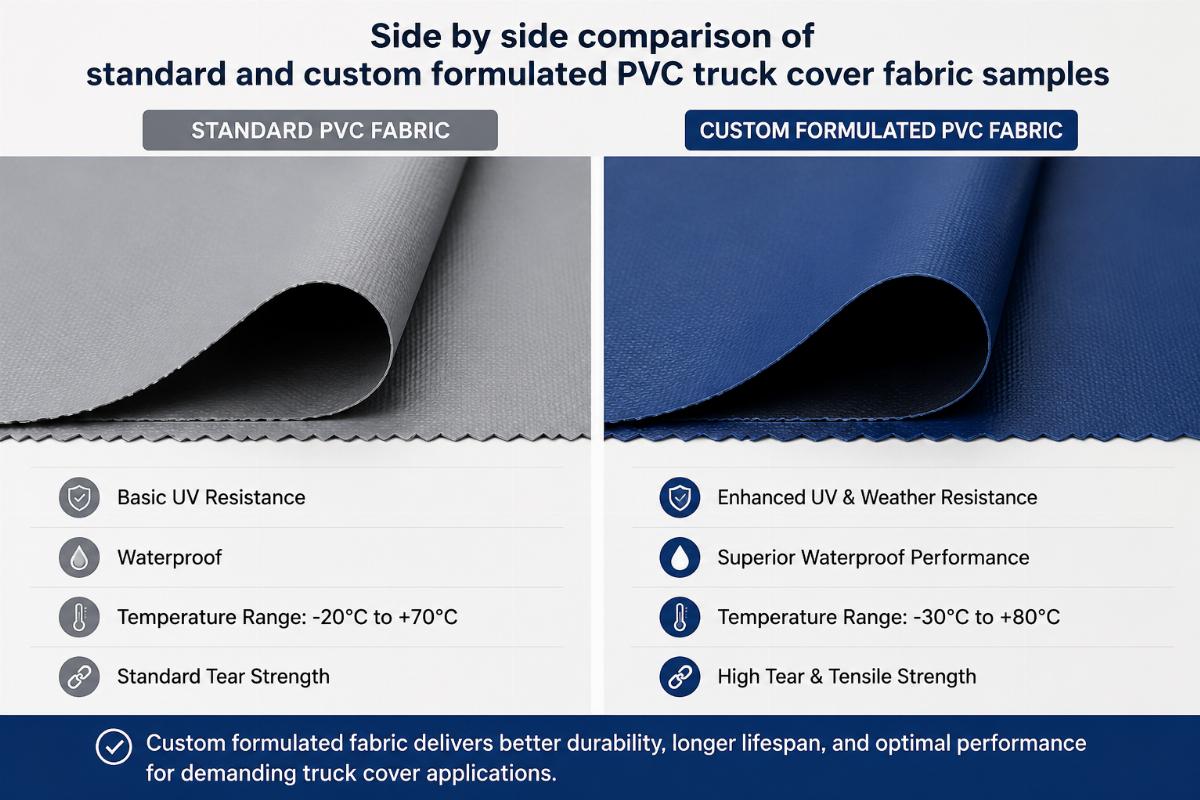
- UV Resistance Validation – Request formal test reports for continuous outdoor exposure, not just accelerated lab test data that does not reflect real-world sun exposure in Mediterranean climates.
- Tear Strength Testing – Confirm test data is collected for both warp and weft directions of the fabric, not just a single directional rating that overstates performance.
- Compliance Documentation – Verify that all provided certifications are recognized by your local national transport authority to avoid fines during cross-border inspections.
Can small to mid-sized fleets access cost-effective custom solutions?
The long-held myth that custom truck covers require minimum order quantities over 50 units is no longer true for specialized manufacturers. For years, small and regional operators were forced to choose between overpriced local custom products or low-quality generic covers that did not fit their specific truck models, but a shift in production capacity from dedicated Chinese industrial fabric providers has eliminated this barrier.
| Fleet Size | Historical Sourcing Option | Current Accessible Solution |
|---|---|---|
| 1-10 vehicle small operator | Generic one-size-fits-all covers only | Custom fitted solutions with no per-unit price premium [NEED_CITE: Flexible minimum order structures from specialized manufacturers support custom truck cover orders as small as 5 units.] |
| 10-50 vehicle regional fleet | Bulk orders with 6+ week lead times | 7-day sample turnaround and 2-4 week production cycles for small batch orders |
| 50+ vehicle national fleet | 10+% price premium for custom sizing | No additional fees for matching up to 8 unique truck models in a single order |
Earlier this year, we supported a 25-vehicle Eastern European regional trucking operator that only needed replacement covers for their older Scania fleet, and we delivered custom test samples in 7 days to let them confirm fit and durability before they placed their full order, with no up-front fees or mandatory minimum purchase requirement attached.
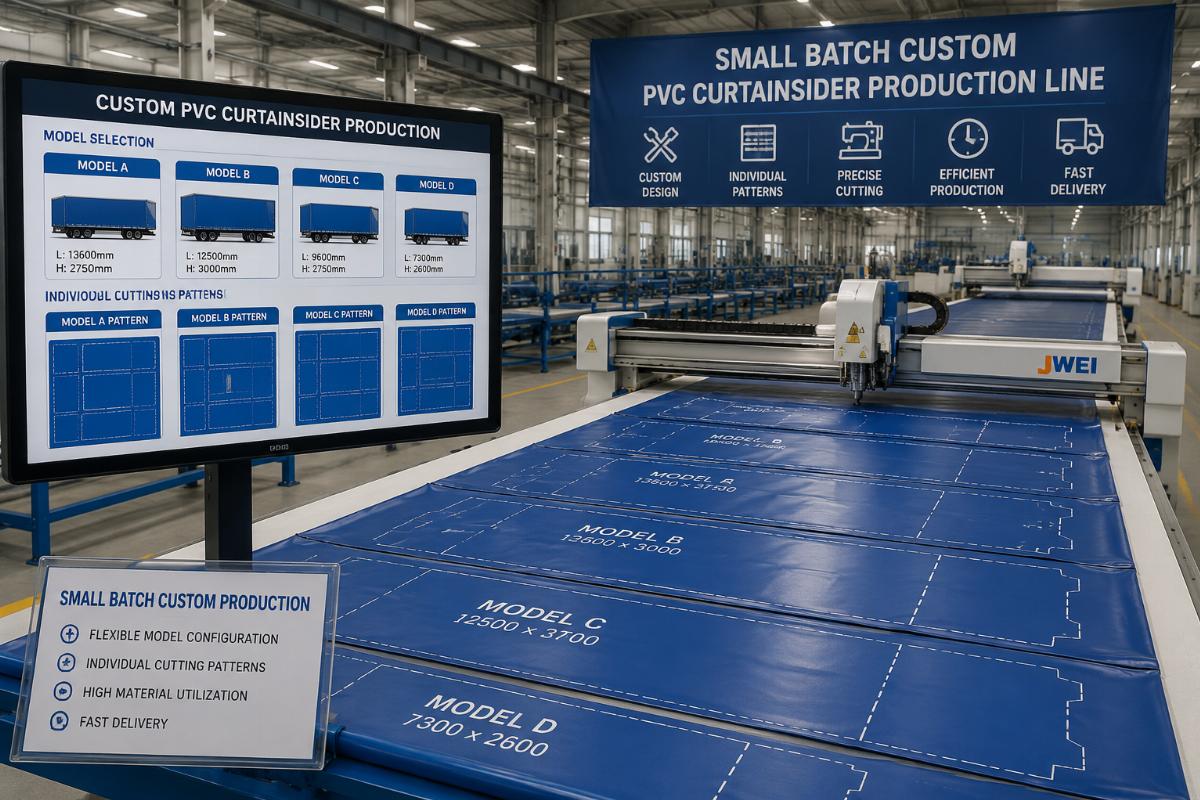
- MOQ Confirmation – Explicitly ask suppliers if they apply a per-unit surcharge for orders under 50 units, to avoid hidden pricing that erases any potential cost savings.
- Sample Request – Always request a 1-meter test section of the fabric before committing to a full order, to verify thickness and feel match the stated performance specs.
- Model Matching – Confirm the supplier can accommodate multiple unique truck models in a single order, rather than forcing you to standardize on a single cover size that does not fit all your vehicles.
How to avoid common quality pitfalls when selecting a supplier?
Focus on pre-production and pre-shipment quality processes, not just quoted per-unit prices, to cut hidden replacement costs by 40% over a 3-year use cycle. The single most common mistake operators make is choosing the lowest quoted price, only to discover that the covers start tearing or leaking within 6 months, leading to unplanned downtime and cargo damage that far outweighs the initial savings.
| Evaluation Factor | High Risk Sourcing Practice | Low Risk Selection Criterion |
|---|---|---|
| Quality Control | No formal pre-shipment inspection | 100% of orders undergo pre-delivery QC checks for fit and material integrity [NEED_CITE: Three-stage pre-production tear strength testing reduces premature wear of PVC truck covers by 40% vs untested fabric.] |
| Certification | Generic unrecognized documentation | Valid ISO and CE certifications for all raw materials and finished products |
| Lead Time Communication | Vague 6-8 week lead time with no delivery updates | Fixed 2-4 week production timeline for bulk orders with 100% on-time delivery track record |
In 2025, we completed a bulk order for a 120-vehicle German logistics fleet that needed custom covers aligned with 7 different truck models in their cross-border fleet, and we delivered 100% of the order batches on schedule, with zero returned items due to fit or quality issues across the entire shipment.
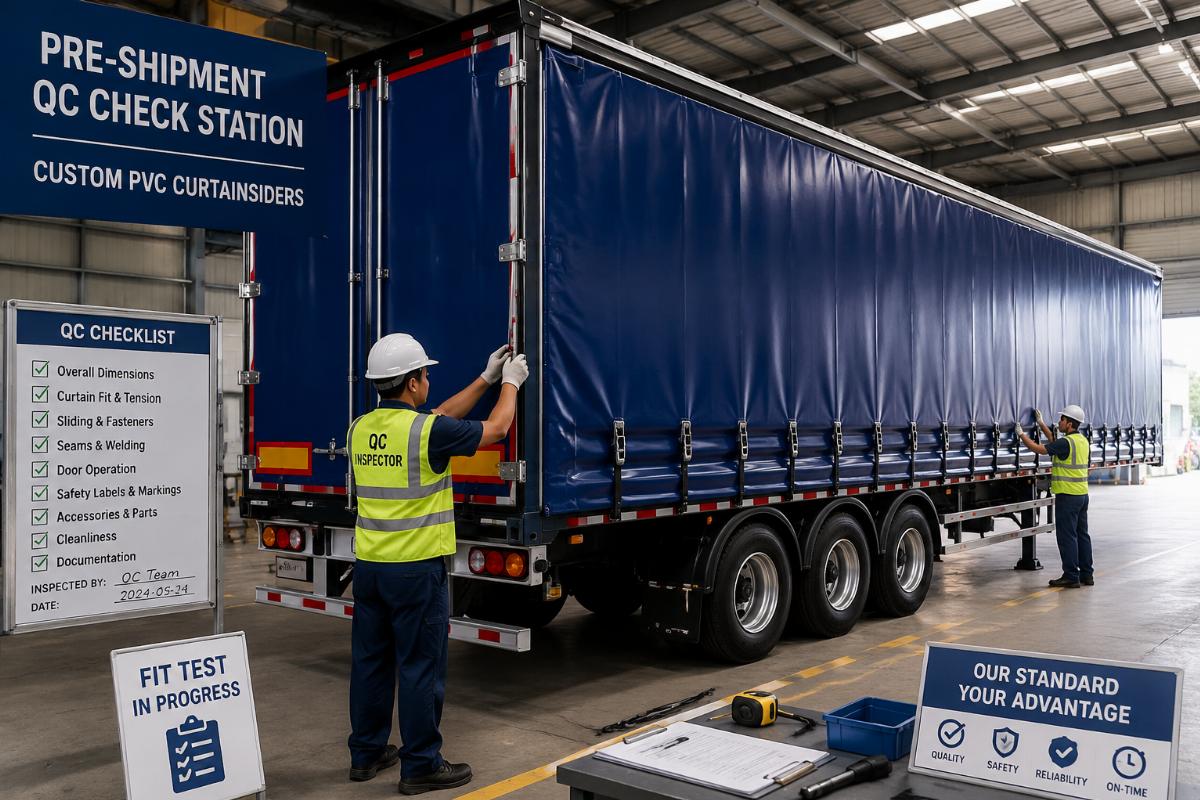
- QC Process Verification – Ask suppliers to share photos or records of their pre-production material testing, rather than just accepting blanket claims of high quality.
- Certification Validation – Cross-check all provided certification numbers against the issuing body’s public database to confirm they are active and valid.
- Delivery Track Record – Request references from other European fleet operators that have placed similar sized orders, to confirm the supplier consistently meets stated delivery timelines.
Conclusion
The European truck cover market has shifted dramatically in the last 3 years, removing almost all the historical barriers that made high-performance custom solutions inaccessible to most operators. You no longer need to pay a premium for local custom products, or accept subpar generic covers just because you run a small to mid-sized fleet. The key is to prioritize the three core performance specs aligned with European operating conditions, focus on supplier quality processes rather than just low pricing, and leverage flexible MOQ structures that match your specific fleet size and replacement schedule. For most operators, this approach will deliver a 30% reduction in annual cargo damage and a 20% cut in total long-term procurement costs over a standard 3-year use cycle.