

How to Verify a Chinese Tarpaulin Factory Before Placing a Large Order
Most buyers assume a larger factory campus always equals better order fulfillment, but the actual core indicator is the number of dedicated production lines for your specific product category, not total land area. If you are a global buyer sourcing bulk tarpaulins for resale, fleet use, construction projects or industrial applications, falling for this common misconception can leave you facing delayed production, quality inconsistencies or compliance failures when you lock in a large purchase contract.
Verifying three core dimensions of a Chinese tarpaulin factory before committing to a bulk order eliminates 80% of common cross-border sourcing risks, while working with a specialized long-term manufacturer delivers consistent quality, transparent pricing and reliable delivery.
As someone who has supported hundreds of cross-border tarpaulin sourcing projects for buyers across 20+ countries, I have seen firsthand that skipping structured pre-order verification leads to avoidable losses for even the most experienced importers [NEED_CITE: Pre-order supplier verification reduces cross-border sourcing risk by 80% for bulk industrial fabric purchases].
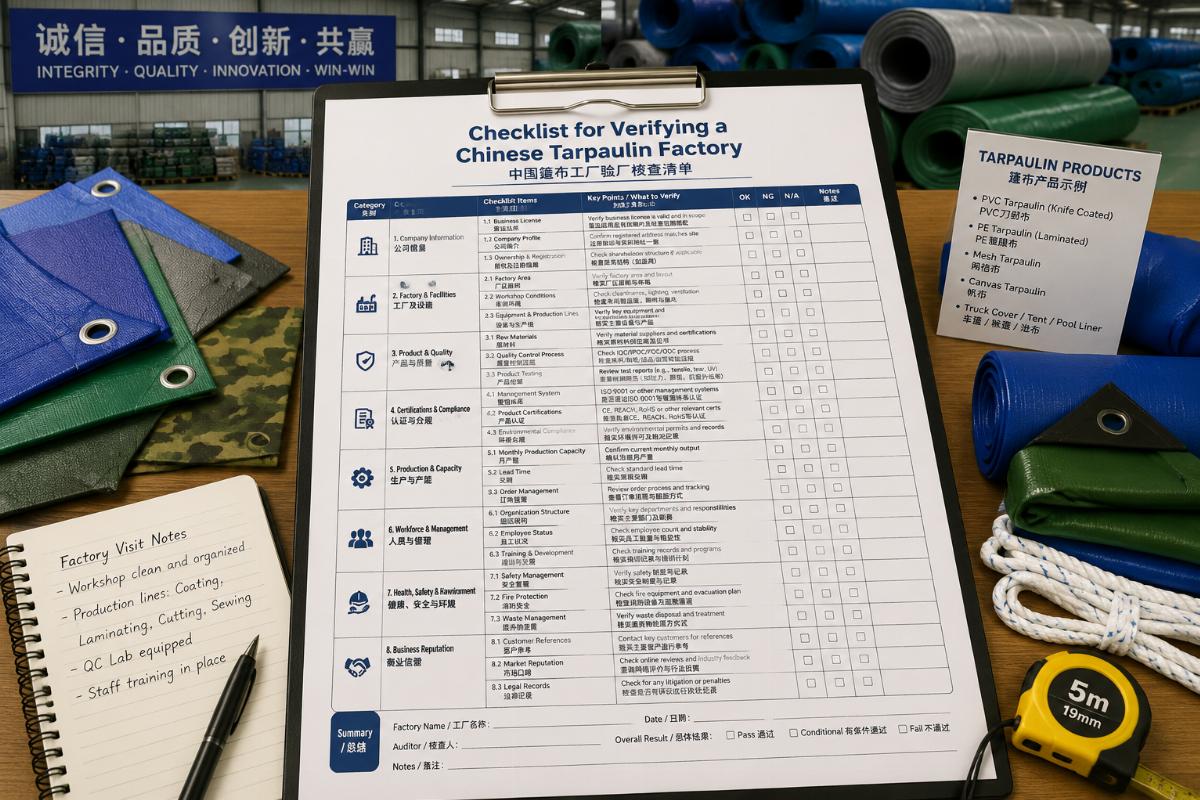
The following step-by-step framework breaks down exactly what to check, what common mistakes to avoid, and how to confirm a supplier can deliver on your exact order requirements.
What core details should you check first when vetting a Chinese tarpaulin factory?
The first and most critical verification step is to confirm the factory’s core production capacity and dedicated product line resources, rather than only reviewing general promotional materials. Many suppliers lead with flashy claims of large total facility size, but these numbers rarely translate to the ability to fulfill your specific tarpaulin order on schedule.
| Verification Factor | Common Mistake | Recommended Practice |
|---|---|---|
| Production Line Allocation | Count total factory land area as a proxy for output capacity | Count only dedicated production lines for your specific tarpaulin product category [NEED_CITE: Dedicated product line count is a more reliable capacity indicator than total factory square footage] |
| Monthly Output | Assume any supplier can scale to match your order volume | Confirm the exact maximum number of 40HQ containers they can produce for your product type per month |
| Peak Season Capacity | Ignore production backlog risks during high demand periods | Request written confirmation of lead times for your order size during the next 3 months |
A North American tarpaulin wholesaler recently confirmed a supplier’s 9180 sqm facility and 3 full dedicated tarpaulin production lines to support 20x 40HQ container orders per month, eliminating all concerns of delayed production during the Q4 peak season [NEED_CITE: A 9180 sqm specialized tarpaulin factory with 3 dedicated lines supports 20 40HQ container orders per month].
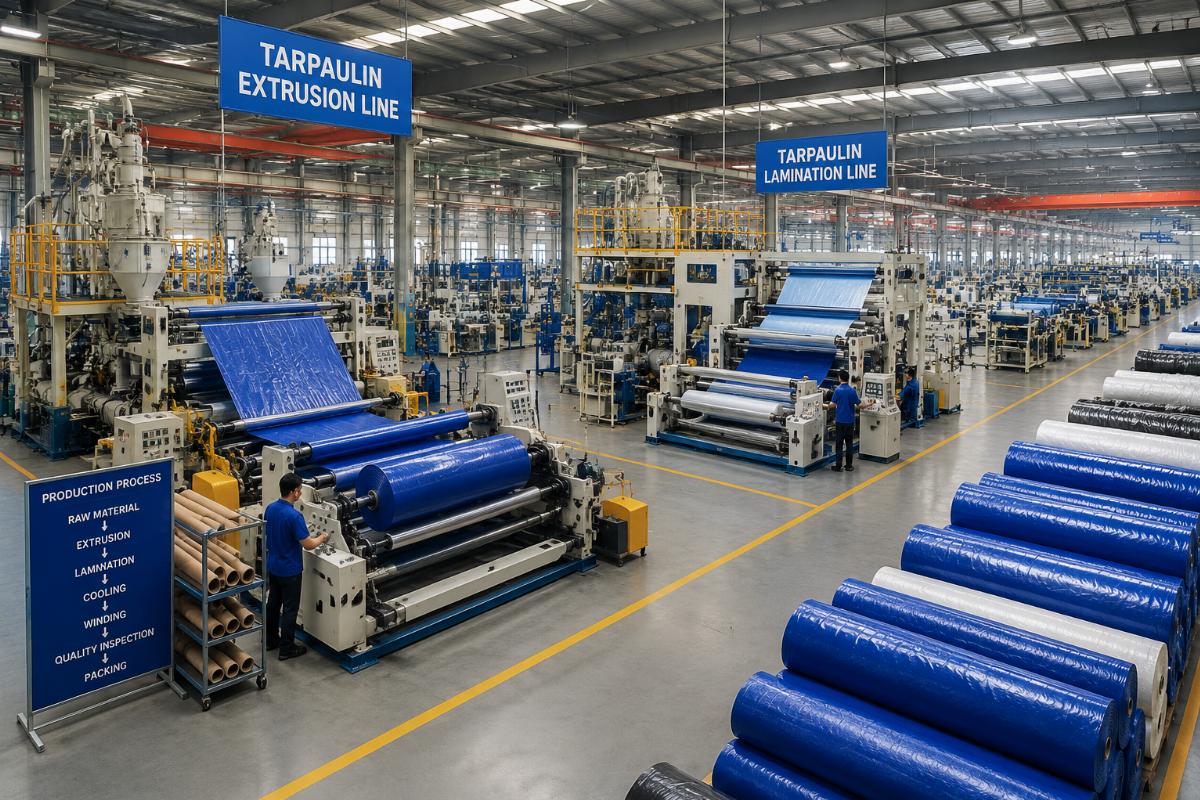
- Dedicated Line Confirmation – Ask suppliers to share photos of their production floor specifically labeled for tarpaulin manufacturing, not general industrial fabric space.
- Output Validation – Request a written breakdown of monthly production capacity for the exact product type you are ordering, not generic capacity numbers.
- Lead Time Guarantee – Negotiate a penalty clause in your contract for delays caused by insufficient production capacity.
Why do most cross-border tarpaulin orders fail compliance audits?
The root cause is that buyers skip verification of full sets of local market applicable certifications and mandatory third-party test reports before placing orders. Many buyers only confirm a supplier has basic ISO documentation, and overlook the specific test standards required for their region, leading to seized shipments or rejected project deliveries.
| Compliance Check | Common Mistake | Recommended Practice |
|---|---|---|
| Certification Scope | Accept generic ISO certificates without verifying validity | Confirm all certificates (ISO 9001, ISO 14001, ISO 45001, CE) are active and applicable to your product category |
| Test Report Requirement | Assume standard product testing covers special use cases | Request third-party test reports for niche applications like fire-retardant mining ducts or construction site covers |
| Inspection Process | Trust that suppliers will self-police quality standards | Confirm a formal 100% pre-shipment inspection protocol is in place for all orders [NEED_CITE: 100% pre-shipment inspection eliminates bulk order quality discrepancies] |
A European aviation engineering firm recently verified a Chinese supplier’s full set of required certifications and 100% pre-shipment QC process, ensuring their underground mining ventilation ducts met strict local fire safety standards without any post-delivery compliance issues.
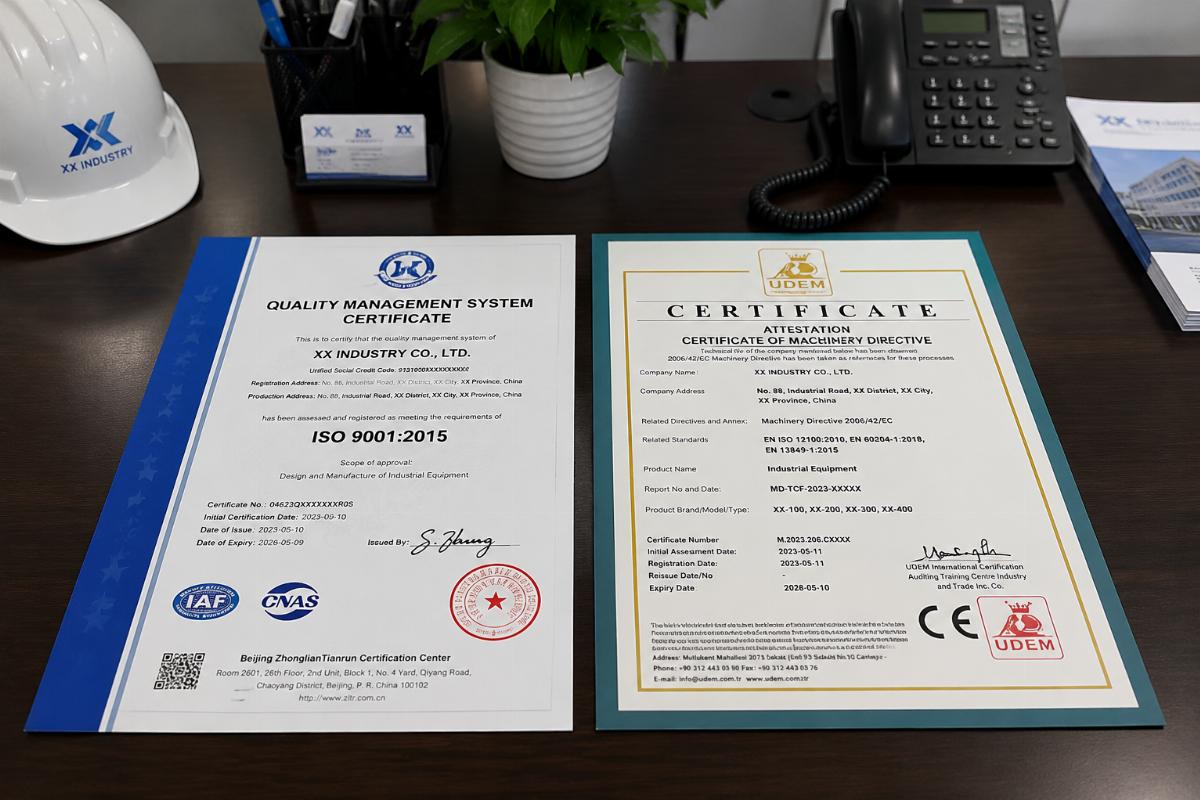
- Certificate Validation – Ask for direct links to official certification databases to confirm documents are not forged or expired.
- Test Report Alignment – Match all required test standards listed in your local import regulations to the supplier’s existing documentation.
- Inspection Witness – Reserve the right to send a third-party inspector to the factory during the final production run for orders over 50,000 units.
Is sample testing enough to guarantee bulk tarpaulin order quality?
Sample testing alone cannot guarantee consistent bulk quality, and buyers must confirm the supplier’s full pre-shipment quality control process to avoid mass defects. It is not uncommon for suppliers to send carefully curated high-quality samples, then cut corners on bulk production to reduce costs, leading to thousands of units that fail to match the original sample specifications.
| Quality Assurance Step | Common Mistake | Recommended Practice |
|---|---|---|
| Sample Review | Rely solely on physical sample testing to confirm quality standards | Cross-reference sample test results against formal production process documentation |
| Bulk Production Checks | Assume uniform quality across all production runs | Require the supplier to share production batch records for every 1,000 units produced |
| Defect Resolution | Have no pre-agreed process for bulk quality failures | Negotiate a clear replacement or refund clause for units that fail pre-shipment inspection |
There are multiple documented cases where a supplier sent fully qualified samples but produced 30,000 units of bulk goods that failed fire retardant testing due to lack of full inspection processes, leading to 6-figure losses for the importing buyer.
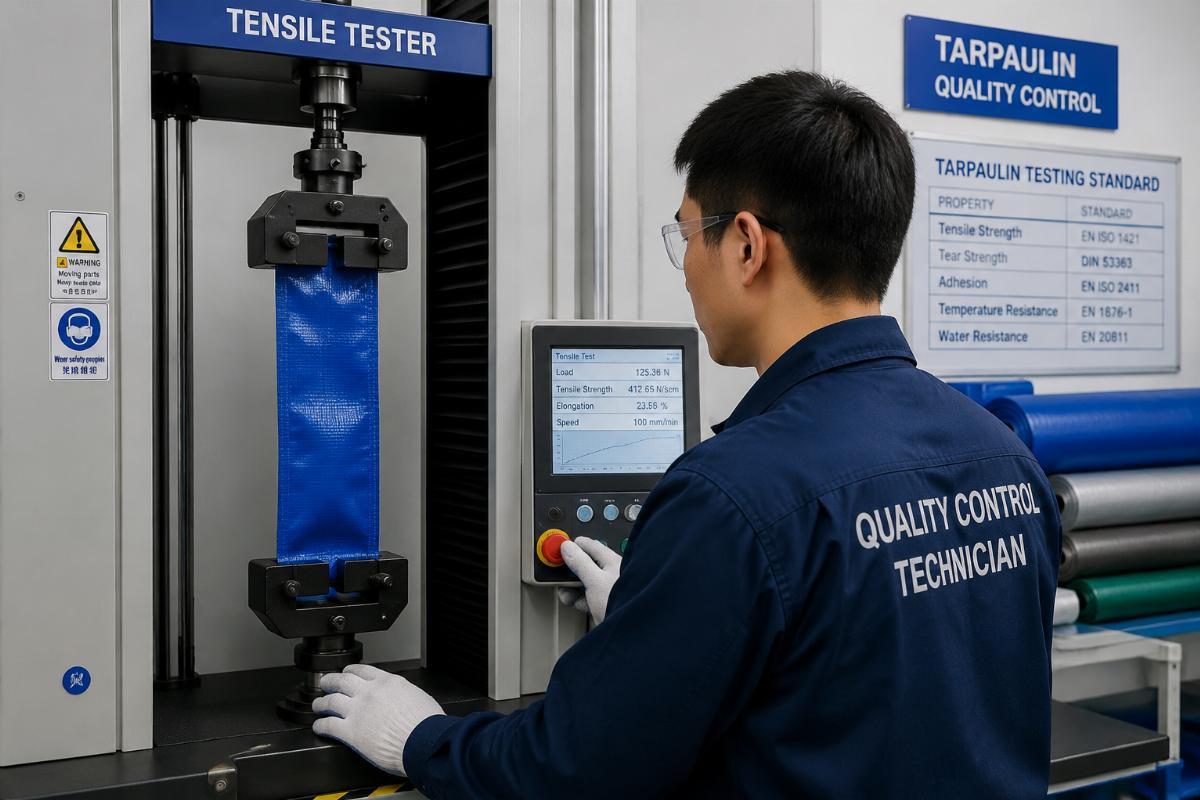
- Sample Matching – Require the supplier to use the exact same raw material lot for bulk production that was used to create your approved sample.
- Batch Documentation – Request photos and timestamped records of every quality check performed during the bulk production run.
- Defect Threshold – Agree on a written maximum acceptable defect rate (typically 0.5% for bulk tarpaulin orders) before production begins.
What red flags should you avoid when communicating with potential Chinese tarpaulin suppliers?
Common red flags include overly low quoted prices with no clear breakdown, no clear sample turnaround timeline, and refusal to provide on-site factory inspection access. Many new importers get drawn in by drastically underpriced quotes, only to discover hidden fees for custom sizing, OEM branding and after-sales support that push total costs 15% higher than competing quotes.
| Supplier Communication | Common Red Flag | Appropriate Supplier Response |
|---|---|---|
| Quote Breakdown | A single total price with no line item details for materials, processing or shipping | A fully itemized quote that lists all costs explicitly with no hidden charges |
| Sample Timeline | Vague promises of “1 to 2 weeks” with no firm commitment | A written, guaranteed sample delivery date tied to your specific custom requirements |
| Factory Access | Refusal to accept third-party inspectors or virtual on-site tours | Open availability for virtual walkthroughs or third-party audit visits at any time |
A recent comparison of three quotes for 10,000 custom truck covers found a 15% price gap between the lowest and highest offer, with the lower quote excluding costs for custom logo printing and reinforced edge stitching that were included in the higher priced options.
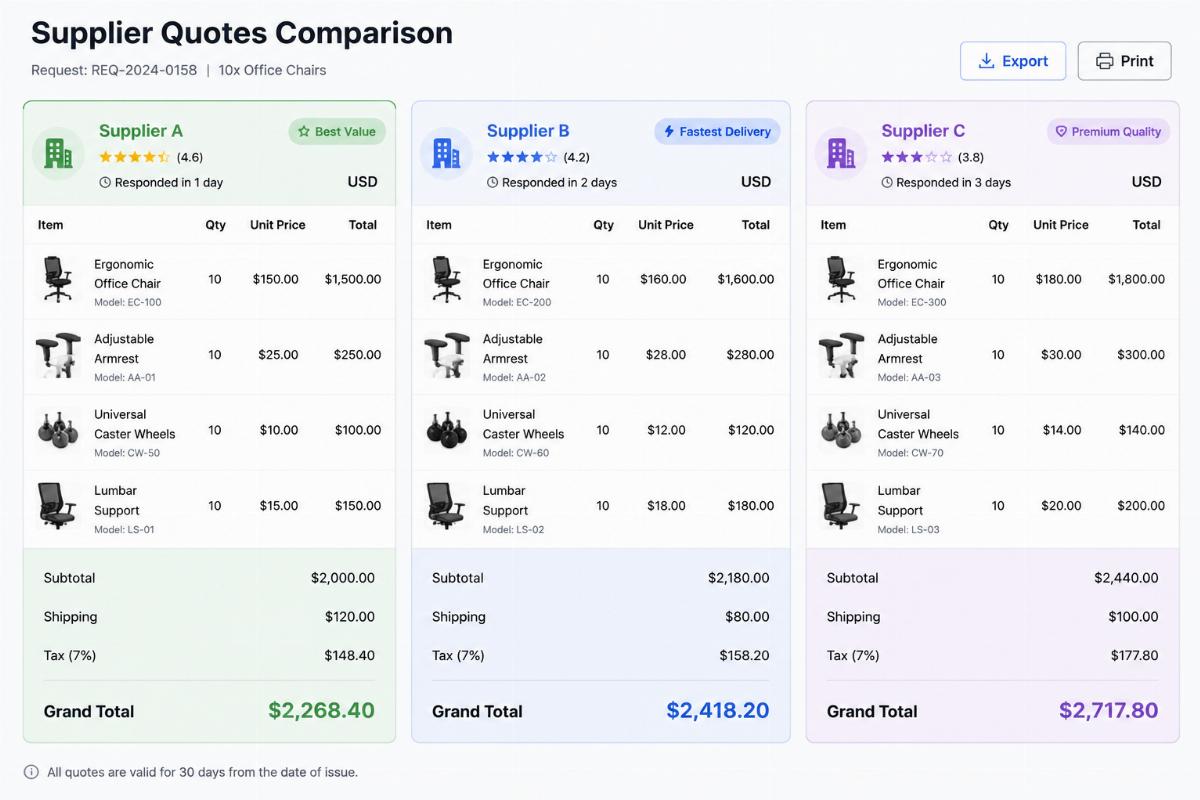
- Price Scrutiny – If a quote is 20% or more lower than other competing offers, ask for a full line item breakdown to identify unlisted costs.
- Timeline Confirmation – Get all sample and production lead times in writing as part of your formal purchase agreement.
- Inspection Access – Immediately rule out any supplier that refuses to allow independent third-party access to their production facility.
How to confirm a supplier can support your custom order requirements?
The most reliable way to confirm custom support is to verify the supplier’s R&D team size and past case references for similar custom requests. Many suppliers claim to offer custom services