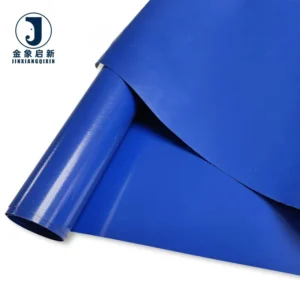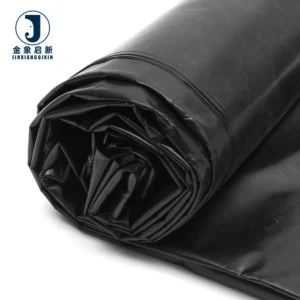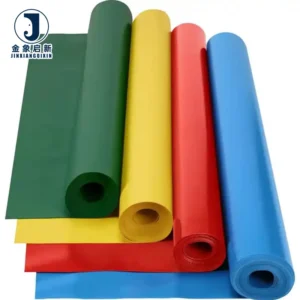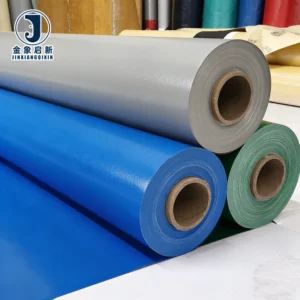
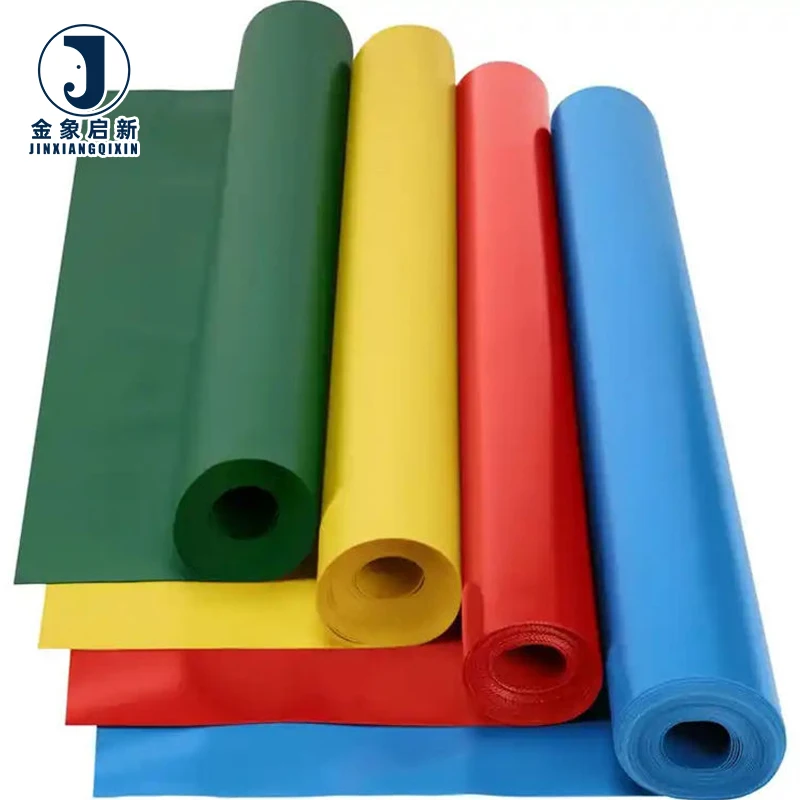
Coating Adhesion Control — Deep process control over PVC coating weight and base fabric penetration ensures consistent peel strength across every roll of 500D500D 1817 PVC tarpaulin fabric.
Technical Specifications
| Parameter | Value |
|---|---|
| Product Type | PVC Tarpaulin Roll |
| Base Fabric Denier | 500D*500D |
| Mesh Count | 18*17 |
| Coating Material | PVC |
| Welding Options | HF, Hot Air, Sewing |
| Flame Retardant | Available in flame retardant grades — confirm the grade required for your market |
| UV Treatment | Available with UV stabilisation — request test basis for your exposure class |
| Anti-Mildew | Mildew proof (no standard stated) |
| Antibacterial | Yes (no standard stated) |
| Chemical Resistance | Oil, stain, acid and alkali resistance |
| Temperature Resistance | High temperature and cold resistant (no values stated) |
| Anti-Oxidation | Yes |
| Cracking Resistance | Highly flexible, resistant to cracking |
| Surface Finish | Self-cleaning surface |
| Standards | ISO 9001, CE |
Application Suitability
| Application | Exposure & Requirement |
|---|---|
| Tensile and membrane structures | Sustained tensile load, wind uplift, long-term UV exposure, welded seam integrity |
| Stadium architectural covers | Span-wide tension, ponding water, fire code compliance, colour consistency across panels |
| Airport hangar enclosures | Fuel and oil splash, chemical cleaning agents, wide-span wind load |
| Portable storage structures | Repeated assembly flex, abrasion at frame contact points, weather sealing |
| Shade systems and shadings | Continuous solar radiation, thermal cycling, minimal colour drift across installed panels |
Why Denier and Mesh Count Matter More Than GSM Alone
The 500D500D base fabric with 1817 mesh count defines the structural baseline that no amount of coating can compensate for.
Buyers frequently receive rolls where the GSM matches the quotation but the fabric still underperforms in the field. The reason is that coating weight can be inflated with filler while the base fabric — the actual load-bearing skeleton — falls short. When a PVC tarpaulin roll is specified only by finished weight, the denier and weave density remain hidden variables. Technical buyers sourcing material for tensile structures or architectural membranes need to see the base construction stated explicitly, because tensile and tear behaviour originate there, not in the coating layer. [NEED_CITE: tensile and tear test methods for coated fabrics per ISO 1421]
How 500D×500D Yarns Determine Tear Propagation Behaviour
The 500 denier yarns in both warp and weft directions create a balanced tensile profile for PVC tarpaulin roll stock used in large-format architectural applications. When a puncture or cut initiates in the field, the load transfers to adjacent yarns at the tear front. A 500D construction provides sufficient yarn cross-section to resist rapid tear propagation under the sustained tension typical of membrane structures. For fabricators welding panels into stadium canopies or hangar enclosures, this balanced weave means tear resistance is consistent regardless of panel orientation on the roll.
Coating Penetration Through the 18×17 Mesh Architecture
The 18×17 mesh count — eighteen ends per centimetre in warp, seventeen in weft — leaves controlled interstices that allow PVC coating to penetrate and mechanically lock around each yarn bundle. This penetration depth directly governs peel strength at welded seams. If the mesh is too open, coating sinks through without building surface film thickness; if too dense, coating sits on top with poor adhesion. The 18×17 architecture supports reliable hot air and HF welding because the coating layer at the weld interface has consistent thickness and plasticiser distribution. [NEED_CITE: DIN 4102 fire classification for building materials and coated textile welding standards]
Reading the Specification Sheet Beyond Finished Weight
A PVC coated polyester roll specified only by GSM tells the buyer nothing about how that weight is distributed between base fabric and coating. Two rolls at identical GSM can have vastly different performance: one with a heavier base fabric and thinner coating will show superior tensile strength but reduced surface abrasion resistance, while one with a lighter base and thicker coating may pass a peel test but tear more easily under load. For the 500D500D 1817 construction, the base fabric accounts for a defined proportion of the total weight, and the remaining coating mass determines surface durability, chemical resistance and weld behaviour. Requesting a material specification sheet that breaks out base fabric denier, mesh count and coating weight separately removes the ambiguity.
The Hidden Cost of Specifying on Weight Without Construction Data
When rolls arrive on site with the correct GSM but an underspecified base fabric, the consequences surface during fabrication and installation. Weld seams may fail at lower peel loads because the coating layer lacks mechanical interlock with a coarser weave than expected. Panels tensioned into membrane structures can show premature yarn slippage at clamp bars. Colour consistency may drift between rolls if the coating thickness varies to compensate for a lighter base. These failures are expensive to rectify once panels are cut, welded and installed overhead. Buyers who specify denier and mesh count alongside GSM eliminate this class of risk. [NEED_CITE: peel strength and weld failure analysis in PVC coated architectural fabrics]
Why Fabricators Source This Grade Here
Three full production lines and 36 sets of professional equipment allow bulk roll output with controlled coating parameters, ensuring the 500D500D 1817 construction runs consistently across large orders. A 10-person R&D team develops samples within days when fabricators need to validate weld settings or confirm coating adhesion on their own HF or hot air machines. Dedicated QA/QC at every production stage includes coating weight checks against the stated specification before any roll is cleared for packing. The ISO and CE certified production system generates the documentation — material spec sheets, test reports where applicable, pre-shipment inspection records — that technical buyers require for project submittals. Roll-to-roll colour consistency is managed through batch-controlled coating runs, preventing the visible colour shift that occurs when installed panels from different production batches sit side by side.
Documentation & Verification
- Material specification sheet stating base fabric denier 500D500D, mesh count 1817 and coating weight
- UV and flame retardant test reports provided against the specific batch where applicable
- Pre-shipment inspection record confirming coating weight and colour per roll
- Roll packing list detailing net weight, gross weight and dimensions for container loading
- Certificate of origin and customs documentation for export shipments
Fabrication, Handling & Storage
- HF welding parameters should be calibrated to the PVC coating thickness on this 500D*500D base before production runs begin
- Hot air seam temperature and speed settings depend on the coating formulation — request the recommended range from the mill
- Sewn seams on this 18*17 mesh construction require needle and thread sizing matched to the fabric density to avoid yarn damage
- Store rolls upright on pallets in a dry environment to prevent edge crushing that affects coating flatness during unrolling
- Avoid dragging the self-cleaning surface across unprotected workshop floors to preserve the finish before fabrication
- Low-temperature transport may temporarily stiffen the PVC coating — allow rolls to acclimatise before unrolling and cutting
What to Include in Your Enquiry
Provide the end-use application and the structural loads the fabric will carry, so the correct coating weight and treatment package can be confirmed. Specify the fire classification or UV exposure class required by your local building code or project specification. State the roll widths and lengths needed, along with the total metreage per colour, to confirm batch consistency and production scheduling. Indicate whether you require raw roll stock or finished panels with welded hems and eyelets.
Frequently Asked Questions
*Q: How does the 500D500D base fabric relate to finished GSM and tensile strength?*
A: The 500D500D denier and 18*17 mesh count establish the base fabric weight and yarn density, which together determine the tensile baseline. The PVC coating adds surface weight and chemical resistance but cannot compensate for a weak base. Request a spec sheet that separates base fabric weight from coating weight to understand where the strength originates.
Q: What test basis supports the UV resistance and flame retardant claims?
A: UV stabilisation and flame retardant treatments are available in different grades depending on the target market and application. Ask for the specific test report — such as the applicable fire classification standard — that matches your project requirement before production begins, so the correct additive package is confirmed.
Q: Which welding method is optimal for this coating formulation?
A: This PVC coated polyester supports HF welding, hot air welding and sewing. The choice depends on seam geometry and production volume. HF welding suits long straight seams on flat panels, while hot air is preferred for curved or three-dimensional joints. Request recommended temperature and speed settings for this specific coating weight.
Q: How is batch-to-batch coating weight consistency verified before shipment?
A: Each roll undergoes coating weight verification during production and again at pre-shipment inspection. The inspection record documents the measured values against the stated specification. For orders spanning multiple production batches, colour reference checks ensure visual consistency across all rolls delivered.
Q: What roll widths and lengths are available, and how are they packed?
A: Roll widths and lengths are configured to match the fabricator’s cutting layout and container loading plan. Standard and custom widths are available depending on production scheduling. Rolls are packed on pallets with protective wrapping, and a detailed packing list accompanies each shipment for receiving verification.