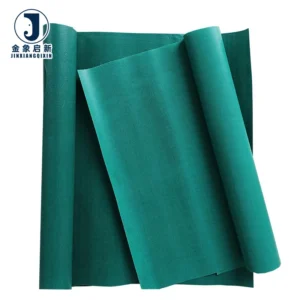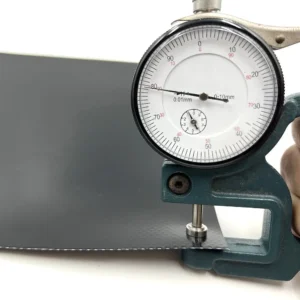
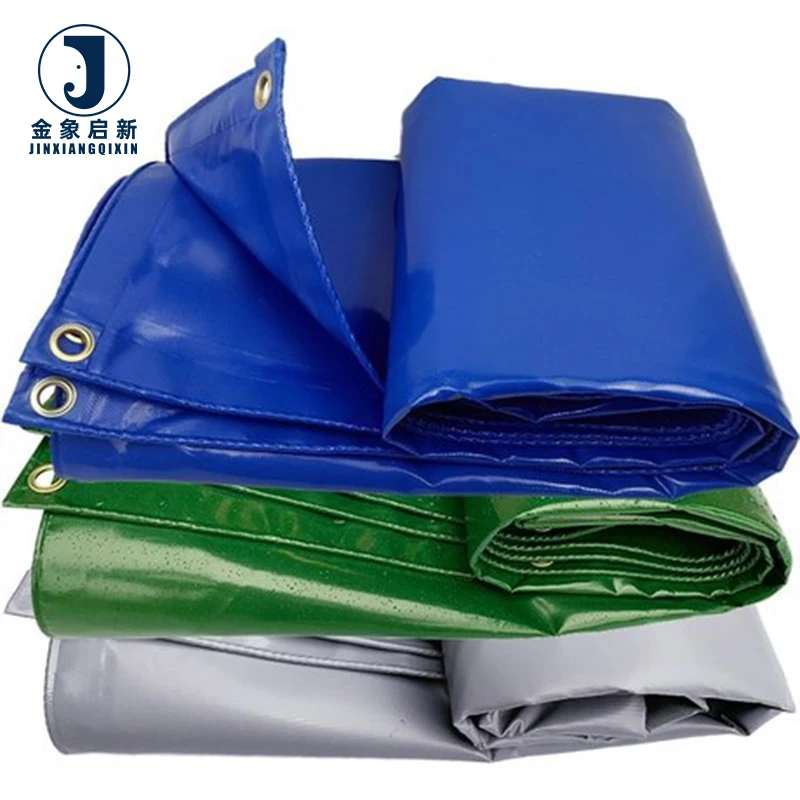
Deep Process Control Over Coating Weight — every roll of 650gsm PVC coated tarpaulin is verified for GSM consistency across the full width at every production stage, ensuring the material properties technical buyers specify are the ones delivered.
Technical Specifications
| Parameter | Value |
|---|---|
| Product Type | PVC Tarpaulin Roll |
| Weight | 650 GSM |
| Base Fabric | 100% high tenacity polyester yarns |
| Coating Material | PVC |
| Coating Method | Laminated technology / Hot-melt coating technology |
| Waterproof | Yes |
| Flame Retardant | Available (grade not stated in source — confirm required standard) |
| Anti-Static | Available (surface resistance value not stated — request test report) |
| Anti-Cold / Cold Crack Resistance | Available (test basis not stated — confirm temperature rating) |
| Anti-Mildew | Yes |
| UV Treatment | Available (test basis not stated — request verification) |
| Key Features | Cold crack resistance, anti-mildew, anti-static, flame retardant options |
| Color Fastness | Manufacturer rated (request test data for grade confirmation) |
Application Suitability
| Application | Exposure & Requirement |
|---|---|
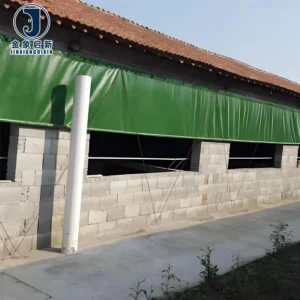
| Truck and trailer side curtains | Constant flexing at load points, road debris abrasion, prolonged UV and rain exposure |
| Construction site equipment covers | Contact with alkaline dust, wind-driven rain, repeated deployment and folding |
| Tent and awning fabric | Tensile load from wind uplift, weld seam integrity at panel joints, colour consistency across panels |
| Inflatable and membrane structures | Internal air pressure stress, fire safety compliance for public occupancy, anti-static charge buildup |
| Industrial covers and pond liners | Permanent water contact, soil chemistry exposure, puncture risk from substrate |
Why Coating Method Matters More Than GSM Alone
The coating process determines whether a 650 GSM PVC coated tarpaulin holds together at the weld or delaminates under the first real load.
Technical buyers reviewing material data sheets often focus on weight as the single proxy for durability. In practice, two rolls both stamped at 650 GSM can behave entirely differently depending on whether the PVC was applied through laminated technology or hot-melt coating. Laminated layers bond the PVC film to the polyester base under heat and pressure, producing a fabric where the coating and substrate act as a single composite — this matters directly when a fabricator heat-welds a seam and expects the joint to match the body strength of the material [NEED_CITE: tensile and tear test methods for coated fabrics per ISO 1421]. Hot-melt coating, by contrast, flows liquid PVC into the weave, filling interstices and improving adhesion at the yarn level. The choice between the two is not about one being universally superior — it is about matching the process to the fabrication method and the stress profile of the end use.
Laminated Versus Hot-Melt: What Each Does to Adhesion and Weld Behaviour
When a 650gsm PVC coated tarpaulin is specified for welded fabrication — truck side curtains, tensioned membrane panels, inflatable ducts — the coating method directly governs how the seam performs. Laminated construction produces a clean, uniform coating surface that responds predictably to hot-air or wedge welding, with the PVC layers fusing into a continuous bond. Hot-melt coating penetrates deeper into the polyester weave, creating mechanical adhesion at the yarn level that resists delamination when the fabric flexes repeatedly at the weld line [NEED_CITE: adhesion strength test methods for PVC coated textiles].
Base Fabric Construction and Its Role in Tensile Performance
The 100% high tenacity polyester yarns in the base fabric carry the structural load. GSM tells you the total weight of coating plus substrate, but it is the denier and weave density of the polyester that determine how the fabric resists tensile and tear forces. A 650 GSM roll built on a lighter base with heavier coating will behave differently under load than one with a denser weave and proportionally less PVC. Technical specifiers comparing PVC coated tarpaulin 650gsm polyester base fabric options should request the base fabric denier and thread count alongside the weight to understand the actual strength profile [NEED_CITE: relationship between base fabric denier and tear propagation in coated textiles].
Reading the Specification Sheet Beyond the Weight Number
The interplay between coating weight and base fabric density shapes every downstream decision a fabricator makes. A heavier coating applied via hot-melt technology fills the weave more completely, reducing porosity and improving waterproof integrity — but it also stiffens the hand of the fabric, which affects how it folds, drapes, and handles through automated cutting tables. The laminated approach tends to produce a smoother surface finish, which matters when the fabric will receive printed branding or needs consistent gloss across panels installed side by side. Flame retardant and anti-static treatments are applied at the coating stage, and their effectiveness depends on uniform distribution through the PVC layer — a process variable that only in-line quality control can verify roll by roll. Cold crack resistance, similarly, is a function of the plasticiser system within the PVC compound, and the temperature threshold at which the fabric remains flexible must be confirmed against the specific climate of the installation site.
The Hidden Cost of Specifying on Weight Without Verification
A roll arrives at the fabricator’s warehouse, and the GSM reads lighter than the quotation stated. The coating may be thinner at the edges than at the centre, or the base fabric may be a lower denier than assumed. When this fabric goes into a truck side curtain, the weld seams fail not because the welding parameters were wrong, but because the coating layer was insufficient to fuse properly. In membrane structures, a flame retardant grade that was declared but not backed by a test report leads to a failed site inspection and a full material replacement at the contractor’s cost. Colour variation between rolls in the same batch becomes visible only after panels are welded and erected side by side, triggering a rework that no one budgeted for [NEED_CITE: batch colour consistency standards for coated architectural fabrics].
Why Source This Grade Through Jinxiang
Jinxiang controls coating weight and adhesion through in-house process management across three full production lines, holding the 650 GSM target consistently across the roll width and from roll to roll within a batch. The 10-person R&D team develops samples within days when a technical buyer needs to evaluate weld behaviour or confirm a specific treatment grade before committing to volume. A dedicated QA/QC protocol runs at every production stage, with 100% inspection before shipment covering weight, colour, and coating adhesion per roll. For specifiers who need test documentation, the documentation package includes material specification sheets, test reports for applicable treatments, and pre-shipment inspection records that tie each roll to its verified properties.
Documentation & Verification
- Material specification sheet stating 650 GSM, polyester base fabric construction, and coating method per roll
- Test reports for flame retardant and anti-static grades supplied with the applicable standard reference
- Pre-shipment inspection record confirming weight, colour, and adhesion verification per roll
- Roll packing list with batch identification for traceability across multiple rolls
- Certificate of origin and customs documentation for international shipment
Fabrication, Handling & Storage
- Heat-weld parameters should be tested on a sample swatch of the 650 GSM laminated or hot-melt grade before full production runs
- Store rolls upright on end caps to prevent flat-spot deformation of the PVC coating surface under their own weight
- Allow cold-stored rolls to reach ambient temperature before unrolling to avoid cracking the anti-cold treated PVC layer
- Use compatible PVC-based repair patches and solvent cements matched to the coating method for field repairs
- Plan cutting layouts around the roll width to minimise off-cuts and reduce the number of welded panel joins
What to Include in Your Enquiry
Technical buyers evaluating this PVC coated tarpaulin 650gsm polyester base fabric should specify the end-use application and the environmental exposure conditions — particularly temperature range and whether flame retardant or anti-static certification is required for site compliance. Confirm the roll width and linear metres needed per colour, and indicate whether you require the material in stock roll form or as cut panels. If weld seam performance is critical to your fabrication, request sample metres of both laminated and hot-melt options to run through your own welding equipment before placing a production order.
Frequently Asked Questions
Q: How is the 650 GSM weight verified — coating weight versus total weight?
A: The stated GSM refers to the total weight of the finished fabric including the polyester base and PVC coating combined. Verification is performed per roll during pre-shipment inspection using standard gram-per-square-metre measurement methods. If your specification requires a separate coating weight value, request this breakdown on the material data sheet before confirming the order.
Q: What flame retardant standards can be supplied with test reports?
A: Flame retardant treatment is available for the 650 GSM grade, but the specific standard and classification depend on the compound formulation used for your production batch. Request the applicable test report — such as DIN 4102, NFPA 701, or the standard required by your market — before order confirmation to ensure the grade matches your project compliance requirement.
Q: How does laminated coating differ from hot-melt for weld seam performance?
A: Laminated technology bonds a PVC film to the polyester base under heat and pressure, producing a uniform surface that fuses predictably during hot-air welding. Hot-melt coating penetrates the weave structure, creating deeper mechanical adhesion that resists delamination at flex points. Fabricators should test both options on their welding equipment to determine which delivers the seam strength required for their application.
Q: How is colour consistency controlled across multiple rolls in one order?
A: Colour consistency is managed through batch-level pigment control and verified during pre-shipment inspection. Rolls intended for side-by-side installation are grouped within the same production run to minimise visible variation. If your project demands strict colour matching across panels, request a colour reference sample and confirm the inspection tolerance before production begins.