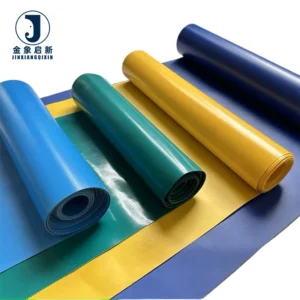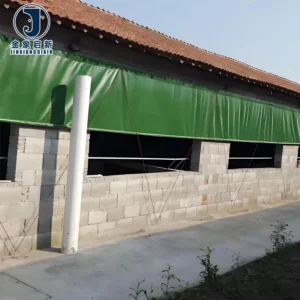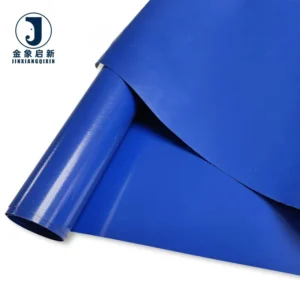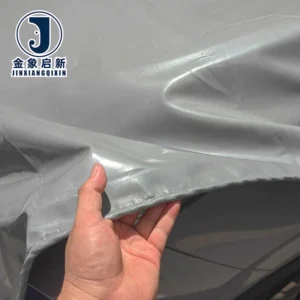
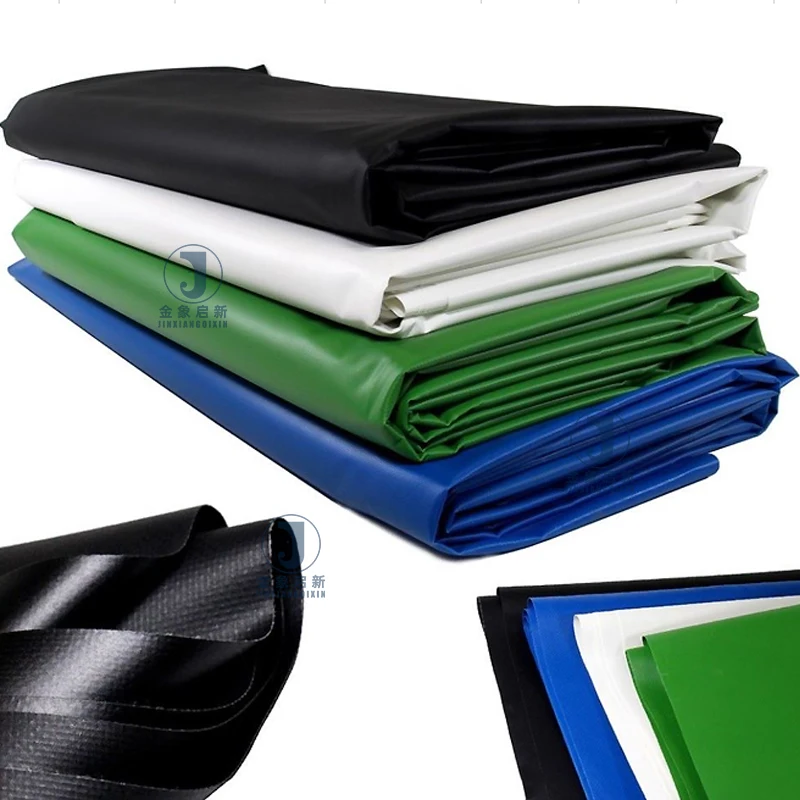
Coating Weight Control — Every roll of 650gsm PVC coated tarpaulin is verified at the coating head to ensure the stated weight matches the physical product, backed by dedicated QA at every production stage.
Technical Specifications
| Parameter | Value |
|---|---|
| Product Type | PVC Tarpaulin |
| Weight | 650 GSM |
| Base Fabric | 100% high tenacity polyester yarns |
| Coating Material | PVC |
| Coating Method | Laminated technology & Hot-melt Coating technology |
| Waterproof | Yes |
| Cold Crack Resistance | Yes |
| Anti-Mildew | Yes |
| Anti-Static Treatment | Yes (grade not stated — confirm requirement) |
| Flame Retardant | Available (grade not stated — confirm requirement) |
| Functional Features | Waterproof, cold crack resistance, anti-mildew, anti-static |
| Adhesion | Good flexibility and adhesion strength |
| Tear Performance | Outstanding tearing strength for welding |
| Color Fastness | Best color fastness (test basis not stated) |
| Outdoor Life Assurance | 3–5 years (source value — verify against manufacturer catalog) |
| Printing Option | Digital printing |
| Standards | ISO, CE |
Application Suitability
| Application | Exposure & Requirement |
|---|---|
| Truck side curtain fabric | Constant flexing at load points, road abrasion, wind-driven rain, UV exposure |
| Caravan tent and awning | Extended outdoor weathering, repeated folding and unfolding, mildew risk in storage |
| Pick-up truck and bed cover | Direct sunlight, mechanical abrasion from cargo, tie-down tension at edges |
| Advertising digital printing banner | Smooth PVC surface for ink adhesion, colour vibrancy, outdoor display durability |
| Inflatable and membrane structures | Internal air pressure stress, weld seam integrity, sustained tensile load |
| General waterproof cover | Prolonged water contact, dust ingress prevention, handling wear |
Why the GSM on the Quotation Does Not Guarantee the GSM on Arrival
Weight verification must happen at the coating line, not only on the data sheet.
Technical buyers sourcing PVC coated tarpaulin for structural or transport applications often specify 650gsm on paper, only to receive rolls that measure lighter when sampled at the warehouse [NEED_CITE: coated fabric weight verification methods per ISO 3801]. A shortfall in coating weight directly reduces the PVC layer available to protect the polyester base fabric from UV degradation and mechanical abrasion. When multiple rolls are installed side by side as truck side curtains, even minor weight variation can signal inconsistent coating adhesion, which surfaces first at welded seams under flex load. The gap between quoted specification and delivered material is where fabrication failures originate.
Hot-Melt Coating and Its Effect on Adhesion Strength
The 650gsm PVC coated tarpaulin in this range uses hot-melt coating technology, where the PVC compound is applied to the polyester base in a heated, semi-liquid state. This process allows the coating to penetrate the yarn interstices rather than sitting only on the surface. The result is a mechanical bond between the PVC layer and the high tenacity polyester base fabric that resists delamination when the material is folded, welded, or subjected to sustained tension. For fabricators building side curtains or inflatable structures, adhesion strength determines whether the coating separates from the base at stress points long before the fabric itself reaches its tensile limit.
Flame Retardant, Anti-Static, and Anti-Mildew: Verifying What Is Claimed
This PVC coated tarpaulin is available with flame retardant, anti-static, and anti-mildew treatments — but the specific grade must be confirmed against your project or market requirement. A flame retardant claim without a stated classification such as M2, B1 per DIN 4102, or NFPA 701 cannot be used to satisfy a building code or mining safety audit [NEED_CITE: fire classification standards for coated textile applications]. Similarly, anti-static treatment for use in aviation fuel handling or grain storage environments must be matched to a surface resistivity standard. Request the test report that corresponds to the grade your specification requires before placing the production order.
Reading the 650 GSM Weight in Context with Base Fabric and Coating Method
A 650 GSM weight grade places this material in the heavy-duty segment, but GSM alone describes the total mass per square metre of both base fabric and coating combined. The tensile and tear performance depends on how that mass is distributed: a high denier polyester yarn in a tight weave contributes structural strength, while the PVC coating thickness governs abrasion resistance, weldability, and waterproof integrity. Laminated and hot-melt coating methods differ in how they bond to the base — hot-melt generally delivers deeper penetration and higher peel strength, which directly affects how the material behaves when heat-welded at seams. For a technical buyer, specifying the coating method alongside the GSM ensures the fabric performs as expected during fabrication, not just on the scale [NEED_CITE: tensile and tear test methods for coated fabrics per ISO 1421].
The Hidden Cost of Specifying on Weight Alone
When a technical buyer selects PVC coated tarpaulin based only on a GSM figure without verifying the coating method, base fabric construction, or treatment documentation, the failure mode is rarely immediate. Rolls that arrive lighter than quoted may pass a visual check but produce weaker weld seams during fabrication, because there is insufficient PVC at the joint interface to form a reliable bond. Flame retardant treatments claimed without a supporting test report can lead to rejected shipments at the job site when the inspector asks for documentation. Batch-to-batch colour variation across a multi-roll order becomes visible only after installation, when adjacent panels are viewed in raking light [NEED_CITE: colour fastness and batch consistency in coated fabric production]. These are not material defects in the traditional sense — they are specification gaps that surface under real-world conditions.
Why Source This PVC Coated Tarpaulin from Jinxiang
Nearly three decades of focused coated fabric production means the coating weight and adhesion process is controlled from the yarn stage through to the finished roll. Three full production lines and 36 sets of professional equipment provide the capacity to maintain batch consistency across large orders without compressing lead times. A dedicated 10-person R&D team handles material selection, custom treatment formulation, and sample development — so a request for a specific flame retardant grade or anti-static level is answered with a testable sample, not a generic data sheet. QA inspection at every production stage and 100% pre-shipment inspection ensure the roll leaving the facility matches the specification agreed at the inquiry stage. Samples for custom requirements are developed within days, allowing fabricators to run weld trials before committing to full production.
Documentation & Verification
- Material specification sheet stating exact 650 GSM weight, base fabric denier, and hot-melt coating method
- Test report for flame retardant or anti-static grade matching your site compliance requirement
- Pre-shipment inspection record confirming roll weight and visual quality before dispatch
- ISO and CE certification documentation for international market compliance
- Roll packing list with individual roll identification for traceability
Fabrication, Handling & Storage
- Heat-weld seams using hot air at temperatures suited to hot-melt coated PVC to achieve full bond depth
- Allow 650 GSM rolls to acclimatise before cold-weather unfolding to prevent coating crack damage
- Store rolls upright on pallets to avoid flat-spot deformation of the polyester base fabric
- Use compatible PVC-based cleaners to preserve the coated surface and colour fastness
- Plan cut layouts to minimise cross-grain seams where tear strength is directionally dependent
- Reinforce tie-down eyelet positions with additional PVC patches to distribute load across the weave
What to Include with Your Inquiry
To receive an accurate specification and sample for this PVC coated tarpaulin, provide the intended application and the environmental exposure conditions the fabric will face — including sustained tension, flex frequency, and chemical contact. Specify the fire safety or anti-static classification required by your local regulatory authority or project specification. Confirm whether you need rolls at standard width or custom dimensions, and indicate your annual volume to support consistent batch allocation across orders.
Frequently Asked Questions
Q: How is the 650gsm weight verified during the coating process?
A: Weight is monitored at the coating head and verified through sampling at defined intervals during production. Each roll undergoes pre-shipment inspection where actual weight is measured and recorded against the stated 650 GSM specification. Buyers can request the inspection record showing per-roll weight data before dispatch to confirm consistency across the order.
Q: What is the relationship between hot-melt coating and weld strength at flex points?
A: Hot-melt coating penetrates into the polyester yarn structure rather than sitting on the surface, creating a deeper mechanical bond. When the fabric is heat-welded at seams, this bond allows the PVC at the joint to fuse thoroughly, producing weld strength that resists separation at high-flex areas such as truck side curtain edges and inflatable structure stress points.
Q: Which flame retardant grades are available for this material?
A: Flame retardant treatment is available in multiple grades, but the specific classification — such as M2, B1 per DIN 4102, or NFPA 701 — must be confirmed against your market requirement. Request the test report for the grade your project specification demands, and our R&D team will develop a sample with the matching treatment for your verification.
Q: How does the polyester base fabric construction affect tear strength and adhesion?
A: The 100% high tenacity polyester yarns provide the structural backbone that resists tear propagation, while the weave density determines how effectively the hot-melt PVC coating bonds to the base. A tighter weave increases the surface contact area for coating adhesion, which directly influences how the material performs when fabricated into welded panels under sustained tension.
Q: What test standards validate the anti-static and anti-mildew treatments?
A: Anti-static treatment is measured against surface resistivity standards relevant to your application environment, while anti-mildew performance is assessed through controlled exposure testing. The specific test standard and result should be requested to match your site compliance needs, and supporting documentation is provided with the material specification sheet for your records.