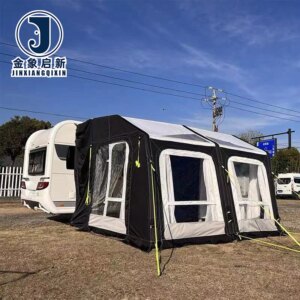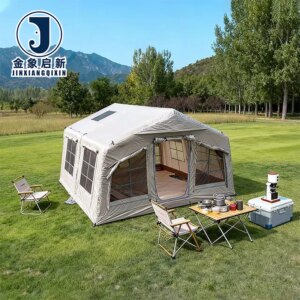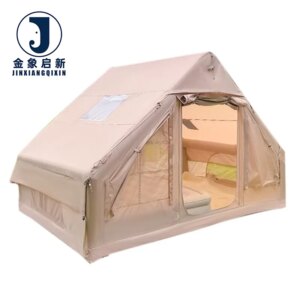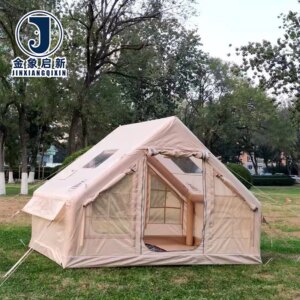
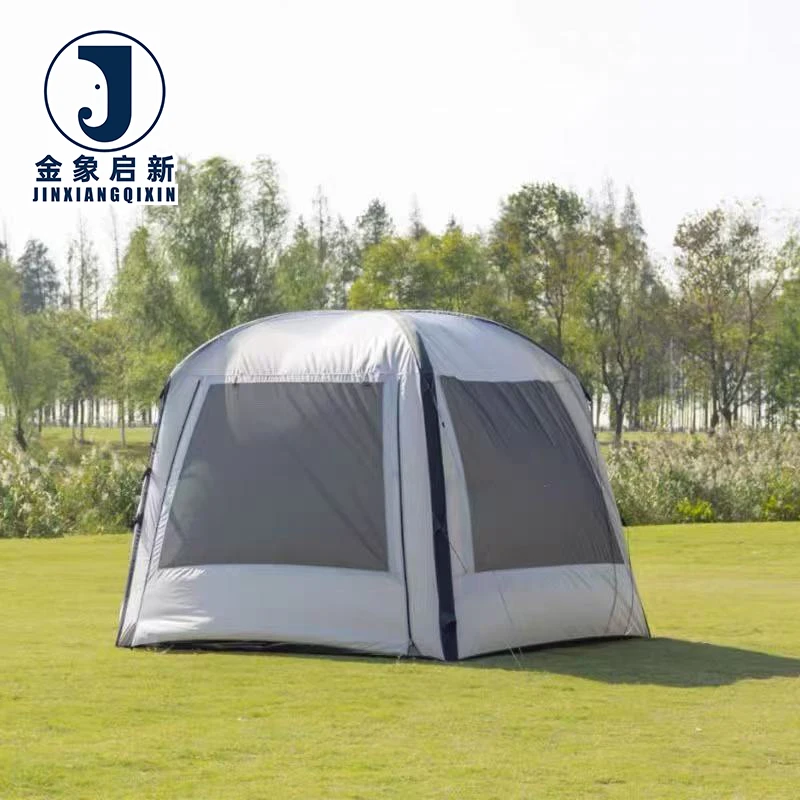
Deep Process Control Over PVC Coating — Our inflatable tent fabric is produced on dedicated lines with stage-by-stage QA, ensuring your batch arrives matching the spec sheet you approved.
Technical Specifications
| Parameter | Value |
|---|---|
| Product Type | Inflatable Tent |
| Core Material | PVC tarpaulin |
| Key Performance | Waterproof, tear-resistant |
| Fire-Retardant | Available in flame retardant grades — confirm the grade required for your market |
| Anti-Static | Available with anti-static treatment — surface resistance to be verified against project standards |
| UV Resistance | Available with anti-UV treatment — test basis to be confirmed for your deployment environment |
| Product Forms | Automatic Inflatable |
| Capacity | 3-5 Person |
| Customization | OEM & ODM including sample customization and pattern printing |
| Quality System | Full-process QA & QC with 100% pre-shipment inspection |
| Certifications | ISO9001, ISO14001, ISO45001, CE |
Application Suitability
| Application | Exposure & Requirement |
|---|---|
| Emergency disaster relief staging | Rapid deployment, all-weather waterproof shelter, repeated inflation cycles |
| Construction site field offices | Prolonged UV exposure, wind loading, dust and debris abrasion |
| Logistics operations temporary cover | Forklift and pallet contact, frequent setup and teardown, moisture ingress |
| Outdoor event management structures | Crowd safety fire compliance, visual branding consistency, multi-day weather exposure |
| Equipment storage in remote sites | Standing water contact, ground moisture, thermal cycling between day and night |
Why Fire-Retardant Claims Without a Grade Create Procurement Risk
Many Inflatable Tent PVC Tarpaulin Fabric suppliers quote "fire-retardant" as a checkbox feature, yet the material arrives on site without documentation matching the fire safety standard your local authority enforces. The tent passes visual inspection but fails the compliance audit, leaving your project stalled and your procurement team answering questions.
Fire-retardant performance only matters when tied to a named standard and grade.
Inflatable shelters concentrate large volumes of air inside a sealed membrane, so any ignition source behaves differently than in open-frame structures. Specifying the fabric without confirming the retardant grade against your market’s fire code — whether that is M2, B1 per DIN 4102, NFPA 701, or a local equivalent — introduces a compliance gap that typically surfaces only at the site inspection stage. [NEED_CITE: DIN 4102 fire classification for building materials and temporary structures]
Coating Weight and Base Fabric Balance in Inflatable Membranes
An Inflatable Tent PVC Tarpaulin Fabric must balance coating weight against base fabric denier. Heavier coating improves waterproofing and abrasion resistance, but if the base yarn count is low the membrane may stretch unevenly under inflation pressure, creating stress points at panel seams. Our production lines allow adjustment of both coating mass and base fabric specification to match the inflation pressure your tent design requires.
Seam Integrity Under Repeated Inflation Cycles
Every inflation and deflation cycle flexes the welded seams. The heat-weld bond must match or exceed the tear strength of the parent fabric, otherwise the seam line becomes the first failure point after repeated use. We control welding temperature and dwell time on our 36 sets of processing equipment, and our QA team verifies peel strength on sample welds before production runs commence. [NEED_CITE: tensile and tear test methods for coated fabrics per ISO 1421]
Reading the Specification Sheet Beyond the GSM Number
Buyers often anchor on GSM as the single measure of fabric quality, yet for inflatable tent membranes the relationship between base fabric weave density and coating adhesion determines real-world performance more than weight alone. A tightly woven high-denier base provides dimensional stability so the inflated structure holds shape, while the PVC coating method — whether knife-over-roll, calendering, or laminating — governs peel strength and long-term flexibility. A lighter fabric with superior base weave and coating penetration can outperform a heavier one with poor adhesion. Anti-UV and fire-retardant additives are integrated at the compounding stage; their effectiveness depends on dispersion quality, not simply their presence on a spec sheet.
The Hidden Cost of Batch Inconsistency Across Multi-Tent Orders
When you procure inflatable tent fabric for a fleet of emergency shelters or a series of event structures, colour or texture variation between rolls forces your fabrication team into sorting and matching exercises that delay production. Worse, inconsistency in coating thickness causes some panels to inflate unevenly, creating visible bulges that undermine the professional appearance your client expects. [NEED_CITE: coating weight variance effects on inflatable membrane performance] These problems rarely show on the sample roll you approved — they emerge only when your production floor opens the third or fourth roll from the same shipment.
Why Procurement Teams Source Inflatable Tent Fabric Here
Our 10-person R&D team develops material formulations and sample panels for inflatable tent projects, allowing you to validate fabric behaviour under your specific inflation pressure before committing to a production order. Three full production lines give us the capacity to hold your delivery schedule even on multi-roll orders, while the 36 sets of dedicated processing equipment maintain consistency from the first roll to the last. Every batch goes through 100% inspection before dispatch — we check coating weight, visual appearance, and dimensional accuracy roll by roll, not by sampling one from a pallet.
Documentation & Verification
- Material specification sheet confirming base fabric denier, coating method, and treatment details for your Inflatable Tent PVC Tarpaulin Fabric order
- Fire-retardant and anti-UV test reports matched to your target market standard where applicable
- Pre-shipment inspection record documenting roll-by-roll weight and dimension checks
- ISO9001, ISO14001, ISO45001, and CE certificates included with every dispatch
- Certificate of origin and customs documentation for cross-border inflatable tent fabric shipments
Fabrication, Handling & Storage
- Heat-weld parameters must match the PVC coating formulation; request our recommended temperature and dwell settings for this inflatable tent fabric
- Store rolls upright on a clean pallet to prevent flat-spot deformation on the coated surface
- Avoid dragging cut panels across rough ground before seaming to protect the waterproof coating layer
- Use compatible PVC adhesive for field repairs, testing bond strength on an offcut first
- Allow fabric to acclimatize before inflation in cold conditions to prevent coating stiffness and crease cracking
What We Need to Quote Your Inflatable Tent Fabric Accurately
Tell us the inflation pressure your tent design operates at and the climate conditions the structure will face, so we can recommend the correct base fabric and coating combination. If your market requires a specific fire classification or anti-static surface resistance, share the standard reference and we will confirm which grades we can supply with supporting test documentation.
Frequently Asked Questions
Q: What fire-retardant grades can you supply for inflatable tent fabric?
A: We offer flame-retardant PVC tarpaulin in multiple grades. The specific grade must match your local fire safety regulation, whether that is M2, B1, NFPA 701, or another standard. Share your project requirement and we will confirm the available grade with a corresponding test report before you commit to a production order.
Q: Can you guarantee colour consistency across a multi-roll inflatable tent order?
A: Yes. Our full-process QA system checks colour and coating weight on every roll before dispatch. For large orders we produce from a single coating batch where possible, and we provide a pre-shipment inspection record so you can verify consistency against your approved sample before the goods leave our facility.
Q: What anti-static options exist for hazard-sensitive inflatable shelter deployments?
A: Anti-static treatment is available for inflatable tent fabric destined for environments where static discharge poses a risk. Surface resistance values depend on the specific treatment formulation. Provide the resistance range your site safety plan requires and we will confirm whether our available treatments meet that threshold with supporting data.
Q: What customisation is possible for pattern printing and sizing on inflatable tent fabric?
A: Our OEM and ODM service covers custom width, length, colour, and pattern printing. Our R&D team prepares a sample panel showing print resolution and colour accuracy on the actual PVC tarpaulin construction you specified, allowing you to approve branding and visual appearance before bulk production begins.