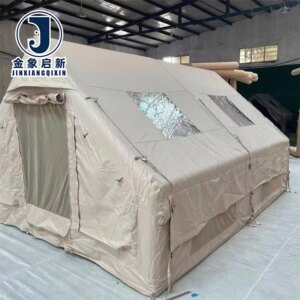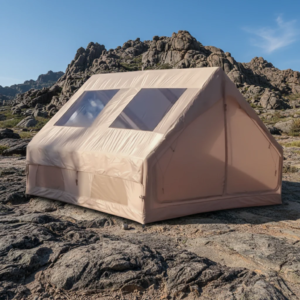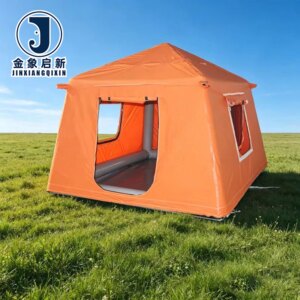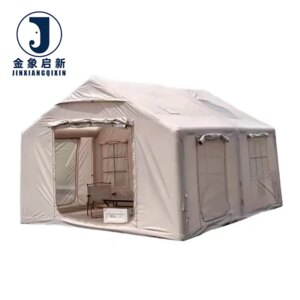
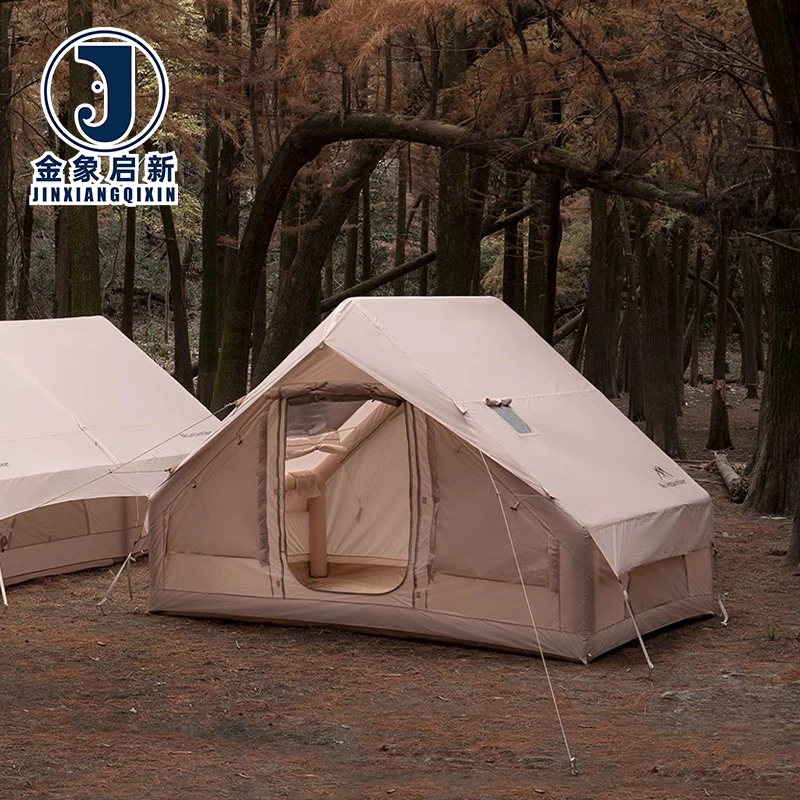
Coated Fabric Process Control — nearly 30 years focused on PVC tarpaulin production with full-process QA from raw material selection through welding and pressure verification, applied directly to inflatable tent fabric manufacturing.
Technical Specifications
| Parameter | Value |
|---|---|
| Product Type | PVC Tent |
| Core Material | PVC tarpaulin |
| Waterproof | Stated (test basis not stated) |
| UV Treatment | Available with UV treatment — confirm the test basis required for your market |
| Flame Retardant | Available in flame retardant grades — confirm the grade required for your market |
| Anti-Static | Available with anti-static treatment — confirm the standard or surface resistance required |
| Tear Resistance | Stated (test basis not stated) |
| Capacity | 1–12 Person |
| Season Rating | Four-Season |
| Opening Mechanism | Quick Automatic Opening (Inflatable) |
| Intended Use | Industrial and Commercial |
| Customization | OEM & ODM (sample customization, pattern printing, material selection, product design) |
| Standards | ISO9001, ISO14001, ISO45001, CE |
Application Suitability
| Application | Exposure & Requirement |
|---|---|
| Outdoor event facilities | Continuous UV exposure, repeated inflation and deflation cycles, crowd contact abrasion, wind load stress on seams |
| Mobile field stations | Temperature fluctuation across seasons, dust and debris ingress, rapid deployment and breakdown frequency |
| Temporary workforce accommodations | Extended occupancy loads, internal condensation, cleaning chemical contact, fire safety compliance on site |
| Emergency response shelters | Immediate deployment under adverse weather, transport and storage in compressed form, structural integrity under partial inflation |
| Commercial outdoor deployments | Batch-to-batch color and performance consistency across multiple units, branding and pattern printing adhesion |
Why Inflatable Tent Fabric Fails at the Seam Before the Material Does
Welded joints carry the inflation pressure at every flex cycle, making seam integrity the governing factor in structural service life.
When an inflatable PVC tent is pressurised, the highest stress concentrates where panels join — not across the body of the fabric itself. An Inflatable Tent Fabric manufacturer that focuses solely on base fabric weight while neglecting weld parameter control will see returns driven by seam separation at the exact points where the structure flexes most. [NEED_CITE: tensile and tear test methods for coated fabrics per ISO 1421]. Field failures traced to weld lines account for a disproportionate share of inflatable structure warranty claims, particularly in units subjected to frequent setup and teardown cycles.
Controlling Weld Integrity Across the Inflation Envelope
Every inflatable PVC tent relies on heat-welded seams to maintain internal air pressure, and those seams must withstand repeated bending without delamination. The welding temperature, dwell time and pressure applied during fabrication must be calibrated to the specific coating formulation and thickness of the PVC tarpaulin in use. A slight deviation in any of these variables produces a weld that passes initial inspection but progressively fails under cyclic loading. Our production process locks weld parameters to the material batch being processed, and each seam undergoes visual and peel-strength verification before the unit proceeds to pressure testing. This level of control is what separates a commercially viable Inflatable Tent Fabric manufacturer from a generic coated fabric supplier.
Balancing Fabric Weight Against Inflation Pressure Requirements
Heavier PVC tarpaulin provides greater puncture and tear resistance, but it also demands higher welding energy and more precise seam alignment. Selecting the correct material weight for an inflatable tent requires matching the expected internal pressure, the span of unsupported panels and the environmental loads the structure will face. [NEED_CITE: relationship between coating weight and peel strength in welded PVC assemblies]. A four-season commercial shelter operating in wind-exposed locations needs a different specification than a short-duration event canopy, and the welding protocol must shift accordingly. Our 10-person R&D team works with buyers to identify the correct balance before production begins, developing samples that can be inflation-tested under realistic conditions.
Reading the Specification Sheet Beyond the GSM Number
The weight of a PVC tarpaulin, expressed in GSM, describes the mass per square metre but does not by itself determine how the material will behave under inflation stress. Tensile strength and tear resistance depend equally on the base fabric denier, weave density and the adhesion between coating and substrate. A fabric with moderate weight but high-density base yarns and strong coating adhesion can outperform a heavier fabric with loose weave and poor bond strength when subjected to the cyclic flexing that inflatable structures experience. The coating method — whether knife-over-roll, laminating or calendering — further influences peel strength at welded seams and the fabric’s ability to hold an airtight seal over repeated use cycles.
The Cost of Overlooking Weld Parameters in Procurement
Buyers who evaluate inflatable tent fabric on weight and price alone often encounter failures that appear as material defects but originate in the fabrication stage. Seam separation at panel junctions, air leakage that increases blower runtime and energy cost, and delamination at high-stress corners all trace back to weld quality rather than base fabric specification. [NEED_CITE: common failure modes in inflatable coated fabric structures]. These issues typically surface after the first or second deployment cycle, when the initial bond weakens under repeated flex and pressure loading. Correcting the problem in the field is rarely feasible, making pre-shipment verification the critical control point for any commercial inflatable tent order.
What This Manufacturing Setup Delivers for Your Order
Three full production lines and 36 sets of professional equipment provide the capacity to fulfil bulk inflatable tent fabric orders within reliable timelines. The 10-person R&D team develops custom samples — including adjusted material thickness, sizing and pattern printing — within days rather than weeks. Dedicated QA and QC personnel conduct full-process inspection at every production stage, from incoming PVC tarpaulin verification through final pressure testing before dispatch. ISO9001, ISO14001, ISO45001 and CE certifications govern the production system, providing documented traceability for each batch. The nearly 30-year focus on coated fabric means process parameters for inflatable tent applications are established through accumulated production data, not trial and error on your order.
Documentation & Verification
- Material specification sheet confirming PVC tarpaulin base fabric, coating type and treatment claims for each batch
- UV resistance and flame retardant test reports supplied where applicable to the grade specified in your order
- Pre-shipment inspection record including pressure test and waterproof verification results per unit
- ISO and CE certificates with batch traceability linked to production line records
- Roll packing list detailing quantity, dimensions and net weight for container loading planning
- Certificate of origin and customs documentation supporting international shipment clearance
Fabrication, Handling & Storage
- Weld temperature and dwell time must match the specific PVC tarpaulin coating formulation to prevent seam delamination during inflation cycles
- Store rolled PVC tent fabric in a dry, shaded environment to prevent surface coating adhesion loss and crease marks on the material
- Transport inflatable tent units in protective wrapping to avoid abrasion against the PVC tarpaulin surface during transit
- Use compatible PVC adhesive and patch material for field repairs to maintain airtight seal integrity at the repair point
- Avoid folding inflatable PVC tent fabric at sharp angles during packing, as repeated creasing weakens the coating bond at fold lines
What to Include in Your Inquiry
Specify the intended deployment environment, including expected wind loads, temperature range and frequency of setup and teardown cycles. Confirm the fire safety and anti-static compliance requirements that apply in your target market so the correct treatment grade can be selected. Indicate whether you need finished inflatable tent units or PVC tarpaulin roll stock for your own fabrication line, and whether sample units are required for validation before volume commitment.
Frequently Asked Questions
Q: How is the flame-retardant grade verified and which market standards does it meet?
A: Flame retardant treatment is applied to the PVC tarpaulin during coating and verified through testing to the grade specified in your order. Test reports documenting the classification are provided with shipment documentation. Confirm the standard required in your target market — such as DIN 4102, NFPA 701 or local building code equivalents — so the correct grade is produced and documented.
Q: What UV treatment test basis is available and how does it relate to continuous outdoor deployment?
A: UV treatment is incorporated into the PVC tarpaulin coating formulation to support extended outdoor exposure. The specific test basis and exposure rating depend on the grade selected for your application. Request the UV test report that corresponds to your specification to evaluate suitability for the duration and conditions of your intended deployment environment.
Q: How are welded seams tested to prevent failure at high-flex inflation points?
A: Each welded seam on the inflatable PVC tent undergoes visual inspection and peel-strength verification before the unit advances to full pressure testing. Weld parameters are calibrated to the specific PVC tarpaulin batch being processed, ensuring consistent bond strength across all panel junctions where inflation stress concentrates during use.
Q: What OEM and ODM customization is available for thickness, sizing and pattern printing?
A: Our 10-person R&D team develops custom samples covering material thickness adjustments, capacity sizing, pattern printing and structural design modifications. Samples are produced within days for buyer evaluation before volume production begins, allowing performance validation under your specific deployment conditions.
Q: How is batch-to-batch color and coating consistency controlled across large-volume orders?
A: Full-process QA covers incoming material verification, in-line coating weight checks and pre-shipment inspection for every batch. Color consistency across rolls and units is verified during production, and inspection records documenting the results are included in the shipment documentation provided with your order.