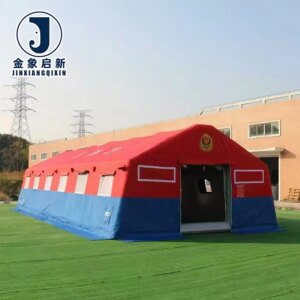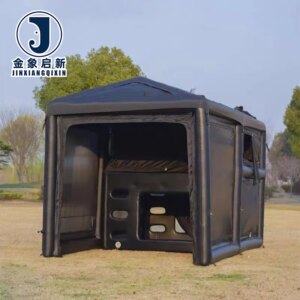


Coated Fabric Process Control — Nearly 30 years focused on PVC coating technology ensures tight regulation of coating weight, adhesion and base fabric integrity across every roll of inflatable tent fabric material and coating technology we produce.
Technical Specifications
| Parameter | Value |
|---|---|
| Product Type | Inflatable Tent Fabric |
| Core Material | PVC tarpaulin |
| Waterproof Rating | 3000mm |
| UV Resistance | Available with UV-resistant formulation — confirm test basis for your region |
| Fire Retardancy | Available in flame retardant grades — confirm the grade required for your market |
| Tear Resistance | Tear-resistant construction |
| Coating Method | PVC coated (knife-over-roll or calender process available) |
| Customization | OEM & ODM, sample customization, pattern printing |
| Certifications | ISO 9001, ISO 14001, ISO 45001, CE |
Application Suitability
| Application | Exposure & Requirement |
|---|---|
| Rapid-deployment emergency shelters | Wind loading, heavy rainfall, frequent inflation-deflation cycles, high visibility requirements |
| Mobile command centers for infrastructure projects | Year-round weather exposure, internal lighting, partition mounting, data cable routing |
| Temporary equipment storage in disaster recovery | UV degradation, dust ingress, ground moisture, repeated assembly and relocation |
| Remote industrial site workspaces | Extreme temperature swings, abrasive particulates, chemical splash from adjacent operations |
When Fire-Retardant Claims Lack a Grade, Shelter Fabric Fails Inspection
Specifying inflatable tent fabric without a named fire classification leaves emergency shelter deployments vulnerable to site rejection and compliance delays.
Procurement teams sourcing inflatable tent fabric material and coating technology often receive a certificate stating "flame retardant" with no referenced standard, only to discover the local fire authority requires a specific classification such as NFPA 701 or DIN 4102 B1. The tent ships on schedule, but the inspector flags the documentation gap and the shelter cannot be commissioned. [NEED_CITE: fire classification requirements for temporary structures vary by jurisdiction]
Base Fabric Construction and Coating Weight
The tear resistance of an inflatable tent shell depends on both the denier of the polyester base yarn and the number of picks per centimetre in the weave. A heavier coating alone does not compensate for a loosely woven base cloth. When evaluating inflatable tent fabric material and coating technology, buyers should review the base fabric specification alongside the total GSM to understand how tensile and tear loads distribute through the laminate.
Coating Adhesion and Seam Integrity
Inflatable structures rely on heat-welded seams to hold internal bladder pressure, and the adhesion between PVC coating and base fabric determines whether the weld line or the fabric body fails first. [NEED_CITE: peel strength test methods for coated fabrics per ISO 2411] Poor adhesion causes the coating to delaminate at the flex point, creating a leak path that deflates the structure under wind load.
Interpreting the Waterproof Rating
A 3000mm hydrostatic head rating means the fabric resists water penetration under a 3000mm column of water before leakage begins. For inflatable emergency shelters exposed to driven rain and ponding on low-slope roof panels, this rating provides a reliable margin against ingress. The rating reflects the coating continuity and the absence of pin-holes in the PVC film, which is why pre-shipment inspection of each roll is necessary to verify batch consistency.
What Happens When Coating Weight Is Not Verified Before Dispatch
Arrival inspections that reveal a lighter fabric than quoted are among the most frequent disputes in technical textile procurement.
A tent manufacturer specifies a heavy-duty PVC tarpaulin for an inflatable shelter frame, but the rolls arriving at the fabrication shop measure below the agreed coating weight. The finished structure inflates correctly during factory testing, yet after three months of field deployment the air beams soften under sustained solar loading because the thinner coating cannot hold the design pressure. The buyer faces a choice between absorbing re-fabrication costs or shipping replacement shelters at their own expense. [NEED_CITE: coating weight verification methods for PVC tarpaulin]
Why Procure Inflatable Tent Fabric Here
Each roll is inspected against the material specification sheet before packing, so the GSM and coating weight stated in the quotation match the fabric on the pallet. Three full production lines and 36 sets of processing equipment support batch consistency across multi-roll orders, eliminating the colour and weight variation that plagues split shipments. A 10-technician R&D team develops samples within days when custom width, fire-retardant grade or surface finish is required. Pre-shipment inspection records document seam peel strength and waterproof rating tests, giving buyers the evidence trail their compliance teams require. Full documentation — from certificate of origin to batch-specific test reports — ships with every container.
Documentation & Verification
- Material specification sheet stating base fabric denier, coating weight and total GSM per roll
- Fire-retardant test report matching the grade specified in the purchase order
- UV resistance test data issued per batch where applicable
- Pre-shipment inspection record covering waterproof rating, seam integrity and dimensional tolerance
- ISO 9001, ISO 14001, ISO 45001 and CE certificates for cross-border compliance
Fabrication, Handling & Storage
- Heat-weld seams using hot air or wedge welders, adjusting temperature to the PVC coating thickness to avoid base fabric scorch
- Reinforce valve and bladder attachment points with additional PVC patches bonded to the coated surface
- Store rolls upright on pallets in a dry, shaded area to prevent flat-spot deformation of the PVC coating
- Use mild detergent and soft brush for cleaning; avoid solvents that attack the plasticiser in the PVC film
- Allow fabric to reach ambient temperature before unrolling in cold conditions to prevent low-temperature cracking
Requesting a Specification That Matches Your Deployment
Share the expected deployment environment, including wind zone, rainfall intensity and temperature range, so the base fabric and coating weight can be matched to structural load. Indicate the fire classification your local authority requires, and whether you need rolls in standard width or custom cut-to-size panels. State your annual volume and colour requirements early to confirm production scheduling and raw material availability.
Frequently Asked Questions
Q: What fire-retardant grades are available for inflatable tent fabric, and how do I confirm the right one?
A: Flame retardant treatment is applied during coating, and several grades are available depending on the destination market. Provide the fire classification required by your local authority or the project specification, such as NFPA 701 or a national building code class, and the corresponding test report will be issued with your shipment documentation.
Q: How is the 3000mm waterproof rating verified, and can I get a test report per batch?
A: The hydrostatic head rating is measured using standard column testing on samples taken from production rolls. Batch-specific test records are retained and can be included in the pre-shipment documentation package upon request, ensuring each delivery carries traceable performance evidence.
Q: Can I order inflatable tent fabric as raw roll stock, or only as finished tent components?
A: Both options are supported. Fabricators sourcing PVC tarpaulin by the roll receive material in standard or custom widths with full technical documentation. OEM buyers ordering finished inflatable tent shells receive units with welded seams, valve fittings and bladder assemblies ready for deployment.
Q: What customisation is possible regarding colour, width and surface finish?
A: Custom colours are matched to RAL or Pantone references, and pattern printing is available for branding or hazard marking. Rolls can be produced in widths suited to your cutting layout to minimise waste. Glossy and matte surface finishes are both available depending on cleaning frequency and visual requirements.
Q: What documents accompany each shipment for customs and compliance clearance?
A: Every order ships with a material specification sheet, packing list, certificate of origin, and the applicable ISO and CE certificates. Where fire-retardant or UV-resistance treatments are specified, the corresponding test reports are included. Pre-shipment inspection records covering weight, dimensions and coating integrity are provided per batch.