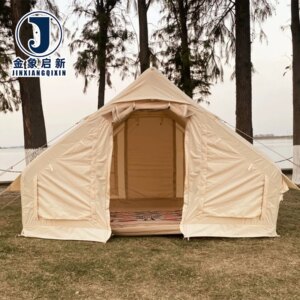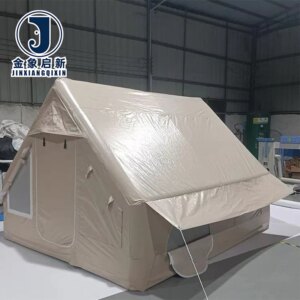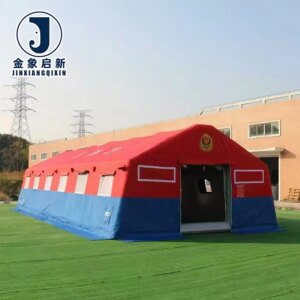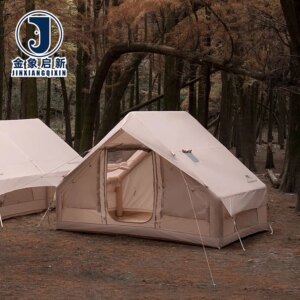
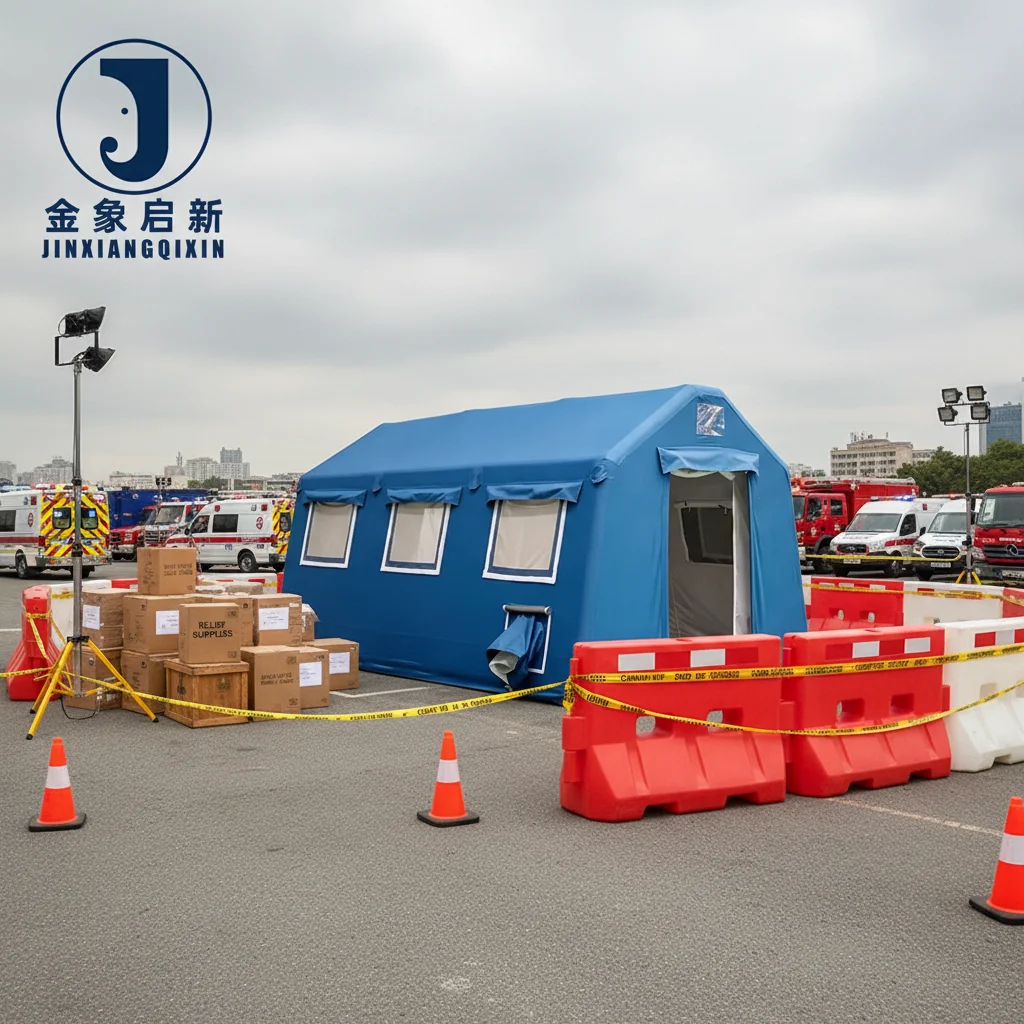
Proven Coating Control — nearly 30 years of PVC formulation experience applied to inflatable tent fabric, where airtight beam integrity depends on consistent coating weight and adhesion at every weld point.
Technical Specifications
| Parameter | Value |
|---|---|
| Product Type | Inflatable Tent |
| Core Material | PVC tarpaulin |
| Waterproof Rating | >3000mm water column |
| Design | 4-season |
| Opening Mechanism | Quick automatic opening (inflatable) |
| Construction | Single layer |
| UV Resistance | UV-resistant PVC material (test basis not stated in source — request report) |
| Temperature Resistance | High and low temperature environments |
| Customization | OEM & ODM (size adjustment, color customization, pattern printing, logo application) |
| Sample Lead Time | 7-10 business days (depending on customization complexity) |
| Production Lead Time | 15-20 business days for bulk orders |
| Standards | ISO9001, ISO14001, ISO45001, CE |
Application Suitability
| Application | Exposure & Requirement |
|---|---|
| Temporary site offices at construction projects | Wind load, rain ingress, repeated inflation cycles, UV exposure across extended project timelines |
| Mobile equipment shelters for outdoor events | Rapid deployment and teardown, abrasion from ground contact, variable weather within a single event window |
| Auxiliary storage facilities for logistics operations | Constant inflation pressure retention, dust and moisture exclusion, forklift proximity and accidental contact |
| Rapid deployment commercial shelters | Frequent transport and repacking, temperature swings between storage and field use, structural rigidity under wind |
Why Airtight Beam Performance Separates Commercial Inflatable Tents from Disposable Ones
The inflatable beam is only as reliable as the coating adhesion and weld integrity holding it together under continuous internal pressure.
When sourcing PVC inflatable tent fabric for commercial deployment, buyers often focus on the waterproof rating of the outer shell while overlooking the airtight performance of the inflatable beam structure. A tent that holds air for an hour in the showroom may lose pressure within a day under field temperature swings, where the PVC expands and contracts with each heating cycle [NEED_CITE: airtight testing protocols for inflatable structural beams]. The consequence is a shelter that sags, collects water on its roof, and requires manual reinflation — defeating the purpose of quick automatic opening entirely. For fleet operators managing dozens of units across multiple sites, inconsistent beam pressure retention turns a rapid-deployment asset into a maintenance liability.
Coating Adhesion and the Airtight Beam Challenge
The core material of this PVC inflatable tent is engineered with controlled coating weight and adhesion, which directly determines whether the heat-welded seams of the inflatable beams hold pressure over repeated inflation cycles. When coating adhesion is weak, the PVC layers delaminate at the weld zone — the exact point where internal pressure concentrates most. This is why inflatable tent fabric manufactured with consistent coating process control outperforms generic PVC sheeting that was never intended for pressurized structural applications.
Temperature Stability Across 4-Season Deployment
A 4-season inflatable tent must maintain its structural rigidity whether deployed in freezing winter conditions or under direct summer sun. The PVC formulation used here resists both low-temperature embrittlement and high-temperature softening, which are the two failure modes that cause inflatable beams to crack or deform. Temperature stability also affects the waterproof rating: as PVC softens in heat, the coating can migrate and thin at stress points, reducing the effective water column resistance below the verified >3000mm baseline [NEED_CITE: PVC coating behavior under thermal cycling per ISO standards].
Understanding What the Specification Sheet Actually Tells You
The >3000mm water column rating indicates the hydrostatic pressure the PVC tarpaulin can withstand before water penetrates the coating — a critical figure for shelters exposed to driving rain or ponding water on low-slope roofs. However, waterproof rating alone does not describe airtight performance, which is the separate requirement for inflatable beam construction. The single-layer design reduces overall transport weight and packed volume, making each unit more practical for logistics operators who ship shelters to remote sites. UV resistance is built into the PVC formulation to extend functional life under continuous sun exposure, though buyers should request the specific test report to confirm the treatment level matches their regional solar intensity. Customization options including size adjustment, color, pattern printing, and logo application allow commercial operators to standardize their shelter fleet to brand or site-identification requirements.
The Hidden Cost of Underspecified Inflatable Tent Fabric
When inflatable tent fabric is sourced on price alone, the first failure typically appears at the welded seams of the air beams — not because the welding was poorly done, but because the coating adhesion of the base material was insufficient to survive repeated pressure cycling [NEED_CITE: weld failure analysis in inflatable PVC structures]. A beam that slowly leaks air forces the end user to reinflate the structure daily, which accelerates wear at the valve and seam junctions. In a commercial rental fleet, this translates to higher return rates, more customer complaints, and shorter replacement cycles that erase any initial cost saving on the fabric itself.
Why Procurement Teams Source Inflatable Tent Fabric Here
The 3 full production lines and 36 sets of professional processing equipment support both sample development and bulk runs without sacrificing coating consistency across the order. A 10-technician R&D team handles material selection and custom sizing, which matters when inflatable tent geometry requires precise panel dimensions for proper beam inflation. Full-process quality inspection with dedicated QA and QC staff means every batch undergoes waterproof and structural verification before dispatch, not just visual grading. ISO9001, ISO14001, ISO45001, and CE certifications are provided as documentation, giving procurement teams the compliance paperwork their internal auditors require. Sample lead times of 7-10 business days allow buyers to validate inflation performance and seam integrity before committing to a bulk order of 15-20 business days production.
Documentation & Verification
- Batch-specific waterproof test report confirming >3000mm water column for your inflatable tent fabric order
- ISO9001, ISO14001, ISO45001 and CE certificates included with each commercial shipment
- Material specification sheet stating PVC base fabric, coating weight, and treatment details
- Pre-shipment inspection record covering airtight beam pressure retention testing
- Third-party accredited lab testing available prior to production for large-scale project verification
Fabrication, Handling & Storage
- Heat-weld seams at manufacturer-recommended temperature to preserve PVC coating adhesion at inflatable beam joints
- Store rolled PVC inflatable tent fabric flat or on cores to prevent crease marks that weaken coating at fold lines
- Allow cold-stored single-layer fabric to reach ambient temperature before unrolling to avoid coating micro-cracks
- Use PVC-compatible cleaners only; solvents can dissolve the UV-resistant surface treatment layer
- Repair minor punctures with matching PVC patches and solvent cement matched to the coating formulation
What to Include in Your Inflatable Tent Fabric Inquiry
Provide your intended deployment environment, including typical temperature range and wind exposure, so the PVC formulation can be matched to your operating conditions. Specify whether you require finished inflatable tent units or roll fabric for your own fabrication line, along with target dimensions and any custom printing or color requirements. Confirm the fire safety or building code standards applicable in your destination market, as flame retardant grades are available and should be specified at the inquiry stage. Indicate your annual volume and whether sample validation is needed before bulk production begins.
Frequently Asked Questions
Q: How is the >3000mm waterproof rating verified per batch before shipment?
A: Each production batch of inflatable tent fabric undergoes hydrostatic pressure testing, and the results are documented in a batch-specific inspection report that ships with your order. This report ties the waterproof performance data directly to the production run, so you have traceable evidence rather than a generic claim.
Q: What UV or flame-retardant test reports accompany the inflatable tent fabric?
A: UV resistance is built into the PVC formulation, but the specific test basis is not stated in the standard documentation — request the test report when placing your inquiry. Flame retardant grades are available, and you should confirm the grade required for your market so the correct test certificate can be included.
Q: What OEM customization options are available and at what stage should they be confirmed?
A: Size adjustment, color customization, pattern printing, and logo application are all supported through OEM and ODM services. These specifications should be confirmed during the sample stage, which takes 7-10 business days, so that bulk production of 15-20 business days proceeds without revision.
Q: How does the 4-season design perform across high and low temperature environments?
A: The PVC formulation resists low-temperature embrittlement and high-temperature softening, maintaining inflatable beam structural integrity across seasonal extremes. For projects in exceptionally cold or hot climates, share your operating temperature range at the inquiry stage so the formulation can be reviewed.
Q: What documentation ships with each commercial inflatable tent fabric order?
A: Each order includes ISO9001, ISO14001, ISO45001, and CE certificates, a batch-specific waterproof and structural inspection report, a material specification sheet, and a packing list. Third-party lab testing documentation is available on request for project-specific compliance requirements.