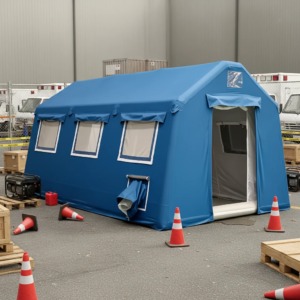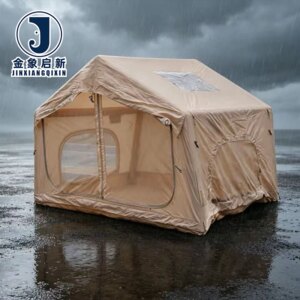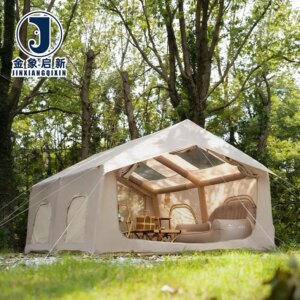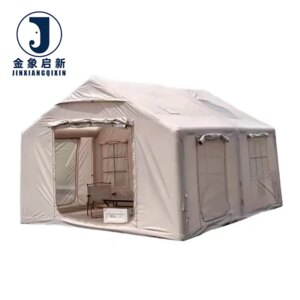
Coating Weight Precision — Process control over PVC adhesion and GSM verified on every roll of inflatable tent fabric we supply.
Technical Specifications
| Parameter | Value |
|---|---|
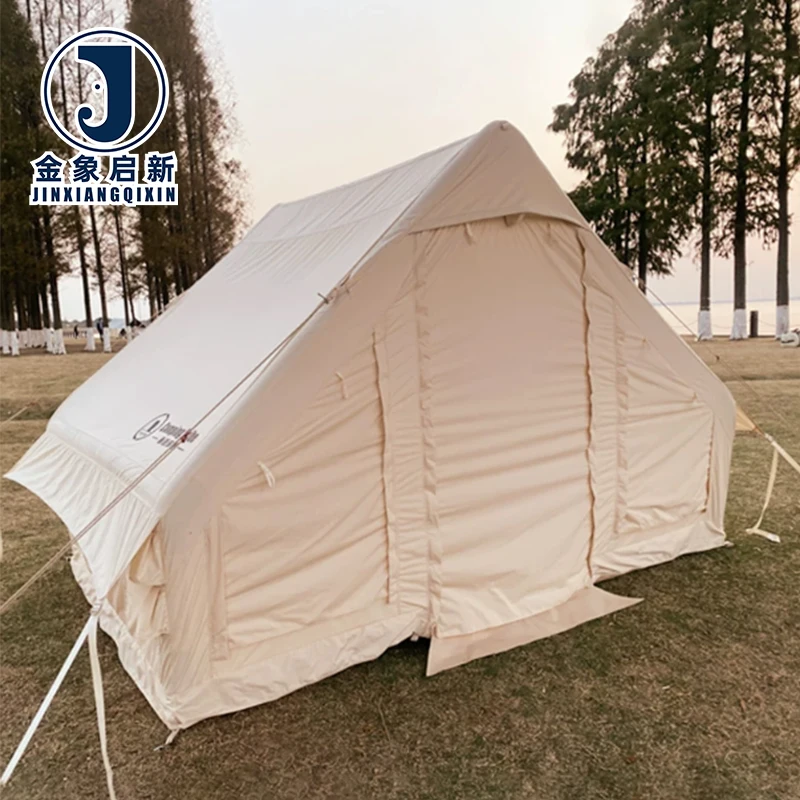
| Product Type | Inflatable Tent |
| Core Material | PVC Tarpaulin |
| Waterproof Rating | Fully waterproof coated construction |
| UV Resistance | UV-resistant treatment (test basis not stated in source) |
| Tear Resistance | Tear-resistant coated base fabric |
| Capacity Range | 2-8 Person |
| Season Rating | 4-Season |
| Opening Mechanism | Quick Automatic Opening |
| Construction Type | Single-layer |
| Customization | OEM & ODM, sample customization, pattern printing |
| Production Facility | 9,180 m² with 3 full production lines |
| Processing Equipment | 36 sets of professional processing equipment |
| R&D Team | 10 technicians |
| Quality Control | Full-process QA/QC with dedicated staff |
| Certifications | ISO9001, ISO14001, ISO45001, CE |
Application Suitability
| Application | Exposure & Requirement |
|---|---|
| Commercial camping grounds | Repeated inflation cycles, UV exposure, guest wear and floor abrasion |
| Outdoor exhibitions and events | Rapid deployment, wind loading, waterproof integrity over multi-day setups |
| Emergency response shelters | Quick inflation, weather resistance, documented material traceability |
| Industrial site accommodation | Extended outdoor placement, UV and moisture exposure, fire code compliance |
| Inflatable structure fabrication | Roll-to-roll consistency, heat-weldable surface, coating adhesion at seams |
Why Coated Fabric Quality Determines Inflatable Chamber Reliability
Airtight integrity depends on coating adhesion and base fabric stability, not just surface appearance.
When inflatable camping tents are deployed commercially, the fabric must hold internal pressure through thousands of inflation cycles without delamination at the weld lines. A PVC inflatable tent aftermarket supplier must ensure that coating weight is consistent not only across the roll surface but also at the edges where heat welding concentrates thermal stress. Fabric that arrives lighter than the quoted specification loses tensile reserve precisely where the chamber flexes most. Sourcing teams who verify GSM upon receipt consistently report fewer field failures than those who rely on quotation documents alone. [NEED_CITE: tensile and tear test methods for coated fabrics per ISO 1421]
Base Fabric and Coating Adhesion for Airtight Chambers
The performance of any custom inflatable tent fabric depends on the bond between the PVC coating and the woven base fabric. During inflation, the chamber walls experience biaxial tension that tests this bond at every weld point. Our 10-person R&D team selects base fabric denier and weave density to match the inflation pressure profile of the intended tent design, ensuring that the coating does not separate from the yarn under cyclic loading. This PVC Inflatable Tent aftermarket supplier approach addresses the root cause of chamber failure rather than treating the symptom.
Heat-Welded Seams Versus Stitched Construction
Stitched seams introduce needle holes that compromise airtight integrity in inflatable structures. Heat welding fuses the PVC coating layers into a continuous bond that matches or exceeds the parent material strength. Our 36 sets of professional processing equipment include dedicated welding stations calibrated to the specific coating thickness of each inflatable tent production run. [NEED_CITE: weld strength testing protocols for PVC coated fabrics] The result is a seam that flexes with the chamber wall rather than cracking at the thread line during repeated inflation and deflation cycles.
Understanding GSM and Base Fabric Density Together
GSM alone does not predict how an inflatable tent fabric will perform under pressure. A lighter base fabric with heavier coating may achieve the same GSM as a denser weave with balanced coating, yet the tear propagation behaviour differs substantially. The base yarn denier and the ends-per-inch count determine how a puncture or cut propagates under the biaxial tension of an inflated chamber. Our material specification sheets provide both GSM and base fabric construction so that buyers can evaluate tear resistance on engineering grounds rather than weight alone. The coating method — whether knife-coated, laminated, or calendered — further influences peel strength at welded seams and the surface finish available for pattern printing or branding application.
The Hidden Cost of Undocumented Material Specifications
When UV-resistant treatment is claimed without a supporting test report, the inflatable tent fabric may degrade under commercial sun exposure faster than the project timeline anticipates. Batch-to-batch colour variation across multiple tent units becomes visible once installed side by side at an event site, forcing the operator to reject the entire delivery. Welded seams that fail before the fabric itself does indicate thermal calibration mismatch rather than material defect, yet the buyer bears the replacement cost either way. [NEED_CITE: UV degradation patterns in PVC coated fabrics under continuous outdoor exposure] Sourcing from a PVC Inflatable Tent aftermarket supplier that provides test documentation with every shipment reduces these verification gaps.
Why Procurement Teams Source Inflatable Fabric Here
Nearly 30 years of coated fabric production means our process parameters for PVC adhesion have been refined across thousands of production runs, not adjusted by trial and error on your order. Three full production lines give us the capacity to deliver custom inflatable tent fabric in volume while maintaining the roll-to-roll consistency that fabricators require for batch welding setups. The 10-person R&D team develops material samples within days so that buyers can validate coating weight, colour, and weldability before committing to bulk production. Dedicated QA and QC inspection at every production stage catches GSM deviation and surface defects before the roll reaches packing. ISO9001, ISO14001, ISO45001, and CE certifications are maintained as active management systems, not shelf documents.
Documentation & Verification
- Material specification sheet stating GSM, base fabric denier, and coating weight for every inflatable tent fabric batch
- UV-resistant test reports supplied with applicable grades to confirm treatment performance claims
- ISO9001, ISO14001, ISO45001, and CE certificates included in shipment documentation package
- Pre-shipment inspection record verifying colour consistency and surface quality before dispatch
- Roll packing list with batch traceability for each unit of inflatable tent fabric shipped
Fabrication, Handling & Storage
- Heat welding temperature must match the specific PVC coating thickness of the inflatable tent fabric grade selected
- Store rolls horizontally on padded racks to prevent permanent creasing in the coated surface layer
- Allow cold-stored rolls to reach ambient temperature before unrolling to avoid coating crack at low flexibility
- Use PVC-compatible cleaners only, as solvent-based products may dissolve the coating surface treatment
- Pattern printing adhesion should be validated on a sample panel before full-run branding application
Request a Material Quote for Your Inflatable Project
Provide your target chamber pressure range, deployment climate, and any fire code requirements for your market so that we can recommend the appropriate base fabric and coating combination. Specify whether you need roll stock for in-house fabrication or finished inflatable tent units with pattern printing and custom sizing. Confirm the colour reference and whether sample approval is required before bulk production proceeds.
Frequently Asked Questions
Q: How is UV resistance tested and what test basis is documented for inflatable tent fabric?
A: UV-resistant treatment is applied during the coating process and tested according to the standard applicable to your market. We supply test reports with shipment documentation confirming the treatment level. Since test basis requirements vary by region, we recommend specifying your local standard during the inquiry so that the correct protocol is applied to your custom inflatable tent fabric order.
Q: What base fabric denier and coating weight options are available for inflatable structures?
A: Our inflatable tent fabric is available across a range of base fabric deniers and coating weights suited to different chamber pressure requirements. The R&D team selects the combination based on your inflation cycle expectations and deployment conditions. Material specification sheets document the exact base fabric construction and GSM for each production batch supplied.
Q: How is batch-to-batch colour and coating consistency controlled across production runs?
A: Colour matching is controlled through dedicated process parameters at each of our three production lines, with in-process QA checks verifying consistency before the roll proceeds to packing. Pre-shipment inspection records confirm that colour and coating weight match across all rolls within your order, preventing visible variation when multiple inflatable tent units are installed side by side.
Q: What material certificates and test reports accompany each shipment?
A: Every shipment includes the applicable ISO9001, ISO14001, ISO45001, and CE certificates along with a material specification sheet, pre-shipment inspection record, and test reports for UV resistance where applicable. Roll packing lists provide batch traceability. We do not ship inflatable tent fabric without the documentation package that procurement teams need for compliance verification.
Q: How does OEM and ODM customization work for inflatable tent fabric thickness and printing?
A: Our 10-person R&D team develops material samples within days based on your thickness, colour, and pattern printing requirements. Once the sample is approved, bulk production proceeds on our dedicated lines with full-process QA oversight. Custom inflatable tent fabric orders can combine material modification, colour specification, and branding application within a single production run.