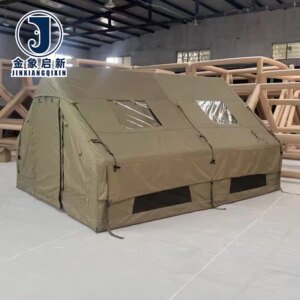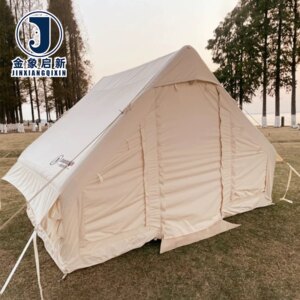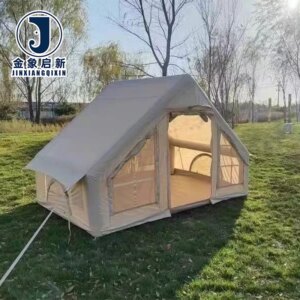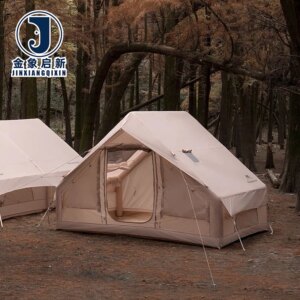
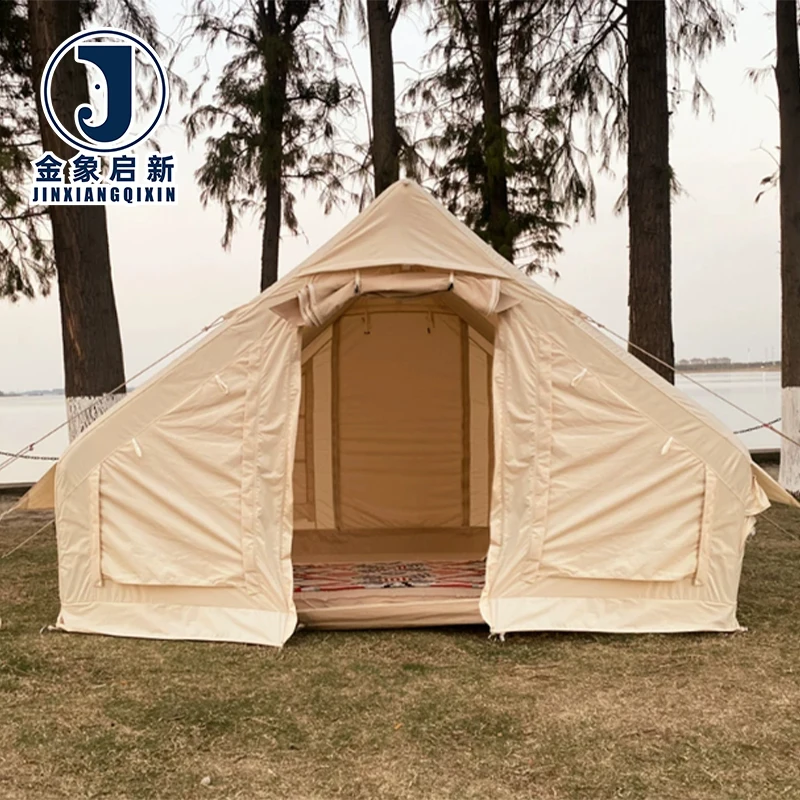
Controlled Coating Weight — every roll of PVC inflatable tent fabric is inspected against the stated specification before dispatch, ensuring the material you receive matches the technical data sheet you approved.
Technical Specifications
| Parameter | Value |
|---|---|
| Product Type | Inflatable Tent Fabric |
| Core Material | PVC tarpaulin |
| Product Forms | Inflatable, extended type, single layer construction |
| Key Performance | Waterproof, windproof, 4-season suitable, quick automatic opening |
| Customization Service | OEM & ODM (sample customization, pattern printing) |
| Production Facility | 9,180 m² with 3 full production lines, 36 sets of professional equipment |
| R&D Capability | 10 technicians |
| Quality Control | Full-process inspection with dedicated QA & QC staff |
| Certifications | ISO 9001, ISO 14001, ISO 45001, CE |
Application Suitability
| Application | Exposure & Requirement |
|---|---|
| Temporary construction site shelters | Wind loading, rain ingress, repeated inflation cycles, site dust and debris |
| Mobile storage for logistics operations | UV exposure during staging, forklift proximity abrasion, weather sealing for inventory protection |
| Field command centers for engineering management | Continuous inflation pressure, temperature fluctuation, interior climate retention |
| Disaster recovery temporary workspaces | Rapid deployment demand, all-weather waterproofing, ground moisture contact |
| Inflatable membrane structures for events | High visibility printing surface, repeated pack-and-deploy cycles, public safety compliance |
What "Tested" Means When No Report Follows the Claim
A specification sheet without a verifiable test report is marketing, not engineering data.
Buyers of inflatable tent fabric regularly receive quotations stating waterproof or flame retardant performance, only to discover on delivery that no third-party or in-house test report accompanies the shipment. For technical buyers sourcing PVC inflatable tent fabric for disaster relief shelters or industrial membrane structures, the absence of documentation means the material cannot be validated against project specifications or local building codes. This gap between claim and evidence is one of the most frequent causes of rejected shipments and re-procurement delays in the coated fabric supply chain. [NEED_CITE: common documentation gaps in coated fabric procurement per ISO 9001 traceability requirements]
Coating Adhesion and Single Layer Construction
The single layer construction of this inflatable tent fabric places the entire structural load on one coated textile. Coating adhesion to the base fabric therefore becomes the critical failure boundary — if the PVC layer delaminates under inflation stress, the air beam loses pressure and the structure deflates. Our coating process is controlled to maintain consistent penetration into the base fabric weave, producing a bond that withstands repeated inflation and deflation cycles without layer separation. The PVC inflatable tent fabric maintains this adhesion across the temperature swings encountered in four-season outdoor deployment.
Waterproof Integrity Under Inflation Pressure
Waterproof performance in inflatable structures is not simply a surface property. When an air beam is pressurised, the fabric experiences biaxial tension that opens micro-gaps at weave intersections if the coating is insufficiently thick or unevenly applied. This PVC inflatable tent fabric is coated to close those intersections completely, maintaining waterproof integrity whether the structure is pressurised for continuous occupancy or cycled through repeated inflation events during emergency deployment. Windproof performance follows the same principle — a fully sealed coating prevents air migration through the fabric body. [NEED_CITE: biaxial tensile behaviour of coated fabrics under pneumatic load per ISO 1421 test methods]
How Base Fabric and Coating Weight Interact to Define Structural Performance
The relationship between base fabric construction and PVC coating weight determines how inflatable tent fabric behaves under load. A heavier coating does not automatically produce a stronger fabric — if the base yarn denier and weave density are low, additional coating mass adds weight without proportional gains in tensile or tear strength. Conversely, a tightly woven high-denier base fabric with a leaner coating can outperform a heavier, loosely constructed alternative. For inflatable applications, the coating must be thick enough to provide airtightness and abrasion resistance while remaining flexible enough to fold and pack without cracking. The balance between these properties is where material specification directly affects field performance and structure lifespan. Surface finish also plays a role: a glossy surface sheds water and dirt more effectively in exposed installations, while a matte surface provides better adhesion for printed branding and signage. Available finishes and base fabric options should be confirmed against your specific structural and aesthetic requirements.
The Real Cost of Specifying Without Verification
When coating weight on the quotation does not match the material on arrival, the consequences extend beyond a single roll. An inflatable shelter deployed with underweight fabric may hold pressure during initial testing but lose airtightness after days of continuous inflation, forcing unplanned deflation and structure replacement mid-operation. Flame retardant or anti-UV treatments claimed without supporting test reports create compliance risk — a shelter that fails a site safety audit cannot be occupied, regardless of how quickly it was deployed. Batch-to-batch colour variation across rolls used in the same structure becomes visible once panels are welded side by side, triggering cosmetic rejection even when structural performance is unaffected. [NEED_CITE: weld failure at coated fabric seams under cyclic pneumatic stress]
Why Procurement Teams Source This Fabric Here
Our 10-person R&D team develops inflatable tent fabric samples within days, allowing you to validate coating hand, colour, and inflation behaviour before committing to production volume. Three full production lines and 36 sets of professional equipment support consistent output across large orders, reducing the batch variation that plagues smaller operations. Full-process QA and QC inspection at every production stage — not just final sampling — means defects are caught during coating and winding rather than at the packing bench. OEM and ODM customisation including pattern printing is handled in-house, eliminating the coordination gap between fabric mill and converter. ISO 9001, ISO 14001, ISO 45001 and CE certification is maintained across the facility, providing the audit trail that institutional buyers and disaster relief procurement programmes require.
Documentation & Verification
- Material specification sheet stating GSM, base fabric and coating per batch
- Test reports for UV and flame retardant grades where applicable — confirm the grade required for your market
- ISO 9001, ISO 14001, ISO 45001 and CE certificates included with shipment
- Pre-shipment inspection record verifying coating weight against stated specification
- Batch quality inspection report accompanying every roll dispatched
- Certificate of origin and customs documentation for export clearance
Fabrication, Handling & Storage
- Heat weld parameters must match the PVC coating thickness — test weld samples before production to confirm seam strength
- Single layer construction requires reinforced patches at air valve and anchor points to distribute concentrated stress
- Store rolls upright on pallets in covered conditions to prevent compression creasing of the coated surface
- Allow cold-stored rolls to reach ambient temperature before unrolling to avoid coating crack at low-flex points
- Use mild detergent for field cleaning — solvent-based cleaners can soften the PVC coating and reduce surface integrity
- Pattern printing areas should be protected during welding to prevent heat distortion of printed graphics
Requesting a Specification Match for Your Project
To move from general enquiry to confirmed specification, provide your intended application environment including expected wind load and temperature range, the target market so we can identify applicable fire safety and material compliance requirements, and whether you need roll stock for your own fabrication line or finished cut-and-welded panels. If pattern printing or specific colour matching is required, share reference samples or Pantone codes with your expected annual volume. We will return a material specification sheet, sample development timeline, and production lead for your review.
Frequently Asked Questions
Q: How is the coating weight verified on arrival and what documentation supports it?
A: Each batch is inspected against the stated specification during production, and a pre-shipment inspection record accompanies your order. The material specification sheet documents the coating weight and base fabric details. If your receiving process requires independent verification, we can arrange third-party testing before dispatch at your request.
Q: Are flame retardant or anti-UV treatments available, and what test standards apply?
A: These treatments are available in various grades depending on your destination market and application requirements. The applicable test standard depends on local building codes and project specifications. Confirm the grade required for your market, and we will provide the corresponding test report with your shipment documentation.
Q: What base fabric denier and weave options are available for inflatable tent applications?
A: Base fabric options vary by required tensile strength, tear resistance, and flexibility for packing. Our R&D team can develop sample swatches in different denier and weave constructions so you can evaluate inflation behaviour and fold recovery before committing to a production run.
Q: How is batch-to-batch colour and coating consistency controlled across production runs?
A: Colour is matched against approved reference standards at the coating stage, and in-process QA checks compare each roll to the batch master before winding. A batch quality inspection report documents the results, ensuring that panels welded side by side on the same structure present a uniform appearance.
Q: What weld and seam behaviour can we expect from this PVC tarpaulin under inflation stress?
A: The coating formulation and weight are designed to produce strong thermal welds when correct heat and pressure parameters are applied. We recommend running weld test samples with your equipment to confirm seam strength matches your structural design requirements before full production begins.