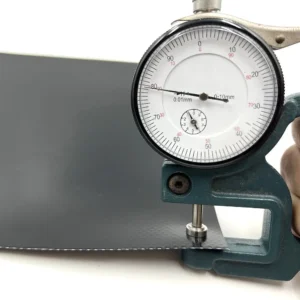
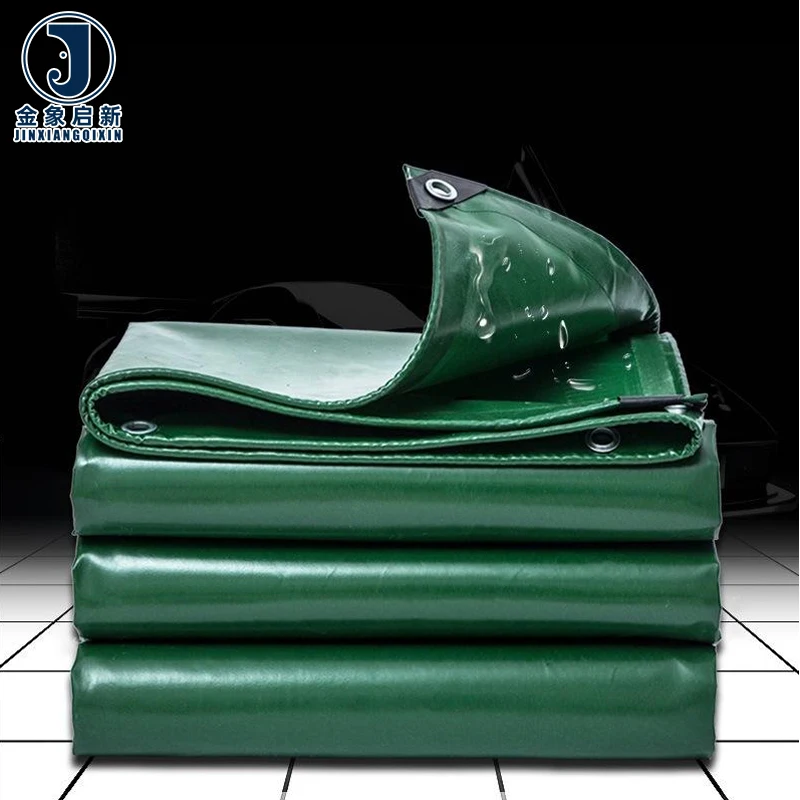
Coating Weight Control — nearly 30 years of PVC coating process refinement means GSM on the specification sheet is the GSM on the roll you receive.
Technical Specifications
| Parameter | Value |
|---|---|
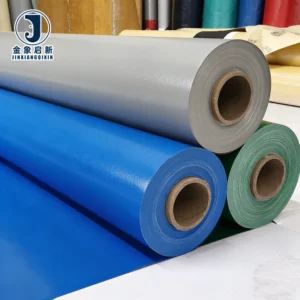
| Product Type | PVC Tarpaulin Roll |
| Coating Material | PVC |
| Waterproof Rating | Waterproof |
| Breathability | Breathable (test basis not stated in source) |
| Flame Retardant | Available in flame retardant grades — confirm the grade required for your market |
| UV Treatment | Available with UV treatment — confirm test basis for your application |
| Application Grade | Heavy duty |
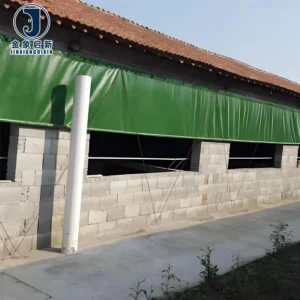
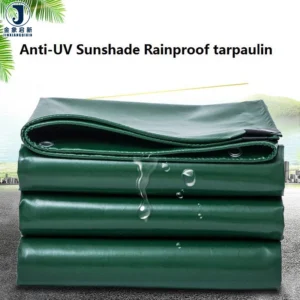
| Primary Use | Outdoor covers, weather protection |
Application Suitability
| Application | Exposure & Requirement |
|---|---|
| Equipment and machinery covers | Permanent outdoor exposure, rain, dust ingress, UV degradation risk |
| Construction site hoarding and enclosures | Wind load, abrasion from scaffolding contact, repeated handling |
| Agricultural stockpile covers | Moisture protection, UV exposure, resistance to organic acids |
| Temporary warehouse and storage partitions | Indoor weather barrier, frequent reconfiguration, handling stress |
Why Material Data Sheets Matter More Than the Quoted GSM for PVC Coated Tarpaulin Base Fabric Denier Coating Weight GSM
A quoted GSM figure without a supporting specification sheet leaves you guessing what the base fabric and coating actually consist of.
Technical buyers who have received rolls lighter than the agreed weight know the cost of undocumented material claims. When a PVC coated tarpaulin base fabric denier coating weight GSM is stated on paper but not backed by a mill certificate, incoming inspection becomes a guessing game. Coating weight and base fabric denier together determine whether the roll will survive fabrication and field use, or fail at the first flex point. [NEED_CITE: tensile and tear test methods for coated fabrics per ISO 1421]
How Base Fabric Denier and Weave Define Structural Performance
The base fabric is the load-bearing skeleton of any PVC coated tarpaulin roll. Denier and weave density govern tensile and tear behaviour before any coating is applied. A higher denier yarn in a tight weave resists tear propagation under dynamic loads such as wind gusts on a truck curtain. When you evaluate PVC coated tarpaulin base fabric denier coating weight GSM, the denier figure tells you how much force the yarn network can absorb before a nick becomes a run.
Coating Method and Weight: Where Process Expertise Separates Mills
Coating application — whether knife-over-edge, dip, or calender — controls adhesion between the PVC layer and the base fabric. Consistent coating weight across the roll width prevents thin spots that become failure origins under tension. Nearly 30 years of process refinement at the coating head means weight distribution stays uniform, which directly supports predictable heat-welding behaviour during fabrication. [NEED_CITE: PVC coating adhesion and peel strength testing methods]
Reading the Specification Sheet: What GSM Really Tells You
GSM is the sum of base fabric weight plus coating weight, and on its own it does not predict strength. Two rolls at the same GSM can have very different tensile figures if one uses a heavier coating and lighter base fabric. Understanding PVC coated tarpaulin base fabric denier coating weight GSM means checking both components independently. A heavier base fabric with moderate coating typically delivers better tear resistance, while a heavier coating on a lighter base improves waterproofing and surface durability at the expense of flexibility in cold conditions.
The Hidden Cost of Specifying on Price per Kilogram Alone
Choosing roll stock on cost per kilogram without verifying base fabric construction leads to predictable downstream problems. Rolls with underweight coating develop pinholes during heat welding, and seams peel before the fabric reaches end of life. Batch-to-batch GSM variation within a single container forces fabricators to re-dial welding parameters for every roll, adding labour and scrap. Colour inconsistency across rolls in the same order becomes visible once panels are installed side by side on a structure. [NEED_CITE: weld seam peel strength versus coating weight in PVC tarpaulin fabrication]
Why Fabricators and Technical Buyers Source Here
Deep coating process control developed over nearly three decades ensures that GSM, base fabric denier, and coating weight remain consistent roll to roll. Three full production lines and 36 sets of professional equipment support volume orders without sacrificing batch uniformity. A 10-person R&D team handles material selection and sample development so you can verify weld behaviour before committing to a container. Dedicated QA and QC at every stage with full pre-shipment inspection catches weight and colour deviations before rolls leave the facility.
Documentation & Verification
- Material specification sheet issued per order listing exact GSM, base fabric denier, and coating weight
- UV and flame retardant test reports provided for applicable grades upon order confirmation
- Pre-shipment inspection record verifying roll dimensions, weight, and colour reference
- ISO and CE certificates included in export documentation for customs clearance
- Roll packing list detailing net weight, gross weight, and roll count per container
Fabrication, Handling & Storage
- Heat-weld temperature and dwell time should be calibrated to the specific coating weight of this PVC tarpaulin roll before production runs
- Store rolls horizontally on pallets in a shaded area to prevent flat-spotting and surface marking on the PVC coating
- Avoid dragging roll ends across abrasive surfaces during unloading to protect the outer coating layer
- Allow cold-stored rolls to acclimatise to workshop temperature before unrolling to prevent coating micro-cracking
- Use compatible PVC-based repair patches and solvent cement for field repairs on heavy duty grade material
What to Include in Your Enquiry
To receive an accurate specification recommendation, share the end-use application and the environmental exposure conditions the fabric will face. If your market requires a specific flame retardant or UV performance grade, state the standard you need documented. Indicate the roll width, estimated annual volume, and whether you require samples for weld testing before placing a bulk order.
Frequently Asked Questions
Q: How is GSM verified and what does it mean for tensile and tear strength?
A: Each roll ships with a material specification sheet stating the exact GSM, base fabric denier, and coating weight. GSM alone does not determine strength — the base fabric construction and coating ratio together define tensile and tear performance. We provide incoming inspection data so you can verify the figures against your own test equipment.
Q: What base fabric denier and weave options are available and how do they affect performance?
A: Base fabric options vary by denier and weave density, selected to match the mechanical demands of your application. Higher denier with tighter weave improves tear propagation resistance, which matters for applications involving dynamic loading such as truck curtains or tensioned structures. Request a sample to evaluate handling and weld behaviour.
Q: How are UV and flame retardant treatments tested and documented?
A: UV and flame retardant treatments are available in various grades depending on market requirements. Test reports are issued for the specific grade ordered, stating the standard and result. Confirm the grade your project or local regulation demands so the correct formulation is applied and documented.
Q: What is the weld and seam behaviour of this PVC coated fabric under flex load?
A: Weld performance depends on coating weight consistency and base fabric stability at the seam. Uniform coating across the roll width supports predictable heat-weld results. We recommend fabricators run test welds on sample material to establish optimal temperature and dwell settings before full production.
Q: How is batch-to-batch colour and weight consistency maintained across rolls?
A: Production lines are calibrated per order with in-process QA checks on coating weight and colour reference. A pre-shipment inspection record documents the actual values before dispatch. This ensures that rolls within a single container arrive with matching weight and colour for side-by-side installation.