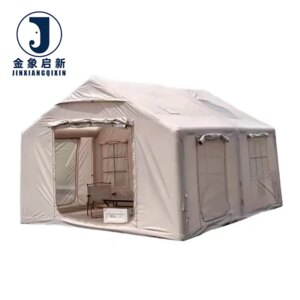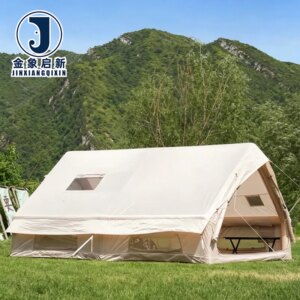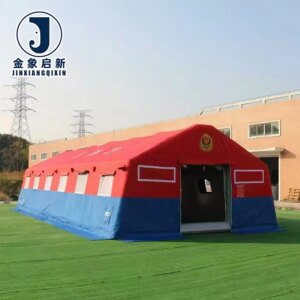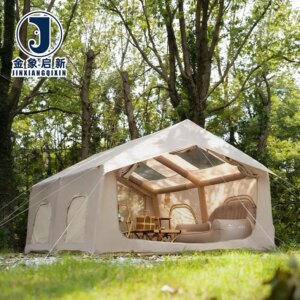
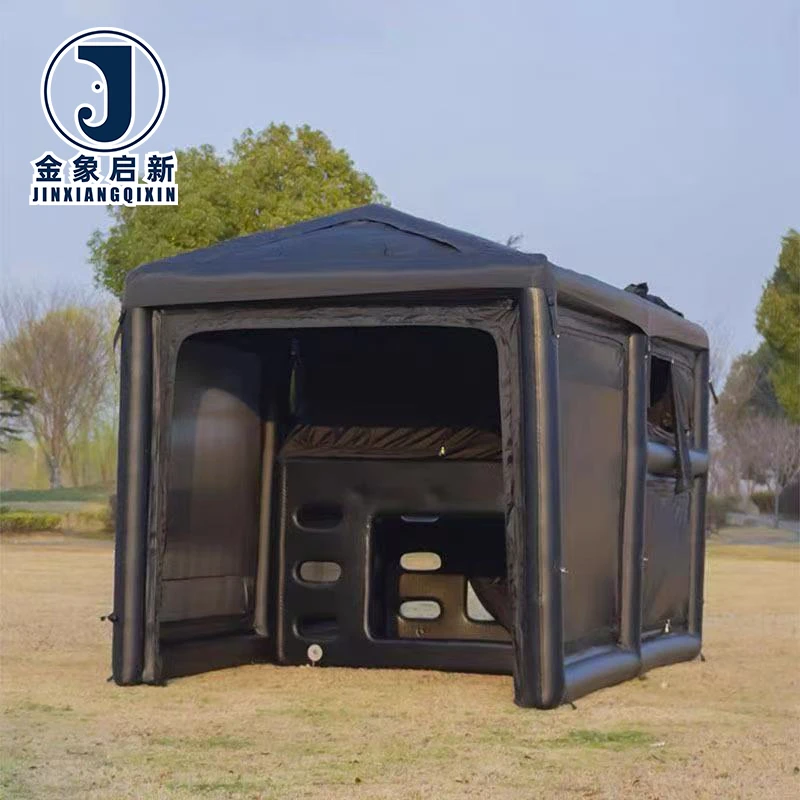
Coated Fabric Depth — nearly 30 years of process control over PVC coating weight and adhesion applied to inflatable tent fabric, ensuring roll-to-roll consistency for membrane structure manufacturers.
Technical Specifications
| Parameter | Value |
|---|---|
| Product Type | Inflatable Tent |
| Core Material | PVC Tarpaulin (PVC knife-coated fabric) |
| Key Performance | Waterproof, UV-resistant (test basis not stated), Tear-resistant |
| Product Forms | Single Layer Construction, Extended Type |
| Deployment Mechanism | Quick automatic opening |
| Customization Service | OEM & ODM (sample customization, pattern printing) |
| Production Facility Area | 9,180 square meters |
| Production Lines | 3 full production lines |
| Processing Equipment | 36 sets of professional processing equipment |
| R&D Team Scale | 10 technicians |
| Quality Control System | Strict full-process quality inspection with dedicated QA&QC staff |
| Standards | ISO 9001, ISO 14001, ISO 45001, CE |
Application Suitability
| Application | Exposure & Requirement |
|---|---|
| Inflatable camping tent manufacturing | Repeated inflation cycles, internal air pressure stress, UV exposure, waterproof integrity across seasons |
| Commercial camping ground shelters | Continuous outdoor deployment, guest turnover wear, four-season temperature fluctuation, rapid setup demands |
| Outdoor event inflatable structures | Short-term high-visibility use, wind loading on membrane surface, transport and re-deployment abrasion |
| Emergency response temporary shelters | Rapid deployment under adverse conditions, all-weather waterproofing, durability across repeated assembly cycles |
| Industrial site temporary membrane shelters | Dust and moisture barrier, UV degradation resistance, structural inflation pressure holding over extended periods |
Why Unverified Treatment Claims Undermine Inflatable Tent Fabric Procurement
Every performance parameter on our material specification sheet is stated with supporting test documentation where applicable.
Inflatable tent structures place continuous stress on coated fabric — internal air pressure, wind loading, and repeated inflation cycles demand that UV and waterproof treatments perform as promised. When a supplier claims treatment without a test report, the tent manufacturer carries the risk. Field failures traced back to coating degradation or seam delamination are costly, both in warranty claims and in brand reputation. The specification sheet should be the procurement baseline, not a marketing brochure [NEED_CITE: tensile and tear test methods for coated fabrics per ISO 1421].
Knife-Coated PVC Construction for Membrane Integrity
The PVC knife-coated fabric used in this custom inflatable tent material delivers a bonded coating layer that penetrates the base fabric weave. This construction method produces a uniform coating weight across the roll width, which directly influences how the material behaves under inflation pressure. For inflatable tent fabric manufacturers, consistent coating adhesion means fewer delamination risks at welded seams where air-holding integrity is most critical.
Four-Season Deployment and Temperature Stability
Inflatable camping tents deployed across seasonal temperature ranges require fabric that resists both low-temperature brittleness and high-temperature softening. The PVC tarpaulin base provides dimensional stability through temperature cycling, maintaining inflation shape without excessive stretching or stiffening. Commercial camping ground operators specifying this inflatable tent fabric for year-round use need material that holds its structural profile whether deployed in cold-weather or high-heat environments [NEED_CITE: PVC coated fabric temperature performance range for outdoor membrane structures].
Reading the Specification Sheet Beyond GSM
GSM alone does not determine how an inflatable tent fabric performs under inflation stress. The base fabric denier and weave density work together with coating weight to define tensile and tear behaviour. A lighter base fabric with higher thread count may outperform a heavier, loosely woven alternative in tear propagation resistance. PVC knife-coated construction also affects peel strength at welded seams — the coating must bond to itself under heat without degrading the base fabric underneath. For inflatable structures, seam failure before fabric failure is a known risk at flex and inflation stress points, making the relationship between coating method and weld behaviour a critical specification parameter. Surface finish, whether glossy or matte, further influences cleaning ease, printing adhesion for branded tent panels, and UV treatment uptake across the coated surface.
The Hidden Cost of Roll-to-Roll Colour Inconsistency
When inflatable tent panels are cut from rolls with visible colour variation, the finished structure shows mismatched sections once assembled and inflated. This is particularly damaging for commercial camping operators and event companies where visual presentation affects customer perception. Sourcing custom inflatable tent material without batch consistency verification means the entire production run may need rework or selective panel replacement. Colour matching should be confirmed against a reference standard before production begins, not discovered during final assembly [NEED_CITE: colour consistency standards for coated fabric rolls in batch production].
Why Fabric Sourcing Alignment Matters for Inflatable Structures
Three full production lines with 36 sets of professional processing equipment support bulk roll output for inflatable tent fabric orders, maintaining delivery schedules without sacrificing coating consistency. The 10-person R&D team handles material selection, custom sizing, pattern printing, and sample development, enabling specification changes before mass production commitment. Dedicated QA and QC staff conduct inspections at every production stage, with 100% pre-shipment inspection ensuring each roll meets the stated specification. Sample development within days allows inflatable structure manufacturers to verify coating behaviour, weld performance, and colour accuracy before placing full orders. ISO 9001, ISO 14001, ISO 45001, and CE certified production provides the compliance framework that project specifications and procurement audits require.
Documentation & Verification
- Material specification sheet stating base fabric, coating method, and GSM for each roll
- UV and flame-retardant test reports provided per batch where applicable
- ISO and CE certificates accompanying shipment documentation for project compliance
- Pre-shipment inspection record with roll-by-roll verification against order specification
- Roll packing list with net weight and roll dimensions for container loading planning
Fabrication, Handling & Storage
- Heat-weld parameters should be tested on sample pieces before production, as PVC knife-coated fabric responds to temperature and dwell time settings specific to each welding machine
- Store rolls horizontally on racking to prevent flat-spot creasing that affects inflation surface uniformity
- Cut panels should be welded promptly after cutting to avoid edge contamination from workshop dust affecting seam adhesion
- Avoid dragging rolls across unprotected floors to prevent surface abrasion on the PVC coating layer
- Use PVC-compatible cleaners on finished inflatable structures to preserve the coated surface and any applied treatments
Specification and Sampling Guidance for Your Inquiry
To specify the right inflatable tent fabric for your application, share the intended deployment environment, inflation pressure requirements, and any fire safety or UV performance standards your target market requires. Confirm whether you need rolls in standard widths or custom sizing, and indicate annual volume for production planning. If pattern printing or branded panels are part of the design, provide artwork early so sample development can include print accuracy verification alongside material testing.
Frequently Asked Questions
Q: How is UV resistance tested and what documentation is provided?
A: UV resistance testing follows applicable standards for the PVC coated fabric grade specified. Test reports are supplied per batch where UV treatment is included in the material specification. The material specification sheet documents the treatment type and test basis, allowing buyers to verify compliance with their target market requirements before production begins.
Q: What custom sizing, printing, and material options are available?
A: Custom inflatable tent material is available in configurable widths, lengths, GSM grades, and surface finishes. Pattern printing and branded panel production are supported through the OEM and ODM service. Sample development is completed within days, allowing verification of print accuracy, coating weight, and weld behaviour before mass production.
Q: How is colour consistency maintained across multiple rolls in a single order?
A: Colour reference standards are established during sample approval and applied across the full production batch. The QA and QC team inspects roll-to-roll consistency at every production stage, with 100% pre-shipment inspection confirming colour match against the approved reference before dispatch.
Q: What certifications accompany each shipment for project compliance?
A: Each shipment includes ISO 9001, ISO 14001, ISO 45001, and CE certificates alongside the material specification sheet, pre-shipment inspection record, and certificate of origin. Flame-retardant and UV test reports are included where applicable to the specified grade.
Q: What are the heat-welding guidelines for inflatable structure fabrication?
A: PVC knife-coated fabric requires heat-weld parameter calibration specific to the welding equipment used. Sample pieces should be tested to establish optimal temperature, pressure, and dwell time settings. Seam strength should be verified through peel testing to confirm the weld holds at inflation stress points before full production commences.