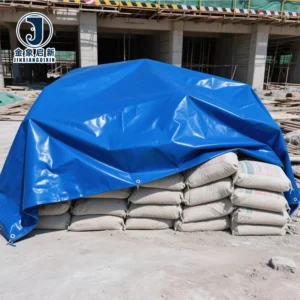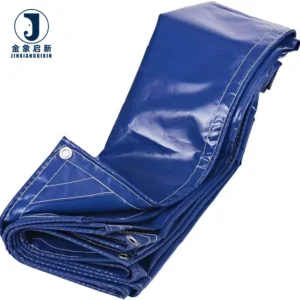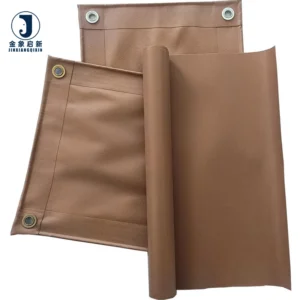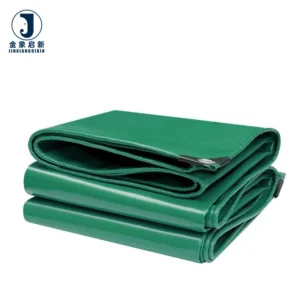
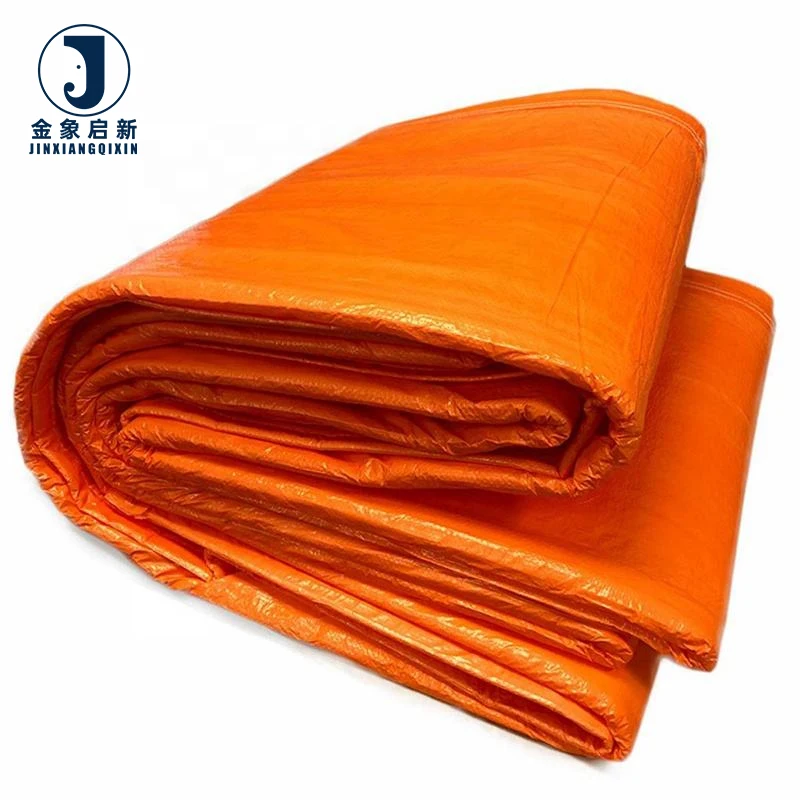
Multi-layer lamination control — PE cloth and closed-cell foam layers bonded under calibrated heat and pressure to deliver consistent thermal retention across every blanket produced.
Technical Specifications
| Parameter | Value |
|---|---|
| Product Type | Insulated Tarpaulin Blanket |
| Size Options | 6ftx24ft, 8ftx25ft, 12ftx20ft, 12ftx24ft |
| Thickness Options | 2x2mm, 3×1.5mm, 1x4mm, 5mm, 6mm, 8mm, 12mm |
| Structure | PE cloth + closed cell PE foam core + PE cloth |
| Color Options | Orange, Black, White, Silver, Customized color |
| Grommet Configuration | Aluminum grommets, spacing at 61cm and 91.5cm intervals |
| Surface Property | Waterproof surface fabric |
| UV Treatment | Anti-UV treatment integrated into base fabric (test basis not stated in source) |
| Flame Retardant Grade | Grade not stated — confirm the grade required for your market |
| Mildew Resistance | Stated resistant |
| Edge Finish | Stitched edges with reinforcement |
Application Suitability
| Application | Exposure & Requirement |
|---|---|
| Concrete curing in winter pours | Constant ground contact, moisture exposure, heat retention to maintain hydration temperature |
| Heated enclosure insulation | Thermal barrier against ambient cold, repeated installation and removal cycles |
| Vertical wind block on scaffold | Wind load on grommets and edges, abrasion against structural steel |
| Equipment covers in low temperatures | Freeze-thaw cycles, condensation, UV exposure during outdoor storage |
| Snowy and rainy weather site covers | Prolonged water contact, snow load deflection, low-temperature flexibility |
Why Insulated Concrete Curing Blanket Material Properties Matter More Than Thickness Alone
A 12mm blanket with an open-cell core loses heat faster than an 8mm blanket with a closed-cell core.
Construction teams often specify insulated blankets by total thickness, assuming thicker always means warmer. On site, the reality is different. Closed-cell PE foam traps air in discrete pockets that block convective heat transfer, while lower-density cores allow thermal bridging through the material. When an Insulated Concrete Curing Blanket material properties sheet only lists overall thickness without core density, buyers cannot predict actual thermal performance once the blanket is laid over fresh concrete in freezing conditions [NEED_CITE: thermal conductivity test methods for insulation materials per ASTM C518]. The consequence is a blanket that measures correctly on a caliper but fails to hold the temperature window that proper hydration demands.
How the Three-Layer PE Construction Manages Heat and Water
The outer PE cloth layers serve two functions simultaneously: they block water ingress from rain, snow and condensation, and they protect the foam core from mechanical damage during handling. The closed-cell PE foam core between them provides the thermal barrier. Because the cells are sealed rather than interconnected, moisture cannot migrate through the core even when the blanket sits in standing water on a curing slab. This three-layer PE layup means the Insulated Concrete Curing Blanket material properties remain stable across wet and dry conditions, unlike single-layer insulating materials that absorb moisture and lose R-value once saturated.
Grommet Spacing and Edge Reinforcement Under Wind Load
Aluminum grommets are drilled at 61cm and 91.5cm intervals around the perimeter, giving site crews multiple tie-down points to secure the blanket against wind uplift. The reinforced stitched edges distribute the pull-out force across a wider fabric area rather than concentrating it at a single point. On vertical wind block applications, this edge construction prevents the tearing that starts at the grommet hole and propagates along the blanket hem. Aluminum was chosen over steel to avoid rust stains on finished concrete surfaces below [NEED_CITE: grommet pull-out resistance testing for tarpaulin edge construction]. The two spacing options let contractors match tie-down density to expected wind conditions on exposed sites.
Reading Thickness Grades Against Ambient Temperature
The available thickness range — from 2x2mm up to 12mm — covers a wide span of curing and insulation scenarios. Thinner grades such as 2x2mm or 3×1.5mm suit mild cool-weather protection where the goal is reducing heat loss rather than maintaining a heated enclosure. Mid-range options at 5mm and 6mm fit standard winter concrete pours where ambient temperatures drop below freezing but are not extreme. The heavier 8mm and 12mm blankets address deep-freeze environments or heated enclosures that must retain generated warmth over extended periods. Selecting the right thickness grade depends on the target concrete temperature, the ambient low, and the duration of the curing window — not simply on picking the thickest option available.
What Happens When Insulation Grade Is Mismatched to the Site
Specifying a blanket that is too thin for the ambient conditions leads to concrete surface temperatures falling below the hydration threshold, producing weak or cracked cure. Going too thick adds cost and weight without proportional thermal gain, and heavier blankets are harder to handle on scaffolding or overhead positions. Beyond thickness, ordering blankets without verifying closed-cell core structure can result in receiving open-cell material that compresses under foot traffic and loses insulating value after the first use. Batch inconsistency in foam density across a large order means some blankets perform differently than others on the same pour — a problem that only becomes visible when temperature sensors show uneven readings across the slab [NEED_CITE: field performance variance in multi-layer insulation blankets].
Why Source Insulated Tarpaulin From This Production Line
The three full production lines and 36 sets of professional equipment support consistent lamination quality across blanket orders of any volume. A 10-person R&D team handles material selection and custom sizing, developing samples within days when a project requires non-standard dimensions or colour. Dedicated QA and QC inspection runs at every production stage, with 100% pre-shipment inspection verifying thickness, edge reinforcement and grommet placement before dispatch. Nearly 30 years of coated fabric and lamination process control ensures that coating weight and layer adhesion stay within tolerance from the first blanket to the last in any batch.
Documentation & Verification
- Material specification sheet stating each layer composition, thickness grade and foam core type per blanket
- UV and mildew resistance test reports — request before specifying for extended outdoor exposure
- Pre-shipment inspection record confirming grommet spacing and edge stitch consistency
- Roll or piece packing list with individual blanket dimensions and colour reference
- Certificate of origin and customs documentation for international shipments
Fabrication, Handling & Storage
- Stitch reinforced edges before adding grommets to prevent tear propagation through the PE cloth layers
- Fold blankets with the foam core facing inward to avoid permanent crease damage during transport
- Store flat or loosely rolled — never compress stacked blankets under heavy loads that deform the closed-cell core
- Clean surface PE cloth with mild detergent only; solvent-based cleaners may degrade the waterproof finish
- Inspect grommet seating after each use cycle and re-press any loosened aluminum rings before redeployment
- Cut with sharp blades to produce clean edges that accept new stitch reinforcement without fraying
What to Include in Your Inquiry
Provide the ambient temperature range and duration of your curing or insulation application so we can match the correct thickness grade. Specify whether you need standard sizes or custom dimensions, along with colour requirements if the blankets will be visible on a client-facing site. Confirm your market’s fire classification requirements so we can verify whether a flame retardant grade is available for your specification.
Frequently Asked Questions
Q: How do I verify the closed-cell foam core density on delivery?
A: Request a material specification sheet that states core density before ordering. On arrival, compress a sample between your fingers — closed-cell foam resists compression and springs back, while open-cell foam compresses easily and recovers slowly. Compare the delivered blanket thickness against the stated grade using a caliper at multiple points.
Q: What UV test documentation should I request for outdoor curing use?
A: Ask for a UV exposure test report that states the test standard, exposure hours and retained tensile percentage. If the supplier notes that UV stabiliser is integrated into the base fabric but provides no test data, treat UV longevity as unverified and plan for seasonal replacement on long-duration projects.
Q: Which thickness grade suits my ambient temperature range?
A: Thinner grades like 5mm suit moderate cool-weather protection above freezing. Grades at 8mm and 12mm address sub-zero environments and heated enclosures where maximum thermal retention is required. Share your target concrete temperature, ambient low and curing duration so the correct grade can be recommended.
Q: Can the grommet spacing be adjusted for high-wind conditions?
A: The standard configuration places aluminum grommets at 61cm and 91.5cm intervals. For high-wind sites, closer spacing distributes tie-down load more evenly and reduces edge stress. Provide your site wind data and preferred spacing so we can confirm feasibility and any impact on minimum order quantities.
Q: Will multiple blankets in one order have consistent waterproof coating?
A: Batch consistency is maintained through in-process QA at every production stage and 100% pre-shipment inspection. Request the inspection record with your order to verify that coating uniformity and waterproof performance are consistent across all blankets delivered in a single shipment.