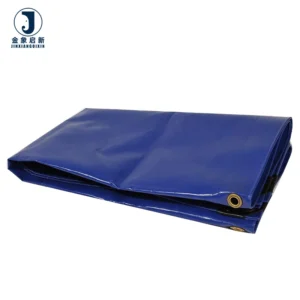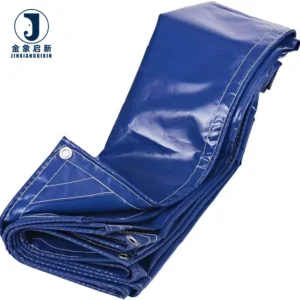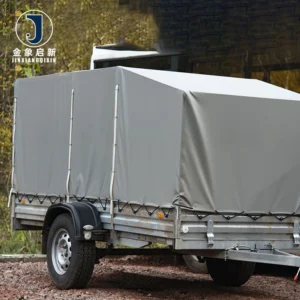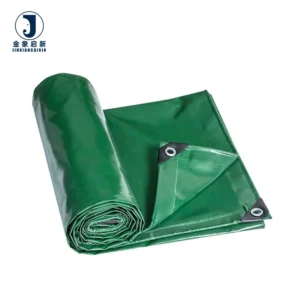
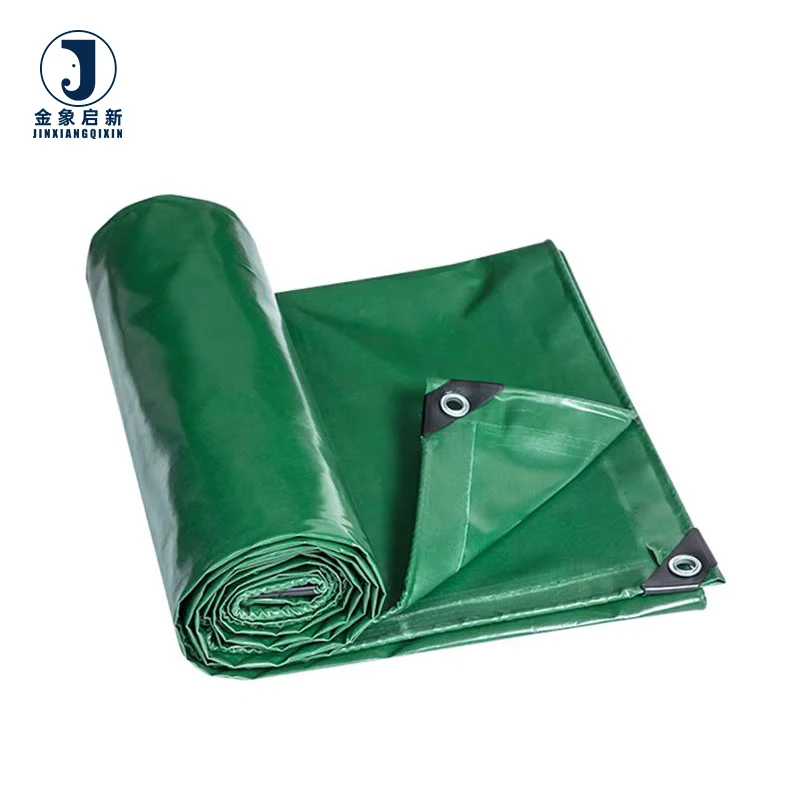
Proven Coating Control — nearly 30 years focused on coated fabric production, with dedicated QA/QC at every stage ensuring coating weight and adhesion consistency for this PVC coated tarpaulin fabric.
Technical Specifications
| Parameter | Value |
|---|---|
| Product Type | PVC Coated Tarpaulin Fabric |
| Material | PVC coated woven fabric |
| Weight | At least 450 g/m² |
| Coating Method | Knife Coated |
| Base Fabric | Woven (1000×1000 denier referenced) |
| Waterproof | Yes |
| Surface Finish | Banner coated |
| Anti-UV Treatment | Available — confirm the grade required for your market (test basis not stated) |
| Flame Retardant | Available — confirm the grade required for your market (grade not stated) |
| Key Features | Tear-Resistant, Oilproof |
| Format | Roll |
| Customization | Custom size available |
| Standards | ISO, CE |
Application Suitability
| Application | Exposure & Requirement |
|---|---|
| Truck and trailer covers | Constant road vibration, flexing at load points, weather exposure, UV from direct sunlight, abrasion from tie-down straps |
| Outdoor tent and awning structures | Sustained UV and rain exposure, wind-induced flutter stress on seams, requirement for consistent roll colour when panels are joined |
| Industrial equipment protection | Contact with oils and coolants, dust ingress prevention, repeated covering and uncovering cycles, storage in unsheltered yards |
| Vehicle and car covers | Prolonged outdoor parking UV load, hail and debris impact resistance, requirement for non-abrasive surface contact with paintwork |
Why the Same GSM Does Not Guarantee the Same Performance
Coating method and base fabric denier determine real-world behaviour more than weight alone.
A 450 g/m² PVC coated tarpaulin fabric made by knife coating on a 1000×1000 denier base will behave very differently under tension and welding compared to one made by lamination on a lighter weave. The coating process controls how deeply the PVC penetrates the yarn interstices, which directly governs adhesion strength and the point at which the coating delaminates under flex [NEED_CITE: coating adhesion test methods for PVC fabrics per ISO 2411]. When technical buyers specify only by GSM, they leave the two variables that most influence service life — base fabric construction and coating method — open to supplier interpretation, which is why rolls arriving on site can feel lighter, weld poorly, or crack at the fold line well before expected.
Knife Coating and Its Effect on Adhesion
Knife coated PVC construction pushes the plastisol into the woven base fabric under controlled blade pressure, filling the gaps between yarns rather than sitting on top as a separate film. This mechanical keying means the coating-to-substrate bond relies on penetration depth as well as chemical adhesion. For fabricators who hot-air weld seams on this PVC coated tarpaulin fabric, that deeper bond translates into a weld zone where the coating does not peel away from the base under thermal cycling.
Base Fabric Density and Tensile Behaviour
The 1000×1000 denier woven base referenced for this grade provides a balanced warp-and-weft structure where tensile load is shared across both directions. In truck side curtain and equipment cover applications, the fabric experiences multi-axial stress — pulling from tie-down tension on one axis and wind flutter on the other [NEED_CITE: multi-axial tensile testing of coated fabrics]. A balanced denier count in both directions prevents the weaker axis from becoming the failure initiation point, which is a common issue in fabrics where one direction uses a lighter yarn to reduce cost.
How Weight, Coating Thickness and Flexibility Interact
At 450 g/m², the total weight is split between base fabric and coating layers. A higher coating proportion increases waterproofness and surface durability but reduces flexibility at low temperatures. A higher base fabric proportion improves tear propagation resistance but may leave a thinner surface film. Knife coating allows the manufacturer to control this ratio precisely by adjusting blade gap and line speed, which is why this PVC coated tarpaulin fabric can be specified for both flexible truck covers and more rigid industrial equipment shrouds without changing the stated weight grade [NEED_CITE: relationship between coating weight and low-temperature flexibility in PVC fabrics].
What Happens When Material Specs Are Assumed Rather Than Verified
When the coating method is not specified on the purchase order, a supplier may substitute a laminated or calendered construction at the same 450 g/m² to meet a price target. The resulting PVC coated tarpaulin fabric will pass an incoming weight check but will separate at the weld line or crack along fold creases after a short period of outdoor use. Batch-to-batch colour variation is another consequence of loose specification — rolls produced on different coating lines or with different plastisol batches can show visible shade differences once installed side by side on a large tent or truck curtain [NEED_CITE: colour consistency standards for coated fabric rolls]. Fire-retardant claims without a documented grade create compliance risk on construction and mining sites where inspectors require a certificate matching the installed material.
Why Technical Buyers Source This Fabric Here
Deep process control over coating weight and adhesion, built across nearly 30 years of continuous PVC coated fabric production, means the knife coated layer on this material is verified at the line rather than assumed after the fact.
Three full production lines and 36 sets of professional equipment support the volume consistency needed when multiple rolls must match in weight, colour and coating thickness across a single order.
A 10-person R&D team handles material selection and sample development, allowing fabricators to confirm weld parameters and colour match on this PVC coated tarpaulin fabric before committing to production volume.
Dedicated QA/QC inspection at every production stage, with 100% pre-shipment roll-by-roll verification, catches GSM deviation and surface defects before the material leaves the facility.
Samples are developed within days for custom width, colour or treatment requirements, reducing the approval cycle for new cover designs or replacement fabric sourcing.
Documentation & Verification
- Material specification sheet stating exact GSM, 1000×1000 denier base fabric, knife coated method and colour reference per roll
- UV and flame retardant test reports issued per production batch where treatments are specified on the order
- Pre-shipment inspection record with roll-by-roll weight verification against stated 450 g/m² minimum
- ISO and CE certificates included with every shipment for regulatory and site compliance documentation
- Certificate of origin and customs support documents prepared for cross-border roll stock shipments
Fabrication, Handling & Storage
- Hot-air weld temperature and speed must be calibrated for knife coated PVC to avoid burning through the 450 g/m² layer at the seam
- Store rolls upright on end cores to prevent permanent creasing of the banner coated surface finish during warehouse holding
- Allow cold-stored rolls to acclimatise before unrolling to prevent cracking of the PVC coating at low temperatures
- Use PVC-compatible solvent cleaners on the banner coated surface to avoid softening or dissolving the top coating layer
- Plan cutting layouts to minimise cross-grain seams on the 1000×1000 denier base where tear propagation risk is higher
What to Include with Your Enquiry
To confirm this PVC coated tarpaulin fabric suits your application, provide the end-use environment including UV exposure duration, temperature range and any chemical contact such as oils or industrial coolants. Specify the target fire classification your market requires so the correct treatment grade can be quoted and documented. Indicate the roll widths and annual volume you need, along with whether custom colour matching or finished cut-to-size panels are required rather than roll stock only.
Frequently Asked Questions
Q: How does knife coating differ from laminated PVC coating?
A: Knife coating forces PVC plastisol into the woven base fabric under blade pressure, creating a mechanical bond through yarn penetration. Laminated coating joins a pre-formed PVC film to the base with adhesive. The knife coated method on this fabric gives stronger adhesion at the weld zone and better resistance to delamination under repeated flexing.
Q: What test basis supports the anti-UV treatment claim?
A: Anti-UV treatment is available in grades matched to different exposure durations and markets. The specific test method and result — such as hours of xenon arc exposure retained — are documented per production batch. Request the test report grade that aligns with your regional outdoor exposure requirements before placing the order.
Q: How is batch-to-batch GSM consistency maintained across rolls?
A: Coating weight is controlled by blade gap setting, line speed and plastisol viscosity at the coating head. Each roll is sampled and weighed during production and again during 100% pre-shipment inspection. This ensures every roll in a multi-roll order meets the stated 450 g/m² minimum without relying solely on average batch weight.
Q: Can the same 450 g/m² weight serve both truck covers and tent fabric?
A: Yes, because the performance difference lies in the base fabric denier and coating formulation rather than weight alone. The 1000×1000 denier base with knife coating provides the tear resistance needed for truck tie-down stress while the waterproof PVC film meets tent weatherproofing requirements. Specify the end use so the correct formulation variant is supplied.
Q: What happens if flame retardant grade is not specified on the order?
A: Without a specified grade, the fabric is supplied as standard PVC without fire-retardant additives. If your installation site or end market requires a particular classification such as B1 or NFPA 701, that grade must be stated on the purchase order so the correct compound is used and the matching test certificate is issued with the shipment.