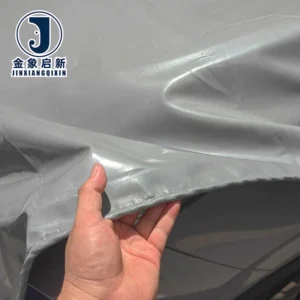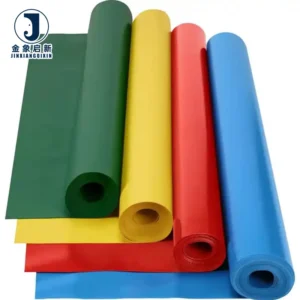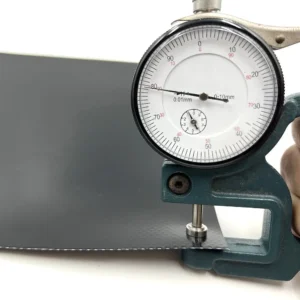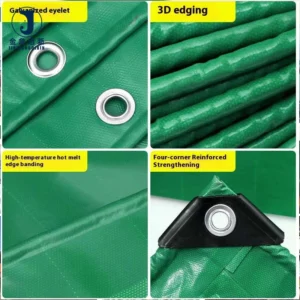
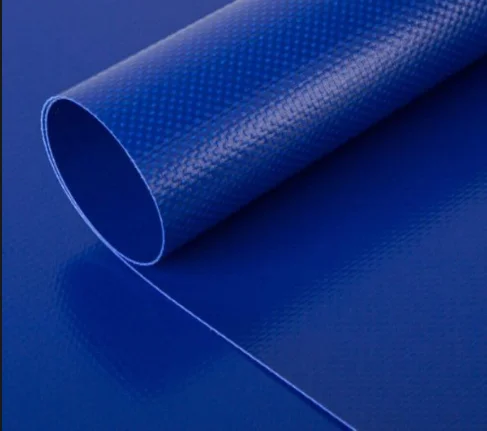
Coating Weight Verification — Nearly 30 years of knife coating process control delivers documented GSM and adhesion data per roll, so the PVC coated tarpaulin you receive matches the specification you approved.
Technical Specifications
| Parameter | Value |
|---|---|
| Product Type | PVC Coated Tarpaulin Roll |
| Coating Method | Knife Coated |
| Coating Material | PVC |
| Welding Options | HF, Hot Air, Sewing |
| Surface Property | Self-cleaning |
| Mildew Resistance | Yes |
| Oil & Stain Resistance | Yes |
| Acid & Alkali Resistance | Yes |
| Temperature Range | High temperature and cold resistant |
| Flame Retardant Grade | Fire retardant (grade not stated in source) |
| UV Treatment | UV resistance (test basis not stated in source) |
| Flexibility | Highly flexible, resistant to cracking |
| Durability | Anti-oxidation and weather resistance |
Application Suitability
| Application | Exposure & Requirement |
|---|---|
| Tensile and membrane structures | Permanent tensile load, UV exposure, wind-driven rain, surface cleanliness for architectural appearance |
| Airport hangars and large-span roofs | Wide panel spans requiring weld integrity, fire compliance, long-term weather resistance |
| Stadium architectural structures | High visibility surface, self-cleaning requirement, batch colour consistency across large panels |
| Portable storage structures | Repeated assembly flex, abrasion at frame contact points, water ingress prevention |
| Shade systems | Continuous UV exposure, thermal expansion and contraction, colour fastness |
| Truck cover fabric | Road abrasion, constant flexing at tie-down points, weather and chemical exposure |
Why Base Fabric Construction Matters More Than GSM Alone
When a technical buyer specifies PVC knife coated tarpaulin, the quoted GSM often becomes the sole acceptance criterion — yet two rolls with identical GSM can perform very differently under load. The base fabric denier, weave density and coating adhesion together determine real-world strength, not the weight figure on the quotation.
I have seen coated fabric pass a GSM check on arrival yet fail at the weld seam within months because the base fabric was loosely woven and the coating had poor yarn adhesion. The knife coating process addresses this by forcing PVC paste into the interstices of the woven base, creating a mechanical lock rather than a surface film. Without documented adhesion data and base fabric construction details, the GSM number alone tells you very little about how the material will behave when a tensile structure is tensioned or a truck cover flexes under highway wind load. [NEED_CITE: tensile and tear test methods for coated fabrics per ISO 1421]
Knife Coating and Yarn-Level Adhesion
The knife coating process applies PVC paste under controlled pressure, driving the compound into the woven base fabric rather than laying it on the surface. This produces a coating-to-yarn bond that resists delamination when the material is folded, welded or subjected to repeated flex cycles. For PVC knife coated tarpaulin used in tensile structures and truck covers, this adhesion quality is critical — a delaminated panel fails at the point of highest stress, typically near welded seams or mechanical fixings.
Self-Cleaning Surface for Architectural Longevity
The self-cleaning surface treatment reduces particulate adhesion and allows rainwater to carry away surface dirt. On stadium roofs, airport hangar membranes and shade systems where visual appearance matters, this property reduces the frequency and cost of maintenance access. The treatment works at the coating surface level and is compatible with the material’s welding behaviour, so fabricators do not need to strip or mask the surface before joining panels. [NEED_CITE: self-cleaning PVDF and acrylic topcoat performance on architectural PVC membranes]
Reading the Specification Sheet Correctly
Three parameters interact to define structural performance: base fabric denier determines individual yarn strength, weave density controls how load distributes across the panel, and coating weight contributes to overall stiffness and environmental protection. A high GSM achieved through heavy coating on a light base fabric will feel stiff but tear easily along the weave. Conversely, a tightly woven high-denier base with moderate coating weight delivers superior tensile and tear performance at comparable total weight. For fabricators selecting PVC knife coated tarpaulin, requesting the base fabric construction details alongside the GSM figure is essential to predicting in-service behaviour.
Welding Compatibility Across Fabrication Methods
This material supports HF welding, hot air welding and sewing, giving fabricators flexibility in choosing the join method that suits their equipment and panel geometry. HF welding produces a homogeneous bond by melting the PVC coating on both faces simultaneously, creating a seam that matches the parent material strength. Hot air welding offers more control for complex geometries and field repairs. Sewing remains appropriate for applications requiring mechanical reinforcement at stress points, though needle punctures must be sealed to maintain waterproof integrity.
The Hidden Cost of Specification Gaps
A flame retardant claim without a stated grade can result in material that fails the fire inspection required by local building codes, forcing removal and replacement of installed panels at significant cost. Similarly, UV resistance stated without a test basis provides no assurance that the material will retain tensile strength and colour after extended outdoor exposure. Batch-to-batch colour variation across rolls in a single order becomes visible when panels are installed side by side on a large structure, requiring selective panel placement or partial rejection. [NEED_CITE: DIN 4102 fire classification for building materials] Weld failures that occur before the parent fabric reaches its rated load typically trace back to inconsistent coating thickness at the weld zone — a consequence of poor coating weight control during manufacturing.
Why Source This Material Here
Deep process control over knife coating parameters means coating weight and adhesion are managed at every stage, not sampled at the end. The 10-person R&D team handles material selection and sample development, producing custom samples within days for specification approval before bulk production. Three full production lines with 36 sets of professional equipment support consistent batch output and on-time delivery for large orders. Dedicated QA/QC inspection at every production stage, including 100% pre-shipment inspection, catches GSM deviation and colour variance before material leaves the facility. ISO and CE certified manufacturing with full customs documentation reduces import clearance delays.
Documentation & Verification
- Material specification sheet stating GSM, base fabric denier, weave pattern and coating method
- Third-party test reports for UV and flame retardant grades applicable to your target market
- Pre-shipment inspection record with per-roll coating weight verification against quoted values
- ISO and CE certificates included with certificate of origin for customs clearance
- Roll packing list with batch reference traceable to production date and QC sign-off
Fabrication, Handling & Storage
- HF welding parameters should be calibrated to the knife coated PVC layer thickness before production runs begin
- Hot air weld temperature and speed must account for the self-cleaning surface treatment to ensure full coating fusion
- Store rolls upright on a flat surface to prevent permanent creasing across the coated face
- Unroll in ambient temperature conditions; cold-stored PVC knife coated tarpaulin requires acclimatisation before fabrication
- Cut panels with allowance for weld overlap and seam positioning away from primary load-bearing zones
- Clean with neutral pH detergent only; alkaline or solvent cleaners degrade the self-cleaning surface layer
What to Include in Your Inquiry
Provide the intended application and exposure conditions — whether the fabric will serve in a permanent architectural structure, a portable shelter or a transport cover application. Specify any fire compliance requirements for your target market so the correct flame retardant grade can be matched. Indicate the required roll width, colour reference and whether you need cut-to-size panels or full roll stock. If batch colour consistency across multiple rolls is critical for visible panel installations, note this upfront so production can be allocated from a single coating batch.
Frequently Asked Questions
Q: How do I verify actual GSM matches the quoted coating weight on arrival?
A: Request a pre-shipment inspection record that documents per-roll weight measurement. On receipt, cut a measured sample from each roll and weigh it to confirm the stated GSM. Compare the base fabric denier and weave construction against the material specification sheet provided with the shipment. Any significant deviation should be flagged before fabrication begins.
Q: Which flame retardant grade matches my target market requirements?
A: Common standards include B1 per DIN 4102, M2 per French classification and NFPA 701 for North American applications. The required grade depends on local building codes and the specific use case. Confirm the applicable standard for your market before ordering, and request a third-party test report matching that grade with the shipment documentation.
Q: What is the difference between HF and hot air welding for this material?
A: HF welding uses electromagnetic energy to melt the PVC coating simultaneously on both faces, producing a fast homogeneous seam suited to straight-line joins. Hot air welding uses heated air to soften the coating, offering more control for curved seams and field repairs. Both methods are compatible with this knife coated PVC tarpaulin roll; selection depends on your equipment and panel geometry.
Q: How is batch-to-batch colour consistency maintained across multiple rolls?
A: Colour consistency depends on raw material lot control and coating formulation management during production. For large structure panels where rolls are installed side by side, request that your entire order be allocated from a single coating batch. A pre-production sample roll can be approved for colour reference before full production proceeds.
Q: What UV test basis is available for architectural applications?
A: UV resistance is available as a treatment option, but the applicable test standard and exposure duration should be confirmed for your specific climate and application. Request the test report that corresponds to the UV grade offered, and discuss realistic service expectations based on the installation environment with the R&D team before specifying.