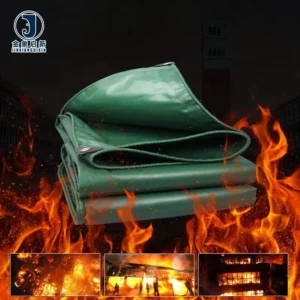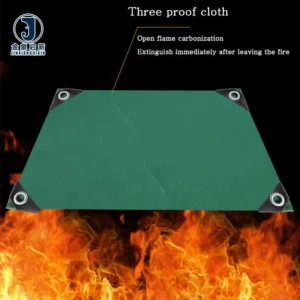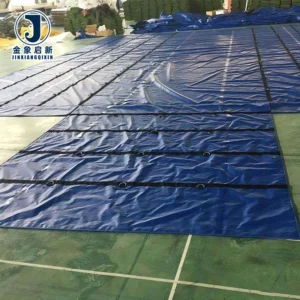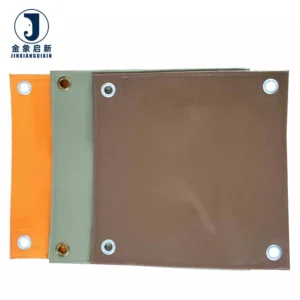
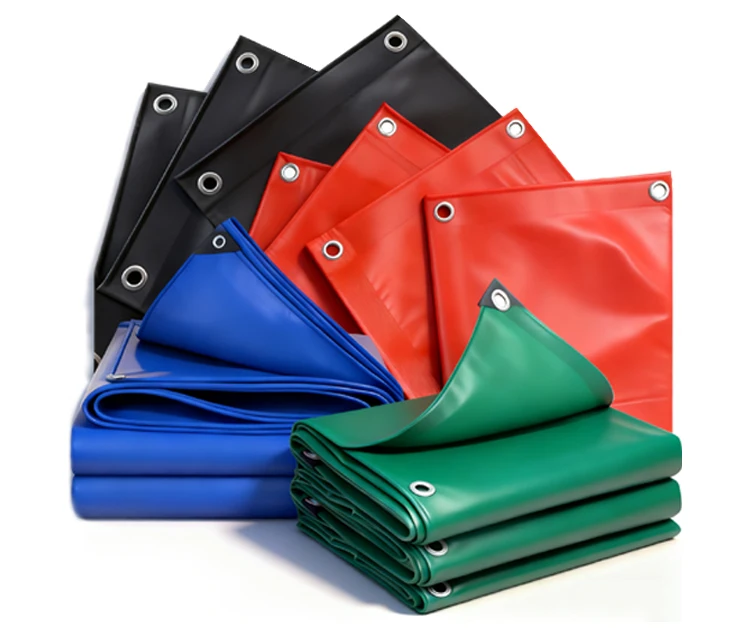
Hot Melt Coated Precision — coating weight and adhesive strength controlled per roll through hot melt technology, ensuring the PVC layer bonds predictably to the polyester base fabric across every grade.
Technical Specifications
| Parameter | Value |
|---|---|
| Product Type | PVC Coated Fabric |
| Base Fabric Material | 100% high tenacity polyester yarn |
| Base Fabric Denier Options | 500D, 1000D, up to 2000D |
| Coating Method | Lamination technology and hot melt coating technology |
| Coating Material | PVC |
| Thickness Range | 0.35 mm to 1.5 mm |
| Weight Range | 400 g/m² to 1500 g/m² |
| Tensile Strength (Warp) | 1500–3000 N/5cm (grade dependent) |
| Tensile Strength (Weft) | 1200–2800 N/5cm (grade dependent) |
| Weld Tear Strength | Excellent per manufacturer test |
| Flame Retardant | Available — confirm the grade required for your market |
| Anti-Static | Available — confirm the test standard required for your application |
| UV Treatment | Weather resistant — confirm test basis for your specification |
| Anti-Mildew | Mold proof treatment applied |
| Cold Resistance | Cold resistant cracking formulation |
| Color Options | Blue (primary), customizable to Pantone or RAL references |
| Standards | ISO, CE |
Application Suitability
| Application | Exposure & Requirement |
|---|---|
| Heavy truck tarpaulin | Constant road abrasion, wind load flexing, UV exposure, rain and snow contact |
| Engineering protective cloth | Mechanical impact, dust ingress, prolonged outdoor weathering on construction sites |
| Industrial pipe canopy | Chemical splash, thermal variation, structural tension load on frame supports |
| Tensioned structural fabric | Sustained biaxial tension, wind uplift, UV degradation over seasons |
| Lightweight engineering fabric | Temporary enclosure, moderate weather exposure, frequent handling and folding |
PVC Coated Polyester Fabric GSM Tensile Strength: Why the Numbers Must Be Read Together
GSM alone tells you what the roll weighs — it does not tell you how the fabric will behave under load.
Technical buyers routinely receive PVC coated polyester fabric where the GSM matches the quotation but the tensile and tear performance falls short. The reason is that base fabric denier and weave density contribute as much to mechanical strength as coating weight does. A 650 g/m² roll woven from 500D yarn at loose mesh count will tear more easily than the same weight built on a tighter 1000D base. Specifying PVC coated polyester fabric GSM tensile strength as a package — rather than a single number — prevents the gap between what the data sheet promises and what the fabric delivers on the welding table. [NEED_CITE: tensile and tear test methods for coated fabrics per ISO 1421]
How Hot Melt Coating Changes the Adhesion Story
Lamination and hot melt coating technology both bond PVC to polyester, but they produce different peel strength profiles. Hot melt coating forces liquid PVC into the base fabric weave under heat and pressure, creating a mechanical lock that resists delamination at welded seams. For fabricators who heat-weld panels together, this matters because the weld line is often the first point of failure when the base fabric and coating separate under flex load. Laminated construction delivers a smoother surface finish suited to applications where appearance and printability take priority. Choosing between the two depends on whether your fabrication process stresses the bond line or the surface.
Denier, Mesh Count, and the Tear Propagation Path
The base fabric denier determines individual yarn thickness, while mesh count controls how many yarns carry the load per centimetre. A 1000D yarn at standard mesh count gives higher single-yarn break strength than 500D, but a tighter mesh on 500D can distribute tear force across more yarns and slow propagation. When you evaluate PVC coated polyester fabric GSM tensile strength data, the warp and weft figures together reveal whether the fabric is balanced or biased — a high warp-to-weft ratio means the fabric resists load in one direction but may split more readily in the other. [NEED_CITE: relationship between base fabric construction and tear resistance in PVC coated textiles]
Reading the Specification Sheet Beyond Weight
Thickness, coating method, and base fabric construction interact to define real-world performance. A thicker coating adds abrasion resistance and waterproofing but increases stiffness, which affects how the fabric folds and handles during fabrication. Hot melt coated rolls tend to show higher interlayer adhesion than laminated equivalents at similar thickness, reducing the risk of coating separation at stitched or welded edges. Cold resistant formulations maintain flexibility in sub-zero environments where standard PVC becomes brittle and cracks at fold points. Understanding these relationships lets you match the grade to the mechanical demands of your application rather than defaulting to the heaviest option available.
What Happens When the Specification Does Not Match the Load
Underspecifying base fabric denier for a tensioned membrane structure leads to creep and eventual tearing at attachment points where stress concentrates. Selecting a laminated grade when the fabrication process relies heavily on heat welding can result in peel failures along seam lines, especially where the load flexes repeatedly. Ordering flame retardant fabric without confirming the specific grade against your local fire code means the material may not pass site inspection, delaying project handover. Colour inconsistency between rolls in a single order becomes visible once panels are installed side by side, forcing rework or replacement on finished structures. [NEED_CITE: common failure modes in PVC coated fabric installations]
Why Fabricators Source PVC Coated Polyester Fabric GSM Tensile Strength Data Here
Deep process control over coating weight and adhesion means the GSM you specify is the GSM that arrives, verified through dedicated QA/QC at every production stage. Three full production lines with 36 sets of equipment support bulk roll orders while maintaining batch-to-batch colour consistency across containers. A 10-person R&D team handles material selection and sample development, confirming base fabric denier, coating method, and treatment chemistry before production starts. One hundred percent pre-shipment inspection with documented records ensures every roll meets the agreed specification before dispatch. Samples for custom widths, colours, and functional treatments are developed within days, not weeks.
Documentation & Verification
- Material specification sheet confirming exact GSM, base fabric denier, and coating method per roll
- Test reports for UV resistance and flame retardant grades supplied with applicable batches
- Pre-shipment inspection record with weight and visual verification before dispatch
- Roll packing list detailing width, length, colour reference, and roll count per shipment
- Certificate of origin and customs documentation for international roll stock shipments
- ISO and CE certificates available on request for compliance submissions
Fabrication, Handling & Storage
- Heat weld temperature settings must match the specific coating method — hot melt coated rolls require different parameters than laminated grades
- Store rolls horizontally on padded racks to prevent permanent creasing on the PVC surface across all thickness grades
- Allow cold resistant rolls to reach ambient temperature before unrolling to avoid stress cracking at low GSM grades
- Cut patterns should account for fabric grain direction, aligning warp yarns with primary load paths on tensioned structures
- Clean surfaces with mild detergent only — solvent-based cleaners can degrade the anti-mildew treatment layer
- Reinforce eyelet and tie-down points with additional PVC patches welded over the base fabric to distribute load
What We Need to Specify Your Roll Correctly
Provide the application environment including mechanical load type, UV exposure duration, and any fire code or anti-static requirements for your market. Confirm the target GSM range, base fabric denier preference, and whether lamination or hot melt coating suits your fabrication process. Specify roll width, colour reference, and estimated annual volume so the R&D team can confirm production line allocation and lead time. Request a sample roll in your required grade before committing to a full container order.
Frequently Asked Questions
Q: How is the GSM on each roll verified against the quotation before shipment?
A: Every roll undergoes weight verification during the pre-shipment inspection process. A material specification sheet documenting the confirmed GSM, base fabric denier, and coating method accompanies each shipment. This allows you to cross-reference the physical roll against the agreed specification without relying on quotation figures alone.
Q: Can test reports for UV and flame retardant performance be supplied with the shipment?
A: Test reports are available for UV resistance and flame retardant grades where applicable to the specific batch being shipped. Confirm the required test standard and grade with the R&D team during sample development so the correct documentation is prepared alongside your production run.
Q: What is the difference between lamination and hot melt coating for weld seam performance?
A: Hot melt coating forces PVC into the base fabric weave under heat, creating a mechanical bond that resists delamination at heat-welded seams. Lamination produces a smoother surface better suited to printing and visible applications. The choice depends on whether your fabrication process stresses the bond line or requires surface quality.
Q: How is colour consistency maintained across multiple rolls in a single order?
A: Batch-to-batch colour control is managed through dedicated QA/QC at each production stage with one hundred percent inspection before dispatch. Rolls within a single order are produced in the same batch run to minimise variation. A colour reference such as Pantone or RAL is confirmed during sample approval before bulk production begins.
Q: What base fabric denier and width options are available for custom specifications?
A: Base fabric is available in 500D, 1000D, and up to 2000D denier options with corresponding tensile strength ranges documented in the specification sheet. Custom roll widths are handled across three full production lines — confirm the required width and length with the R&D team during the sample stage.