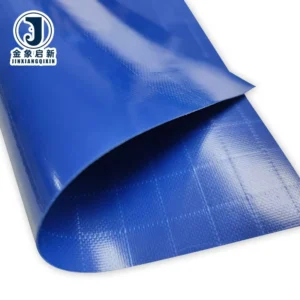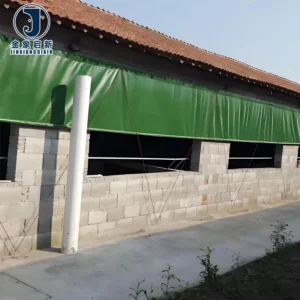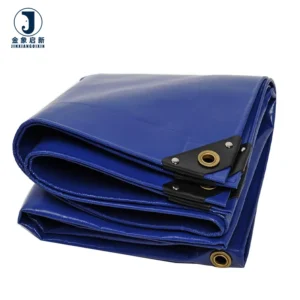
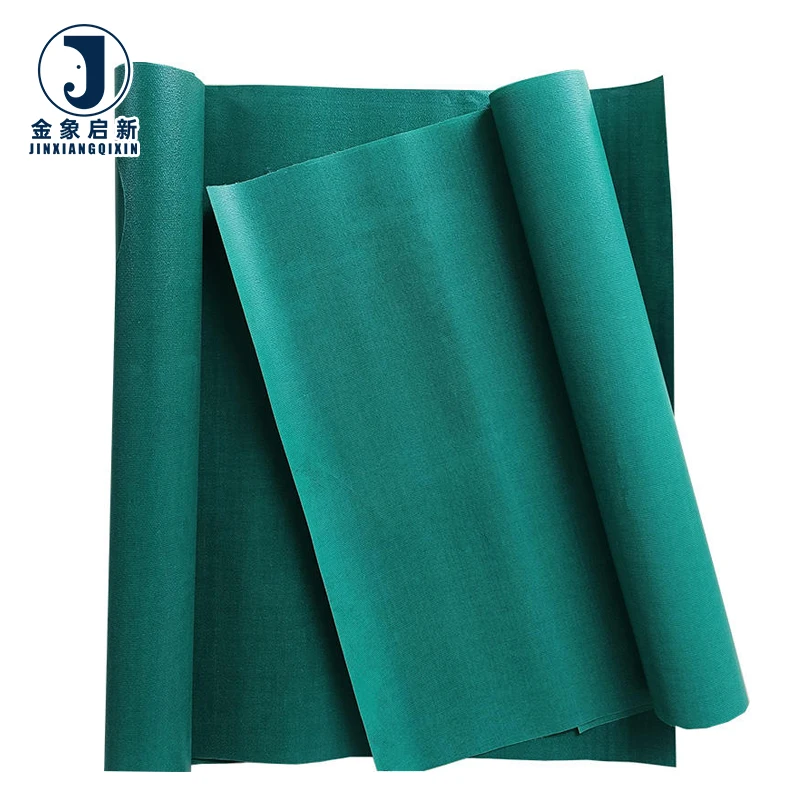
Coating Weight Control — deep process control over PVC coating application across the full GSM range, verified per roll with a material specification sheet stating exact coating weight and base fabric construction for incoming inspection.
Technical Specifications
| Parameter | Value |
|---|---|
| Product Type | PVC Coated Tarpaulin Roll |
| Material Construction | High-strength polyester mesh base fabric with PVC coating |
| Weight (GSM) | 350gsm / 420gsm / 500gsm / 550gsm / 600gsm / 750gsm |
| Total Thickness | 0.32mm / 0.35mm / 0.4mm / 0.45mm / 0.5mm / 0.65mm |
| Coating Method | Laminated technology & Hot-melt coating technology |
| Roll Width | 2m / 2.1m |
| Roll Length | 75m (for 2m width) / 50m (for 2.1m width) |
| Color | Blue / Red / Yellow / Light blue / Grey (Customized) |
| Key Features | Cold crack resistance, Anti-mildew, Waterproof |
| Flame Retardant | Available as special treatment — confirm grade required for your market |
| Anti-Static Treatment | Available — surface resistance standard not stated in source |
| UV Treatment | "Sunproof" treatment claimed — request test basis before ordering |
| Certifications | ISO, CE |
Application Suitability
| Application | Exposure & Requirement |
|---|---|
| Tent and awning fabrication | Welded seam integrity, consistent coating adhesion across the roll, batch colour uniformity when panels are joined |
| Construction site enclosure | Wind loading, scaffold abrasion, moisture exposure — requires matched GSM and tensile capacity |
| Equipment and industrial covers | Outdoor weathering, mechanical contact, fold stress at edges and corners |
| Agricultural and aquaculture lining | Continuous water contact, UV exposure, biological contamination resistance |
| Inflatable and membrane structures | Predictable tensile behaviour under inflation pressure, coating-to-fabric bond stability |
| Truck awning and side curtain | Flex cycling, road debris abrasion, weather exposure at highway speed |
What the GSM Label Leaves Out About Coated Fabric Performance
A quoted GSM figure only describes mass per square metre — it says nothing about base fabric denier, weave density, or how the PVC coating was bonded to the yarn.
Technical buyers who specify PVC coated tarpaulin roll material by GSM alone frequently discover that two rolls carrying the same weight label behave very differently under tension, at the weld line, and across temperature extremes. The base fabric construction determines how load transfers through the weave, while the coating method controls whether the PVC penetrates the yarn bundle or simply sits on the surface [NEED_CITE: tensile and tear test methods for coated fabrics per ISO 1421]. Without a material specification sheet that breaks out coating weight separately from base fabric weight, incoming inspection cannot confirm whether the roll matches the technical intent of the order.
Coating Method and Its Effect on Fabric Behaviour
Hot-melt coating drives the PVC compound into the polyester mesh under heat and pressure, producing a bond that penetrates the yarn structure and resists delamination through repeated flex cycles. Laminated technology applies pre-formed PVC films to the base fabric, which can yield a smoother surface finish suited to printed branding and architectural membrane work. For PVC coated tarpaulin base fabric denier GSM tensile tear strength coating technology decisions, understanding which method was used is critical before setting welding parameters on the fabrication floor.
GSM Grades and Their Structural Implications
The range spans from 350gsm at 0.32mm thickness up to 750gsm at 0.65mm, with each grade carrying a different relationship between base fabric denier and total tensile capacity. Lower GSM grades serve lightweight covers and temporary enclosures where drape and handling ease matter more than ultimate strength. Heavier grades suit permanent structural membranes, mining ventilation applications, and heavy-equipment covers where puncture resistance and sustained load-bearing are the priority. Selecting the right grade means matching the expected mechanical load and environmental exposure, not simply choosing the heaviest option available [NEED_CITE: DIN 4102 fire classification for building materials].
Understanding the Specification Variables That Matter
GSM alone does not predict tensile or tear performance because the base fabric denier and the warp-weft thread count determine how stress distributes across the weave. A 550gsm roll built on a high-denier, open-weave mesh will tear differently than a 550gsm roll on a denser, lower-denier construction, even though the scale reads the same. The coating method adds another layer: hot-melt coated fabric typically shows higher peel strength at the coating-to-fabric interface, which matters when the material flexes at welded seams. Thickness correlates with puncture resistance but not necessarily with tensile strength, because a thicker coating does not compensate for a weaker base yarn. Width and roll length choices — 2m by 75m or 2.1m by 50m — affect cutting yield and the number of weld seams required to build large panels, directly influencing fabrication time and structural continuity.
The Cost of Specifying Material Without Full Documentation
When a roll arrives with a GSM label but no breakdown of coating weight versus base fabric weight, the buyer cannot determine whether the coating is adequate for the intended welding process or environmental exposure. Rolls that test lighter than quoted at the coating layer — not the total weight — fail at the weld seam before the fabric body shows any wear. Flame retardant claims that arrive without a matching test report create compliance risk on regulated job sites, where inspectors require documented grade certification, not a label statement [NEED_CITE: DIN 4102 fire classification for building materials]. Batch-to-batch colour drift across a multi-roll order becomes visible once panels are heat-welded side by side on a truck curtain or building enclosure, forcing costly rework or partial replacement.
Why Technical Buyers Source This Range Here
Three full production lines and 36 sets of professional coating equipment support bulk roll output with consistent coating weight control across long production runs. A 10-person R&D team handles material selection, sample development, and custom specification matching, with samples produced within days rather than weeks. Dedicated QA/QC runs at every production stage, culminating in 100% pre-shipment roll inspection before dispatch. The facility holds ISO and CE certification, with documentation packages assembled to match the destination market’s customs and compliance requirements. Roll configurations in 2m and 2.1m widths are held in stock grades, while custom colours and treatments are produced to order with batch consistency controls that reduce visible variation across multi-roll shipments.
Documentation & Verification
- Material specification sheet stating exact GSM, base fabric construction, coating weight, and colour reference per roll
- UV and flame retardant test reports provided where applicable — request the specific standard before ordering
- Pre-shipment inspection record confirming 100% roll inspection against stated specifications before dispatch
- ISO and CE certificates included with documentation package for customs and end-user compliance
- Roll packing list with individual roll weights and dimensions for warehouse receiving verification
- Certificate of origin and customs support documentation prepared per destination market requirements
Fabrication, Handling & Storage
- Hot-melt coated rolls require adjusted welding temperature settings compared to laminated grades — confirm parameters with sample offcuts before full production runs
- Store rolls upright on pallets to prevent flat-spot deformation that transfers into visible surface marks on finished panels
- Allow cold-stored rolls to reach ambient temperature before unrolling to avoid coating micro-cracking in grades with cold crack resistance treatment
- Cut lighter GSM grades (350gsm–420gsm) with rotary blades to prevent fraying at the polyester mesh edges
- Clean finished panels with pH-neutral detergent — solvent-based cleaners may compromise anti-mildew treatment on the coating surface
- Plan cutting layouts around the 2m or 2.1m roll width to minimise weld seams on large-format covers and enclosures
How to Start a Technical Inquiry
Provide the intended application, the environmental exposure conditions, and the mechanical loads the fabric will face so the correct GSM grade and coating method can be matched to your requirements. Specify whether flame retardant or anti-static treatment is required and which test standard your market or job site demands. Confirm roll width preference, annual volume, and whether you need stock colour options or a custom colour reference — samples can be developed within days for your approval before full production begins.
Frequently Asked Questions
Q: How is GSM verified and how can I confirm coating weight on arrival?
A: Every roll ships with a material specification sheet stating the exact GSM, base fabric construction, and coating weight. You can verify total weight by cutting a measured sample and weighing it against the stated value. For coating weight specifically, the documentation breaks out base fabric mass separately, allowing your incoming inspection to confirm the coating layer matches the technical specification you approved.
Q: What flame retardant grades are available and which test standards do they meet?
A: Flame retardant treatment is available as a special option. The specific grade — whether B1 per DIN 4102, M2, NFPA 701, or another standard — must be confirmed against your market’s regulatory requirements before production. Request the test report matching your target standard during the specification phase so the correct compound is selected for your order.
Q: What is the test basis for anti-UV claims and how does it relate to service life?
A: UV treatment is applied and described as sunproof, but the specific test basis and exposure duration should be requested before ordering. Outdoor service life depends on UV intensity, installation angle, and local climate conditions. Ask for the test method used to substantiate the UV resistance claim so you can evaluate it against the exposure profile of your application.
Q: How does hot-melt coating compare to laminated coating for weld and seam strength?
A: Hot-melt coating penetrates the polyester mesh under heat and pressure, creating a bond that typically shows higher peel strength at the weld interface. Laminated technology applies a PVC film to the base fabric and can produce a smoother surface. The choice between them affects welding temperature settings and seam durability — request samples of both methods to test against your fabrication equipment.
Q: How is batch-to-batch colour consistency controlled across rolls in a single order?
A: Colour consistency is managed through controlled pigment dosing and batch mixing procedures across the production run. For orders spanning multiple rolls, the colour reference is matched at production start and monitored through the run. Request a colour sample from the production batch for visual approval before dispatch if side-by-side panel appearance is critical to your installation.